Physical Address
304 North Cardinal St.
Dorchester Center, MA 02124
Physical Address
304 North Cardinal St.
Dorchester Center, MA 02124

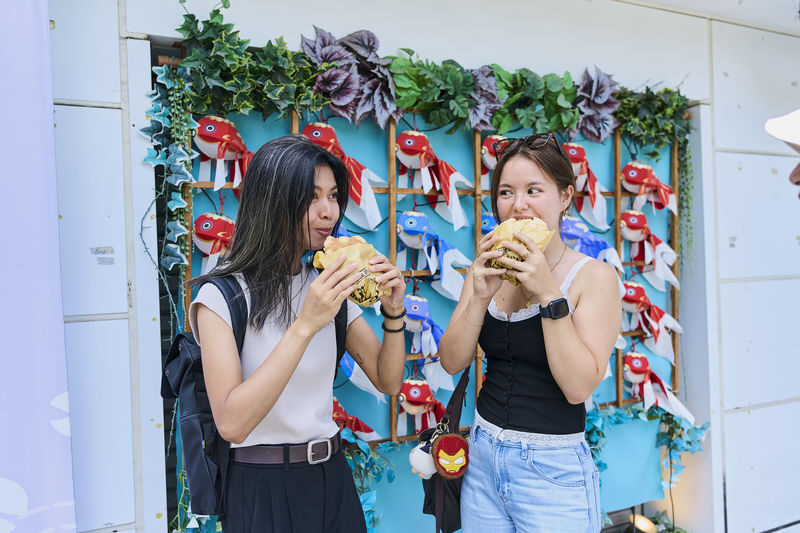
Walk Asakusa with an English-speaking guide, visit Senso-ji, sample local snacks and browse knife, chopstick, samurai and ninja shops.
Senso-ji is more than a photo stop when someone helps you understand the rituals, stories and streets around it. This two-hour Asakusa walking tour pairs Tokyo’s oldest temple with snack stops and shops that show a more everyday side of the neighborhood.
I like the mix of temple history and practical local finds, from handcrafted knives at Honke Kanesō to the supermarket on the route. I also like that guides such as Jun, Ricky, Kaoru and Keisuke are praised for explaining clearly, answering questions and keeping the walk fun.
The trade-off is time: two hours gives you a useful introduction, not a full exploration of Asakusa. The tour is in English only, and meals and drinks beyond the tastings cost extra.
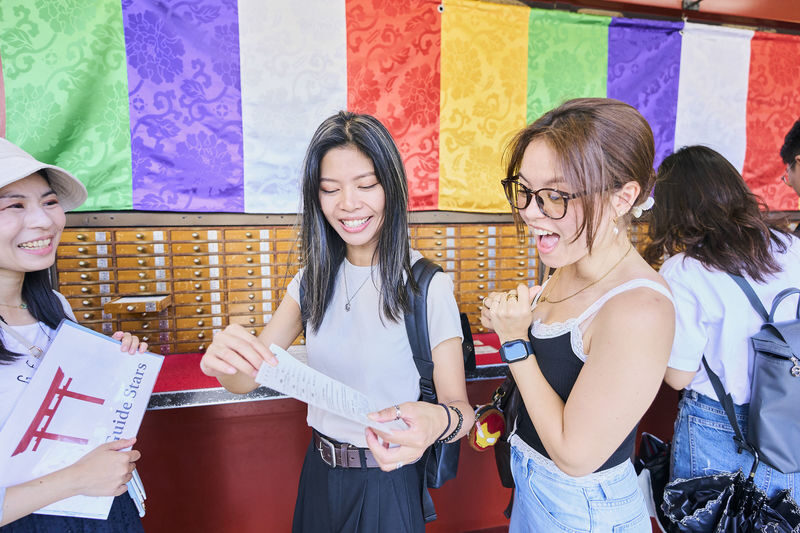
The meeting point is in front of Kaminarimon Police Box at Asakusa Station, at 1 Chome-3-1 Asakusa. Look for a guide holding a Local Guide Stars sign. Arrive 15 minutes early as a practical buffer, even though the activity information also says to arrive at least five minutes before departure.
You can select from departure times at 09:00, 10:30, 11:30, 13:30, 16:00 or 18:30. The available return times are listed as 12:30 and 15:30, with options depending on your chosen departure and itinerary duration. Check the time confirmed for your booking rather than assuming every departure pairs with every return.
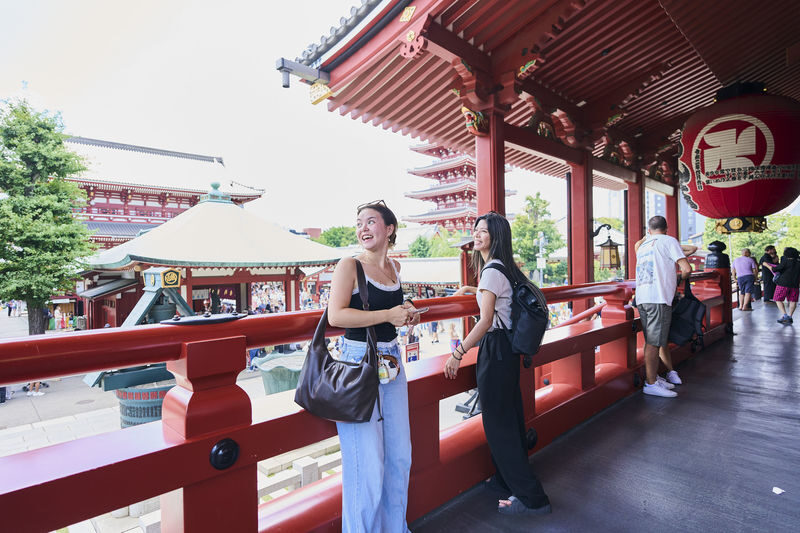
Beginning at Kaminarimon gives the walk an immediate sense of place. The gate is a recognizable entrance to Asakusa’s temple district, and walking from there lets you see the shift from busy approach streets to the more ceremonial temple grounds. The guide’s role is to make the route more than a sequence of stops: you can ask questions as you go, instead of trying to piece together signs and customs on your own.
If you enjoy exploring Tokyo on foot, these walking tours might also suit your style
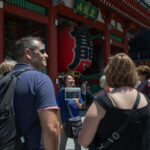
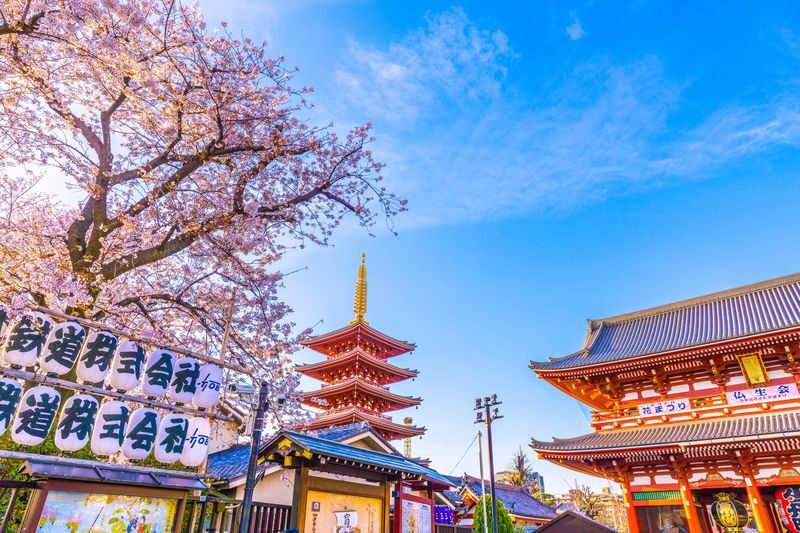
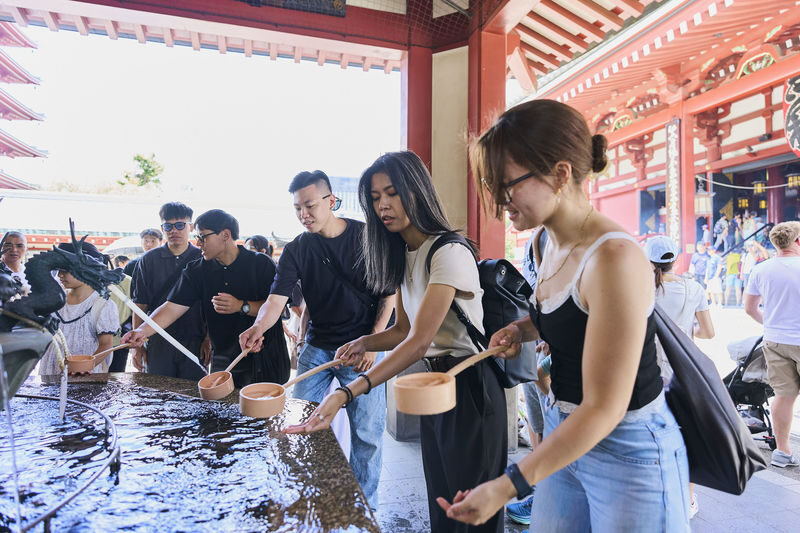
Senso-ji is the heart of the tour. It is Tokyo’s oldest temple and one of the city’s best-known places of worship. The experience is not just about seeing a major landmark; a guide can explain the meaning of temple details and religious practices that may otherwise look like a blur of statues, incense and ritual.
That added context can matter even if you have already visited independently. One participant who had spent a full day in Asakusa found that a guide’s explanations gave familiar sights more meaning. The strongest recurring praise for guides such as Jun, Ricky, Keisuke and Kaoru is that they answer questions, explain history in an engaging way and help keep the group involved.
A small caution: the depth of explanation can depend on the guide. One less favorable account described a presentation as repetitive and basic, with too little attention to temple history. That is a useful reminder that a short walking tour is an introduction, not a specialist lecture. If you want an academic account of Buddhist art or Japanese religious history, this may not go far enough. If you want an accessible orientation with room to ask questions, the format is better suited.
The tour also points out the close presence of Buddhist and Shinto traditions in the area. This is a helpful detail for first-time visitors, since Japanese religious sites and customs can be unfamiliar. The guide can help you notice that the district is not simply an old temple frozen in time, but a working place of worship with traditions that continue alongside shops and daily routines.
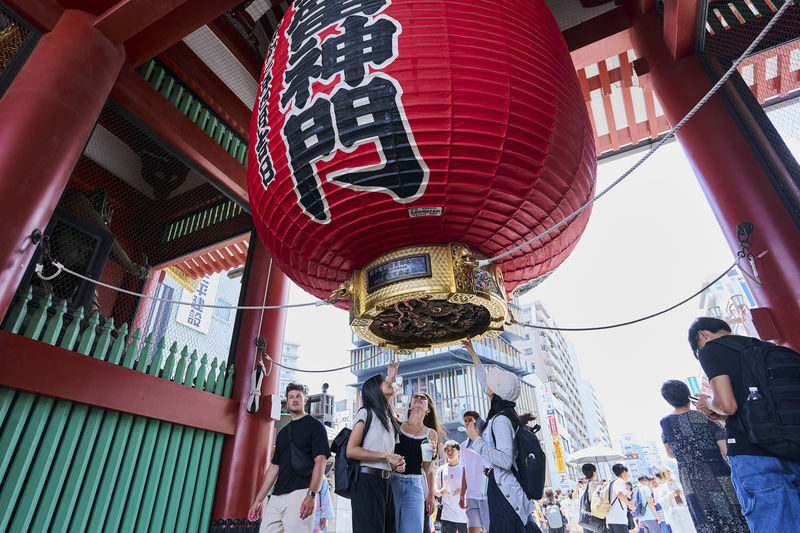
Nakamise-dori is the colorful shopping street leading toward Senso-ji. It is a place to look, smell and sample, with food and souvenir stalls that form part of Asakusa’s long-running appeal. On a short guided walk, the advantage is having someone point out what is worth noticing while you move through the crowd.
The tour includes local snack tastings, but it does not include meals or beverages. Think of the samples as a taste of the neighborhood rather than lunch. If you are hungry, or want to linger over a particular treat, bring extra money and allow time to return after the tour. The exact snacks are not specified, so don’t book expecting a particular dish.
The street can be crowded, especially when many people are heading to the temple. That is part of its character, but it can make a leisurely browse difficult during a compact tour. I would treat the guided pass as an introduction, then come back on your own if you want to shop at a slower pace.
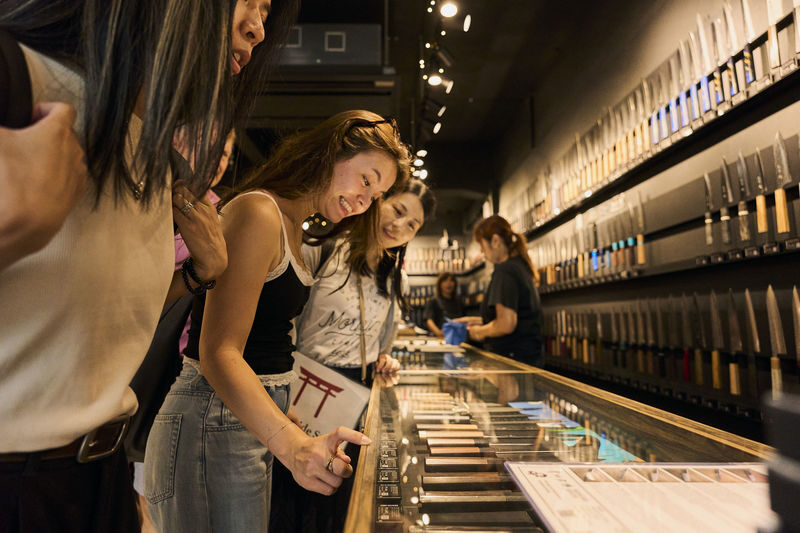
One of the tour’s more distinctive stops is Honke Kanesō, a shop for handcrafted Japanese knives. It adds a useful counterpoint to the temple and food stalls: here, you can see a craft object made for daily work as well as display. The tour describes the knives as sharp, beautiful and carefully made. If you enjoy cooking, this may be a more memorable stop than a standard souvenir shop.
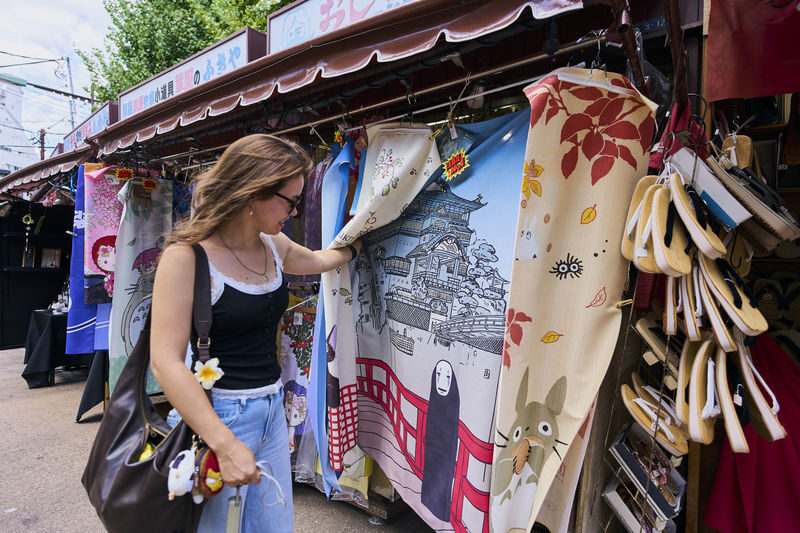
The route also includes a chopstick shop and a store selling samurai swords and ninja goods. These stops give you a chance to see the range of Asakusa retail, from practical utensils to playful takes on Japan’s warrior past. The tour promises visits to these shops, but not a buying session or a demonstration. You can browse without treating every stop as a sales pitch, and any purchases are your own expense.
These shop visits are especially useful if you are deciding what to bring home. A knife is a serious purchase, so take time to ask about the item and its intended use; the supplied details do not specify shopping advice, prices or shipping arrangements. For lower-stakes browsing, the chopstick and samurai or ninja goods shops offer easy-to-carry souvenir possibilities.
Hoppy Street is known for its bars and local atmosphere. The tour frames it as more than a row of places to drink: it is a street where people gather and stories are shared. You will pass through rather than join a meal or drinks session, since food and beverages are not included. If this part of Asakusa interests you, note the area and return later on your own.
Denboin Street brings the walk back to small-scale browsing, with snacks and little surprises along the way. Its appeal is less about one grand sight and more about seeing how the neighborhood’s side streets differ from the main temple approach. With a guide, you can get a sense of which corners are worth noticing without spending your short visit wandering at random.
The final listed stop is Ozeki Supermarket Asakusa Kaminarimon. That might sound like an odd inclusion beside temples and souvenir shops, but it gives the tour a glimpse of everyday shopping in Japan. A supermarket can show the ordinary side of a district that is otherwise presented to visitors through shrines, snacks and souvenirs. You will not need to buy anything; the point is to see a local daily-life setting.
The schedule may change with traffic and weather. Since this is a walking route through active streets, a little flexibility is sensible. Wear clothing suited to the day’s conditions, and bring shoes you are comfortable walking in.
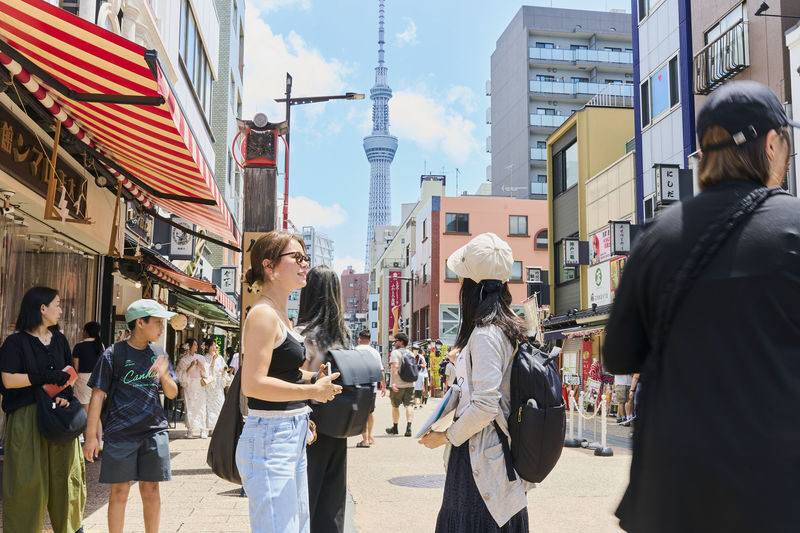
Guide quality is central to this experience. The tour is short, and many of its stops are easy to visit without help. What makes a guided walk worthwhile is the explanation: why a ritual is performed, what makes a temple feature significant, or how a street fits into the life of Asakusa.
Several guides are singled out by name in the available feedback. Jun is often praised for patience, clear explanations and answering questions; Ricky is described as engaging and helpful with local recommendations; Keisuke is noted for including children in the discussion; Kaoru is praised for friendly, clear explanations. Other named guides include Victoria, Rikiya, Yuma, Kensuke, Shintaro and Yukari. Those names give you a sense of the guide team, but you cannot assume a particular person will lead your departure.
The walk seems to work well for families as well as adults. One family brought two children, and another had an eight-year-old who was included in the discussion. Still, the pace and level of detail can vary, and younger children may find a two-hour walk long if they are not keen on temples or shops. If you have questions or specific interests, ask them during the walk; guides are repeatedly praised for taking questions.
At a starting price of $14.59, the main value is access to a local English-speaking guide for a compact introduction to several parts of Asakusa. You are not paying for transport, a meal or admission to a packaged attraction. You are paying for a structured route, historical and cultural explanations, and a few food samples.
That is a fair trade if you are new to the neighborhood, short on time or unsure how to approach temple customs. It is less compelling if you prefer to wander alone, already know the area well, or want an in-depth specialist tour. The headline price is a starting rate, so check the current cost for your date and package. A private guided option is also listed, but no specific private-tour price or details are provided here.
The experience has a 4.9 out of 5 rating from 291 reviews, and the provider has a 97 percent good review rate across 6,368 reviews. Those numbers suggest a generally dependable service, though the isolated criticism about repetitive or shallow commentary is worth keeping in mind. The walk’s value depends most on how much you enjoy having a guide translate the details around you.
Book it if this is your first visit to Asakusa and you want a clear route through Senso-ji, Nakamise-dori and the surrounding lanes. It also suits curious eaters and shoppers who like mixing temple history with local snacks, craft shops and everyday sights. Families may find the guide helpful, especially when children enjoy questions and stories.
Skip it if you want a long, quiet temple visit, a full food tour or a deep study of religious history. Two hours moves briskly, tastings are not a meal, and the tour is conducted in English only, with no Japanese-language support. If the balance of temple, street food and local shopping sounds right, it is a low-cost way to get your bearings and make the rest of your Asakusa visit more rewarding.
“Victoria is amazing! we enjoyed the walking tour even that we had 2 kids. She has a lot of patience”
The standard walking tour lasts two hours.
Meet in front of the Kaminarimon Police Box at Asakusa Station, 1 Chome-3-1 Asakusa, Taito City, Tokyo.
Arrive 15 minutes before departure as a practical guide. The activity information also says to arrive at least five minutes early.
The tour is conducted in English only. Japanese-language support is not available.
Local snack tastings are part of the experience. Meals, beverages and other personal expenses are not included.
The route includes Senso-ji Temple, Nakamise-dori Street, Honke Kanesō, Hoppy Street, Denboin Street and Ozeki Supermarket Asakusa Kaminarimon.
Listed departure times are 09:00, 10:30, 11:30, 13:30, 16:00 and 18:30. Choose the time selected for your booking.
Return options are listed as 12:30 and 15:30. Available options can vary based on the departure time and itinerary duration.
Yes. The available package options include a two-hour walking tour and a private guided tour. The provided package details are for the two-hour walking tour.
Children aged 0 to 6 can join free, and children aged 12 and older are charged the adult rate. The tour information also notes that guides have included children in the discussion.