Physical Address
304 North Cardinal St.
Dorchester Center, MA 02124
Physical Address
304 North Cardinal St.
Dorchester Center, MA 02124

Review teamLab Planets TOKYO, with water rooms, glowing art, practical ticket advice, timing tips, and help choosing the right pass.
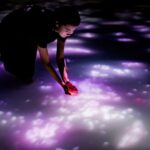
At teamLab Planets TOKYO, you do not just look at the art from a safe distance. You walk through shallow water, cross a floor that gives underfoot, and watch digital scenes respond to your movements. Your body is part of the artwork, sometimes in ways you will not expect.
I like two things in particular: the water rooms make the visit feel physical rather than screen-based, and the artworks are varied enough to keep the pace lively. One room may ask you to slow down and look; the next invites you to make a drawing and watch it appear in the art.
The trade-off is crowding. Timed entry helps manage numbers, but waits can still run 30 to 60 minutes, and the rooms can feel busy once you are inside. If you want a quiet art museum, this is not quite that.

teamLab Planets is in Toyosu, on Tokyo’s eastern waterfront, and its central idea is simple: you enter the art rather than view it from a bench. The rooms use light, sound, digital images, water, and unusual floors to make you aware of your own movement. In one space, a step can alter the scene; in another, the main task is simply to stand still and take it in.
That physical approach is the attraction’s strength. It gives children something to do beyond looking, and it keeps adults from drifting through on autopilot. The best parts are not all flashy. Some are quiet, including the hanging flowers and glowing garden installations, where a slower pace suits the work.
This is not a conventional museum with labels explaining each piece in detail. You move from one environment to another, and the effect matters more than a long written interpretation. Downloading the teamLab app before your visit can add information and interactive features, but you can still enjoy the rooms without making the phone the main event.
The setting and design also mean that the visit asks more of you than a typical indoor attraction. You may need to take off your shoes, step into water, adjust to dim corridors, and share small rooms with other people. That hands-on format is a draw, but it is worth knowing what you are signing up for.
The exhibition includes several large-scale rooms, and the sequence can change with the layout and crowd flow. Rather than expect a fixed, guided itinerary, think of the visit as a chain of spaces with different sensations and levels of activity. Plan for one to three hours; the average visit is around one to two hours, but children who want to linger can stretch that.
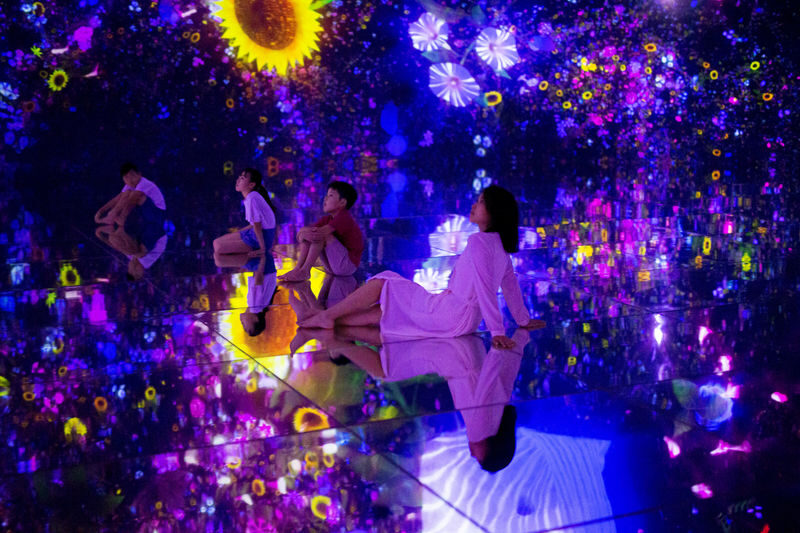
Infinite Crystal Universe is among the most striking rooms. Thousands of LED points create a field of light that seems to stretch in every direction, with changing colors and reflections adding depth. It is a place to pause and look around, though its appeal depends on how much you enjoy light-based art. If flashing patterns bother you, this may not be a comfortable stop.
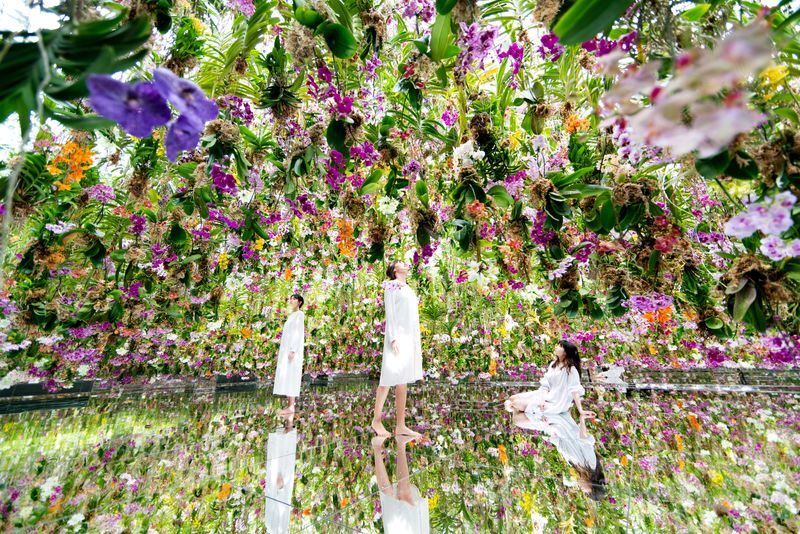
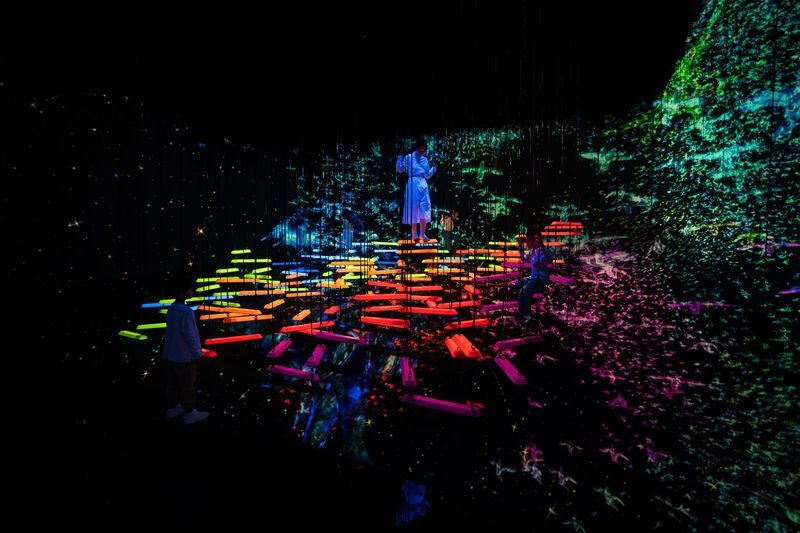
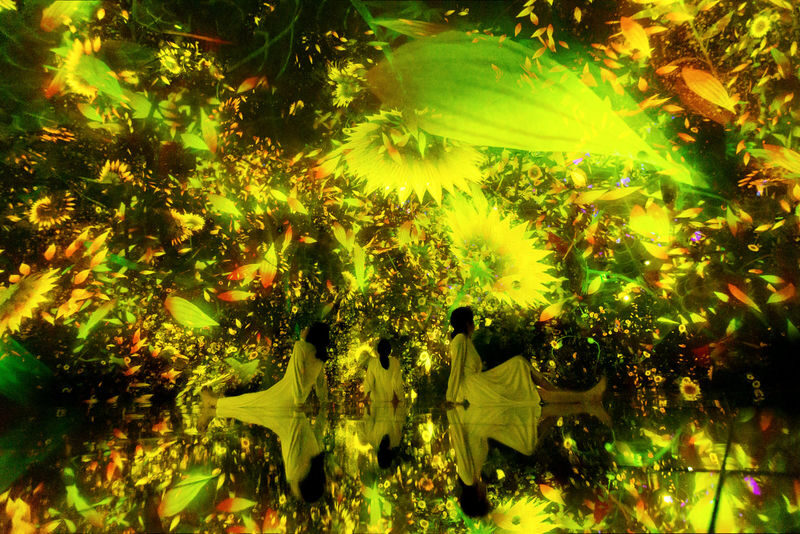
The Floating Flower Garden brings a softer mood. Flowers hang above and around you, making the room feel more organic than the LED spaces. This is one of the areas that can reward a slower visit, especially if you are ready for a break from the brighter, more intense effects.
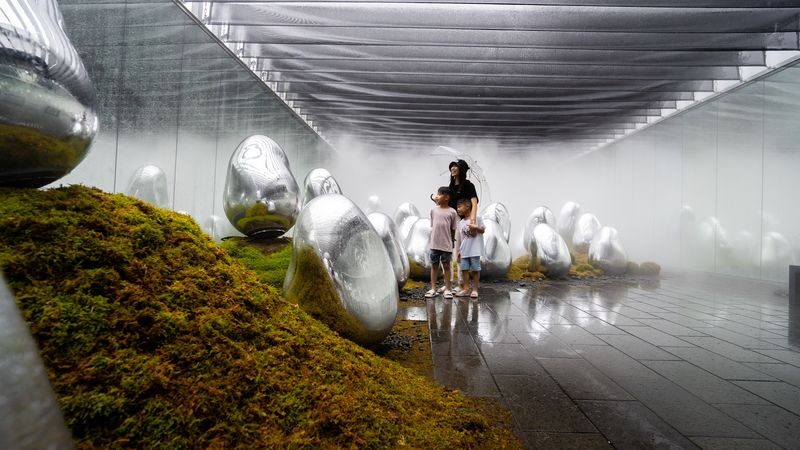
In Moss Garden of Resonating Microcosms, glowing moss balls respond as you move around them. The idea is small-scale and almost meditative: the display changes through your presence, rather than asking you to push a button or follow instructions. It offers a useful change of pace from the larger, more dramatic rooms.
Other installations include Ephemeral Crystallized Light and Universe of Fire Particles Falling from the Sky. Both use shifting light to create a sense of motion around you. The names hint at the effect: clusters of light appear to float, fall, or change shape, so the room itself becomes the subject. These spaces are visually strong, but they can blur together if you hurry through them. Stop long enough for the patterns to change.
You might also be interested in these Tokyo experiences
The water section is the part to prepare for, not the part to improvise. In Drawing on the Water Surface Created by the Dance of Koi and People, you walk barefoot through water as digital koi swim around you and respond to your movements. Water can reach an adult’s knees, so this is not a dry, shoes-on exhibit with a water effect in the distance. You are in it.
The koi artwork is a clear example of the attraction’s body-led approach. Your steps affect what appears around you, and the fish respond to the motion of people in the room. It can be a hit with children, and it offers a rare art experience where movement is not just permitted but part of the point.
There is a practical catch: you should wear clothes you can roll up, and small children are best dressed in clothes you do not mind getting wet. If your clothing gets wet, staff may ask you to change before going on to another artwork. Towels are available to rent, but bringing a change of clothes for a child is the simpler plan.
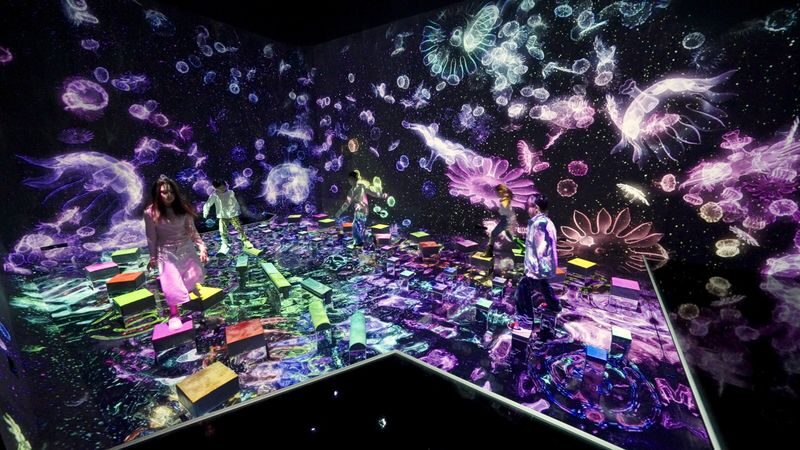
Soft Black Hole takes the challenge from water to balance. Its squishy surface gives way as you walk, making steady steps less certain than they would be on a normal floor. It is playful, but it is also a reminder to watch where you are going, especially in dark areas and when you are with children.
The building’s dim corridors and limited signs can make it easy to lose track of your group or misjudge a step. Hold a child’s hand, keep your pace measured, and do not assume each room is a straight, open passage. Some areas use flashing lights and loud sounds, so anyone sensitive to those effects should weigh that before booking.
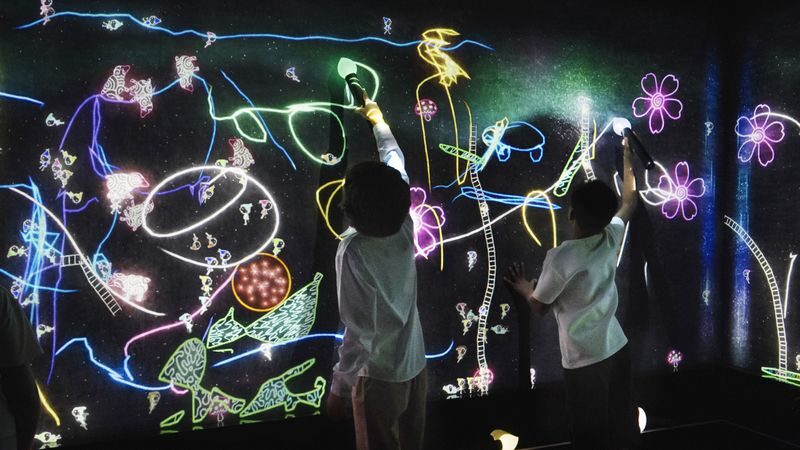
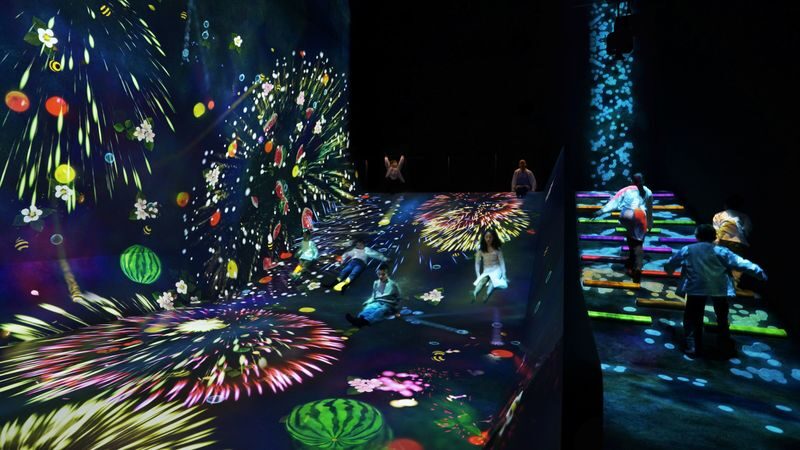
Sketch Umwelt World, part of Future Park, is the most direct invitation to create. You draw an image, then see it join the digital world around you. That change from spectator to maker can be especially satisfying for children, though adults can have fun with it too.
The activity has a different rhythm from the rooms built around light and scale. Instead of only taking pictures, you have a small task and a result to watch. It is a good moment to let children set the pace, while remembering that the attraction can be busy and shared spaces are not always calm.
The app can deepen the interactive side of the visit, offering more information and ways to take part. I would treat it as an optional extra, not a requirement. You will likely want your attention on the rooms themselves, and there is no need to spend the whole visit looking at a screen.
Photography for personal use is allowed, which is useful in rooms designed for memorable images. Commercial photography and live broadcasting are prohibited. Be mindful of other people in tight spaces, and do not let taking a picture become a reason to block the path or lose sight of your group.
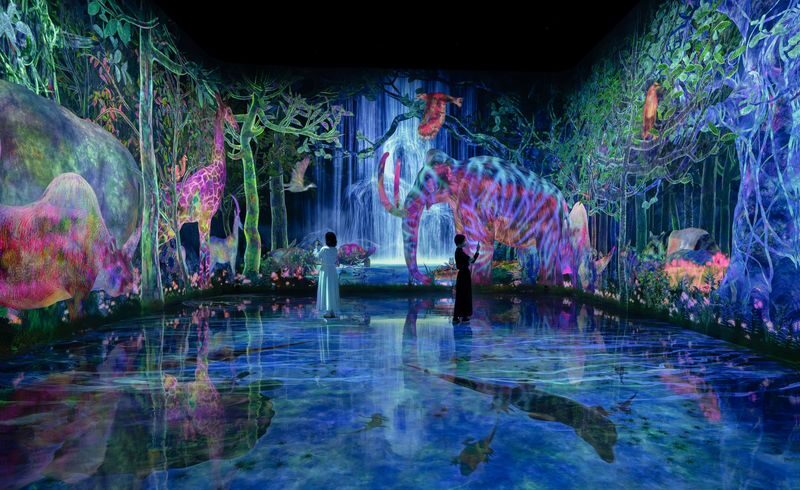
The simplest outfit is trousers that can be rolled above the knee and clothes you can move in. Some areas have mirrored floors, and skirts or wide-hemmed trousers may reflect in them. The venue recommends pants, and it is practical advice rather than a fashion rule.
You will need to remove your shoes before entering the locker area, and some sections require bare feet. Lockers for small bags are free, but they are compact, measuring 23 cm wide, 34 cm deep, and 37 cm high. Do not count on storing a large suitcase there.
Strollers are not allowed inside, though there is a designated place to leave them. Outside food and drinks are prohibited, and re-entry is not allowed after you leave. Plan any meal before or after the visit rather than expecting to pop out midway.
The attraction is open to children, but there are age and supervision rules. Children aged zero to three enter free, while children aged zero to twelve must be with a paying adult, with a maximum of three children per adult. Children’s tickets cannot be booked on their own. The dark rooms and water make active supervision important.
Wheelchair users are asked to transfer to a venue wheelchair inside, and the number available is limited. Some areas are not accessible to pregnant women for safety reasons. Pets, including guide dogs, are not allowed because of the facility’s layout, so check the official site for current access guidance before setting out.
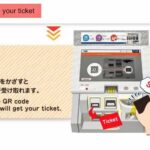
The listed opening hours are 8:00 a.m. to 10:00 p.m., with last entry at 9:00 p.m. Hours and closure dates can change, so check the official website close to your visit. Tickets are sold for specific dates and time slots, and you should arrive at the entrance for the time printed on your ticket.
A timed ticket does not guarantee a walk straight in. Waiting 30 to 60 minutes is possible during busy periods, even after you reach the venue. The premium pass is intended to reduce the wait to enter the building and allows flexible entry during opening hours, but it does not mean skipping every line. You may still queue for individual rooms or areas.
That distinction matters when judging the premium price. If you have limited time in Tokyo, are visiting during a busy school holiday, or simply value a quicker entrance, the pass may be worthwhile. If you arrive at a quiet time, or do not mind waiting, a standard ticket may be the better value. Do not buy the premium option expecting private access or a queue-free visit throughout.
Booking in advance is sensible because admission is limited by time slot and tickets can sell out. The ticket is valid only on the chosen date, and the supplied terms state that cancellations and refunds are not available. Make sure your whole party is booked together, since everyone under one booking must enter at the same time.
The entrance is at 6-1-16 Toyosu, Koto City. Shin-Toyosu Station is about a one-minute walk away on the Yurikamome line. Shijoumae Station and Toyosu Market are around five minutes on foot, while Toyosu Station on the Tokyo Metro Yurakucho Line is about ten minutes away.
The location makes it easy to pair the visit with nearby Toyosu sights, but leave enough time for the attraction itself. A visit can take two hours, and a queue may add more. If you have a tight schedule, choose your time slot with your next activity in mind rather than assuming you will be out in an hour.
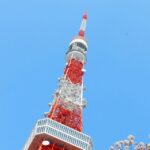
There are several ticket packages. The basic admission ticket is the straightforward choice. Some options include a Bic Camera discount coupon, a Tokyo Tower Main Deck visit, or admission to Senkyaku Banrai Toyosu Manyo Club Onsen, which includes a foot bath and a free drink. Check exactly what is included in your selected package; the add-ons are not part of every ticket.
A weekday parking benefit is also available: one hour of free parking at Urban Dock LaLaport Toyosu. To claim it, take your booking voucher and the parking ticket issued on entry to the 1F General Information Desk at LaLaport Toyosu 1, between 11:00 a.m. and 7:00 p.m. It is valid only for that day, and you may have to wait if the desk is busy.
The venue has a Living Art Store and Sketch Factory, open daily from 8:30 a.m. to 10:00 p.m., and Vegan Ramen UZU Tokyo, open from 10:30 a.m. to 9:30 p.m. Ramen orders end 30 minutes before closing, and before 11:00 a.m. only light meals and drinks are available. These are useful options if you want to eat nearby, but food and drink are not included in the admission ticket.
Tickets start at $26.55, though the final price depends on the package and available time slot. By Japanese attraction standards, the cost can feel high. The value comes from the variety: you get a run of art spaces that use water, soft flooring, flowers, lights, and drawing, rather than a short single-room display.
I would count the ticket as good value if you are curious about interactive art, visiting with children, or looking for an indoor activity that is not another observation deck or shopping stop. It is less compelling if you prefer quiet galleries, dislike crowds, or want a long, detailed account of the art. The rooms can be small, the experience may feel brief if you move quickly, and some people will find the bright effects more memorable than the concepts behind them.
The venue also has a practical advantage on a rainy day. It is indoors, although the water sections remain part of the visit, and severe weather such as a typhoon can affect operations. Check current conditions and opening details before you go.
Book it if the thought of walking through water, watching digital koi respond to your steps, and seeing your own drawing join an animated world sounds more fun than strange. It suits families particularly well, and adults who enjoy art that asks for participation can find plenty to appreciate. Give yourself at least two hours if you want to move at an unhurried pace.
Think twice if you need a calm, spacious museum visit, are sensitive to flashing lights or loud sound, or are uneasy about barefoot water exhibits. For most people, the standard timed ticket is enough; choose the premium pass only when avoiding an entrance queue is worth the extra cost to you. Either way, wear practical clothes, arrive on time, and keep your schedule loose enough to enjoy the rooms without watching the clock.
“Purchasing teamLab Planets TOKYO Ticket Admission ticket + free Bic Camera on Klook has been a smooth and easy experience!”
Plan on one to three hours. The typical visit takes about one to two hours, though children may want to spend longer in the interactive areas.
The listed hours are 8:00 a.m. to 10:00 p.m., with last entry at 9:00 p.m. Hours and closure dates can change, so check the official website before your visit.
Advance booking is recommended because tickets are limited by date and time slot. Your voucher is valid only for the selected date and time, if one is specified.
No. It can reduce the wait to enter the building and allows flexible entry during opening hours, but queues may remain for individual areas inside.
Wear practical clothes and trousers you can roll up. Some areas require bare feet, water can reach an adult’s knees, and mirrored floors may reflect skirts or wide-hemmed trousers.
Yes. Children aged zero to three enter free, and children aged zero to twelve must be accompanied by a paying adult. A maximum of three children may accompany each paying adult.
The address is 6-1-16 Toyosu, Koto City, Tokyo. It is about a one-minute walk from Shin-Toyosu Station, five minutes from Shijoumae Station and Toyosu Market, or ten minutes from Toyosu Station on the Yurakucho Line.