Physical Address
304 North Cardinal St.
Dorchester Center, MA 02124
Physical Address
304 North Cardinal St.
Dorchester Center, MA 02124

See Tokyo from 229 meters at SHIBUYA SKY, with rooftop views, art-filled indoor spaces, sunset access, and practical tips for choosing your time.
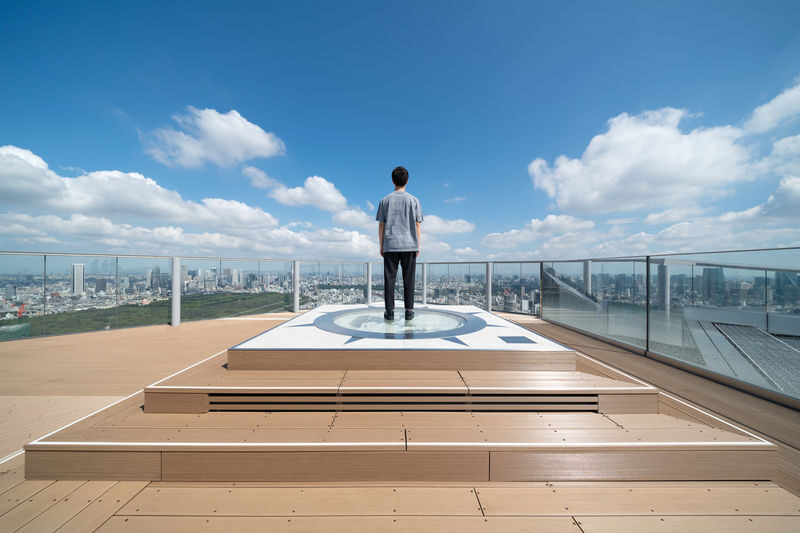
Tokyo makes more sense from above. At SHIBUYA SKY, the city spreads out from a 229-meter rooftop, with Shibuya Crossing below, distant towers on the horizon, and Mt. Fuji sometimes visible on a clear day. The visit is more than a quick elevator ride: you move through three distinct zones, from an art-filled indoor route to an open-air roof.
I like two things in particular: the rooftop gives you a true 360-degree view, and the route itself has character, with digital installations, the Sky Gate escalator, and places to pause such as the Cloud Hammocks. If you time it well, you can watch the city shift from daylight to night.
The main catch is that the best-known rooftop is exposed to weather and crowds. Strong winds or other poor conditions can close Sky Stage, and sunset entry times tend to sell out early. Book for the view, but keep your expectations flexible.
SHIBUYA SKY sits at the top of Shibuya Scramble Square, directly connected to Shibuya Station. The station is large, so leave yourself time to follow signs to the building and take the SHIBUYA SKY elevator to the 14th-floor entrance. From the station, the access route is convenient, but it is easy to underestimate how much time you may spend finding the correct exit.
The entrance is on the 14th floor, not at street level. Your ticket is tied to a chosen date and time, and you should reach the entrance within 20 minutes of that slot. Arriving late can put your entry at risk, so do not schedule a tight connection or assume that being inside the building is enough.
Present the mobile voucher and your passport. The name used for the booking should match your passport, since staff may check identification and can refuse entry if the details do not match. The voucher is valid only for its specified date and, where applicable, time.
You might also be interested in these Tokyo experiences
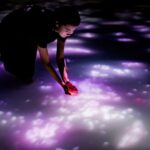
The first zone, Sky Gate, turns the journey upward into part of the experience. A striking escalator passage and the Sensing Hall set up the transition from busy Shibuya to the observatory. Digital works such as Time River, Parallel Windows, and Data Scape bring light and motion into the route.
This is a good start if you like an attraction with more to it than a lift and a railing. The installations give you something to notice before you reach the view, and the approach builds anticipation without needing a guide or a set tour schedule. You can take the route at your own pace, within the time allowed by your ticket and the venue.
The art is also a reminder that this is a designed observation deck, not a quiet mountain lookout. Sound, light, and other visitors are part of the setting. If you want a contemplative view with little activity around you, the busy indoor route may feel a bit staged.
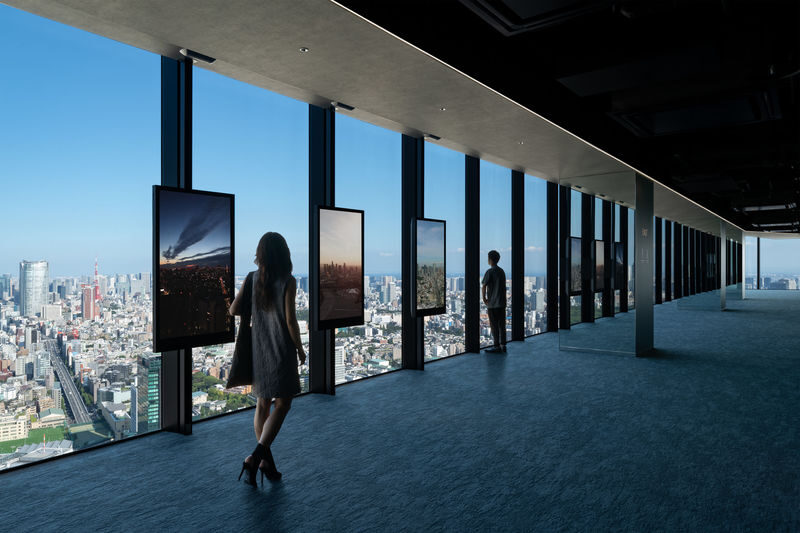
Sky Gallery is the indoor zone, on the 46th floor. Large windows frame Tokyo from above, and the Geo Compass helps you identify what lies in different directions. On a clear day, you can pick out well-known landmarks including the Shinjuku skyline, Yoyogi Park, Tokyo Bay, and Tokyo Skytree. Mt. Fuji is a possibility on a clear day, not a promise.
The indoor space matters most when the weather turns. If strong winds or other adverse conditions close the rooftop, the indoor corridor on the 46th floor remains open. You still get an elevated view, though you lose the open-air feeling that makes Sky Stage the signature part of the visit.
Glass has a trade-off: it offers shelter and broad views, but reflections can interfere with photographs. Try adjusting your position and angle rather than expecting every window shot to come out clean. If photography is your main reason for coming, it is worth knowing that the roof has a separate set of rules, and certain gear and loose items cannot go up.
Paradise Lounge is the venue’s refreshment option, and the ticket includes a 10% discount on food or drinks there. It is a handy place to pause, but meals and beverages are not included in the admission price. Treat the discount as a small saving, not a bundled meal.
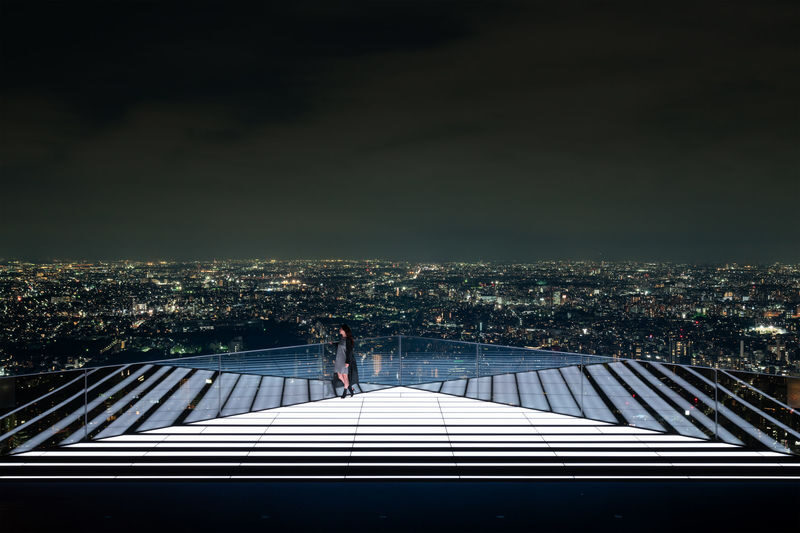
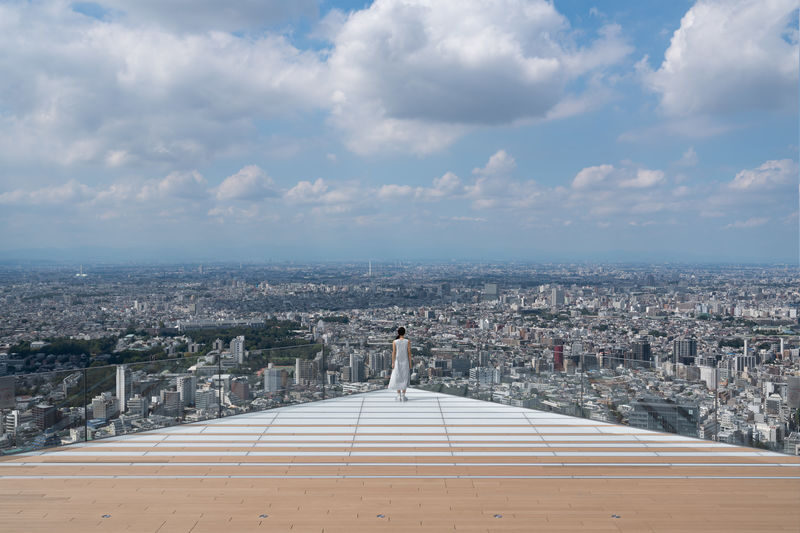
Sky Stage is the open-air rooftop, where the city feels less like a picture behind glass and more like a wide, shifting view around you. At 229 meters, Shibuya’s dense streets and crossing sit within a much larger spread of buildings, parks, and distant landmarks. The rooftop’s open perspective is the clearest reason to choose SHIBUYA SKY over an indoor-only observation deck.
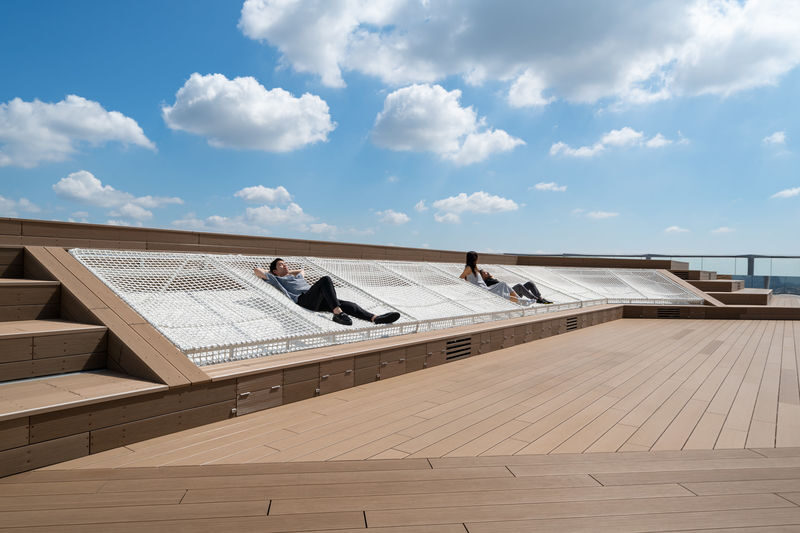
Sky Edge is a prime photo spot, and a natural place to pause for the view. It is popular, so you may need patience to get a clear moment or a less crowded frame. The rooftop also has Cloud Hammocks, which offer a place to rest and take in the scene at a slower pace. At night, the Crossing Light show adds a burst of color and motion to the experience.
Do not mistake an open roof for a comfortable one in every season. Wind can make the top chilly, and high temperatures or other difficult weather can affect access. Bring clothing suitable for the forecast, but note that hats and caps are among the items not allowed on the rooftop. Staff may close Sky Stage at short notice for safety.
The rooftop has several rules designed to prevent things from blowing or falling. You cannot take bags, pouches, tripods, monopods, selfie sticks, earphones or headphones, hats, food, drinks, strollers, and other loose items onto the roof. Storage is available at the venue for a fee, and lockers are noted on the 46th floor. Check with staff for current storage arrangements and rates before you enter the roof queue.
Sunset is the most sought-after slot because it lets you see the city in more than one mood. Arriving about an hour before sunset gives you a chance to take in the daylight view, watch the sky change, and stay for the first spread of city lights. Sunset times vary by season, from about 4:30 p.m. in December to around 7 p.m. in June and July.
This timing has a price in convenience: popular evening slots can sell out, so book as soon as your plans are firm. Tickets go on sale from midnight Japan time two weeks before the admission date. Earlier slots can be a sensible alternative if your schedule is fixed or you prefer a quieter visit, though the sky and visibility still depend on the day’s weather.
Night is a strong choice if you care most about the city lights and Shibuya’s glowing streets. You will miss the sunset transition, but the city view remains impressive after dark. A daytime visit can make distant features easier to pick out, especially when the air is clear. There is no single best hour for everyone: choose between the changing light at sunset, the night view, or a less time-sensitive daytime visit.
The posted hours are generally 10:00 a.m. to 10:30 p.m., with last entry at 9:20 p.m. Hours and rooftop status can change, and the observation deck may close for weather. Check the official schedule close to your visit. The venue is closed on New Year’s Day.
Tickets start from $17.09, with the final price subject to the option and booking details. For that starting price, you get access to a major rooftop viewpoint, the indoor gallery, and the art-filled approach. That is fair value if you want a memorable city overview and will take time to explore the three zones rather than dash up for one photograph.
Plan for one to two hours. You can move through the spaces quickly, but a longer visit makes more sense if you are watching sunset, taking photos, or stopping at the lounge. Entry is time-specific, and changes to the date or time are not allowed after booking. To change plans, the stated process is to cancel and book again, subject to availability and the booking’s cancellation terms.
The rooftop can be crowded, especially around sunset and at the best-known photo spots. Entry may also be restricted during busy periods. Crowd management and QR-code entry are generally straightforward, but the experience is not guaranteed to feel calm. If you dislike waiting for a photo or sharing a viewpoint, try a less popular time or focus on the indoor gallery.
The attraction suits first-time visitors who want a fast sense of Tokyo’s scale, photographers who are happy to work around people and glass reflections, and anyone spending time in Shibuya. It is less suitable if bad weather would spoil the main reason for your visit, or if you want an uncrowded, low-key lookout. Strollers and wheelchairs are accommodated, and staff can direct visitors who need an elevator. Some areas are dim, and stairs require care.
Children aged 0 to 5 enter free, including six-year-olds who have not yet started elementary school. Tickets for children aged 6 to 11, including 12-year-old elementary school students, are sold at the ticket counter on the 14th floor and require a paying adult. A student ID or passport is needed when purchasing a child ticket. Visitors with disabilities and one companion can buy adult tickets in advance and present the original disability certificate at entry for a partial refund.
Book it if you want an open-air view over Shibuya and a well-designed route that combines rooftop scenery, indoor art, and a few places to pause. The strongest plan is a clear-weather sunset slot, booked early, with enough time to arrive at the 14th floor without rushing. If sunset is sold out, a night visit still gives you a dramatic view of the city.
Think twice if you are visiting during poor weather and only care about the rooftop, or if crowds and photo queues would frustrate you. The indoor gallery remains open if Sky Stage closes, but it is not the same experience. For most first visits to Tokyo, the combination of city views and convenient Shibuya location makes the ticket worthwhile, as long as you choose your time with care.
“Purchasing Shibuya Sky ticket on Klook has been a smooth and easy experience! Worth purchasing online.”
Plan for one to two hours. Allow extra time if you want to watch sunset, take photos, or stop at Paradise Lounge.
A slot about an hour before sunset gives you a chance to see daylight, dusk, and the city lights. Sunset times vary, from around 4:30 p.m. in December to close to 7 p.m. in June and July.
The usual hours are 10:00 a.m. to 10:30 p.m., with last entry at 9:20 p.m. Hours can vary, and the deck may close for weather, so check the current schedule before you go.
Bring your mobile voucher and passport. Your booking name should match your passport, and you should arrive at the 14th-floor entrance within 20 minutes of your ticket time.
No. Bags, selfie sticks, tripods, hats, food, drinks, and other listed loose items are not allowed on Sky Stage. Storage is available at the venue for a fee.
Sky Stage may close because of strong winds, high temperatures, or other adverse weather. The indoor corridor on the 46th floor remains open. A full refund is available under the stated policy if the rooftop is closed during your selected time and all tickets in the booking are unused; contact Klook Customer Service by 11:59 p.m. Japan time that day.