Physical Address
304 North Cardinal St.
Dorchester Center, MA 02124
Physical Address
304 North Cardinal St.
Dorchester Center, MA 02124

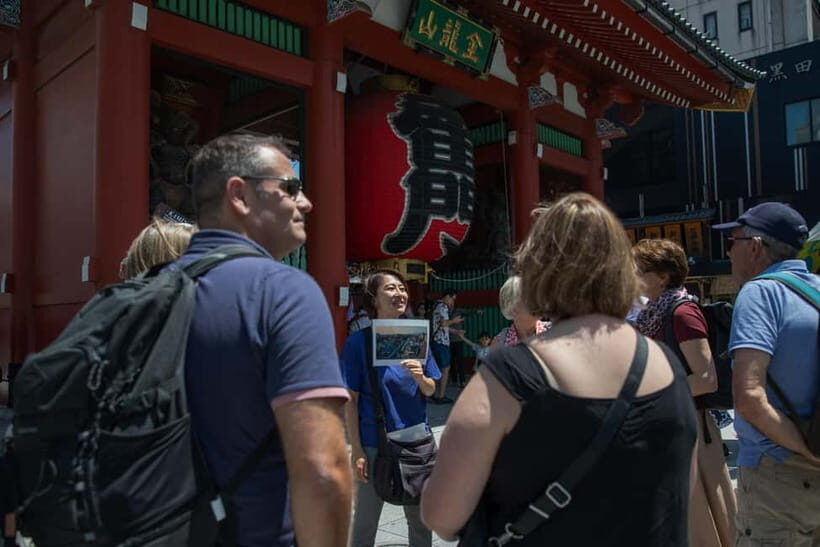
Walk Asakusa’s temple gates, old shopping streets and shrine with an English-speaking guide on this two-hour, $22 Tokyo tour.
Sensō-ji is more than a grand temple gate and a photo stop. This two-hour walk gives you a way into Asakusa’s religious customs and local stories, from the incense at Tokyo’s oldest Buddhist sanctuary to the shops along Nakamise Street. I like that the route also includes Asakusa Shrine and lesser-known shopping streets, not just the temple’s busiest approach.
I also like the practical side: guides such as Aya, Keiko, Hiroko, Glenda and Loc have made the district’s history lively and offered tips on where to eat and what to see next. One consideration is the pace. Two hours covers several stops in a popular area, so you will get a useful introduction, not a slow, thorough visit to every shop and shrine.
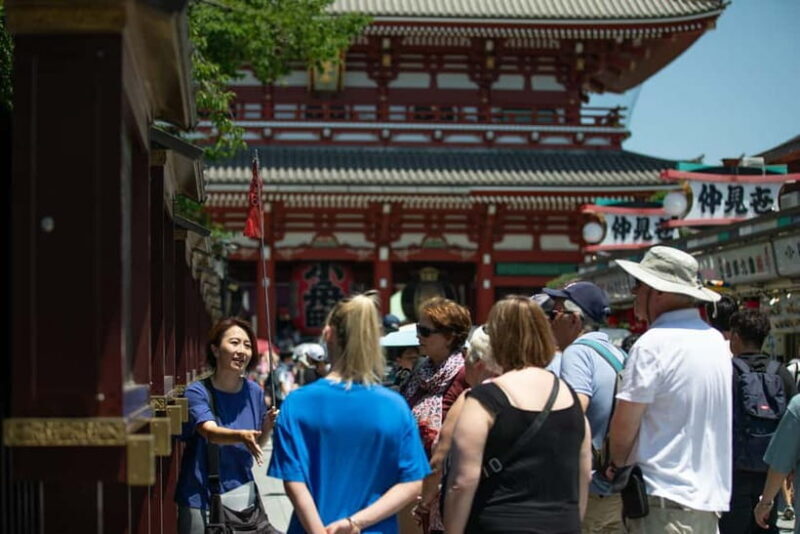
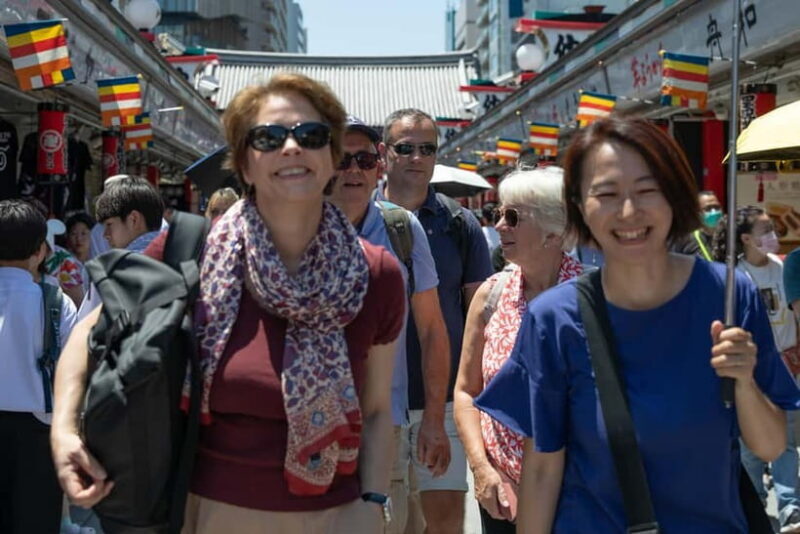
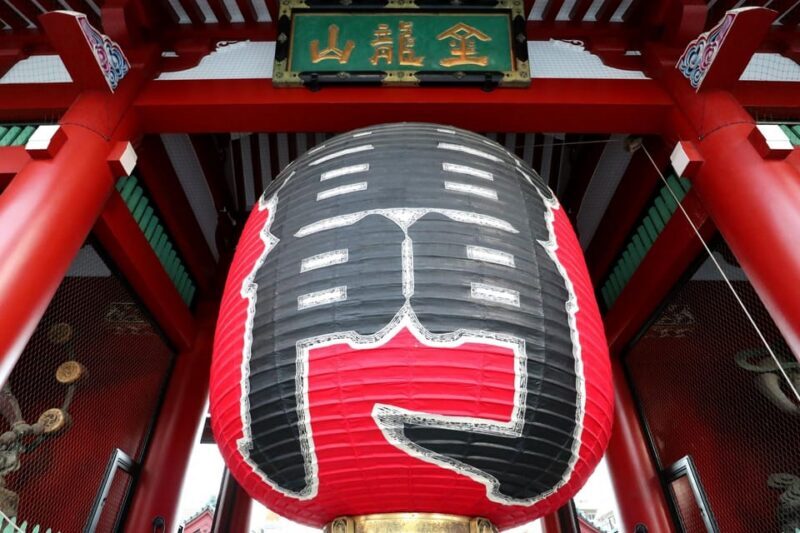
The meeting point is Kaminarimon, the Thunder Gate, the striking entrance to Sensō-ji. Your guide waits on the left side, near Tokiwado Kaminari-okoshi Honpo, holding a tour sign. Arrive on time: the guide cannot hold the group for long if you are late.
The gate is a natural place to begin because it gives you an immediate sense of Asakusa’s scale and purpose. It is both a famous landmark and the entrance to a working religious site, not simply a backdrop for photographs. The ten-minute stop is brief, but a guide can help you notice details and understand why this gateway matters before you head into the crowds.
Asakusa draws plenty of people, and the main route can feel busy. A guide helps keep the walk focused and gives you something more useful than trying to work out the site’s meaning from signs and snapshots. The tour is wheelchair accessible, though the route passes through public streets and temple grounds.
If you enjoy exploring Tokyo on foot, these walking tours might also suit your style
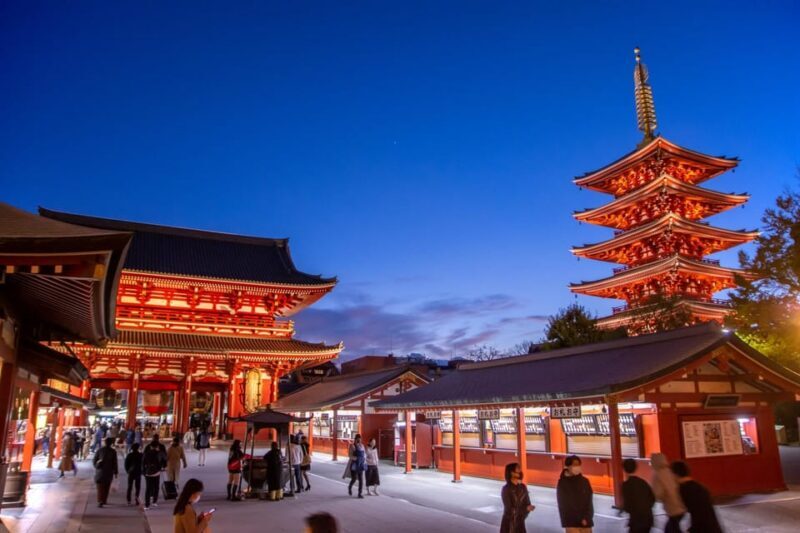
From the gate, the group walks along Nakamise Shopping Street for about 15 minutes. It is one of Japan’s oldest shopping centers, with traditional crafts, small shops and food options. The street links the approach to Sensō-ji with everyday commerce, making it a good place to see how religious landmarks and local trade share the same space.
Here, I would listen to the guide before turning every shop into a shopping stop. The walk is short, and the point is as much to understand the street as to browse it. You may want to return later at your own pace if a shop or snack catches your eye. There are also more eateries around the area, so keep the guide’s food suggestions in mind for after the tour.
This is one of the tour’s more practical stretches. Guides have shared recommendations for local food and shops, along with advice for the rest of a Tokyo visit. That can be especially helpful early in a trip, when you are still learning how to choose what to eat and where to spend your time.
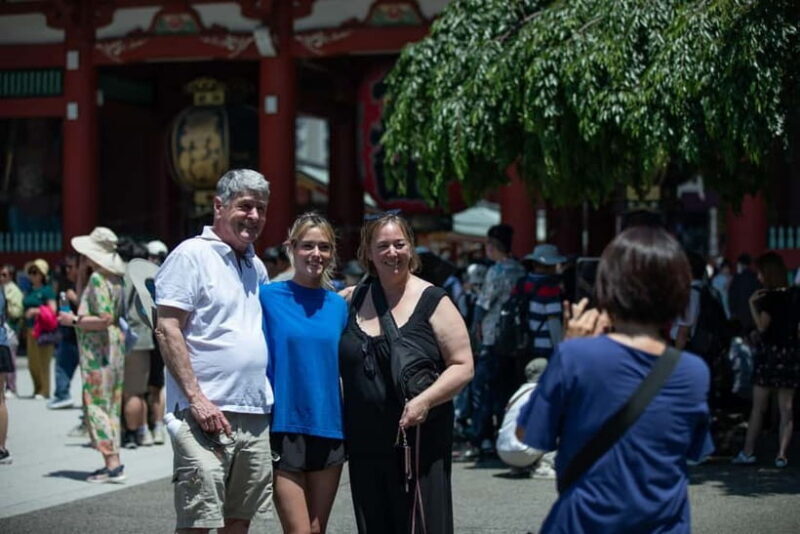
The main temple visit lasts about 30 minutes, including a photo stop, guided explanation and free time. Sensō-ji, also called Asakusa Kannon, is Tokyo’s oldest Buddhist sanctuary. Its scale and intricate details make it one of the district’s defining sights, but the visit becomes more meaningful when you know what you are looking at.
Your guide explains the temple’s history and cultural significance, and the tour description includes the chance to take part in incense-burning customs. This is a good moment to ask questions. Several guides, including Aya and Keiko, have been praised for answering questions patiently and explaining Japanese culture as well as the site’s past. Guide assignments vary, of course, but the tour’s value depends heavily on that personal interpretation.
You also get free time, which matters. It lets you look around, take photographs and absorb the setting without listening to a running commentary every minute. Still, half an hour is not long for a major temple complex, especially when the area is busy. If you want to linger, study details or take part in rituals at your own pace, plan to return after the walk.
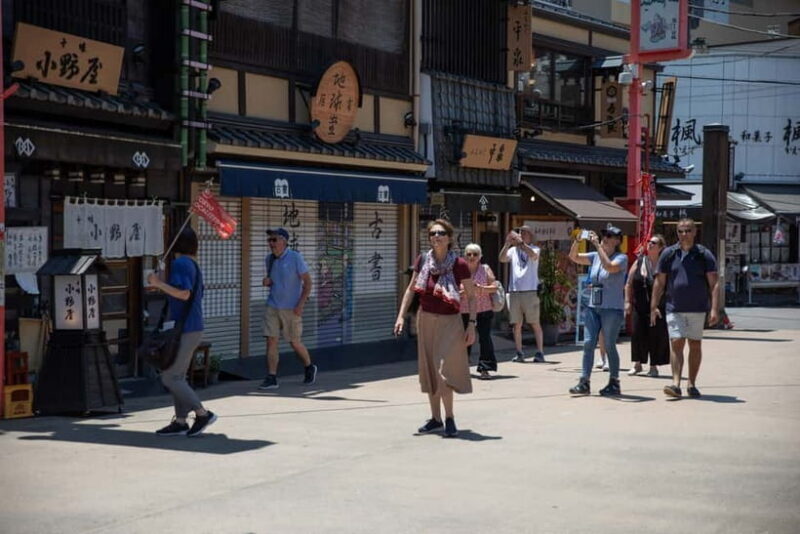
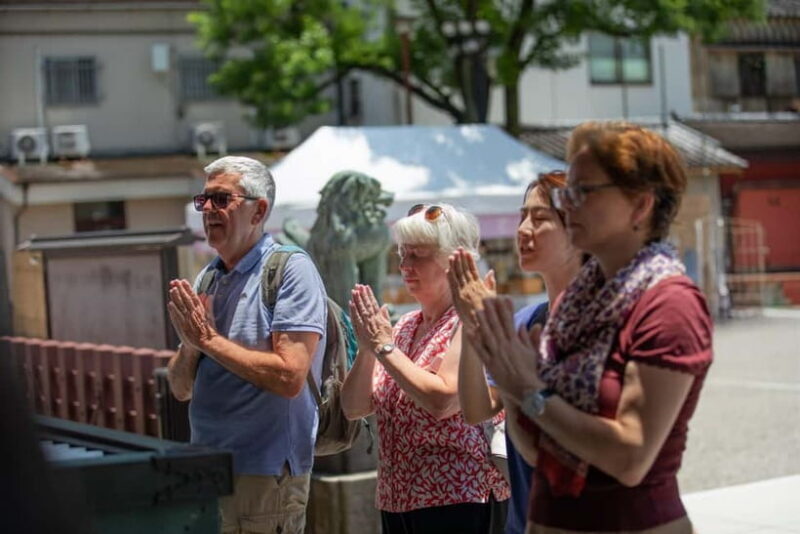
The route continues to Asakusa Shrine for about 20 minutes, with a visit, guided explanation and time for photographs. The contrast with Sensō-ji is one of the most useful parts of the walk: one stop is Buddhist, the other Shinto. Seeing both helps you understand that Japan’s religious life cannot be reduced to a single tradition or a single type of sacred place.
The shrine visit also gives the guide room to explain customs and local history beyond the most photographed temple. A few people have especially valued learning about both sites, and I can see why. Without context, it is easy to treat a shrine and a temple as interchangeable stops. A guide can show you how to approach each place with more understanding.
This stop is longer than the visit to Kaminarimon or either shopping street, but it is still an introduction rather than a seminar. Bring questions if you have them. Guides have been described as attentive to different needs, including families with children, and some have made a point of adjusting their pace so people can hear and follow along.
More Great Tours Nearby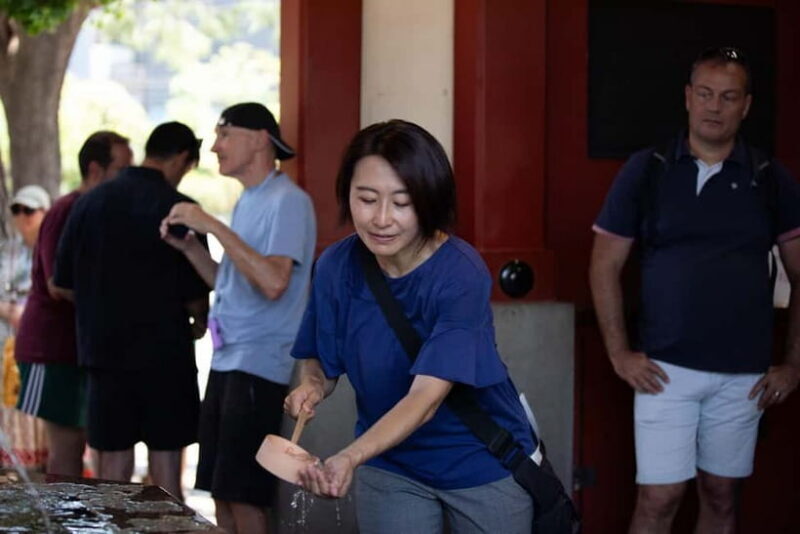
Hoppy Street is a ten-minute stop. The route then spends another ten minutes at Shin-Nakamise Shopping Street. These shorter visits widen the picture of Asakusa beyond the classic gate, temple and main shopping approach. You get a glimpse of the district’s other streets and their local character.
The schedule does not leave much time for a long meal or extended browsing here. Think of these stops as pointers: notice the atmosphere, hear what your guide has to say and make a mental note of places you might want to revisit. Food recommendations are a recurring benefit of the tour, and the walk finishes at lunchtime for many starting times, when the area offers plenty of places to eat.
The route ends at Azuma Bridge. That is useful for planning the rest of your day, but the tour does not include transport or a meal. You finish with a better sense of where you have been and can decide whether to return to the temple, explore a shop or find lunch.
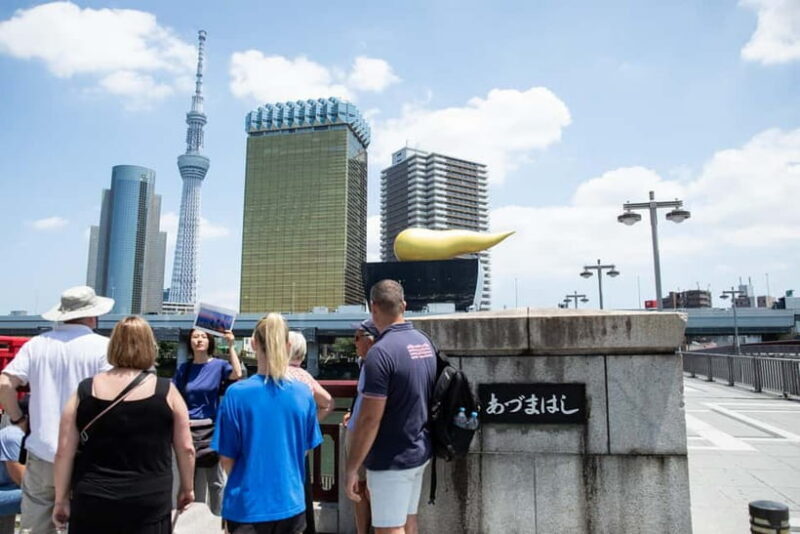
At $22 per person, the tour offers a guide for two hours across six stops. That is fair value if you want historical and cultural context, especially at Sensō-ji and Asakusa Shrine. The guide’s explanations are the main purchase. The streets and landmarks are public places, but a good guide helps you see more in the same amount of time.
The format is also convenient for a first visit. You do not need to build your own route from scratch, and you can ask questions as you go. English is the tour language. Guides have included Aya, Keiko, Hiroko, Glenda, Loc, Mei and Miyu, among others. Their delivery styles differ, but the qualities that matter most are clear communication, patience and a knack for making history understandable.
There are limits. The tour does not include food, shopping purchases or transport, and two hours goes quickly. The temple gets about 30 minutes, while the two shopping streets and Hoppy Street each get ten to fifteen minutes. If your priority is shopping, eating at leisure or making a detailed study of the temple, a self-guided return visit will give you more freedom.
The route is wheelchair accessible, and the tour lasts two hours. Starting times depend on availability. You can reserve now and pay later, and cancellation up to 24 hours in advance allows a full refund. Those terms make it easier to fit the walk into a changing itinerary, but the most important practical point is still simple: arrive at Kaminarimon on time.
I would choose this tour if you are new to Tokyo, curious about Japanese religious customs or keen to understand why Asakusa matters beyond its famous gate. It is also a good fit if you enjoy asking questions and want local food tips for later. Families may appreciate that guides have engaged children as well as adults, though the route is still a walking tour through a busy district.
If you have already spent time in Asakusa, you may prefer to explore on your own, especially if you want long stops or a flexible shopping schedule. The walk’s strength is its compact, guided overview. It gives you a foundation, then leaves you free to come back and explore what caught your attention.
Book this tour if you want a friendly, efficient introduction to Asakusa and value having someone explain the temple, shrine and surrounding streets. At $22, it is a sensible way to add context to a district that can otherwise become a string of photo stops. For the best use of your time, take the tour early in your Asakusa visit, ask questions, and save time afterward for lunch or a return to Sensō-ji.
Skip it if you prefer to set your own pace or already know the area well. The two-hour schedule is brisk, but for a first visit, it gives you a useful route and a better understanding of what you are seeing.
“Its was amazing! Paulina really explained everything! Its was really interesting! Thanks to her !”
The tour lasts two hours. Stops include Kaminarimon, Nakamise Shopping Street, Sensō-ji Temple, Asakusa Shrine, Hoppy Street and Shin-Nakamise Shopping Street.
The price is $22 per person.
The live guide speaks English.
Meet in front of Kaminarimon Gate, on the left side near Tokiwado Kaminari-okoshi Honpo. The guide will be holding a sign for the tour.
The walk finishes at Azuma Bridge.
Yes, the activity is listed as wheelchair accessible.
You can reserve now and pay later. Cancel up to 24 hours in advance for a full refund.
You can check availability for your dates here: