Physical Address
304 North Cardinal St.
Dorchester Center, MA 02124
Physical Address
304 North Cardinal St.
Dorchester Center, MA 02124

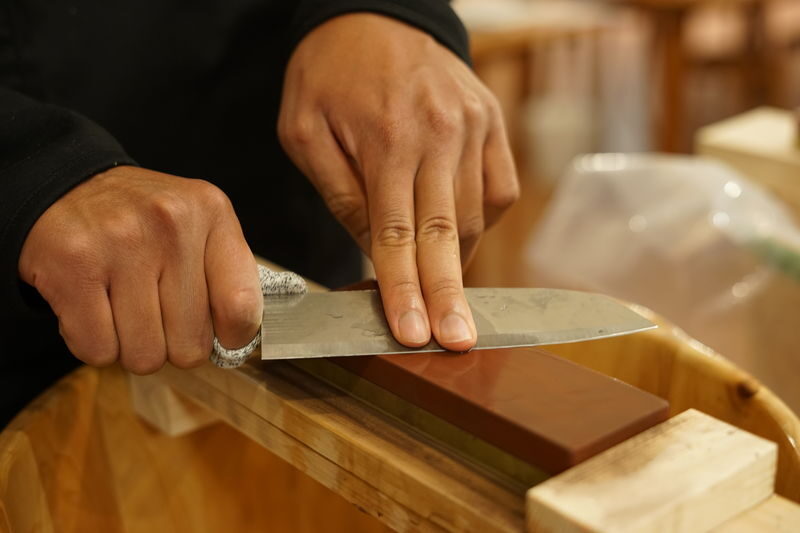
Sharpen and personalize a Japanese kitchen knife in a guided Asakusa workshop, then take home a practical souvenir you helped make.
A sharp Japanese kitchen knife makes a better souvenir than another trinket, and here you help shape the final result. I like two things in particular: patient, step-by-step instruction makes the work approachable for beginners, and the finished knife is a useful keepsake rather than something destined for a drawer.
One point to understand before booking: despite the knife-making name, the described work centers on sharpening, polishing, and personalizing a knife, not forging one from raw steel. The session lasts about an hour, so expect a focused introduction to the craft rather than a long apprenticeship.
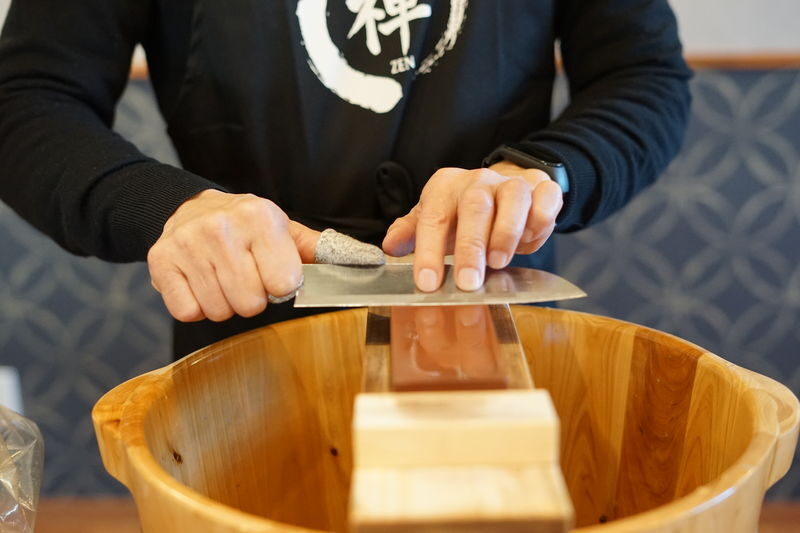
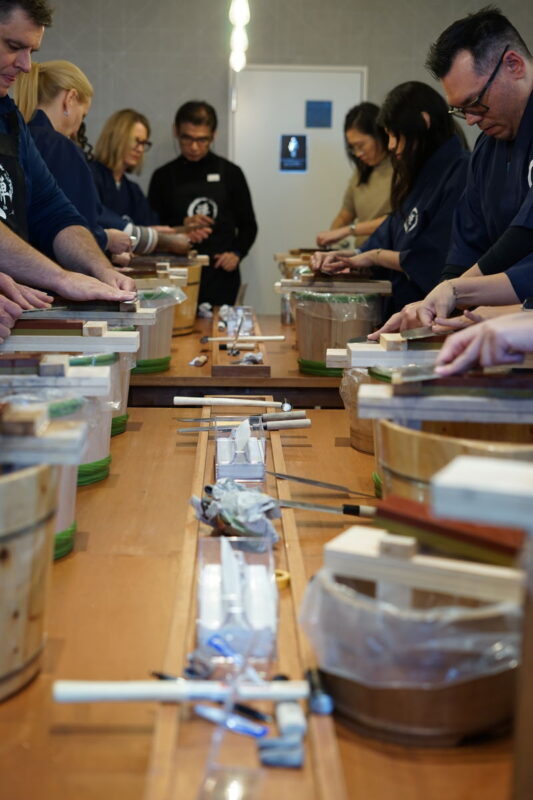
Japanese knives have a reputation for sharpness and careful workmanship. This Asakusa class gives you a practical way to learn about that craft: you work on a kitchen knife under an instructor’s direction, then leave with the finished piece.
It is worth setting expectations clearly. The available details describe sharpening, polishing, and adjustments, and participants have described choosing blades and handles before sharpening. They do not describe heating steel, hammering a blade, or making a knife from raw material. If your idea of knife-making is a forge and an anvil, this is not that. If you want to understand sharpening and finish a usable knife yourself, it is a better fit.
That distinction does not make the class less worthwhile. Sharpening is a real skill, and many home cooks are uneasy about working on a Japanese knife without guidance. An instructor can show you the basics and correct your technique as you go. You leave with more than a souvenir: you have a starting point for caring for the knife once you get home.
The finished object also gives the hour a satisfying purpose. A knife is made to be used, and each meal can bring back a small memory of Asakusa. Just remember that the class does not promise a complete course in Japanese blade-making. It is a compact, guided introduction to the hands-on end of knife care and finishing.
You might also be interested in these Tokyo experiences
The session is listed as one hour, with a guided knife-making activity. The details and participant accounts suggest a sequence that begins with selecting a blade and handle, then moves into sharpening and finishing. The instructor guides you throughout, which is useful if this is your first time handling a sharpening task.
The actual work is the heart of the visit. You learn the basic technique and get help keeping your movements on track. Several instructors are named by people who have taken the class, including Satoru, Muto, Omar, Alberto, Krish, and Hana. Instructor assignments can vary, so treat those names as examples, not a promise of who will teach your session.
The teaching style is a real strength for beginners. Participants describe patient, attentive guidance, including help for people who felt clumsy or had never sharpened a Japanese knife. One family brought a 10-year-old, who was guided through the work, and another participant singled out a 14-year-old son’s enthusiasm. There is no stated age limit, though all participants still need to follow the instructor’s directions around a sharp blade.
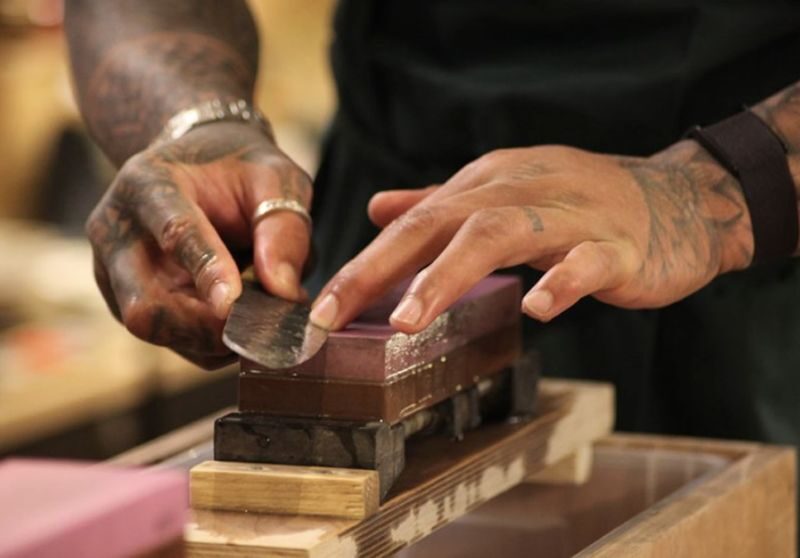
Sharpening also asks for more care than brute force. You are learning to handle an edge with control, not simply rubbing metal until it looks shiny. The instructor’s close supervision matters here. If you have worried about damaging a knife at home, this is a sensible place to ask questions and practice with guidance.
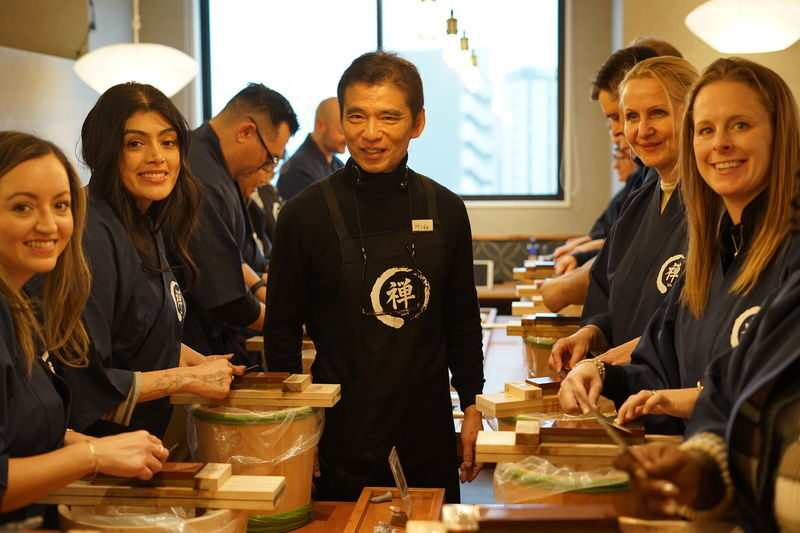
The last stages give the knife its individual character. The experience includes final polishing and handle adjustments, and participants describe choosing a handle as part of the process. That makes the souvenir feel personal without requiring you to be a trained craftsperson.
Some participants mention engraving and upgraded handles as options for an additional charge. Those extras are not included in the stated package, so ask the studio about current choices and prices before deciding. If you are trying to keep the cost down, the basic knife is already the central takeaway; an upgrade is a nice extra, not a requirement for getting value from the class.
There is a useful balance here between guided work and a finished result. You contribute to the knife’s final sharpness and appearance, while an instructor is there to help you through the steps. You should not expect to design every technical detail or work without supervision. The attraction is having a hand in the process and taking home something that looks and works like a real kitchen tool.
The workshop meets at 禅 ZEN Craft Studio, Tosei Building, 10th floor, 1 Chome-27-2 Asakusa, Taito City, Tokyo. Check the address and map before setting out; the meeting point is inside a building, not simply a street-level shopfront.
Departure times are offered hourly from 9 a.m. through 6 p.m. The return slots run from 10:15 a.m. through 7:15 p.m., depending on your selected departure and the session schedule. The stated activity time is one hour, though the available return times leave a little more space between start and finish. Plan around the time confirmed with your booking rather than assuming you can arrive for any session.
Arrive promptly. If you are more than 15 minutes late, you may be asked to reschedule because the next reservation could be affected. The studio is cashless, accepting Visa, Mastercard, American Express, JCB, Diners Club, and Discover. Tips and personal expenses are not included.
English- and Japanese-speaking staff are included. Instructors have been described as explaining the work clearly in English, and one participant noted that Alberto could teach in Spanish. Do not count on a particular instructor or language beyond the listed English and Japanese staff unless you confirm it with the studio.
At a starting price of $66.35 for an hour, this is not a bargain activity if you measure value only by time. It makes more sense if you count the instruction, the hands-on practice, and the knife you take home. You are paying for a craft activity with a useful result, not just an hour of entertainment.
The value depends partly on what you want from the class. If you are looking for a low-cost attraction or a full blacksmithing lesson, this is probably not the right choice. If you cook often, have wanted to learn basic sharpening, or want a souvenir with a job to do, the price is easier to justify. A knife you use for years can make a short workshop feel worthwhile long after the trip.
Keep possible add-ons in mind. Engraving and handle upgrades may be offered for extra payment, and they can increase the final cost. The workshop is cashless, so bring a suitable card rather than expecting to pay in cash.
This is a strong choice for curious beginners, home cooks, and anyone who likes learning a practical skill while travelling. It also works well as a family activity for people comfortable following careful instructions around a sharp tool. The class is short enough to fit into a busy Tokyo day, and the finished knife gives the hour a clear payoff.
You do not need prior knife-sharpening experience. In fact, the close guidance is most useful if you are new to it. People who already sharpen knives may still appreciate the chance to learn about Japanese knives, but those seeking advanced technique or an extended craft course may find the session too brief.
I would also think about whether you can take a kitchen knife home. The supplied information does not explain packing or airline rules, so check the relevant transport requirements before booking if you plan to fly with it. That small bit of planning can prevent a useful souvenir from becoming a problem at the airport.
Book it if you want a hands-on activity with a practical keepsake and are happy to spend an hour learning sharpening and finishing rather than forging a blade from scratch. The strongest reasons to go are the close instruction, the beginner-friendly pace, and the chance to leave with a knife you helped prepare.
Skip it if you expect a full blacksmithing session, need a longer technical course, or are not interested in taking a knife home. For everyone else, it is a distinctive Asakusa activity that pairs a small lesson in Japanese knife care with a souvenir you can put to work.
“Omar was fantastic taking us through the knife making experiance”
The guided knife-making session lasts one hour. Return times depend on the departure time you choose and the activity schedule.
Meet at 禅 ZEN Craft Studio, on the 10th floor of the Tosei Building, 1 Chome-27-2 Asakusa, Taito City, Tokyo 111-0032.
English-speaking and Japanese-speaking staff are included.
The activity has no age limit and is described as suitable for beginners, with guidance throughout. Participants have also brought children, including a 10-year-old, but everyone must follow the instructor’s directions.
Yes. Knife sharpening is included, along with the guided knife-making activity.
The workshop is cashless and accepts Visa, Mastercard, American Express, JCB, Diners Club, and Discover. You can cancel for a full refund if you do so at least 24 hours before the activity date, using destination local time.