Physical Address
304 North Cardinal St.
Dorchester Center, MA 02124
Physical Address
304 North Cardinal St.
Dorchester Center, MA 02124

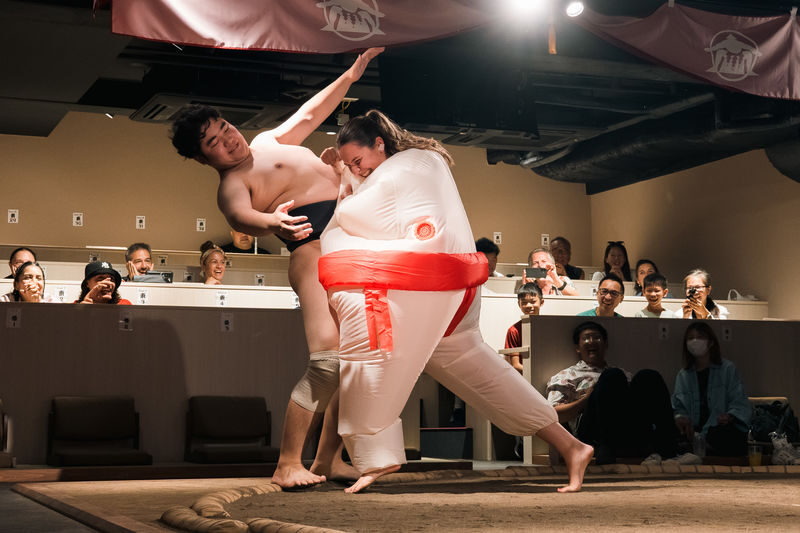
See live sumo in Tokyo, learn its customs from an English-speaking host, ask wrestlers questions, and try a ring challenge by lottery.
Sumo packs ritual, balance, and sudden force into a contest that can be over in a blink. This Tokyo show brings the wrestlers close, then gives an English-speaking MC room to explain what you are seeing, so you are not left guessing at the rules or traditions.
I like two things in particular: the live demonstrations and matches make sumo’s physical power plain, and the Q&A with the wrestlers lets you ask about training and daily life. One caveat: this is a hosted show, not a tournament, and the chance to challenge a wrestler is limited and decided by lottery.
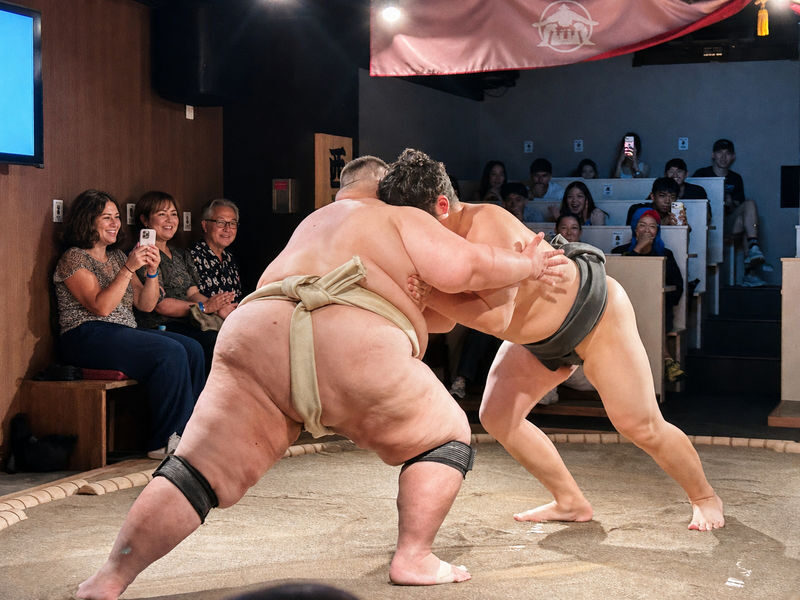
Sumo makes more sense when someone explains the action as it unfolds. The English-speaking MC describes the rules, traditions, and cultural significance behind the demonstrations, giving first-timers a useful frame for watching the wrestlers’ movements and contests.
The format is lively and audience-friendly, but the appeal is more than spectacle. You see real sumo wrestlers demonstrate techniques, then face off in live matches. The contrast between the show’s explanations and the force of the bouts helps you understand why sumo is both a sport and a tradition.
This is a performance made for visitors, not a professional tournament. If you hope to see an official match with the full scale and atmosphere of a competition, this is not a substitute. If you want an accessible introduction and a close look at sumo without needing to know the rules beforehand, it fits the bill.
The show’s hosts can make a real difference to the experience. Names associated with recent sessions include Jasmine, John, Kristen, Shane, and Paula. Hosts vary, so you should not book expecting a particular person, but the consistently enthusiastic feedback about their clear explanations and audience interaction suggests that the MC is an important part of the program.
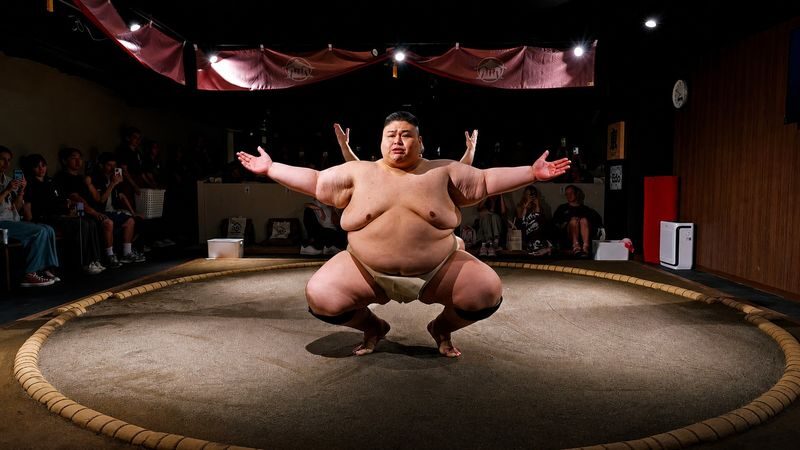
The experience is listed as about one hour in its summary, while the Shinjuku schedule runs from the chosen start time to a return time 90 minutes later. That difference matters if you are fitting the show between meals or other plans. Allow the full slot shown for your selected package, and check the duration displayed when you book.
The program begins with sumo demonstrations. This is the point where the MC’s explanations help most: basic rules and traditions can be hard to read from the outside, but a running explanation gives you something to watch for. The wrestlers then face off in live matches, putting the techniques into action.
Next comes a Q&A session. You can ask the wrestlers about their training, daily life, and sumo customs. It is a valuable change of pace from watching a performance, because you get a chance to hear directly from the people in the ring. The format does not guarantee that every question will be answered, but it gives the show a personal element.
A sumo challenge offers selected participants the chance to step into the ring and test themselves against a wrestler. Participation is limited and decided by lottery, so consider it a bonus, not a promised part of your booking. If you are chosen, follow the staff’s directions; if you are not, you still see the challenge as part of the show.
The session wraps up with a photo opportunity with the wrestlers. That gives you a lasting memento and a more relaxed moment after the matches. Taken together, the demonstrations, bouts, questions, and photos provide a fuller introduction than a quick viewing alone.
You might also be interested in these Tokyo experiences
Sumo has rules and customs that are not always obvious to a new viewer. A guide who explains the action in English can turn a series of quick bouts into something you can follow, rather than simply a display of strength. You hear about the sport’s traditions as well as its techniques.
The tone appears to be informal and interactive. Hosts such as John, Kristen, Jasmine, and Shane are singled out for clear commentary, humor, and audience engagement. Those details are useful to know because the show depends on more than the wrestlers’ athletic skill: the host connects the performance to the people watching.
The wrestlers are also part of the conversation through the Q&A and photo session. You can ask about their training and daily life, subjects that a match alone cannot explain. The show does not promise an in-depth interview, but the chance to ask questions adds real human context.
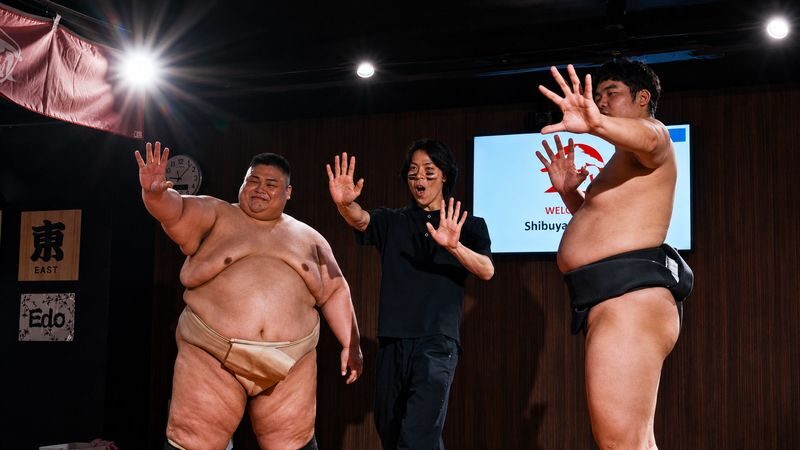
The experience is offered at Shinjuku and Shibuya, with the package details provided here centered on the newer Shinjuku Kabukicho location. Make sure your booking shows the location you intend to visit. Similar names and multiple options make it worth checking the address rather than relying on the title alone.
For the Shinjuku Kabukicho venue, the address is 1F, 1 Chome-8-4 Okubo, Shinjuku City, Tokyo, postal code 169-0072. The stated walk is three minutes from Exit A1 of Higashi-Shinjuku Station, seven minutes from Seibu-Shinjuku Station, or ten minutes from JR Shin-Okubo Station. These are useful reference points when planning your route.
The Shinjuku start times listed are 13:00, 15:30, 18:00, and 20:30. The corresponding return times are 14:30, 17:00, 19:30, and 22:00, depending on the slot and itinerary. Arrive at the venue for the time you selected; this is a meet-up activity, not a pickup tour.
The booking information also names Shinjuku Sumo Club and Shinjuku Sumo Club Kabukicho. Check that the venue on your confirmation matches the location and address you plan to attend. The Shibuya option is available, but its specific address and transport directions are not included here.
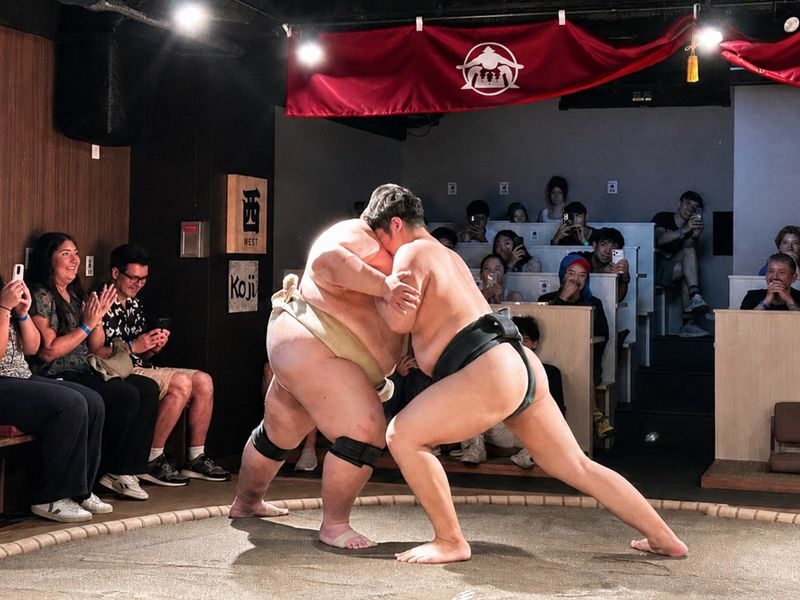
Prices start at $47.39, though the actual amount can vary by location and package. For that price, you get a live show, English-language explanations, a Q&A, a chance to enter the ring if selected, and a photo opportunity. That is a good bundle if you want an organized introduction to sumo rather than a performance without context.
Value depends on what you expect. The show is short, and it is not an official tournament. The lottery also means you may not get to participate in the challenge yourself. But you do not need to know sumo in advance, and the MC’s explanations make the hour more useful than watching demonstrations with no background.
Snacks and drinks are not included, though additional options are available for purchase. Factor that in if you want refreshments during the session. Personal expenses beyond the included admission and activities are yours to cover.
This is a good fit for first-time visitors to sumo, families, and groups of friends who want an active, easy-to-follow cultural outing. The English explanations remove much of the guesswork, while the Q&A and ring challenge keep the event from feeling like a lecture. Children aged 13 and older pay the adult rate.
It also suits you if you have limited time in Tokyo but want to learn something about a distinctly Japanese sport. The short format is easier to fit into a day than a longer excursion, though the full Shinjuku slot can take up to 90 minutes based on the listed schedule.
If you are a dedicated sumo fan hoping for a formal tournament, consider what matters most to you. This event offers close viewing, explanations, and interaction, but its purpose is an entertaining introduction rather than a match-day experience.
Admission, an English-speaking guide and staff, the show and demonstrations, the wrestler Q&A, and a photo opportunity are included. The challenge is included as an activity, but participation is limited and decided by lottery. Snacks, drinks, and other personal expenses cost extra.
You receive a mobile voucher and must use it on the date and time shown. The activity offers free cancellation with at least 24 hours’ notice before the experience, using local destination time. Confirmation is normally sent within minutes; if it does not arrive, contact customer support.
Book this show if you want a friendly, clearly explained introduction to sumo, with real wrestlers, live bouts, questions, and a chance to join in. I especially like that it combines cultural context with the spectacle instead of asking you to work out the sport on your own.
Skip it if your main goal is to watch an official tournament or if you would only be satisfied by taking part in the ring challenge. That part is decided by lottery. For most visitors who want an entertaining and informative hour in Tokyo, the mix of explanation and close-up action makes the starting price worthwhile.
“jasmine was great! very interactive and provided so much information. the sumo wrestlers were amazing to watch.”
The summary describes the activity as about one hour. The Shinjuku schedule spans 90 minutes from the listed departure time to return time, so check the duration shown for your chosen package and plan around the full slot.
It is at 1F, 1 Chome-8-4 Okubo, Shinjuku City, Tokyo, 169-0072. The address is also given as Shinjuku Sumo Club Kabukicho.
It is a three-minute walk from Exit A1 of Higashi-Shinjuku Station, a seven-minute walk from Seibu-Shinjuku Station, or a ten-minute walk from JR Shin-Okubo Station.
Yes. Shinjuku and Shibuya are listed as location options. Check the selected location and its meeting details when you book.
The listed start times are 13:00, 15:30, 18:00, and 20:30. Available options can depend on the package you select.
No. Participation is limited, and selected participants are chosen by lottery. You can still watch the show if you are not selected.
Yes. An English-speaking guide and English-speaking staff are included, and the MC explains sumo rules, traditions, and cultural significance.
Admission, the live show and demonstrations, English-speaking guide and staff, a Q&A session with wrestlers, the sumo challenge activity, and a photo opportunity are included. Challenge participation is limited.
No. Additional snacks and drinks are available for purchase, and other personal expenses are not included.