Physical Address
304 North Cardinal St.
Dorchester Center, MA 02124
Physical Address
304 North Cardinal St.
Dorchester Center, MA 02124

See Delhi, the Taj Mahal and Jaipur on a private three-day Golden Triangle tour with a dedicated driver, local guides and optional hotels.
The big draw is a sunrise visit to the Taj Mahal, folded into a three-day route that also takes in Delhi’s old lanes and Jaipur’s forts and palaces. You get a private car and, typically, a local guide in each city, so the days can feel more personal than a group coach tour.
I like two things about this setup: you cover the Golden Triangle’s main sights without arranging three separate city tours, and the same driver stays with you for the long transfers. There’s also a lively Old Delhi rickshaw ride, a welcome change from seeing the capital only through a car window.
The trade-off is pace. Delhi to Agra to Jaipur and back means long road journeys and full sightseeing days, so this is a highlights trip, not a slow study of northern India. Check which hotel, ticket and meal options your price includes before you book.
The Golden Triangle joins Delhi, Agra and Jaipur in a loop that brings together Mughal monuments, modern Delhi and Rajasthan’s royal architecture. This tour makes the route manageable in a short visit, with private transport, city guides and an overnight stay in Agra and Jaipur if you choose the accommodation option.
That convenience comes with a clear cost in time. Expect substantial driving between cities, with one visitor estimating roughly five hours on each intercity leg. Traffic and the order of stops can affect the day, so the schedule is best for you if covering the major sights matters more than lingering over each one.
The private format makes a difference. You are not sharing the car with a busload of people, and the driver can coordinate pickups and transfers around your group. The guides are local to the cities, which gives you a fresh perspective at each stop rather than one person trying to interpret three very different places.
You can check availability for your dates here: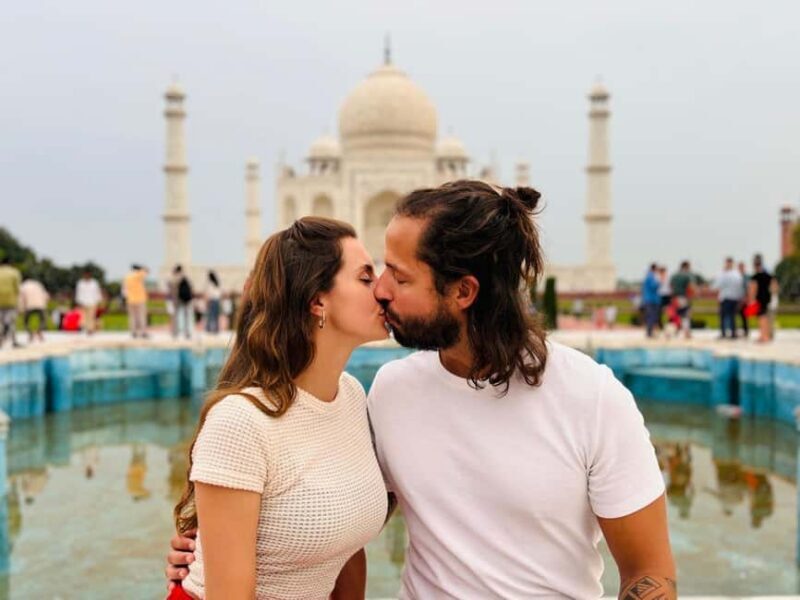
Pickup is available from hotels in Delhi, Gurgaon or Noida, and from Delhi Airport at the exit of Gate 4 in Terminal 3 arrivals. The stated pickup window runs from 7:00 AM to noon, so confirm your chosen start time and plan the day around it. A later start can mean missing some sights, especially on a route this full.
Old Delhi is the day’s most immediate contrast with the broad roads and official buildings of New Delhi. The planned stops include Jama Masjid, a view of the Red Fort from outside, and Chandni Chowk market. A rickshaw ride through Old Delhi puts you closer to the packed lanes and market activity than a vehicle tour can.
Chandni Chowk is a good place to get a feel for how the capital’s older commercial streets work. The spice-market area is a particular highlight, and some guides add a stop for masala tea. You will have less control over how long you spend at each place than on an independent day, but a guide can help you make sense of a busy setting and navigate the crowds.
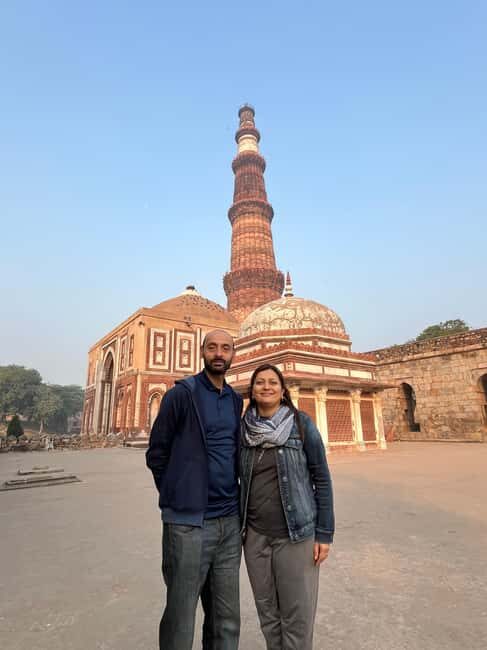
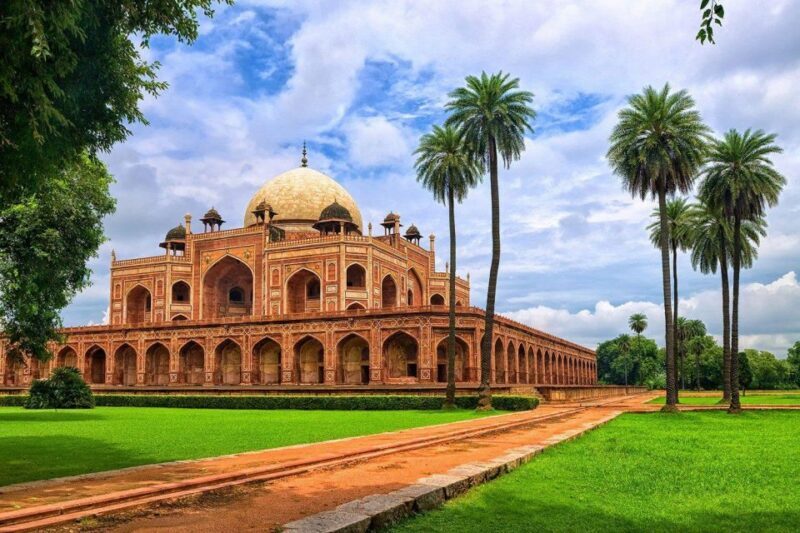
After lunch, the itinerary shifts to New Delhi. India Gate, Rashtrapati Bhavan, Humayun’s Tomb and Qutub Minar are among the listed sights. These stops show a very different side of the capital: government-era avenues, monumental tomb architecture and the soaring minaret at Qutub Minar.
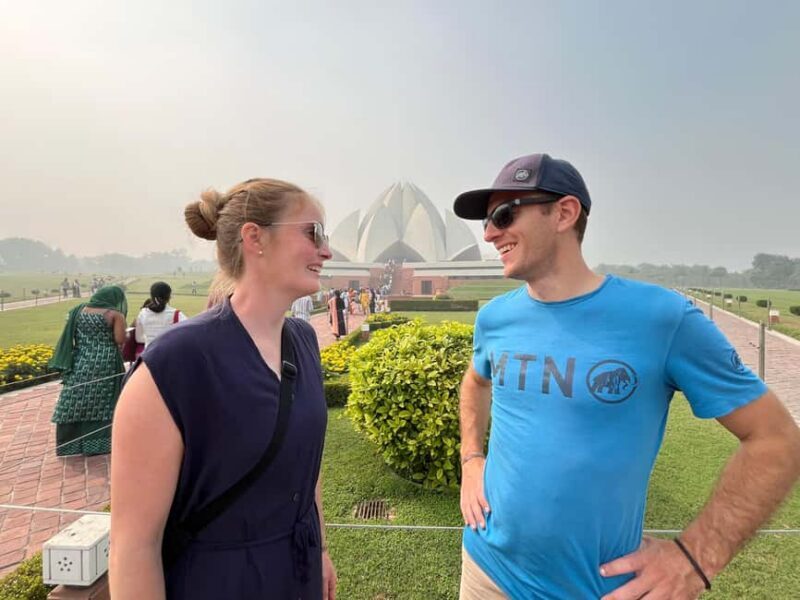
The outline also lists the Lotus Temple among the highlights, though the day-by-day schedule does not spell out its timing. It is closed on Mondays. The Red Fort is also closed on Mondays, when the plan substitutes Gurudwara Bangla Sahib. Check the actual Monday itinerary with the operator rather than assuming every listed sight will be open.
The day ends with the drive to Agra and hotel check-in. That means you may arrive after a long sightseeing day, so don’t plan on a demanding evening. Dinner is not included.
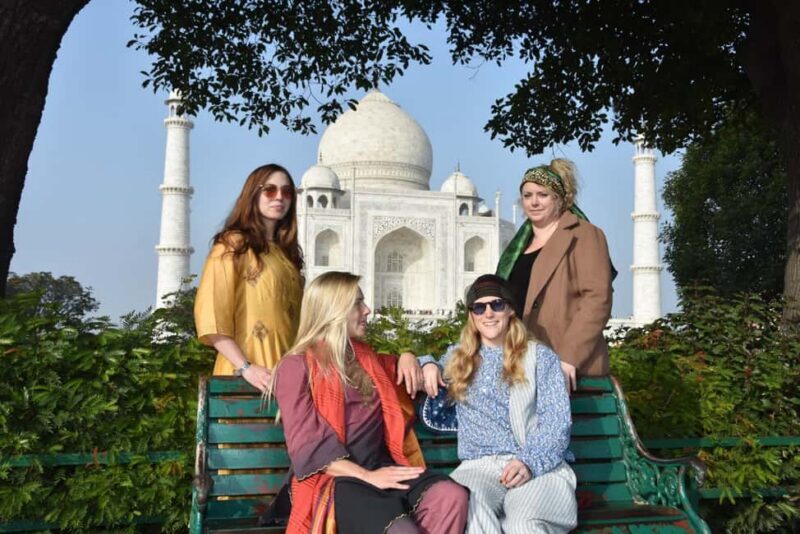
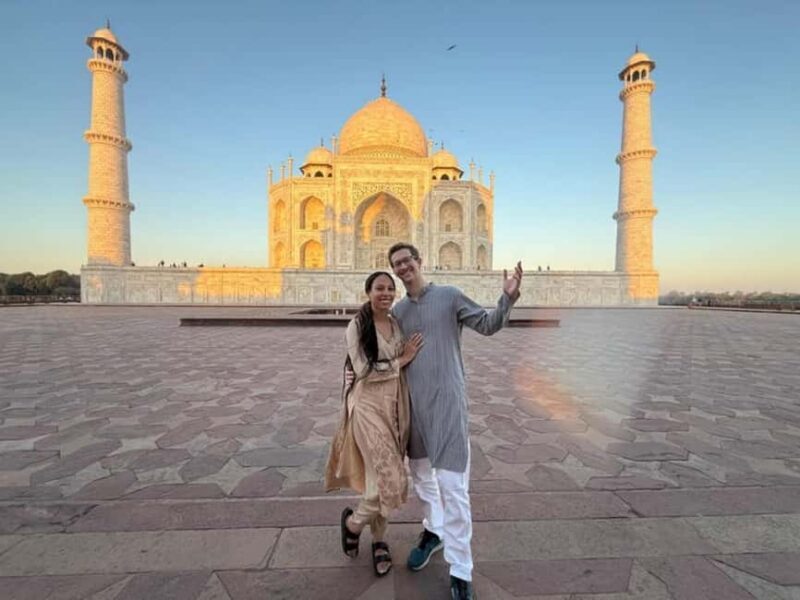
A pickup around 6:30 AM takes you to the Taj Mahal for an early visit. The pale marble changes with the morning light, and the quieter start can make the visit feel less hurried than a later arrival. A battery bus ride to the monument is included, and the tour says it offers skip-the-ticket-line access.
Your guide can explain the building’s design and history, and may help you find good angles for photographs. Guides such as Imran, Shaan and Azhar have been named on past trips in Agra, but you should not assume a particular person will be assigned. If photography matters to you, say so at the start; if you would rather focus on the guide’s explanation, make that clear too.
The Taj Mahal is closed on Fridays. When Friday falls during the trip, the route changes to Delhi, Jaipur, Agra and Delhi, rather than following the standard order. Check the revised plan before booking, since the sequence changes which city you visit on each day.
After the Taj, you return to the hotel for breakfast and a short rest before checking out. Agra Fort is the next major stop. Its palaces, courtyards and defensive walls give you a useful contrast with the Taj: one is a mausoleum built for a beloved wife, the other a vast seat of imperial power.
The drive onward includes Fatehpur Sikri, the former Mughal capital. Its monumental buildings offer another architectural stop between Agra and Jaipur, though the visit also adds time to an already lengthy transfer. By evening, you check in at your Jaipur hotel.
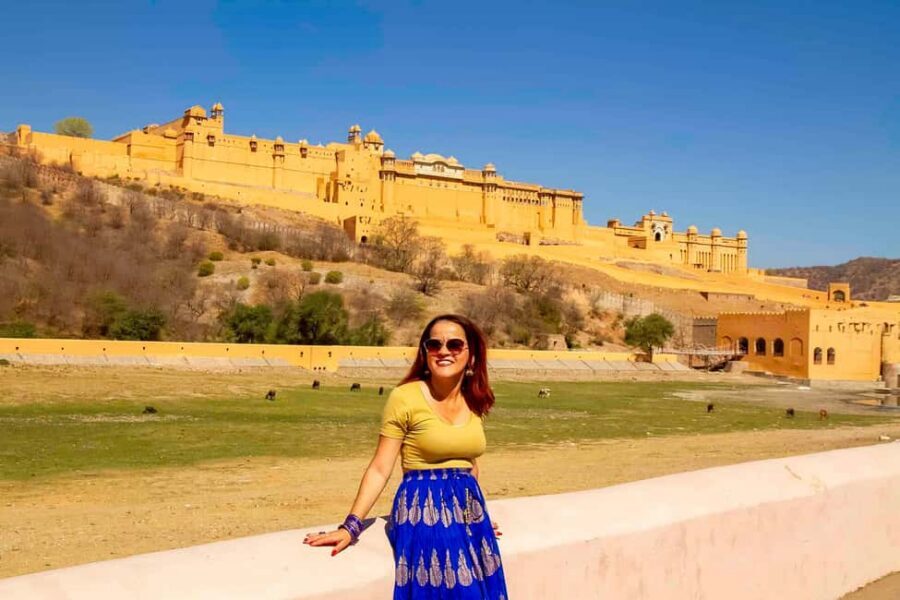
Jaipur’s day begins after breakfast and checkout, with your guide and driver collecting you from the hotel. The main visit is Amber Fort, set above the city and known for its courtyards and richly decorated interiors. Allow for a lot of walking around the complex, and wear shoes that can handle uneven surfaces.
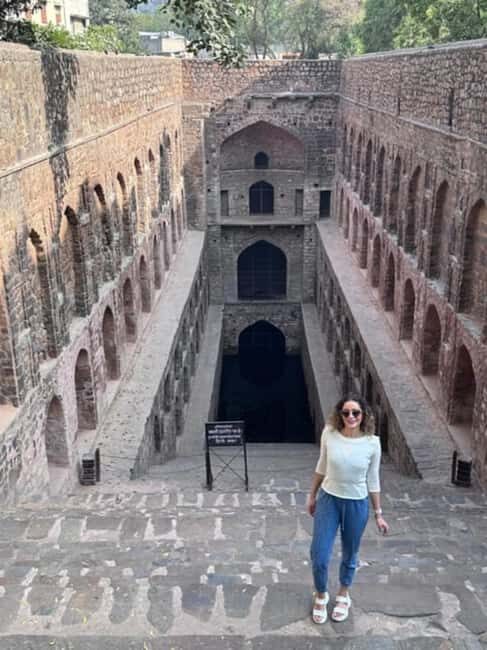
Panna Meena Ka Kund, a stepwell, is also on the schedule. Its repeated stair patterns make it a striking stop, and guides often know where to stand for a clear photograph. The itinerary then takes in Jal Mahal, the palace seen from the water’s edge, and Hawa Mahal, the ornate facade that has become one of Jaipur’s most recognizable views. These can be brief stops rather than long visits.
At City Palace, you explore the palace and its museum. Jantar Mantar, the astronomical observatory, is a different kind of monument: its huge instruments were built to observe and measure the sky. A guide can make the site more rewarding by explaining what the structures do, rather than leaving you to guess from their unusual shapes. Soni and Vijay Gupta are among the Jaipur guides named on past tours, but assignments vary.
The schedule includes lunch and time for souvenir shopping before the return drive to Delhi. The tour ends with a drop-off at your Delhi hotel or the airport. If shopping is not a priority, say so early and ask how that time can be used; some itineraries include stops at local artisan shops, and buying something is optional.
The strongest practical feature is the combination of one driver across the route and separate local guides in each city. The driver handles luggage and the long transfers, while each guide focuses on the place you are visiting. Past visitors have named drivers such as Amar, Vikas, Manish and Ashok, often praising their punctuality, careful driving and willingness to accommodate reasonable requests.
The guides are central to the experience. Names such as Aamir, Ali and Riyaz in Delhi, Shaan and Imran in Agra, and Soni in Jaipur recur among the people who have led trips. The operator offers guides in English, Spanish, French, Russian, German, Japanese, Italian, Hindi and Portuguese. If you need a particular language, confirm availability before booking rather than relying on it being assigned automatically.
This format can also suit a first visit to India. A driver waiting at the hotel and guides who take you through unfamiliar sites can reduce the number of decisions you need to make in a fast-moving day. Solo visitors have also described feeling well looked after, though you should still keep valuables secure and confirm where the driver will meet you after each stop.
More Great Tours Nearby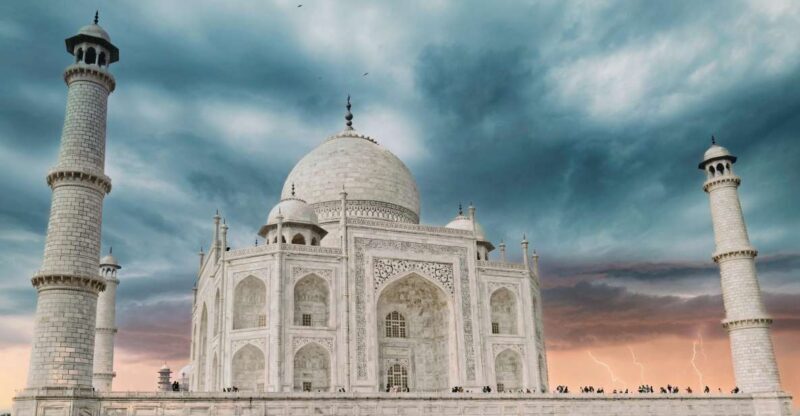
The advertised starting price is $93 per person, but the total depends on the option selected. Two nights’ accommodation and hotel breakfasts are included only when you choose an option with hotels. Monument entry fees and daily lunches are included only with the all-inclusive option. Dinner is excluded, and bottles of mineral water are provided during the drives.
That distinction matters when comparing prices. If you select a lower-cost option, add the cost of hotels, entrance tickets and lunches before deciding it is a bargain. If you choose all-inclusive, you pay more upfront but have fewer separate arrangements to make while moving between cities.
Hotel standards can vary by package and property. Past stays have ranged from pleasant four-star hotels to basic three-star places, with one visitor describing a three-star property as closer to a two-star European standard. Treat the star rating as a guide, not a promise of a uniform experience, and check the hotel details for your chosen option.
Rooms are generally twin-sharing. A booking of three people is assigned a triple-sharing room by default; if you prefer two rooms, expect an additional charge. This is worth sorting out before travel, especially if sharing arrangements matter to your group.
Lunch is part of the all-inclusive package, but restaurant quality can vary. If you have dietary needs or prefer mild food, tell your guide or driver clearly. One visitor found that the team accommodated a request for food without much spice, but you should make your own needs known rather than assume every meal will suit you.
Pack comfortable walking shoes, sunglasses, sunscreen and clothes suited to the season. Bring your passport or ID, a credit card and some cash. The tour is listed as wheelchair accessible, but if you need specific assistance at a particular monument or during transfers, confirm the arrangements directly before booking.
Pregnant women are listed as not suitable for this activity. The long drives, early start and full days are also worth considering when deciding whether the pace fits your health and energy.
The booking offers free cancellation up to 24 hours before the activity and a reserve-now, pay-later option. These terms can help if your plans are still taking shape, but check the exact conditions attached to your booking.
I would consider this tour if you have only three days, want to see the headline sights and value a private driver and local guides more than a leisurely pace. It is especially practical for a first visit, for a small group that wants its own car, or for someone who would rather have help coordinating transfers and entrances.
I would look for a longer itinerary if you want unhurried museum time, long meals or a chance to explore each city independently. Three days can introduce you to Delhi, Agra and Jaipur, but it does not leave much room for surprises or a late start. If you book, confirm your hotel and ticket inclusions, the Friday route, your pickup time and whether you want to spend time shopping. Those few checks will make the price and pace easier to judge.
“really nice experience visiting the main attractions, Fez and Samir our guides where very helpful.. the tour is very well organice we may definitel…”
Accommodation is included only if you select an option with hotels. The tour includes two nights, and daily hotel breakfasts, with that option. Check the exact package details before booking.
They are included only with the all-inclusive option. Daily dinners are not included.
The Taj Mahal is closed on Fridays, so the itinerary changes to Delhi, Jaipur, Agra and Delhi.
Pickup is available from hotels in Delhi, Gurgaon and Noida, or from Delhi Airport at the exit of Gate 4 in Terminal 3 arrivals.
Guide languages offered are English, Spanish, French, Russian, German, Japanese, Italian, Hindi and Portuguese. Confirm your preferred language when booking.
Three people are generally assigned a triple-sharing room by default. If you want two rooms, an additional charge applies.
You can check availability for your dates here: