Physical Address
304 North Cardinal St.
Dorchester Center, MA 02124
Physical Address
304 North Cardinal St.
Dorchester Center, MA 02124

Shape wooden chopsticks with a Shinjuku artisan in this relaxed, English-led workshop, then take home a useful handmade souvenir.
Shinjuku’s bright signs and busy streets make a good contrast with a quiet hour spent shaping wood by hand. I like that you leave with a pair of chopsticks you made yourself, and that an English-speaking instructor explains the steps while sharing something about chopsticks’ place in Japanese culture.
The main consideration is that this is hands-on work, not a quick souvenir purchase. Wood can be harder to shape than you expect, and the included price covers two wood choices; other options and engraving cost extra.
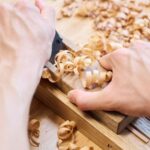
This class turns an ordinary object into a small lesson in Japanese craft. Rather than browsing for a ready-made souvenir, you work a piece of wood into a pair of chopsticks, guided through shaping, smoothing, and finishing. The result is personal without requiring you to arrive with any experience.
The workshop is in Shinjuku, a part of Tokyo better known for its crowds and bright city energy than for a quiet craft table. That contrast is part of the appeal: you can step away from sightseeing for a while, focus on a simple task, and leave with something you can use at home.
The class is beginner-friendly, but that does not mean every step is effortless. You will need to pay attention to the wood as you shape it, and the process can take more or less time depending on your pace and material. If you enjoy making things with your hands, that is a welcome part of the experience. If you mainly want a fast, polished souvenir, a shop will be quicker.
You might also be interested in these Tokyo experiences
The meeting point is on the 10th floor of the Shinjuku West Building. Take the elevator up. The building is identified by 617 Bar and is close to the post office; the supplied coordinates are 35.6959774, 139.6984349.
This is useful to know because the class is inside a building rather than in an obvious street-level storefront. Give yourself enough time to find the entrance and elevator, especially if you are unfamiliar with the area. The location puts the activity within Shinjuku, making it a handy addition to a day in the district.
The workshop itself is described as a small room with several worktables. One account described four tables, each seating up to ten people. That gives you a sense of the setting, though the room may feel different depending on the session. If you prefer a quiet, private lesson, this group format may not be your ideal fit. If you like making things alongside other people, it can add a friendly, shared feel.
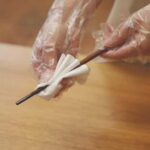
The class follows a straightforward sequence. First, you choose your wood from the two types included in the ticket. Then, with an instructor’s help, you shape the wood, smooth its surface, and finish the pair. You leave with your own chopsticks, wrapped so they are ready to take home or give as a gift.
The work is guided rather than left to guesswork. Instructors explain each step and help when a piece of wood proves stubborn or your shaping needs a correction. In sessions led by Koji, Masa, Shu, Mimi, Yuki, and others, people have found the instruction clear and patient. That matters for a hands-on class: a small correction at the right moment can keep a wobbly pair from becoming a lopsided one.
You also get a little context about chopsticks in Japan and the care behind an everyday object. That cultural element is not a long lecture. It adds meaning to the work without taking over the hour, and it helps explain why a simple utensil can carry more significance than its shape suggests.
A few people have found the carving harder than expected. Wood type affects the amount of effort involved, so do not assume every option will feel equally easy. Ask the instructor about the differences before choosing, especially if you are making chopsticks with a child or would rather keep the task light.
Two wood types are included in the stated price. More wood choices may be available for an extra charge, so ask what is covered before settling on an upgrade. The choice matters for both the look of your finished pair and how challenging the shaping feels.
Engraving is another optional extra. Name engraving has been offered for 2,000 yen. It gives the chopsticks a clear link to your trip and can make them feel more gift-ready, but it is not part of the base cost. If you are keeping to a tight budget, the handmade pair is already personalized by the work you put into it.
Some people also keep the wood shavings. They can be used at home for fragrance or pot-pourri, but there is a practical catch: the shavings are untreated. If you hope to take them across a national border, check your country’s rules first. The chopsticks are the main souvenir; the shavings are a possible bonus, not something to count on bringing home.
More Great Tours NearbyA good instructor makes a short craft class feel less like following a set of directions and more like learning a small skill. The class is in English, and the teaching style described by participants is patient, encouraging, and clear. Instructors answer questions and step in when someone is struggling, rather than letting a mistake spoil the finished pair.
Names that have come up in sessions include Koji, Masa, Shu, Mimi, and Yuki. Other instructors have included Fu, Mauro, Karen, and Sayaka. Staffing can vary, so you cannot count on a particular person unless the provider confirms it. What you can expect is English-language guidance and help throughout the making process.
The staff also help make the class work for different kinds of groups. Families have made chopsticks together, and solo participants have been welcomed and helped along. Instructors have also offered to take photos, which is a useful extra if you are by yourself and want a record of the activity.
The stated duration is one hour, but your own working pace may be quicker. Some families have finished in roughly 30 minutes, while others may want more time to shape carefully. I would keep the hour free rather than scheduling something immediately afterward. That leaves room to ask questions, choose materials, and finish without watching the clock.
This is a good choice for families, friends, and solo visitors who want a low-pressure activity with a tangible result. Children have taken part, including an eight-year-old, and families with children around ten and twelve have enjoyed it. That is encouraging, but the activity still involves shaping wood, so younger children will benefit from attentive adult help and the instructor’s guidance.
It also suits anyone who likes making things and wants a break from looking at sights. You do not need prior craft skills. You do need a little patience and a willingness to work with the material rather than expect a factory-perfect result from the first stroke.
If you are traveling with people who prefer museums, shopping, or fast-paced attractions, this may not be a group-wide favorite. It asks you to sit and focus for a while. The benefit is a slower, more personal memory of Tokyo, not another photo taken in front of a famous landmark.
At $12 per person, the base price is modest for a guided activity that includes the workshop, two wood choices, traditional tools, English-speaking staff, and a pair of chopsticks to take home. The value comes from doing the work yourself, not from the raw material alone. You are paying for instruction and an activity that gives you a story attached to the souvenir.
Keep the optional costs in mind. Engraving has been offered for 2,000 yen, and other wood types may carry an extra charge. The base ticket still gives you a choice of two woods, so you can make a complete pair without upgrading. Decide in advance whether engraving matters to you, and ask about any additional wood costs before choosing.
The class is not a long workshop, and some people complete it sooner than the stated hour. That is worth considering if you are comparing it with a full-day craft course. But for a compact activity in central Tokyo, the combination of instruction, hands-on making, and a finished keepsake makes the price attractive.
The session is taught in English, and the meeting point is on the 10th floor of the Shinjuku West Building. Use the elevator, and look for the building near the post office with 617 Bar. Check your selected start time when booking, since availability varies.
You can cancel up to 24 hours in advance for a full refund. There is also a reserve-now, pay-later option, which may help if your Tokyo plans are still shifting. The activity is offered by Traveling Tokyo.
If you want the most straightforward version of the class, choose one of the two included woods and skip engraving. If you want a more personal memento, ask about the wood upgrades and engraving before the work begins. That way, the total cost will not surprise you at the end.
I would book this if you want a useful souvenir and enjoy a short, hands-on activity more than another hour of shopping. The patient English-speaking instruction, choice of wood, and chance to shape your own pair make it a good fit for curious beginners, families, and solo visitors.
I would think twice if you have little interest in making things, need a private or very quiet setting, or want a long, in-depth craft course. The room can feel crowded, the wood may take effort, and extras cost more. For a modest price and a personal keepsake, though, this is a practical way to spend an hour in Shinjuku.
“Masa was amazing and very helpful. Great experience for a visit to Japan!”
The stated duration is one hour. Some people finish in around 30 minutes, so the time needed can vary.
The listed price is $12 per person. Extra wood options and engraving may cost more.
The workshop, English-speaking staff, traditional tools, your own handmade chopsticks, and a choice of two wood types are included.
Yes. English-speaking staff provide instruction, and English is listed as the activity language.
Meet on the 10th floor of the Shinjuku West Building. Use the elevator. The building is near the post office and has 617 Bar.
Engraving is available for an extra cost. Name engraving has been offered for 2,000 yen.
Yes. The class is described as beginner-friendly, and the instructor guides you through the steps. The wood can be harder to shape than expected.
Yes. You can cancel up to 24 hours in advance for a full refund.
You can check availability for your dates here: