Physical Address
304 North Cardinal St.
Dorchester Center, MA 02124
Physical Address
304 North Cardinal St.
Dorchester Center, MA 02124

Compare three winter day trips from Busan, from Gyeongju’s temples to Pohang’s Space Walk, with practical timing, costs and route advice.
A winter day out of Busan can take you from a snow play park to a thousand-year-old temple, or from Pohang’s sea views to the ice formations of Cheongsong. The key is choosing the right route: these are three different tour options, not one giant loop that visits every stop.
I like the way the tour combines round-trip transport and a guide, which removes the fuss of arranging several far-flung stops yourself. I also like the range: one option leans into Gyeongju’s history, another into winter scenery and local food, and a third brings together the coast, ice and a striking pedestrian structure.
The trade-off is a long day, with some routes running from a 10 a.m. Busan departure until around 10 p.m. or later. Winter scenery also depends on the weather: ice can melt, and a rainy day does not automatically cancel the tour.
Before booking, match the package to what you most want to see. Option A pairs Kookmin Healing Park with Bulguksa Temple, Gyochon Village, Hwangnidan-gil and Woljeong Bridge. It is the strongest choice if you want a mix of winter fun and Gyeongju’s historic center.
Option B combines Kookmin Healing Park with Seomun Market in Daegu and either Songhae Park’s ice wall or Biseulsan Recreational Forest. It suits you if you want a day split between outdoor scenery and market food and shopping. The exact scenery can be seasonal: ice may be less impressive after a thaw.
Option C focuses on Pohang and Cheongsong, with Yeongildae Beach, Pohang Space Walk and Cheongsong Ice Valley, followed by Gyeongju’s Hwangnidan-gil and Woljeong Bridge. Choose it for variety and a coastal stop, rather than for a full Gyeongju history tour.
The headline name can make the experience sound like every attraction is included. It is not. Healing Park is part of A and B, while the detailed C schedule features Pohang, Cheongsong and two Gyeongju stops. Check the package name carefully before paying.
Looking for more options in Gyeongju? Here are some other experiences worth considering.
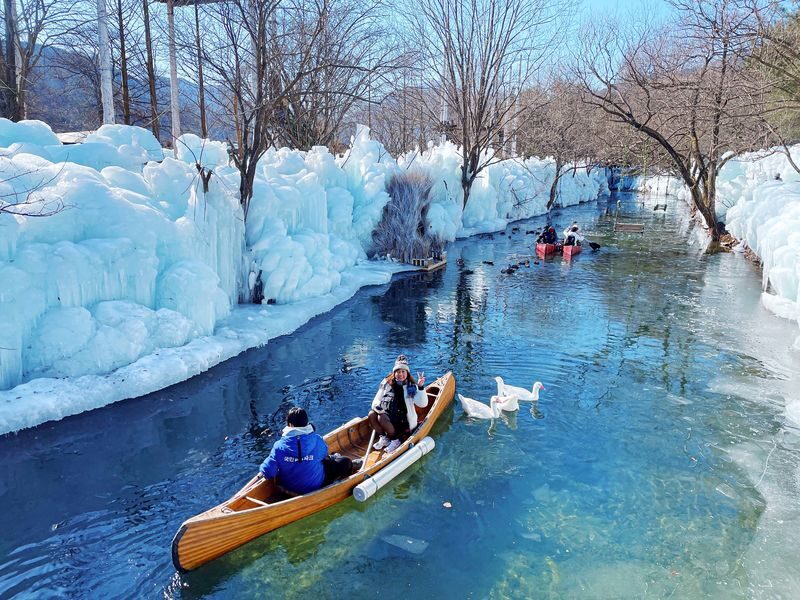
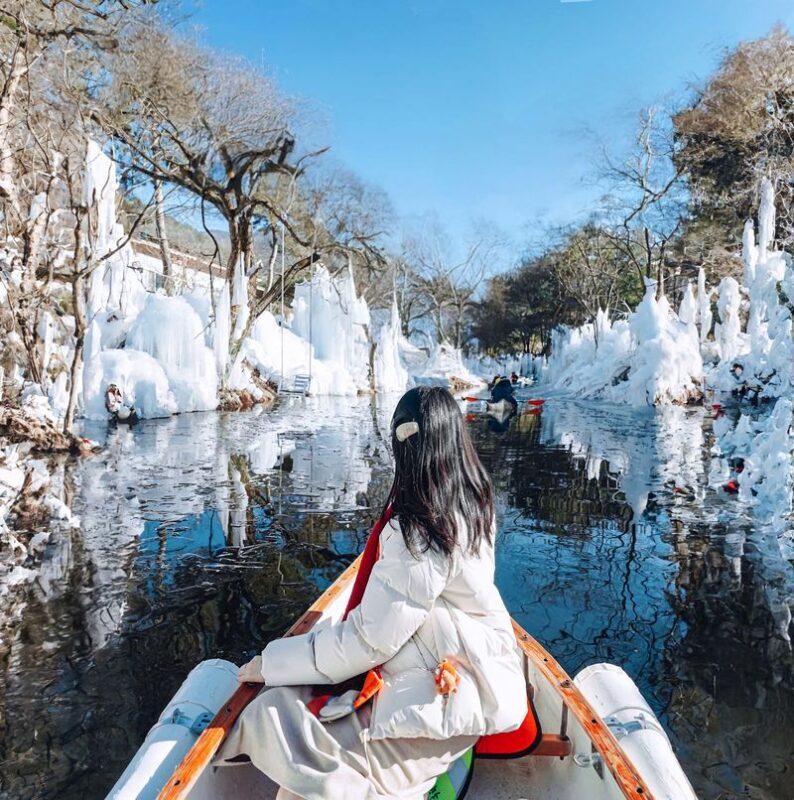
For Options A and B, Kookmin Healing Park gives the day a change of pace before temples, villages or Daegu. It is not only a place to look at snow. Activities described at the park include sledding, canoeing and feeding geese, ducks and rabbits. That combination can make the stop work well for families, while adults who expect a grand natural attraction may find it more modest than the name suggests.
Think of it as an outdoor recreation stop, with the exact feel shaped by the day’s weather and what is operating. Snow can make the visit especially appealing, but don’t book this tour on the assumption that a particular activity or amount of snow is guaranteed.
Bring shoes and clothing suited to cold, possibly wet conditions. The park is one of the stops where you will be outside and moving about, so a warm layer is more useful than spending the day wishing you had packed one.
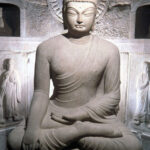
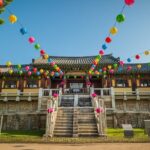
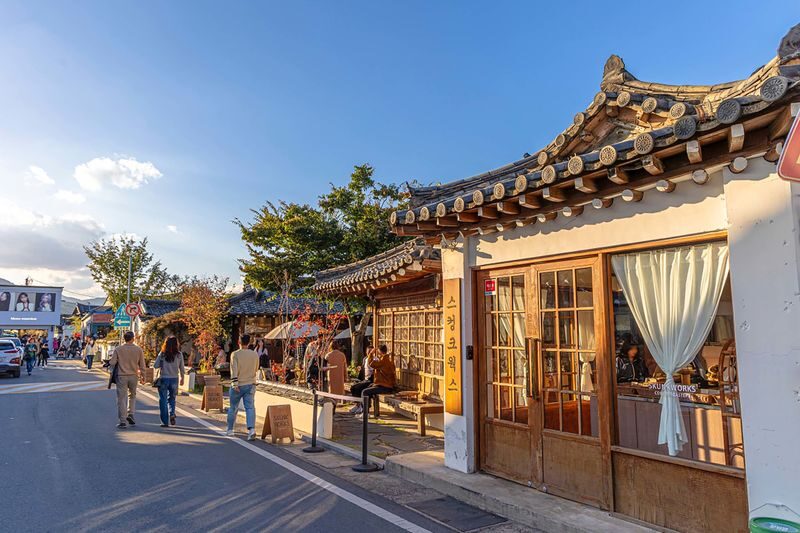
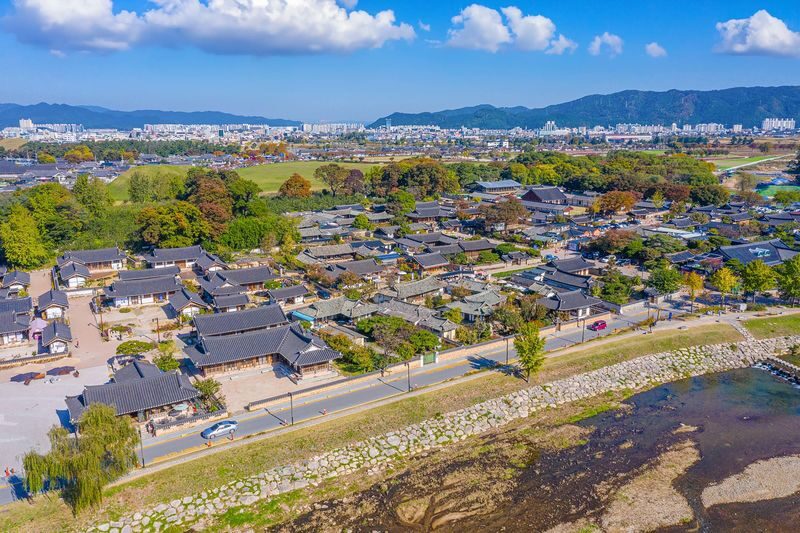
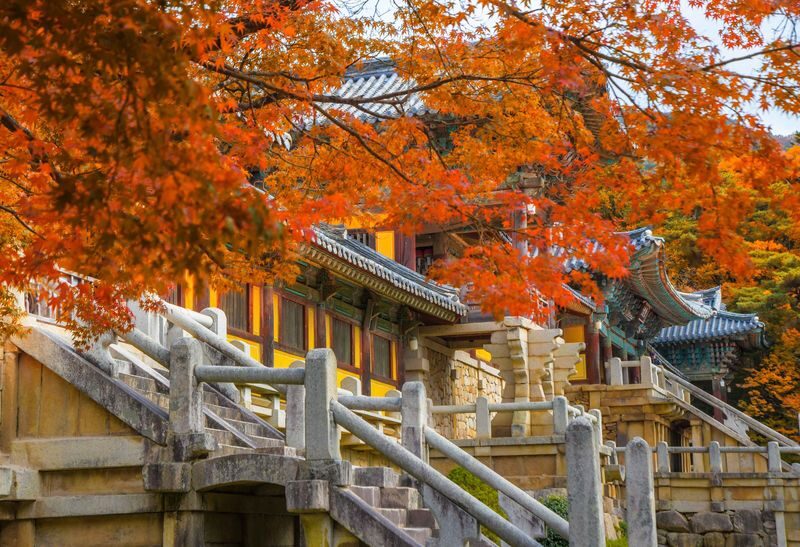
If you want the most history, Option A is the best fit. Bulguksa Temple offers a more formal, contemplative stop, while Gyochon Village gives you a chance to walk among traditional-style buildings and get a feel for Gyeongju’s older quarters. These places are rewarding at a slower pace, and a guide can help you connect what you see with the city’s past.
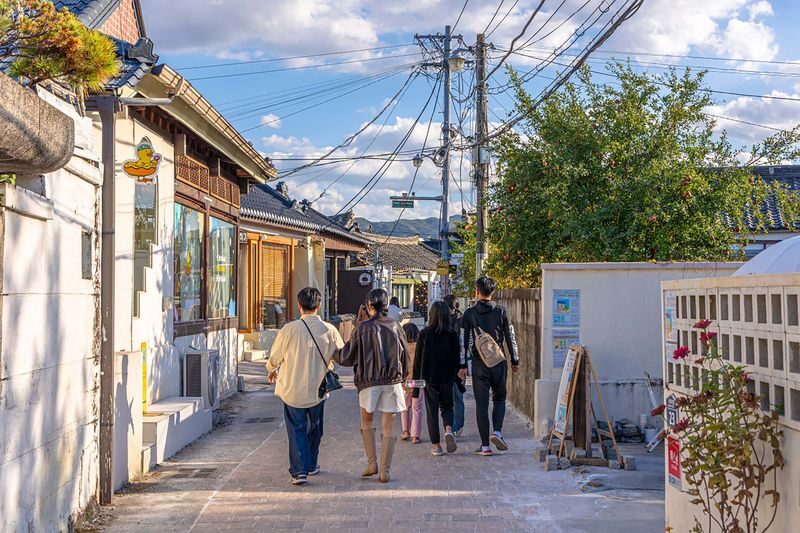
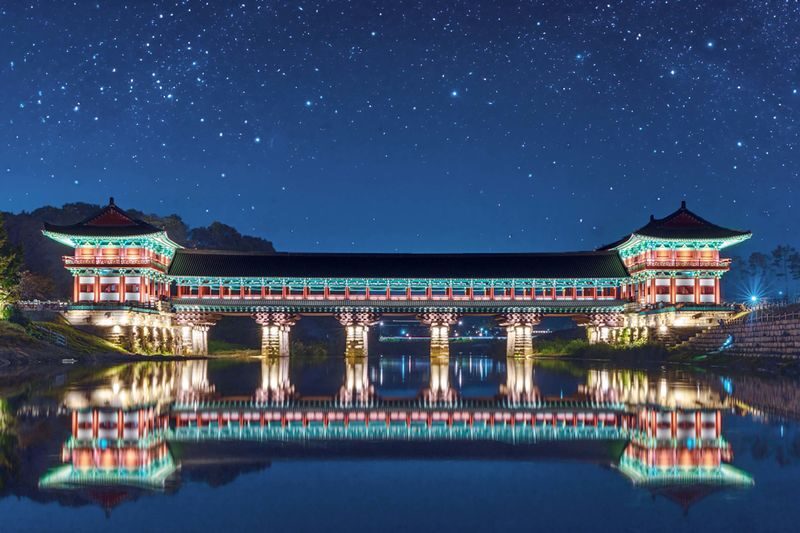
The package also includes Hwangnidan-gil, a modern street of cafés and local businesses, and Woljeong Bridge. That mix is one of the route’s strengths: you are not spending the whole day looking at historic sites, and you have time for a coffee or a browse between the older landmarks.
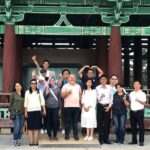
Guides on recent tours have included Lee, Lan, Ken and Sunny. Their roles have gone beyond commentary: some have helped with photos, offered practical suggestions and explained the history along the way. The guide assigned to your departure may be different, but the tour is advertised with English- or Chinese-speaking guidance.
The schedule is designed to fit several stops into one day, so you should expect free time at attractions rather than a private, in-depth visit at every site. That balance works well if you want an overview and appreciate not having to plan intercity transport. If you want hours at Bulguksa or a slow, self-guided day in Gyeongju, an organized day trip may feel too brisk.
Option B takes you beyond Gyeongju to Daegu. Seomun Market is the practical highlight for anyone who likes to sample local food and browse stalls. Meals are on your own, so this is a chance to choose what appeals rather than follow a fixed group menu. Keep some cash or a payment method handy for snacks and shopping.
The other main stop is either Songhae Park’s ice wall or Biseulsan Recreational Forest. The choice gives the route some flexibility, but the experience depends on conditions. Ice formations can lose their impact when temperatures rise; a recent trip found the ice had melted considerably, although the day was still worthwhile overall.
This is the option for you if the idea of pairing outdoor winter scenery with a market visit sounds better than spending the afternoon at temples. It covers ground across Gyeongju and Daegu, so expect time in the vehicle as well as time on foot. If your priority is a particular ice display, remember that nature does not keep a booking calendar.
The detailed schedule for Option C begins with a stop at Yeongildae Beach at 12:40, where you have about an hour and lunch is at your own expense. The beach gives the route a coastal pause before the more unusual attraction ahead. Since meals are not included, use this break to eat rather than assume food will be provided later.
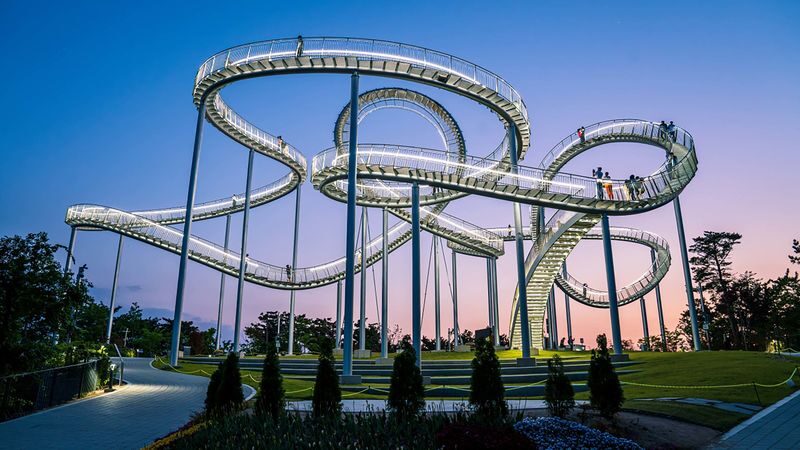
At 13:50, the group heads to Pohang Space Walk for about 40 minutes. This striking pedestrian structure is the route’s most distinctive modern stop, and it gives you a different sort of outing from the temples and old village buildings in Option A. The visit is relatively short, so plan to make the most of your time there and follow the guide’s instructions.
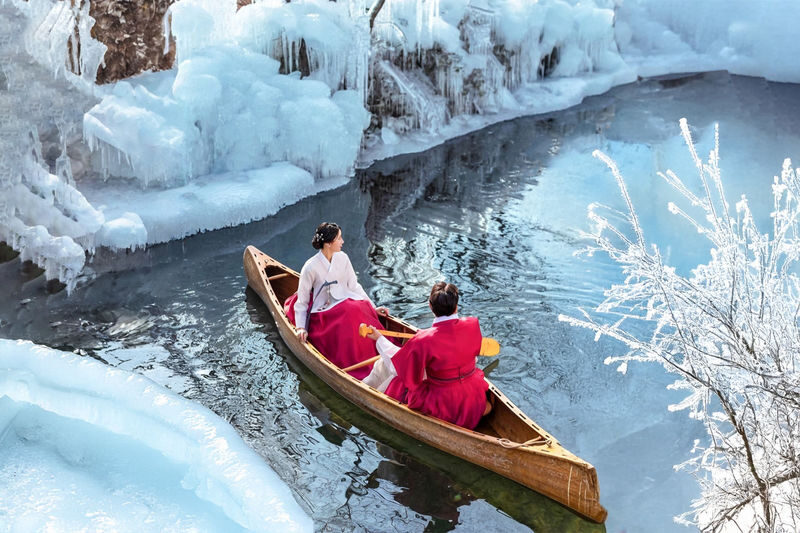
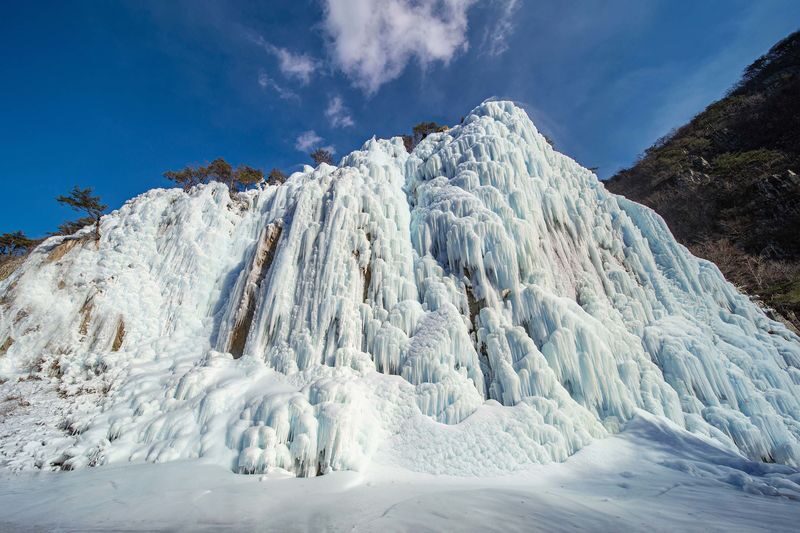
Cheongsong Ice Valley is scheduled for 16:00, with about an hour at the site. Its icy cliffs and formations are the draw, but the display varies with weather. If a warm spell has melted the ice, the stop may not match your winter postcard expectations. The tour’s route still gives you a scenic day, but the ice itself is the least predictable part.
The evening brings you back to Gyeongju for Hwangnidan-gil at 18:40 and Woljeong Bridge at 20:10. Hwangnidan-gil is your chance to wander, find a café or look for a bite to eat, while the bridge gives the day a final historic setting. The timings allow a taste of both, not a long evening spent in either place.
This is a full circuit: the listed stops continue until 20:40, when the bus begins the return journey. The schedule may shift with traffic and weather, so don’t plan a tight connection or late-night commitment in Busan based on the printed times alone.
A self-planned visit to these places can mean juggling transport across several cities and trying to keep winter day length in mind. Here, round-trip transfers and a guide take care of the main logistics. That is the tour’s central value, especially for a short stay in Busan or a family group that would rather not coordinate multiple connections.
The guide’s contribution can be more than pointing out the next stop. Several guides named on recent departures, including Lee, Lan, Sunny, Ken, Jake and Sol, have explained local history, helped with photos and kept groups informed. Treat those names as examples, not a promise: the guide roster varies by departure.
The vehicle is assigned according to the group size, so you cannot choose a specific bus. Some departures have used a comfortable limousine bus, while group size can also vary. In either case, you are likely to spend a meaningful part of this long day riding between areas, making the transfer service particularly useful.
Prices vary by package and booking details. The package options are shown from US$81.05 for C and US$83.55 for A or B, while the main tour price is also displayed from US$93.19. Check the current price for your date and selected route before booking.
The useful comparison is not simply the ticket cost against a list of attractions. You are paying for transport from Busan, a guide and the convenience of linking distant stops in a single day. The guided format is most valuable if you do not want to work out local connections or would benefit from history and practical help at each stop.
Meals, drinks, personal expenses and insurance are excluded. Budget separately for lunch and any snacks, shopping or café stops. The tour also includes a KRW 10,000 Lotte Duty Free coupon, a small extra rather than a reason on its own to choose the trip.
The tour departs from Busan, with pickup details that can include KTX Busan Station and a subway station exit. KTX Busan Station is not the same as the subway station, and the subway meeting point is not the shopping mall exit. Check your confirmation and arrive at the correct point at least 10 minutes early. Late arrivals and no-shows are not refundable.
The listed return points include Haeundae Station, Seomyeon Station and Busan Subway Station, with approximate times of 22:00, 22:40 and 23:00. Traffic and weather can change the timetable, so consider these as planned estimates, not a promise of arrival to the minute.
Rain alone does not cancel the tour, but the route and pickup or drop-off schedule may change on the day. In unforeseen events or extreme weather, the operator can cancel and offer rescheduling or a full refund, subject to availability.
Children aged three and older pay the adult rate. Children aged zero to two can join without charge if they do not need a separate seat; bring valid identity documents for them. Ask the operator about luggage or strollers, since space depends on the bus assigned to your departure. A reminder email with a group-chat link is sent the day before, between 3 and 5 p.m.; check your spam folder if it is missing.
I would choose Option A if you want the most balanced day in Gyeongju, with a playful park stop, major historic sites, a traditional village and time on Hwangnidan-gil. Option B makes sense if market food and a winter nature stop are a strong draw. Pick C if Pohang’s coastal setting and Space Walk sound more compelling than Bulguksa and Gyochon.
This is a good fit if you want to see several places without organizing the transport yourself, and you are comfortable with a long day and a structured schedule. Families can find useful variety in the Healing Park route, while history-minded visitors will get the most from A. If you want slow visits, guaranteed snow or a fixed, unchanging schedule, look for a more focused alternative.
“Had a wonderful time on this tour that we booked via Klook. We had a really big bus even if we weren't many tourists that day. The schedule was gre…”
The listed schedule starts from Busan at 10:00 and returns from the final stop at about 22:00. The stated drop-off times in Busan range from 22:00 to 23:00, and traffic or weather can change them.
Option A includes Kookmin Healing Park, Bulguksa Temple, Gyochon Village, Hwangnidan-gil and Woljeong Bridge. Option B includes Kookmin Healing Park, Seomun Market and either Songhae Park’s ice wall or Biseulsan Recreational Forest. Option C includes Yeongildae Beach, Pohang Space Walk, Cheongsong Ice Valley, Hwangnidan-gil and Woljeong Bridge.
No. Meals and beverages are not included. Option C has a one-hour lunch stop at Yeongildae Beach, with lunch at your own expense.
The tour includes an English- or Chinese-speaking guide. The guide assigned to your departure can vary.
Meeting points include KTX Busan Station and a subway station exit. KTX Busan Station is not the subway station, and the subway meeting point is not the shopping mall exit. Check your departure details and arrive 10 minutes early.
The tour is not canceled just because of rain. The schedule or route may change depending on weather and traffic.
Children aged three and older are charged the adult rate. Children aged zero to two can join free if they do not occupy a separate seat. Bring valid identity documents for children.
Contact the tour provider about luggage or strollers, as space depends on the bus assigned for that day. The provider recommends checking after 10 a.m. KST on the day before the tour.
A full refund is available if you cancel at least 24 hours before the activity date, based on local time. In unforeseen events or extreme weather, the operator may cancel and offer a reschedule or full refund, subject to availability.