Physical Address
304 North Cardinal St.
Dorchester Center, MA 02124
Physical Address
304 North Cardinal St.
Dorchester Center, MA 02124

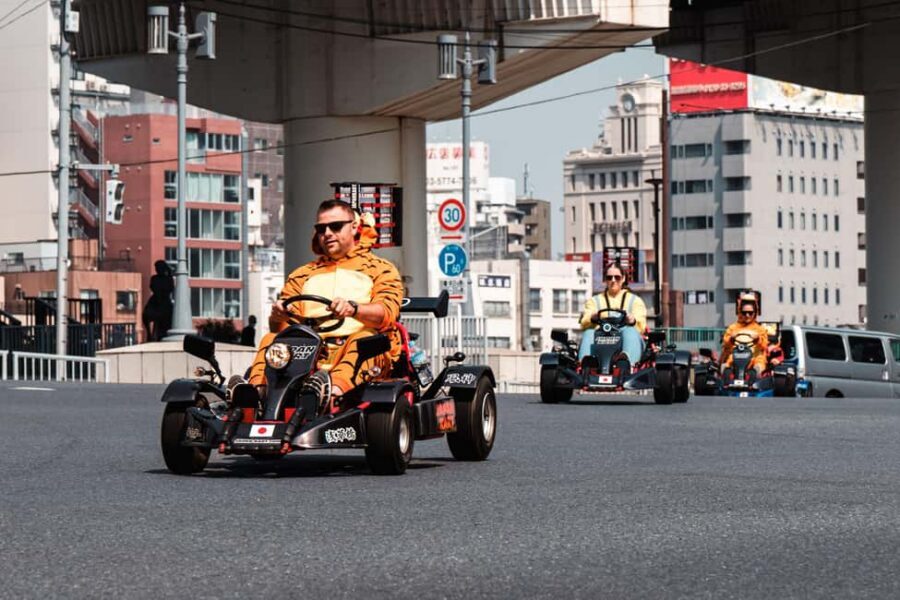
Drive Tokyo’s public roads by go-kart, passing Ginza, Akihabara, Ueno and Asakusa, with a safety briefing, costumes and photos included.
Tokyo looks different when you’re low to the road, following a guide through its traffic in a go-kart. This JAPANKART tour links modern shopping districts and older neighborhoods, with a pause around Tokyo Bay for a breather and photos. I like that you get a city overview without walking between far-flung areas, and that the small group is limited to 10.
I also like that costumes and photos are included, while staff give a safety briefing before you set off. The catch is that driving takes attention: this is a novelty ride and a moving view of the city, not a slow, narrated sightseeing tour. You must also arrive with the correct Japanese driving documents, or you may be turned away without a refund.
This is not a go-kart track with a Tokyo-themed backdrop. You drive on public roads, in a small kart, following a guide through real city traffic. That makes the ride exciting, but it also means you need to stay alert and follow instructions rather than gaze around as if you were on a bus.
The route combines districts that can feel far apart on foot or by train. In about two hours, you pass from the bay area toward Ginza, Nihonbashi, Kanda and Akihabara, then on through Ueno and Asakusa. You get a quick sense of how Tokyo shifts from sleek commercial streets to older shopping and temple districts, although you should not expect a stop at every landmark.
The advertised duration ranges from 90 to 150 minutes. The two-hour option is the main East Tokyo ride; one participant reported about 1 hour 10 minutes of driving within a total visit of roughly 90 to 100 minutes. Build some slack into your plans rather than scheduling a timed attraction immediately afterward.
Looking for more options in Tokyo? Here are some other experiences worth considering.
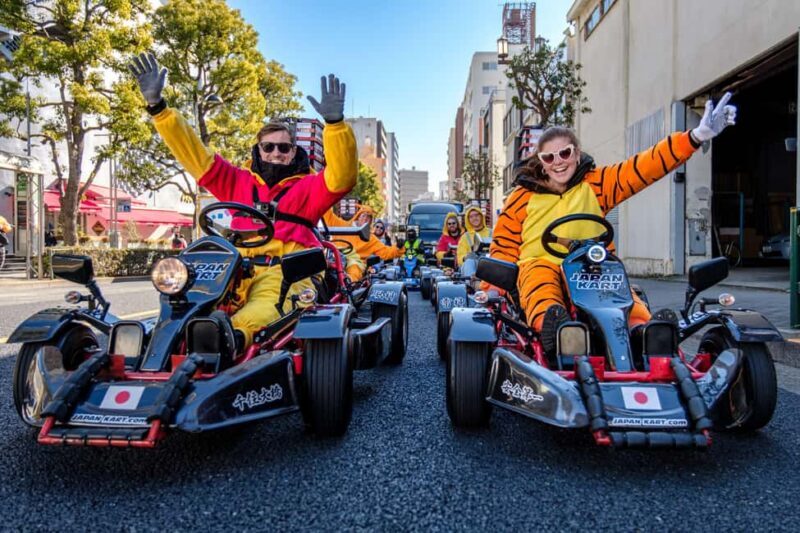
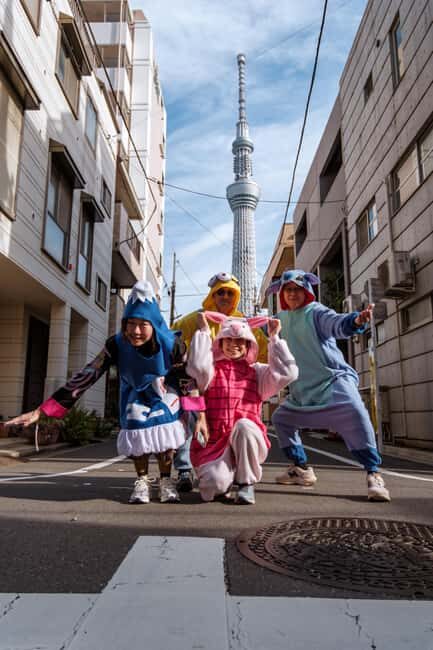
The check-in point is at the provider’s shop near Tokyo Skytree Tower. The two-hour route is described as starting at JAPANKART, while the separate one-hour SkyTree Branch tour has a different meeting point. Confirm which tour and address you booked before setting out, especially if you are choosing the shorter ride.
At the shop, expect a safety briefing and demonstration before you take the wheel. The English-speaking staff explain how to operate the kart and what to do in traffic. Several people found the first moments on the road daunting, but the guide-led format and clear instructions helped them settle in.
The group is small, with a maximum of 10 participants. That matters here: you need to keep pace with the guide, and the group must stay together among other road users. Guides may stop if the group gets split up, and the lead-and-tail arrangement described by one participant can help keep everyone in view.
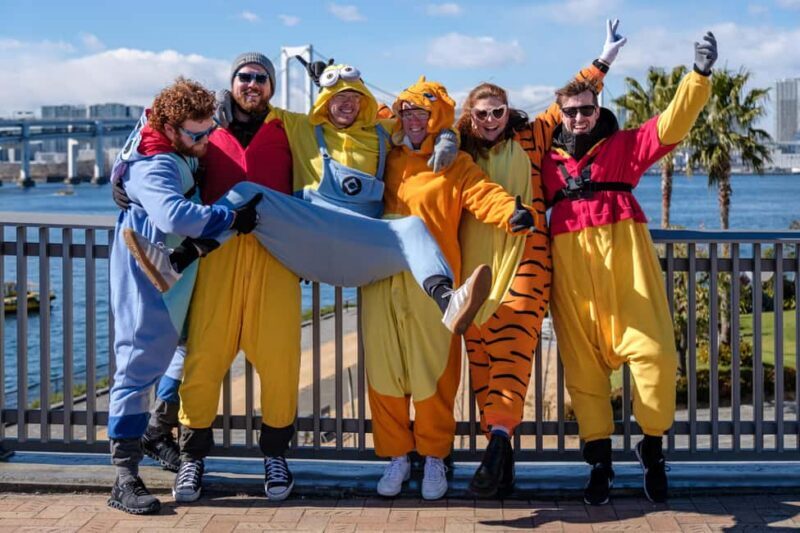
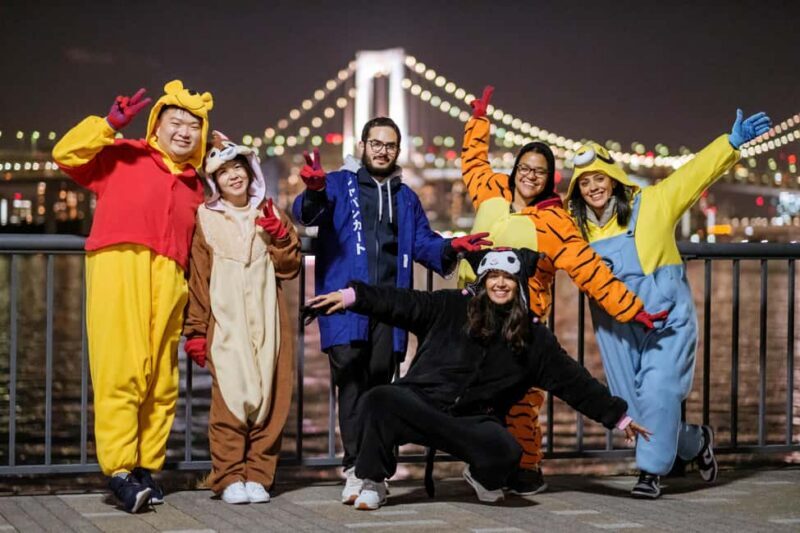
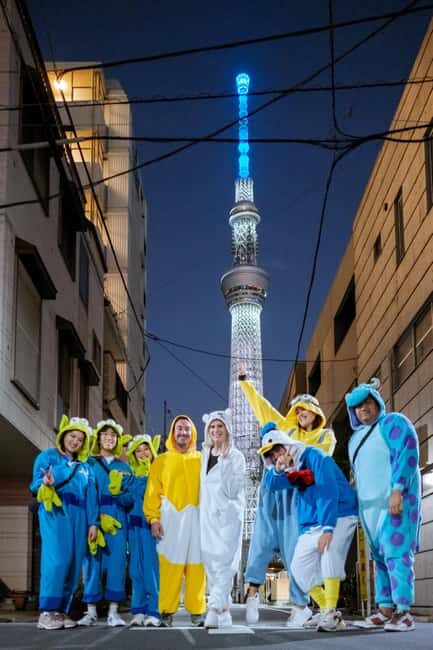
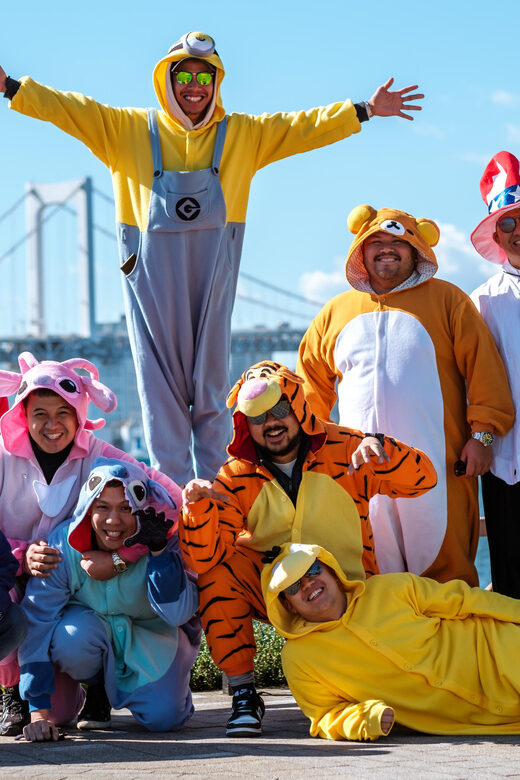
Costumes add a playful note, and you can choose from a range of options. They are part of the fun, but do not let the dress-up element distract from the serious business of driving. Photos are included, with staff taking pictures at scenic points and along the way; some riders also used phone or camera harnesses offered by the team.
The bay section is one of the tour’s visual payoffs. The itinerary includes a break at Tokyo Bay, and the advertised highlights call out Rainbow Bridge and the view over the water. A low kart gives you a very different perspective from a train window, though the road itself remains the focus as you ride.
There may be time for a group photo and a short restroom break at a stop. One rider described a photo pause with a view from a bridge, but the exact stop and timing can vary. Think of it as a welcome reset, not a long sightseeing visit.
The ride can be particularly striking near sunset or after dark, when the city lights come on. Evening is not automatically better for everyone: traffic, weather and visibility all affect how comfortable the drive feels. If you are nervous, a quieter time may help; one rider specifically recommended a Thursday at 7 p.m. for lighter traffic, but conditions will vary by date.
Rain deserves thought. The tour has gone ahead in heavy rain, and the provider may offer to reschedule when weather is poor. Wet roads can make the driving feel less relaxed, so ask about conditions before you leave for the shop if the forecast looks rough. If the operator cancels because of bad weather, you can receive a full refund or reschedule if space is available.
After the bay, the route passes through Ginza, then Nihonbashi and Kanda. Ginza is known for its high-end shops and polished streets; from the kart, you get a quick impression of its scale and city energy rather than time to browse. Keep your eyes on the road and enjoy the view in short glances.
Nihonbashi and Kanda add a different texture to the route. They help connect the newer waterfront area to central Tokyo, giving the ride a sense of movement through several kinds of city streets. These are pass-through sections, so do not book the tour expecting a guided walk or a detailed stop at a particular building.
The route is also a useful way to cover ground without tiring your feet. You remain seated, but the kart is open to the elements and the drive demands concentration. If you want a restful sightseeing ride, a bus or boat will be calmer; if you want to feel the city at street level, this is the more active choice.
More Great Tours Nearby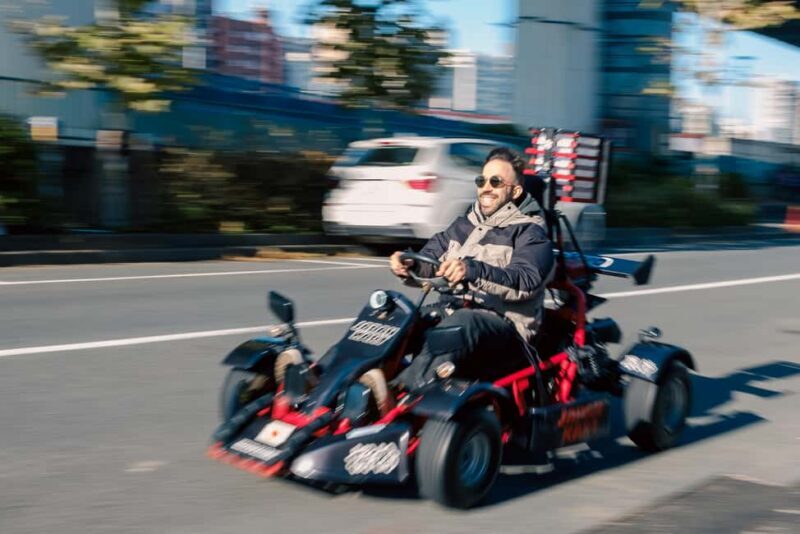
Akihabara brings the route through one of Tokyo’s best-known electronics and pop-culture districts. You may recognize the area as you pass, but the tour is not designed for shopping or stopping at individual stores. The advantage is seeing how this district fits into the broader East Tokyo route.
Ueno offers a change of mood, with Ueno Park among the sights on the shorter SkyTree Branch route. Some riders especially enjoy this stretch. On the two-hour route, Ueno is a sightseeing pass-through, so treat it as an introduction rather than a visit to the park or its museums.
Asakusa supplies the older-city counterpoint, with the tour passing through this historic neighborhood. Kappabashi Kitchen Tools Street and Tokyo Skytree are named on the separate one-hour SkyTree Branch route, which also includes Asakusa, Ueno and Akihabara. That branch has a different meeting point, so do not assume it is simply a shorter version of the same departure.
One limitation applies to all the districts: the guides lead the route, but there is no promised running commentary about every landmark. If learning detailed history is your priority, plan a walking tour or museum visit as well. Here, the appeal is seeing several neighborhoods quickly while you take part in the drive.

At $64 per person, the price includes the go-kart, fuel, fees and taxes, costumes, and photos. Hotel pickup and drop-off are not included. For a roughly two-hour activity, the cost is reasonable if you value the unusual way of getting around and the included photos; it is less compelling if you mainly want a conventional city tour with detailed explanations.
The time saved between neighborhoods is part of the value. You can cover a broad stretch of East Tokyo in one outing, without organizing each leg by train. But this is not a substitute for spending time inside the places you pass. The ride gives you an overview and a memorable activity, not a deep look at every district.
The included photos are a practical bonus. You can focus on steering rather than trying to take pictures while driving, and staff have taken group shots at scenic stops. The exact number and locations of photos are not specified, so consider them a helpful extra rather than a guaranteed album of every landmark.
Check your paperwork well before booking. For most drivers, the required set is a valid license from your home country, an International Driving Permit issued under the 1949 Geneva Convention by an approved organization in your own country, and your passport. The permit must be a hard-copy booklet; a paper printout or a permit issued under the 1968 Vienna Convention is not accepted.
Drivers whose licenses are from Switzerland, Germany, France, Taiwan, Belgium, Estonia or Monaco need their original license, an official Japanese translation from an authorized organization, and a passport instead. US military SOFA license holders need an active military ID and a stateside driver’s license.
The provider notes that permits must come from the appropriate national issuer. Examples include AAA or AATA in the United States, AAA in Australia, AA or RAC in the United Kingdom, and CAA in Canada. If you are unsure which documents apply to you, contact the provider before the tour. A missing or incorrect document can mean you cannot drive, with no refund.
Drivers must be at least 18. High heels, sandals, flip-flops and bare feet are not allowed, and alcohol or drugs are prohibited. Wear suitable shoes and bring your passport, license and required permit or translation. Those simple checks are more important than arriving early to choose a costume.
Book it if you enjoy driving, want a memorable way to cover several neighborhoods, and are comfortable following a guide through city traffic. It is also a good fit if you want an activity that feels different from Tokyo’s usual train-and-walking routine, with photos and costumes included.
Skip it if your main goal is a detailed history lesson, time inside museums and shops, or a relaxed view without the work of driving. Before you reserve, verify the route, meeting point and paperwork, then choose a time when you feel comfortable with traffic and weather. With the documents in order and the right expectations, this can be a spirited way to see East Tokyo from a very low seat.
“This is a fun way to do to see Tokyo. We did this in pouring rain but really enjoyed it. We felt very safe and the guides were good. I recommend th…”
The activity is listed as 90 to 150 minutes. The East Tokyo route is described as a two-hour tour, though time spent driving may be shorter than the full visit.
The route includes Toyosu, Ginza, Nihonbashi, Kanda, Akihabara, Ueno and Asakusa. It also includes a break around Tokyo Bay.
Most drivers need their home-country driving license, a hard-copy International Driving Permit issued under the 1949 Geneva Convention, and a passport. Drivers from Switzerland, Germany, France, Taiwan, Belgium, Estonia or Monaco need their original license, an official Japanese translation and a passport.
No. The provider states that International Driving Permits issued under the 1968 Vienna Convention are not accepted in Japan for this activity.
No. Drivers must be at least 18 years old.
The price includes the go-kart, fees and taxes, fuel, costumes and photos. Hotel pickup and drop-off are not included.
If the tour is canceled because of bad weather, you are eligible for a full refund or may reschedule, depending on availability.
You can check availability for your dates here: