Physical Address
304 North Cardinal St.
Dorchester Center, MA 02124
Physical Address
304 North Cardinal St.
Dorchester Center, MA 02124

Compare two Fuji day-trip routes from Tokyo, with Chureito Pagoda, lakes, waterfalls, a tea farm, and round-trip bus transport.
Mount Fuji is at its best when you see it from several angles, and this full-day bus trip sets out to do just that. The famous view from Chureito Pagoda is the headline act, but the lakes, spring-fed ponds, waterfall, and tea fields give you more than one reason to leave Tokyo for the day.
I like the choice between a photo-focused route and one with more time for lakes and village sights. I also like that the guide and round-trip transport are included for $69, a useful deal when you want to reach several scattered places without arranging buses or a rental car. The trade-off is a long day with short stops, and Fuji can hide behind clouds.
This is a practical way to see a spread of places around Mount Fuji in a single day. The trip runs about 11 hours, though traffic can stretch it to 12 hours or more. You leave Tokyo by coach, make a series of stops, then return to one of the central meeting points.
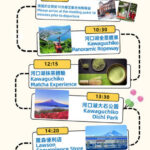
The two route choices give the day a different feel. Course A is aimed at classic pictures: Chureito Pagoda, Lake Kawaguchi and Oishi Park, Shiraito Waterfall, and Obuchi Sasaba tea fields. Course B pairs the pagoda with Oshino Hakkai, Lake Yamanaka, and a choice between the Mt. Fuji Museum and a nearby matcha café. Both include a stop at Lawson Fujikawaguchiko Town Hall.
The broader route sequence may shift with traffic, weather, the season, and conditions at each site. Don’t assume that every place named across both courses is included in the option you book. Check your selected route and meeting point before you set out.
You can check availability for your dates here: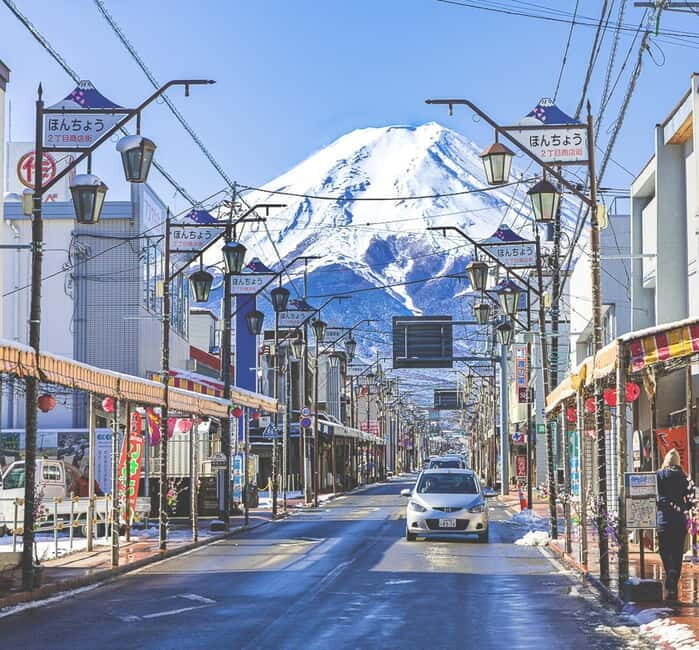
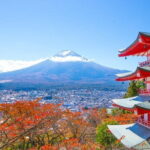
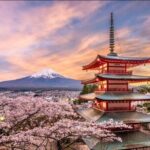
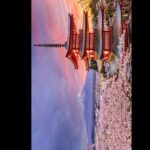
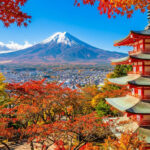
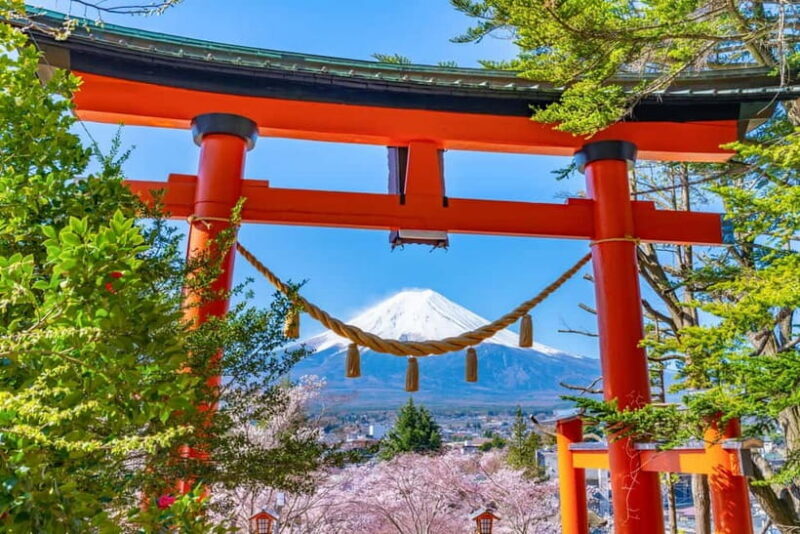
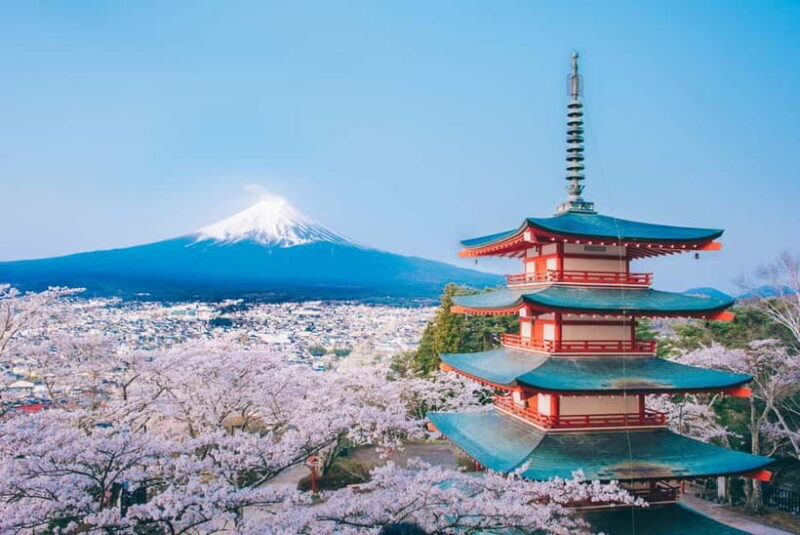
Arakurayama Sengen Park is the trip’s strongest photo stop for many people. The five-story Chureito Pagoda frames Mount Fuji in a view that has become one of Japan’s best-known images. If the sky is clear, it’s easy to understand why photographers make the climb.
The path up includes roughly 400 steps, according to a person who made the trip. It’s a short but steep effort, so comfortable shoes matter. You’ll have a set time at the stop, which means taking a few pictures and exploring the park may require choosing one over the other.
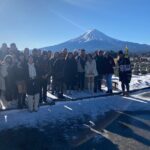
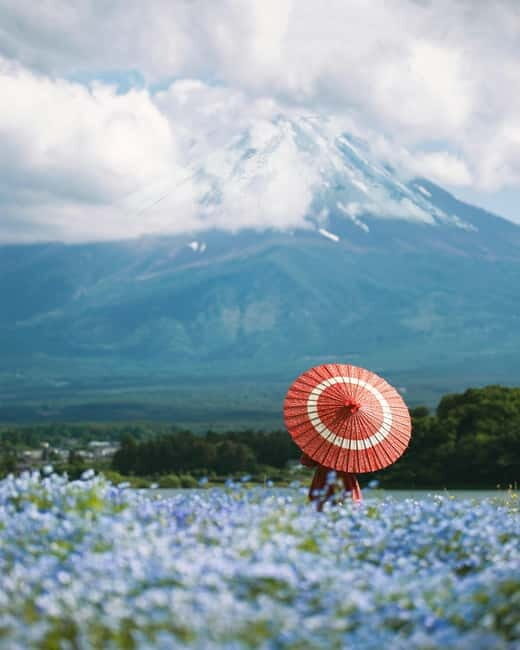
Weather is the big uncertainty. A clear day can reveal the mountain in full; cloud may conceal the summit or all of Fuji. Guides sometimes adjust the order of stops to make the most of changing conditions, but no route can promise a view.
You might also be interested in these Tokyo experiences
Shimoyoshida Honcho Street brings a different mood from the pagoda’s elevated viewpoint. Its older shopfronts and eateries offer a glimpse of a working town, with Fuji sometimes visible along the street. This is a good place to slow your pace a little and notice the setting beyond the famous mountain shot.
The stop is relatively brief, so you’re not getting a long visit to Fujiyoshida. If you’re drawn to local shops or want time to eat, you may wish it were longer. Still, it gives the day a human scale between viewpoints and bus rides.
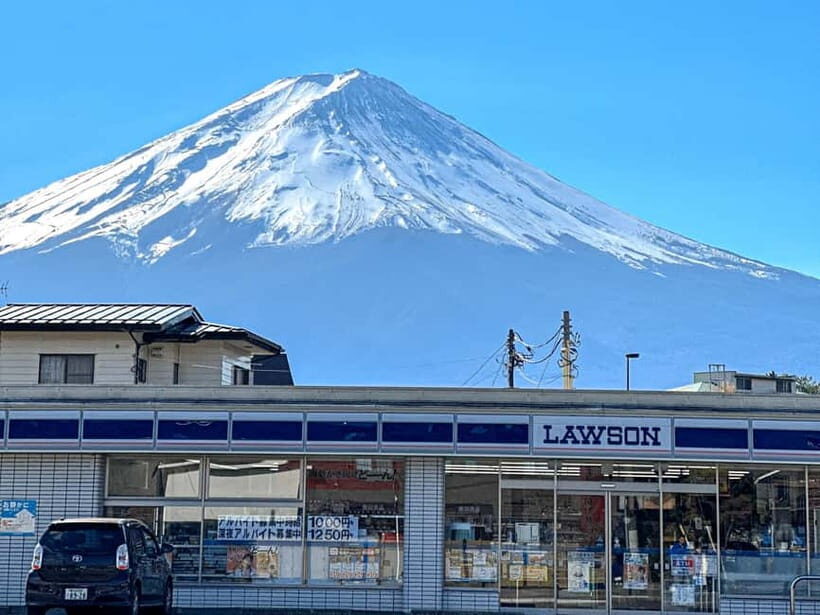
Lawson Fujikawaguchiko Town Hall is a convenience store, not a cultural site. It has become a popular place to photograph Fuji above an everyday Japanese street scene. The stop is short on Course A, and the Course B description allows more time there, so check which route you’ve chosen.
I’d treat it as a quick, slightly quirky photo opportunity rather than a must-see in its own right. If you’ve already seen similar pictures, this is an easy stop to keep brief. The convenience store setting also means you may be able to pick up a drink or snack, though don’t count on it replacing a proper lunch break.
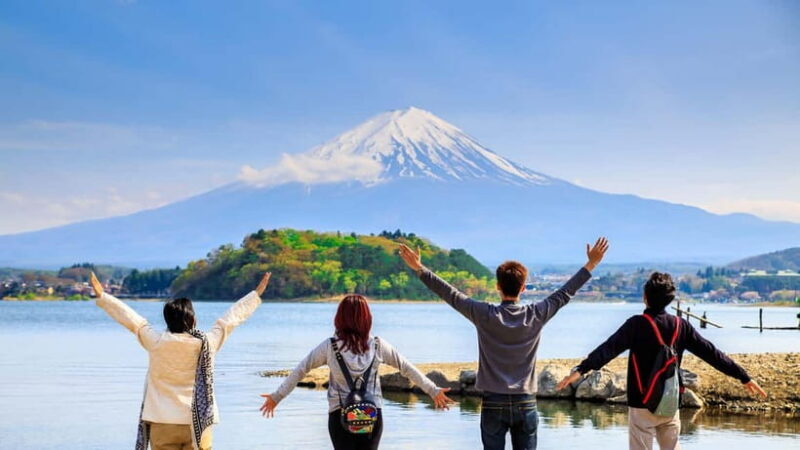
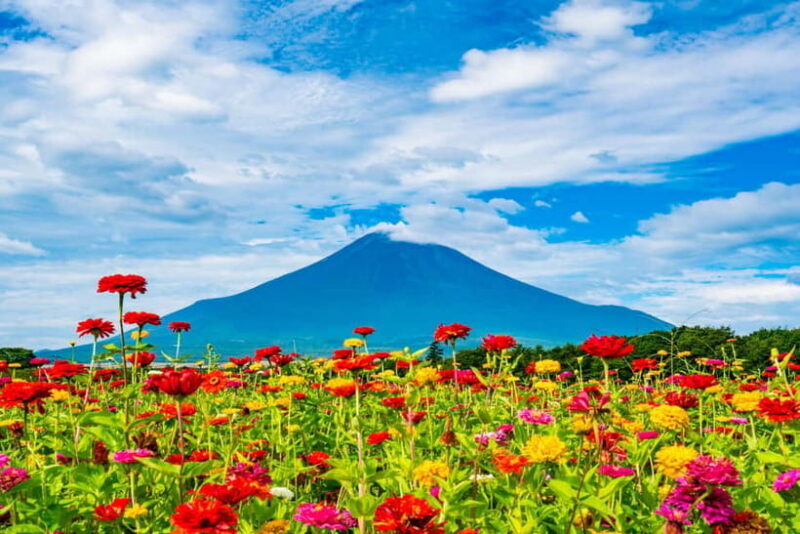
Lake Kawaguchi is one of the best-known lakes around Fuji, and its open water gives you a different frame from the pagoda or town street. The schedule includes a short pass-by and a stop at Oishi Park, where flowerbeds add color in season. If the mountain is clear, you can look for its reflection on the water.
The time here is limited, so think of it as a scenic pause rather than a full lakeside visit. Flower displays vary with the season, and clouds may change the view quickly. Even on a less-than-perfect Fuji day, the lake and park provide a welcome break from the road.
More Great Tours Nearby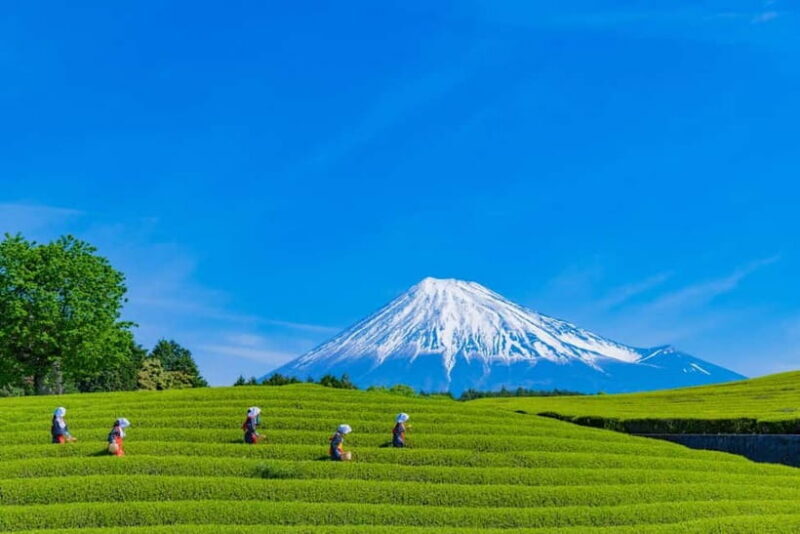
Oshino Hakkai is a small village known for eight clear spring ponds. The water and historic watermills give this stop a more intimate feel than the open lakes. You have about an hour, enough to walk around and take in the ponds, though the village can be busy and the time can pass quickly.
Course B also includes Lake Yamanaka and Hirano Beach. The broad shoreline is a calmer finish to the sightseeing, with space for a walk and a view across the water toward Fuji. On a clear day, the mountain reflected in the lake can be a fine last image before the return drive.
For Course B, the Mt. Fuji Museum offers exhibits about the mountain’s culture and geology. The route description also gives you the option of a nearby matcha café instead. That choice is useful if you’d rather take a relaxed break than spend time indoors, but confirm the exact plan with your guide on the day.
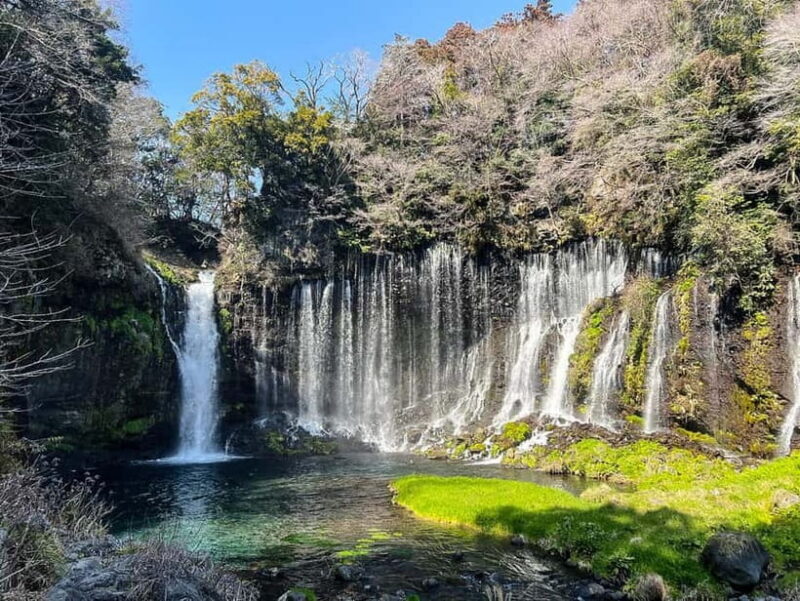
Shiraito Waterfall is a natural pause on Course A, with fine streams of water flowing down a broad cliff face. The stop allows time for sightseeing and a simple lunch break, but meals are not included. Bring a light lunch or snacks rather than counting on a scheduled restaurant meal.
Obuchi Sasaba offers a striking change of scenery: rows of tea plants on rolling ground with Fuji in the distance when weather allows. It’s a particularly good stop if you want a rural view beyond lakes and tourist-town streets. Course A’s variety is its strength, but its many stops mean you’ll be moving on before you’ve had time to linger.
Round-trip transport from central Tokyo is included, with pickup and drop-off options at Starbucks Coffee near Shinjuku L Tower or Tokyo Station’s Marunouchi North Exit 2. The meeting point depends on the option you book, so check it carefully. A guide speaks English, Korean, and Chinese, and guides named Kei, Goldie, Jun, Yui, Jeffrey, and Yuichi have led trips.
This is a large-group tour, with up to 49 people. That brings a practical advantage: you can reach several distant stops in one day without navigating local connections or driving yourself. The coach has been described as comfortable, with good legroom, but it’s still a shared bus and group timing shapes each stop.
The guide’s role matters on a day with several changes of place and schedule. Clear directions, help with meeting back at the bus, and local context can make the trip feel much easier. Some guides also share photo tips or take pictures for people travelling alone. Language delivery may vary by guide and group, so if detailed English explanations are important to you, consider that the tour serves several languages.
At $69 per person, the price is attractive for a full day of transport and guided visits across a wide area. You’re paying for convenience as much as sightseeing: the stops are spread out, and arranging them independently by public transport would take planning. The value is strongest if you want to see several places without renting a car.
Meals, travel insurance, and personal expenses are not included. Bring snacks and a light lunch, as there is no dedicated lunch service. Stops may have places to buy food and drinks, but carrying something gives you more control over your break.
The vehicle is subject to a Japanese rule limiting operation to 10 hours, and the itinerary may be adjusted around that rule as well as traffic and weather. Road delays can be substantial: a serious accident has stretched the drive to Fuji to five hours and led to missed stops. Don’t schedule a tight commitment in Tokyo for the evening.
This activity is stroller-friendly if you tell the operator in advance, but it is not wheelchair-accessible. The pagoda climb in particular makes the route a poor fit if stairs are difficult for you.
Book it if you have one free day in Tokyo and want to see several Fuji-area sights without organizing transport yourself. It suits photographers, first-time visitors, and anyone keen to pair the pagoda with lakes, village scenery, or a waterfall. Choose Course A for the tea fields and Shiraito Waterfall, or Course B for Oshino Hakkai and Lake Yamanaka.
Think twice if you need a slow pace, a guaranteed view of Fuji, or a long lunch. The day is structured around a large group and a lot of driving, and the mountain’s visibility depends on weather. I’d bring comfortable shoes, snacks, and a flexible attitude. If Fuji shows itself, the many viewpoints make the effort worthwhile; if it doesn’t, the ponds, waterfall, and countryside still give the day plenty to offer.
“Guide is a legend, he was so good at explaining everything and keeping the interest high during the 12 hours. The driver is highly skilled gentlema…”
The tour is listed as 11 hours. Traffic and other conditions can make the day longer, with some trips reaching 12 hours or more.
The two listed starting points are Starbucks Coffee near Shinjuku L Tower and Tokyo Station’s Marunouchi North Exit 2. Your meeting point depends on the option booked.
Guides are listed as speaking English, Korean, and Chinese. The guide assigned to your trip may vary.
No. Meals are not included, and there is no planned lunch service. Bring snacks or a light lunch.
Wear comfortable shoes and bring snacks. The operator also recommends a light lunch because meal time is not included.
No. The activity is not wheelchair-accessible, though it is stroller-friendly. Tell the operator in advance if you plan to bring a stroller.
You can check availability for your dates here: