Physical Address
304 North Cardinal St.
Dorchester Center, MA 02124
Physical Address
304 North Cardinal St.
Dorchester Center, MA 02124

See 400 Nile crocodiles, explore Djerba’s heritage and Islamic art, and get hotel transfers on this three-hour guided park tour.
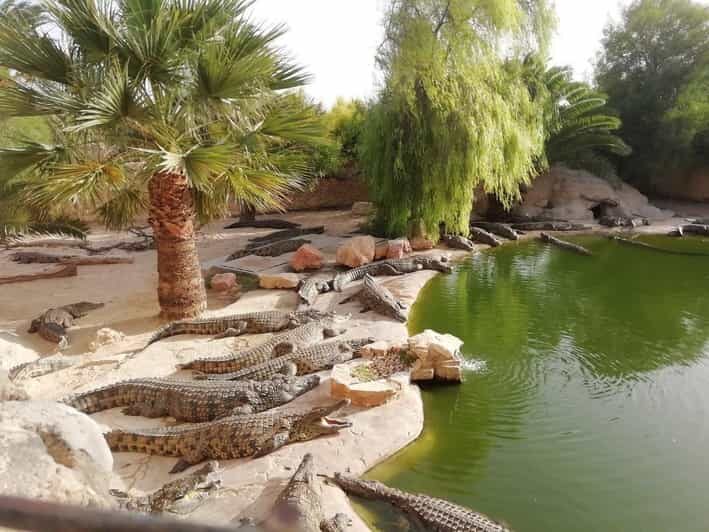
Djerba Explore Park brings crocodiles, traditional Djerbian life and Arab-Muslim art into one compact visit. The headline moment is the crocodile farm, home to more than 400 Nile crocodiles in a tropical lagoon, but the cultural stops give the park more substance than a zoo outing alone.
I like two things in particular: a guide can connect the animal exhibits with Djerba’s customs and history, and the park puts its heritage displays and museums close to the crocodiles. That mix makes the three-hour visit useful for families and curious first-time visitors alike.
The main consideration is time. Three hours gives you a guided introduction, not a leisurely museum day, and some reptile displays or feeding activities may vary by season. The listed $27 price includes park entry and hotel taxi transfers, but the tour information is not fully consistent about whether guide services are included, so confirm that detail before booking.
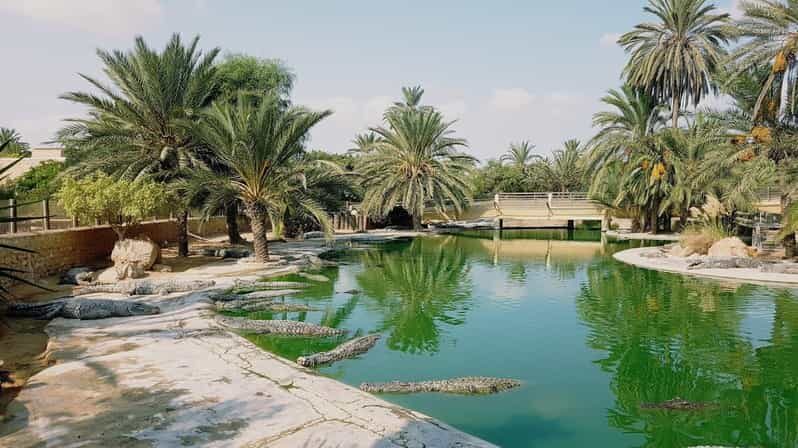
Djerba Explore Park is in the Medenine Governorate of Tunisia, and its appeal rests on a simple combination: animals, local heritage and art in a single destination. If you are deciding between a short excursion and a full day away from your hotel, this one fits the shorter slot. The stated duration is three hours.
The largest draw is the crocodile farm, where more than 400 Nile crocodiles share a large tropical lagoon. You can watch them bask on the banks or glide through the water. The feeding session is a particular highlight, so ask your guide about its timing early in the visit. That gives you a better chance of being in a good viewing spot rather than hearing the commotion from across the park.
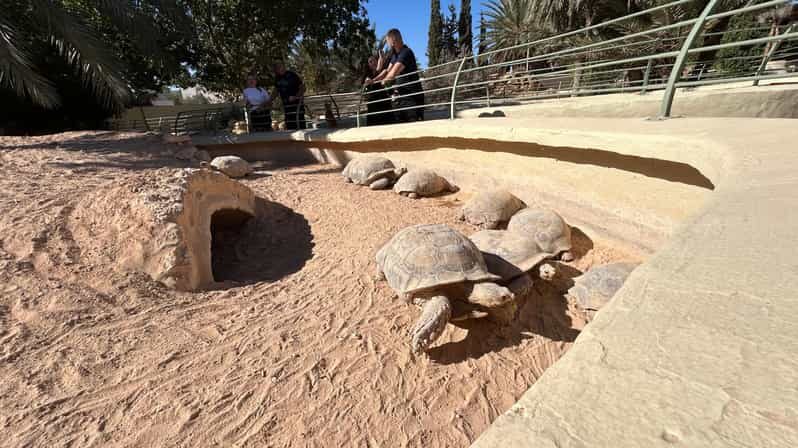
The crocodiles are impressive at close range, but the tour also includes lizards, snakes and turtles in a safe, designed environment. That variety helps keep the visit interesting if you have a child who is less taken with crocodiles, or if you already know your way around a reptile house. Keep in mind that animal activity can vary. In colder months, reptiles may be less active or in hibernation, and some displays, including snake feeding, may not take place.
You can check availability for your dates here: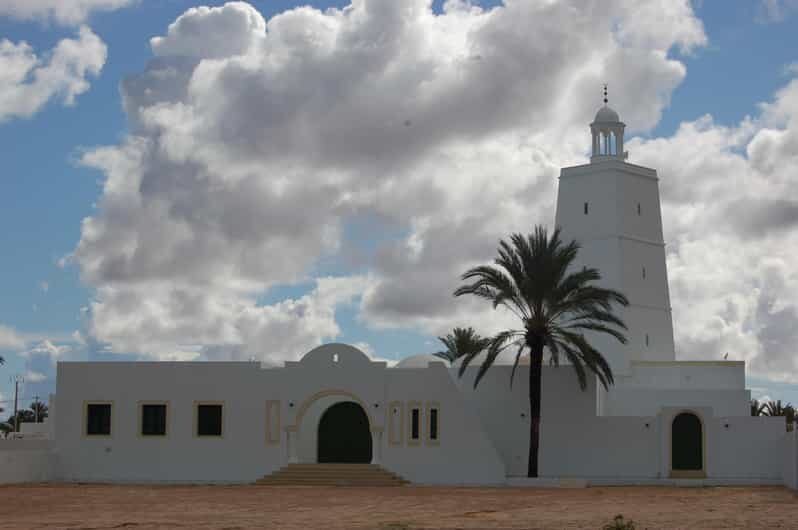
A reptile show is scheduled for 11:00 AM, led by keepers who explain the animals and their habits. It is a useful moment to pause and learn rather than simply walk past enclosures. The show is intended to be educational and engaging, so it can work well for children as well as adults who want context for what they are seeing.
The timing matters. The tour itself has variable starting times, while the show is listed for 11:00 AM. Check the available departure details when booking, and ask your guide how the schedule fits together. If the show is a priority, make that clear at pickup rather than assuming the group will arrive at the right moment.
Season also matters. During colder periods, some reptiles may be in hibernation, and feeding displays may not run. The crocodile farm remains a major part of the visit, but it is sensible to treat the reptile show as a scheduled feature that can be affected by conditions, not as a guaranteed performance.
Looking for more options in Djerba? Here are some other experiences worth considering.
The cultural portion is what gives this excursion its strongest sense of place. The Heritage Museum and traditional displays introduce the way of life on Djerba, including local architecture and crafts. A traditional house, known as a menzel, helps make those details concrete: rather than seeing a collection of objects in isolation, you get a glimpse of the spaces and practices that shaped island life.
The traditional oil mill is another useful stop. Olive oil is part of the region’s everyday food culture, and seeing how it was made helps turn a familiar product into a story about work and local skill. Park activities can also include demonstrations or displays of traditional textiles, jewellery making and a camel-powered wheel. These features add variety, though the exact time spent at each depends on the tour pace.
This section benefits most from a guide. A good guide can explain what you are looking at, answer questions and leave you enough time to observe. Visitors have named guides including Imed, Amine and Imad, among others. Names and language assignments can vary, so you should not assume you will have a particular guide. The tour information lists French and English for the local guide, while Arabic, English, French, German and Italian are listed among the host or greeter languages. Confirm your preferred language when checking availability.
Lella Hadria Museum offers a change of pace from the animal areas. Its collection covers Islamic art and history from across the Arab world, giving the visit a wider frame than Djerba alone. The museum is a good reason to choose this tour even if crocodiles are not your main interest.
Allow yourself time to look rather than treating the museum as a quick indoor stop between exhibits. The collection is described as large, and the museum’s modern building provides a different setting from the traditional house and craft displays. The contrast is part of the appeal: you move from everyday local life to a broader artistic and cultural story.
There is a practical trade-off. With only three hours for the whole park, you may need to keep moving if you want to see the crocodiles, attend the reptile show and visit both museums. If you like to read every label or spend a long time in galleries, this guided outing may feel brief. Think of it as a well-rounded introduction, not an exhaustive museum visit.
A guide can make a noticeable difference at a site with several distinct sections. Instead of working out the order yourself, you have someone to explain the Djerbian house, the oil mill, the museums and the animal enclosures. Several guides named on the tour, including Imed and Amine, have been praised for clear explanations, patience and answering questions. Some have also helped visitors find a good spot for crocodile feeding or take photos.
The most useful quality is not simply a store of facts. It is pacing. A guide who gives you time to look, rather than hurrying everyone from stop to stop, helps the visit feel less like a checklist. If you are travelling with children, this can be especially helpful: the animal areas offer immediate interest, while the guide gives adults a cultural thread to follow.
The group size is not fixed in the information provided. Some outings have been very small, including a group of two with one guide, while another had four participants. That can make the experience feel more personal, but you should not count on a private tour unless it is specifically confirmed.
More Great Tours Nearby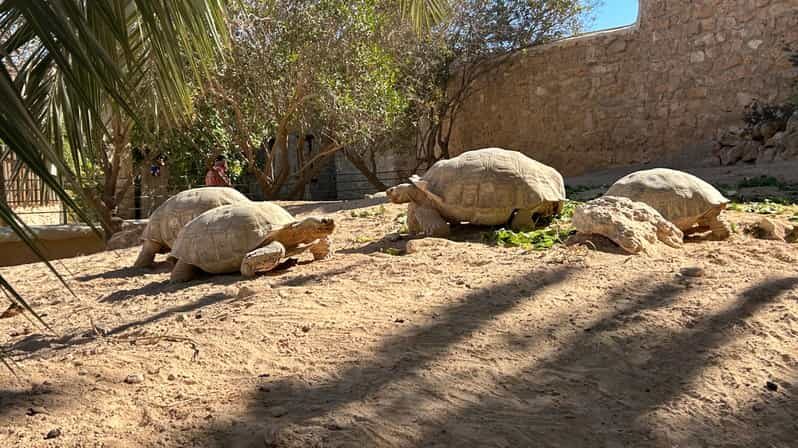
At $27 per person, the value depends on how you use the bundled pieces. The stated inclusions are entry to Djerba Explore Park and hotel pickup and drop-off by taxi. A local guide is also described as included in the tour details. Taken together, entry, transport and an explanation of the park can make the price reasonable, particularly if you would otherwise arrange a taxi and navigate the site on your own.
There is a wording conflict: the included section lists a local guide, while the exclusions list guide services as not included. That is worth resolving before you pay. Ask whether the live guide is part of your specific booking and whether there are any additional guide charges. Do not assume every service mentioned in the general description is covered.
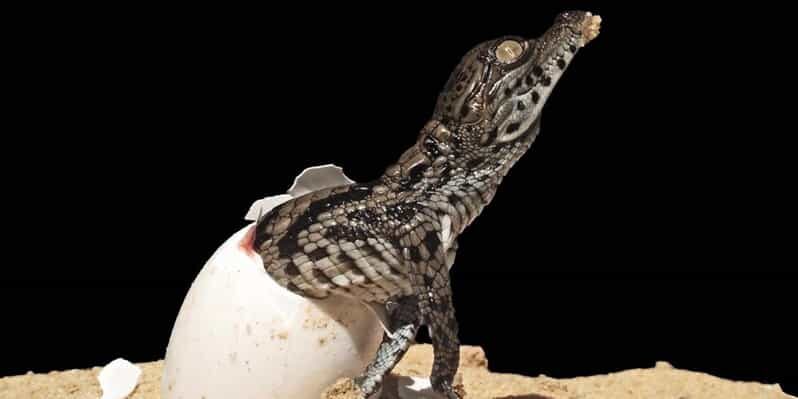
Food, drinks and personal expenses are not included. Plan to pay separately for anything you buy on site. A photo with a baby crocodile has been part of some visitors’ experiences, but the tour details do not establish that it is included or always available. Treat it as an optional possibility, not a promised feature.
Free cancellation up to 24 hours before the activity and a reserve-now, pay-later option are listed. The activity is also described as wheelchair accessible. Pickup is included, but the exact details depend on availability, so check the pickup arrangements for your hotel before the day of the tour.
This tour suits families who want an activity with a clear animal attraction and enough variety to hold adult interest. The crocodile lagoon is an easy focal point for children, while the traditional house, oil mill and art museum give parents more to talk about than animal feeding alone. The guided format also makes it easier to ask questions as you go.
It works well for couples and solo visitors looking for a half-day cultural stop without arranging separate transport or researching the park in advance. If you are especially interested in reptiles, the farm and keeper-led show may be the main draw. If you care more about Djerbian culture, give the heritage area and museums proper time, and ask your guide to explain how the traditional house and oil mill fit into daily life.
You may want a different plan if you dislike animal attractions or prefer to explore museums at your own pace. The guided visit is designed to cover several parts of the park in a limited time. It offers breadth, but not unlimited time at every stop.
I would book this if you want a compact outing that combines a striking animal encounter with a real introduction to Djerbian culture. The crocodiles are the spectacle, but the traditional house, oil mill and Lella Hadria Museum make the visit more worthwhile than a quick stop at a reptile park. Hotel taxi transfers add practical value, especially if you do not want to arrange transport yourself.
Before booking, confirm the language of your guide, the pickup details and whether guide services are included in your specific price. If you are visiting in colder weather, ask what reptile displays are operating. Go with the expectation of a well-paced overview, not a full day to study every exhibit. For a family or curious first-time visitor, that is a sensible use of three hours.
“I really wish I could remember the guides name be he was amazing. No big group just the 4 of us, he was friendly and very knowledgeable, he made su…”
The tour lasts three hours.
The listed price is $27 per person.
The crocodile farm is home to more than 400 Nile crocodiles.
Yes. A keeper-led reptile show is scheduled for 11:00 AM. Seasonal conditions can affect some animal displays.
The park includes other reptiles such as lizards, snakes and turtles.
The visit includes the Heritage Museum and the Lella Hadria Museum. The latter displays Arab-Muslim art and history from across the Arab world.
Hotel pickup and drop-off by taxi are listed as included. Check availability for the exact pickup details.
Arabic, English, French, German and Italian are listed for the host or greeter. The local guide is described as speaking French and English, so confirm the language for your departure.
No. Food, drinks and personal expenses are listed as not included.
Yes. The activity is listed as wheelchair accessible.
You can check availability for your dates here: