Physical Address
304 North Cardinal St.
Dorchester Center, MA 02124
Physical Address
304 North Cardinal St.
Dorchester Center, MA 02124

Go behind the scenes at Rio’s Samba City, see Carnival costumes and floats, try samba steps, dress up, and finish with a caipirinha.
At Rio’s City of Samba, Carnival is not just a parade on TV. It is a year-round project of design, construction and rehearsal, and this tour takes you inside the Grande Rio samba school’s working world. You get a closer look at floats and costumes, plus the people and planning behind the spectacle.
I like that the tour explains how a samba school builds a parade, not just what you see from the stands. I also like the hands-on finish: trying on a costume, learning a few samba steps with a dancer, and having a caipirinha.
One consideration: the meeting point can be hard to spot among the warehouses, and the advertised costume photo opportunity needs to be balanced with the rule against indoor photography. Ask the team where photos are allowed before you take your camera out.
City of Samba is a large complex of warehouses in Rio’s port area. Behind the industrial-looking exterior, each samba school has a base for preparing its Carnival parade. Grande Rio’s warehouse is the focus here, and its role as the 2022 Carnival champion gives the visit a useful connection to a recent winning production.
The parade is a competition, not simply a procession. A samba school develops a theme and turns it into music, choreography, costumes and floats, all of which must work together in the Sambadrome. The guide helps you connect those pieces, so the parade starts to look less like a blur of feathers and drums and more like a carefully planned performance.
The scale is striking. The tour describes the production of more than 3,000 costumes for the show, and explains how planning begins soon after one Carnival ends. That detail helps make sense of the warehouse itself: the parade may last only a short time, but its preparation takes much of the year.
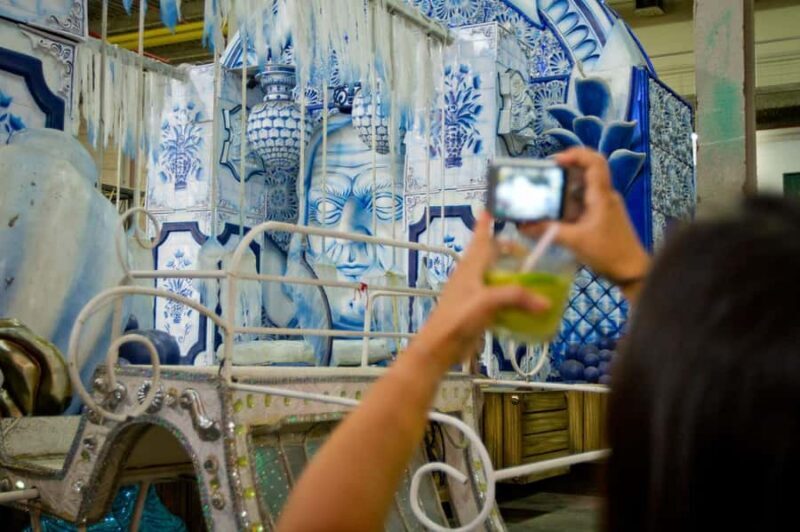
You may see floats, props and costumes up close, and learn about their design and construction. What is actively being built can depend on the time of year. Some parts of the workshop may be busy with preparations, while other visits focus more on past costumes, displays and how the school organizes its work. If watching construction in progress matters most to you, ask what is underway when you book.
You can check availability for your dates here: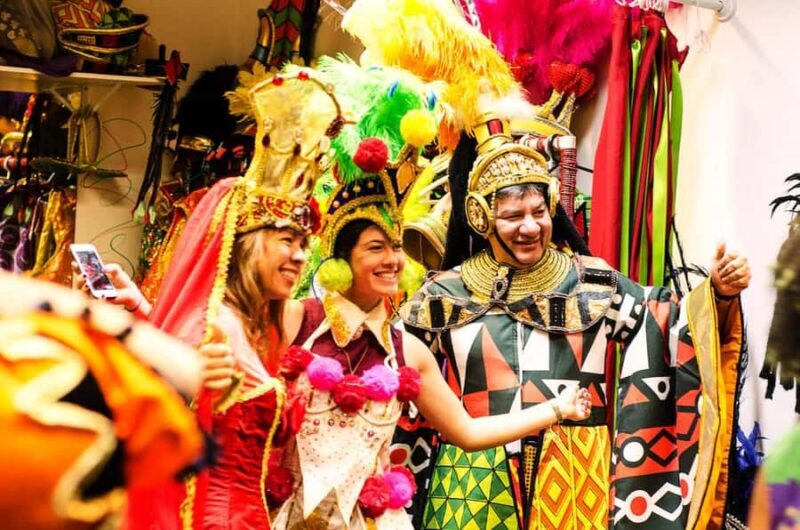
A good guide is central to this visit. Without context, a costume is a dazzling object; with context, it becomes one piece of a school’s theme and an annual contest. The guide explains the history of samba and Carnival, the planning process and the work that brings a parade to life.
The tour runs in English, Portuguese, French, Spanish, German, Hebrew and Italian. The guide’s assigned language and person can vary, so do not book expecting a particular individual. Guides named on past departures include Sol, Ton, Lias, Jaquel and Lea, but names are not guaranteed.
I especially value the explanation of how the samba school competition works. It gives you a better eye for what to watch if you later attend a parade: not only the costumes, but how music, movement and visual ideas fit together. Several people make the tour part of a Carnival visit for exactly that reason.
The guide also gives the experience its human side. Samba schools depend on the effort of many people, and the workshop makes that labor easier to picture than a seat in the Sambadrome can. Expect a lively, social tour rather than a quiet museum visit. The mood is playful, but the subject is serious craft and organization.
Looking to discover more of Rio De Janeiro? Consider these other city tour options
Seeing parade pieces from a few feet away is one of the tour’s strongest features. From the stands, you take in the full sweep of the show; in the warehouse, you can focus on the materials, detail and size of individual elements. That closer view helps you appreciate why a parade needs so many makers, performers and support workers.
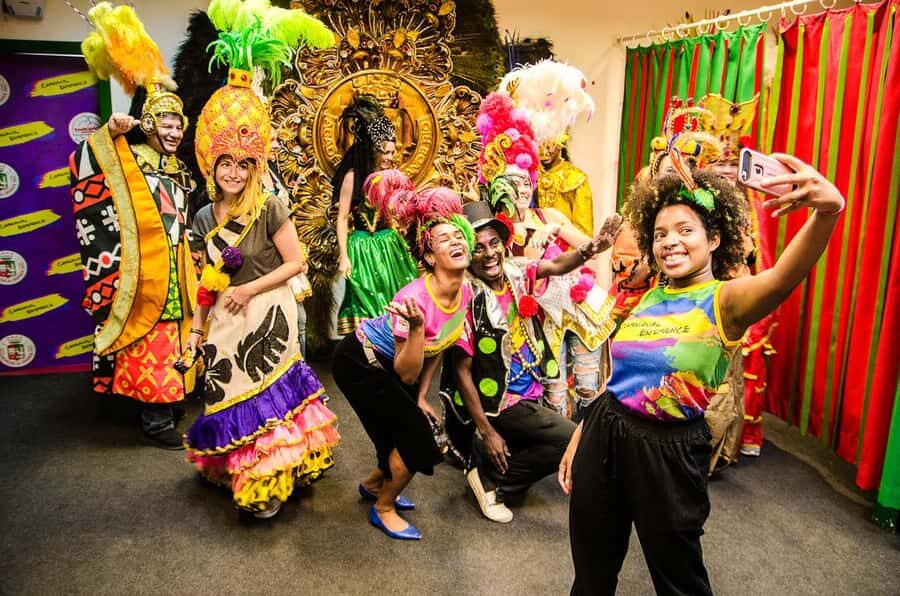
Costumes are another highlight. You can try on an authentic parade outfit, which shifts the visit from looking at Carnival to briefly taking part in its visual language. The outfits are designed for a large, high-energy show, so expect them to be elaborate rather than everyday clothing.
There is one practical wrinkle: the activity promotes a costume try-on and a chance to get a picture, but the rules also prohibit photography inside. Do not assume you can take photos wherever the tour goes. Ask the Carnaval Experience team at the start where photography is permitted, and follow the guide’s instructions.
The tour may show past costumes and designs as well as current production. This matters because the work changes over the year. A visit close to Carnival can offer a sense of preparations in motion; outside that period, the displays and explanations still give you a clear picture of how a parade is made. The tour is worthwhile even if you do not see every stage of costume construction live.
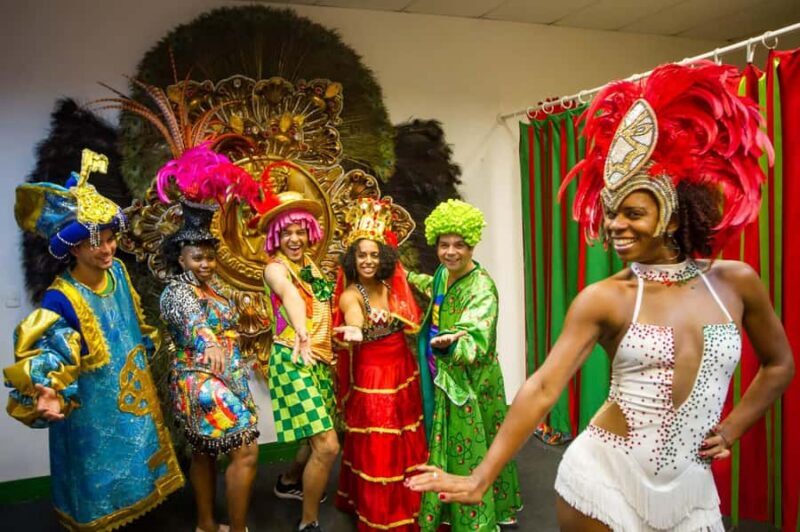
The visit ends on a more participatory note. A professional dancer demonstrates samba and leads a short lesson, so you can try a few steps yourself. Some departures also include a performance. You do not need dance experience; the point is to feel the rhythm and understand the movement, not to leave ready for the Sambadrome.
This is a welcome change of pace after the workshop explanations. The lesson adds energy, and it makes the tour feel less like a factory visit and more like an introduction to the culture that gives the objects their purpose. If dancing is not your thing, you can still watch and enjoy the music.
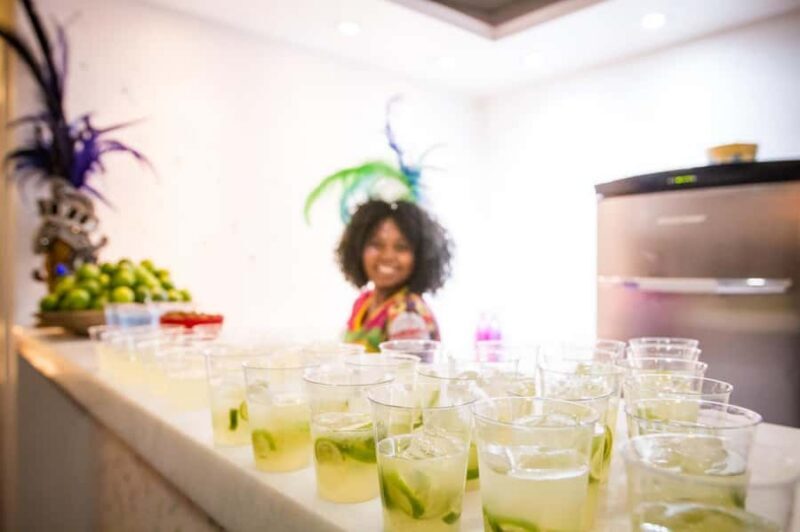
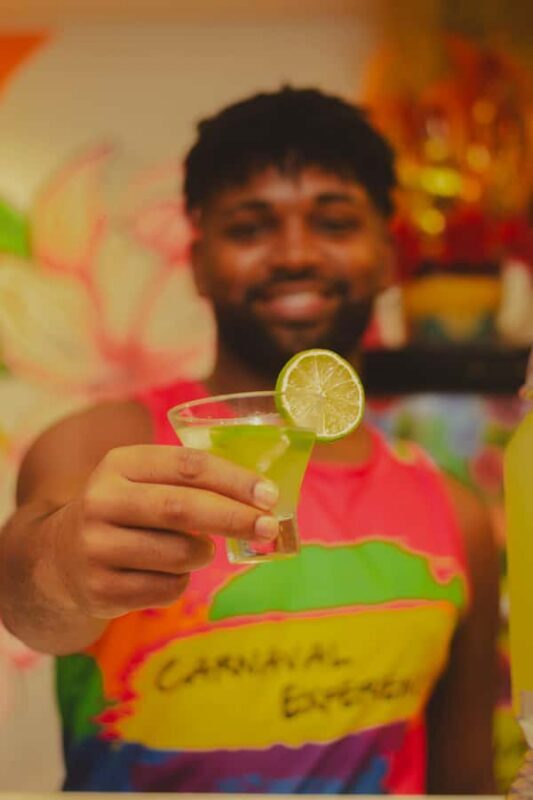
A caipirinha is served at the end, a fitting Brazilian finish to the visit. A non-alcoholic version is available, according to the tour information. Water is also included, which is useful in Rio’s heat.
The meeting point is at the main entrance to City of Samba on Binário do Porto Avenue, about 200 metres from AquaRio. The complex consists of large, light-brown warehouses. Look for the Carnaval Experience team in the square or outside the Grande Rio warehouse; staff wear colorful shirts.
The nearby Cidade do Samba VLT station makes the tram a straightforward option. If you arrive by car or taxi, search for Carnaval Experience or Cidade do Samba main entrance in your navigation app. Paid street parking is listed at 60 Rivadávia Corrêa.
Give yourself time to locate the team. The warehouse setting can feel confusing at first, and the entrance is not a grand, obvious museum doorway. If you cannot see staff, check the square and the area in front of Grande Rio’s warehouse rather than wandering around the complex.
Transportation is not included in the standard tour. Optional pickup is available, but you need to arrange the exact meeting point with the provider in advance. For a hotel pickup, wait in the lobby entrance; the driver is due to arrive 15 minutes before the scheduled time.
More Great Tours Nearby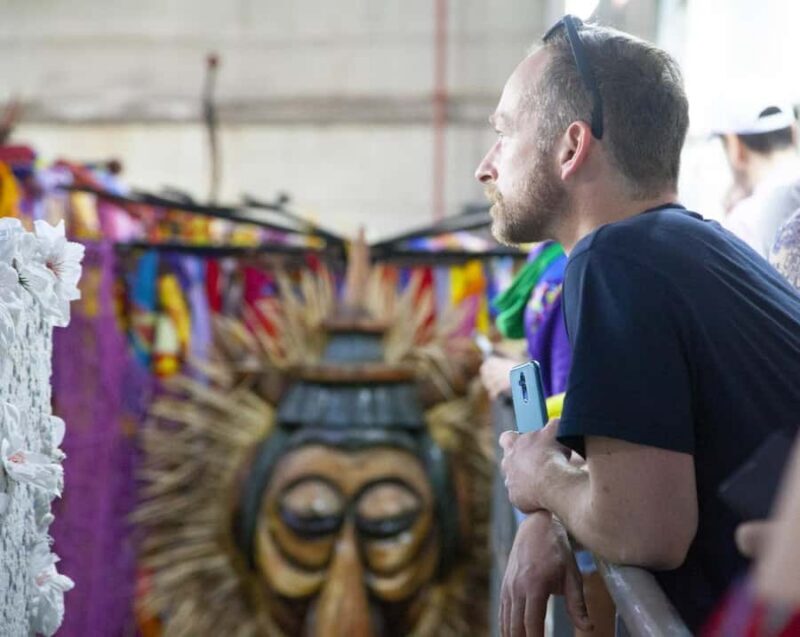
At the stated price of $27 per person, this is a compact experience with several distinct parts: a guided workshop visit, Carnival history, costume try-on, samba instruction, water and a cocktail. I think the value comes less from the drink or the photo opportunity than from seeing the scale and organization behind a parade that is easy to admire without understanding.
The tour lasts 90 to 150 minutes, so allow some flexibility in your plans. The listed range is broad, and the pace or amount of explanation may affect the final length. Small groups are available, which can make it easier to hear the guide and ask questions, though a small group is not guaranteed for every departure.
The experience makes particular sense before a Sambadrome parade. You will recognize more of the planning and teamwork behind what you see, and the costumes and floats will have more meaning. It also works well if you are in Rio outside Carnival season and want a closer look at samba culture without attending the parade itself.
Choose it if you are curious about the craft, people and planning behind Carnival, not just the party atmosphere. It is a good fit for first-time visitors who want cultural context, families or friends who enjoy interactive activities, and anyone planning to attend a parade and hoping to watch with a sharper eye.
It may be less satisfying if you expect to see a full parade rehearsal or a factory floor in constant motion. The tour offers a backstage look, but what is being built or rehearsed depends on timing. It is also not the right place to take unrestricted photos indoors, so check where pictures are permitted before you rely on the costume moment for photos.
The activity is non-refundable, so be sure your date and transport plan work before booking. If you need a specific language, check the available starting times and confirm the language when you reserve.
I would book this tour if you want to understand how Rio’s Carnival is made, or if you are attending a parade and want the spectacle to mean more than feathers, drums and scale. The warehouse visit, costume try-on and samba lesson give it a satisfying mix of explanation and participation for around two hours.
Go with realistic expectations about active production and indoor photos. The workshop may not be at the same stage every day, and the meeting point takes a little care to find. But at $27, the combination of local context, close-up parade objects and a hands-on finish makes this a useful, good-value addition to a Rio stay.
“Tour was great. Would definitely do it again. It’s nice to understand more about samba culture and see the floats in person and up close.”
The tour lasts 90 to 150 minutes. Check the available starting times when you book.
Meet at the main entrance to City of Samba on Binário do Porto Avenue, near AquaRio and the Rio Star. Look for the Carnaval Experience team in the square or outside the Grande Rio warehouse.
Take the VLT to the Cidade do Samba station. The meeting point is at the complex’s main entrance.
Guided tours are offered in French, Portuguese, English, Spanish, German, Hebrew and Italian. Check the language available for your chosen departure.
Transportation is not included in the standard tour. Optional pickup is available if arranged with the provider in advance.
Yes. The tour includes the chance to wear an authentic parade costume.
Photography inside is listed as not allowed. Since the activity also describes a costume photo opportunity, ask the team where, if anywhere, photos are permitted.
An alcoholic beverage is included, and a non-alcoholic version is available. Water is also included.
You can check availability for your dates here: