Physical Address
304 North Cardinal St.
Dorchester Center, MA 02124
Physical Address
304 North Cardinal St.
Dorchester Center, MA 02124

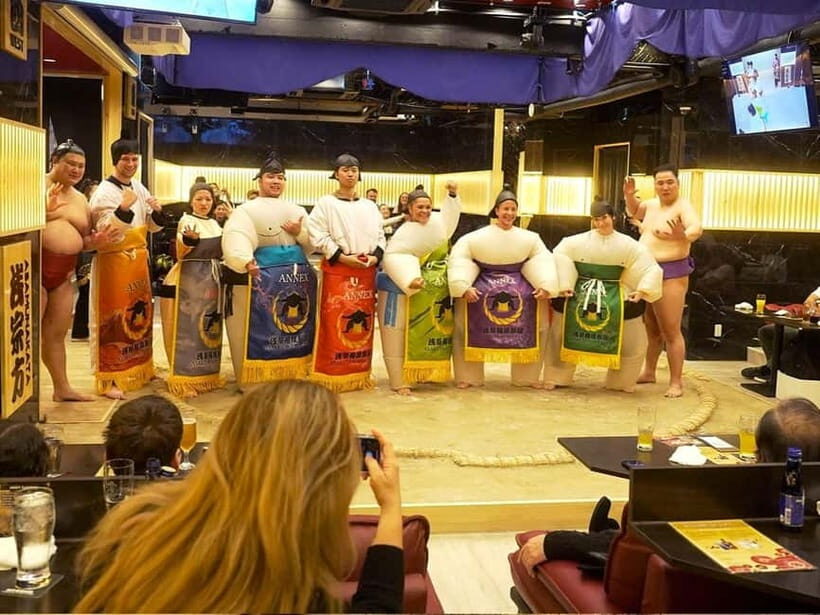
Watch sumo bouts, learn the rituals, try the ring and enjoy wagyu sukiyaki at this two-hour Asakusa show.
Sumo is easier to appreciate when someone explains what is happening before the wrestlers collide. At Asakusa Sumo Club Annex, you get a lively introduction to the sport, demonstrations and close-up bouts, all built for an audience that may never have watched sumo before. The wrestlers are retired professionals, so this is an entertainment show, not a visit to an active training stable.
Two things I especially like are the clear bilingual commentary, which makes the rituals and rules legible, and the chance to step into the ring for a friendly challenge. The geisha dance and an ample Japanese dinner add variety to the evening, too. One consideration: this is a polished, tourist-friendly performance rather than a formal tournament, and the venue has stairs, so it is not suitable for wheelchair users.
The most important distinction to understand before booking is the kind of sumo you will see. The wrestlers here are retired, and the event is designed as an interactive performance. You will see training techniques and staged bouts, but you will not observe active wrestlers preparing for a tournament in a working stable.
That difference is not a flaw. A stable visit is about watching a serious training environment, often with strict rules and little explanation. Here, a host talks you through the sport, demonstrates its movements and makes room for questions. If you want an accessible first encounter with sumo, the show format can be more useful than watching practice without context.
The atmosphere is deliberately warm and informal. Families, couples and solo visitors are all welcome, and the performers invite audience participation without making it compulsory. You can enjoy the spectacle from your seat, or volunteer for the challenge if the idea of facing a sumo wrestler sounds like a good story to take home.
You can check availability for your dates here:The evening starts with a geisha dance, a graceful change of pace before the louder, physical part of the program. Afterward, you can take a photo with the performer before the show shifts to an introduction to sumo history, customs and rules. The dance is a brief element of a broader entertainment evening, not a full cultural performance, but it gives the program a distinctive opening.
Next comes the explanation that makes the bouts easier to follow. Sumo has rituals and rules that can seem opaque if you have not watched it before. The host and wrestlers demonstrate techniques and explain what competitors are trying to do, giving you enough of a framework to spot the action once the bouts begin.
The bilingual commentary is a practical strength, particularly if you are attending with a mixed-language group. Hosts have included people called Luke and Go, though you should not count on a particular presenter at your session. The format also leaves room for questions, so it is worth thinking of one or two beforehand. A question-and-answer exchange can be one of the most informative parts of the evening.
You might also be interested in these Tokyo experiences
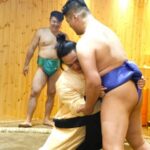
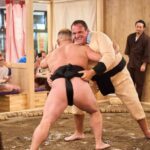
A real sumo ring occupies the center of the restaurant, so the performance happens at close range rather than on a distant stage. The wrestlers demonstrate techniques, then stage dynamic bouts. The show mixes instruction with humor and audience interaction, keeping the sport approachable without asking you to treat the event like a tournament.
If you volunteer for the sumo challenge, you will get the chance to enter the ring and test yourself against a wrestler in a friendly setting. It is an optional highlight, not a guaranteed part of your own evening: the number of challengers is limited, and if interest is high, participants are chosen by lottery. Children and teenagers can take part when selected, but there is no promise that any particular person will get a turn.
You do not need to be an expert or a confident performer to enjoy the bouts. The demonstrations and commentary provide the context; the humor and physical scale of the wrestlers provide the spectacle. If you are shy, there is no need to force yourself into the ring. You can watch, take photos where permitted and still get the main experience.
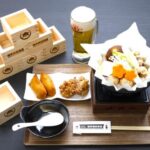
The meal is more than a token snack alongside the performance. The standard offering includes a sukiyaki bento made with Japanese A5 wagyu beef, chanko hot pot and matcha dessert. Chanko is closely associated with sumo, making it a fitting dish for an evening about the sport. The meal is substantial, so plan on this being dinner rather than a pre-show nibble.
Food quality is generally a strong part of the experience, though one small caveat is that food temperature can vary. One diner wished the meal had been hotter, so if a dish arrives cooler than you prefer, tell the staff while you are still eating rather than waiting until the end. Service is otherwise a recurring strength of the event.
Business and First Class add tempura to the meal. Standard seating includes one complimentary drink, with further drinks available to buy. Business includes unlimited drinks, while First Class adds unlimited drinks that include premium Japanese whisky such as Yamazaki. The drink package can make the higher tiers better value if you expect to order more than one drink, but it will matter less if you do not drink alcohol.
Vegetarian and vegan meals are possible, but you must request one at least two days before the reservation. A same-day request cannot be accommodated, and the regular meal will be prepared if you have not notified the venue in time. Gluten-free and halal meals are not available. If those restrictions apply, you may bring your own food.
The three seating categories change both the comfort and what is included. Standard has table seats with a clear view, the sukiyaki meal and chanko hot pot, plus one free drink. It is the straightforward choice if you want the show and dinner without paying for an open bar.
Business moves you to sofa seats and adds tempura and unlimited drinks. This may be the sweet spot if you value a more relaxed seat and plan to make use of the drinks. First Class puts you on front-row sofas closest to the ring, includes the Business food and drink package, adds premium whisky such as Yamazaki, and comes with a special souvenir set that includes a happi coat.
The front row offers the closest view, but the standard category is not described as having a poor view. If you are weighing the cost, think about what you will actually use: seat comfort, proximity, food extras, drinks and souvenirs. A higher tier is not automatically a better deal if you do not want alcohol or extra gifts.
The price starts at $103 per person, but the exact value depends on the chosen category. At the entry level, you are paying for a two-hour hosted performance, dinner, a drink, the dance, the sumo demonstration and photo keepsakes. Business and First Class add more substantial food and drink inclusions, which can justify the higher price for some people. If you mainly want to see a live tournament, this is not a substitute for buying a tournament ticket.
More Great Tours NearbyAfter the show, you receive a printed commemorative photo with the wrestlers and a souvenir tied to your seating category. There is also a photo opportunity after the geisha dance. Souvenir items can vary by season, so regard the keepsake as a pleasant extra rather than booking for a particular item.
The staff also take photos during the event, including during the challenge, which can be helpful if you are busy taking part. The overall pace gives you several chances to interact and take pictures, rather than limiting photography to a quick posed shot at the end.
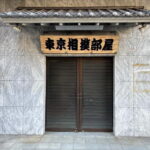
The meeting point is along Asakusa Kokusai Street, next to Matsuya Restaurant. The main club and its Annex can be easy to confuse, so check that you are going to the Annex named on your booking. The venue is in Asakusa, where you can fit the show around other sightseeing, but do not assume that the surrounding area will be busy late at night. If you have an evening time slot, plan your route and any nearby stops in advance.
You might also be interested in these Tokyo experiences
This is a strong choice for a first-time sumo audience, especially if you want explanation, food and interaction in one outing. Families with school-age children may find it particularly engaging: the format is designed for adults and children, and young participants can be invited into the challenge. The event is not suitable for babies under one, and infant meals, seating and souvenirs are not included.
Solo visitors can also feel at ease. The host and staff guide the interaction, and the format gives you a natural way to ask questions or volunteer. Couples looking for a dinner with a distinctly Japanese theme will find more to do here than simply sit through a meal.
The limits are worth keeping in mind. This is a tourist-oriented show, with staged bouts and a humorous tone. It does not offer the quiet discipline of a morning training session or the stakes of a professional tournament. If your main goal is to see active athletes at work, seek out a stable experience instead. If you want a friendly primer with good access to the action, this format makes sense.
Practical details are simple but important: the experience lasts two hours, and you should check availability for the start time that suits you. The venue is not wheelchair accessible because of stairs. You may be seated with other parties, so do not assume your group will have a private table. You can cancel up to 24 hours ahead for a full refund, and the reserve-now, pay-later option can help if your Tokyo plans are still shifting.
Book it if you want a lively, understandable introduction to sumo, a proper dinner and a chance to get close to the ring. The combination of bilingual explanation, funny demonstrations, audience participation and photo keepsakes gives the evening a clear purpose beyond watching a few bouts. For many first-timers, that context is what makes sumo click.
Skip it if you want a serious sporting contest, active stable training or a quiet cultural performance. For the best value, compare the seating inclusions with your appetite for tempura, drinks and souvenirs. Standard can be enough for the show and meal; Business or First Class makes more sense if you will use the extra food, drinks or front-row seat. Book the meal you need at least two days ahead, check the Annex meeting point, and arrive ready to watch, ask questions or take your turn in the ring.
“The show was excellent, lots of humour and lots of learning. The meal was huge and delicious. we had lots of fun, and would recommend it.”
The experience lasts two hours. Check availability for the starting times offered on your date.
No. Retired sumo wrestlers perform for entertainment, with demonstrations and staged bouts. It is different from watching active wrestlers train at a sumo stable or attending a tournament.
Yes. Live commentary is provided in English and Japanese throughout the show.
You can volunteer, but the number of participants is limited. If many people want to take part, the final challengers are selected by lottery.
The meal includes an A5 wagyu sukiyaki bento, chanko hot pot and matcha dessert. Tempura is included with Business and First Class seating.
Standard seating includes one complimentary drink, with additional drinks available to buy. Business and First Class include unlimited drinks; First Class also includes premium Japanese whisky such as Yamazaki.
Yes, but you must request it at least two days before your reservation. The venue cannot prepare a vegetarian or vegan meal for a same-day request.
No. Gluten-free and halal meals are not available. You may bring your own food if needed.
No. The restaurant has stairs and is not wheelchair accessible.
The meeting point is along Asakusa Kokusai Street, next to Matsuya Restaurant. Check that you are going to the Annex. You can cancel up to 24 hours in advance for a full refund.
You can check availability for your dates here: