Physical Address
304 North Cardinal St.
Dorchester Center, MA 02124
Physical Address
304 North Cardinal St.
Dorchester Center, MA 02124

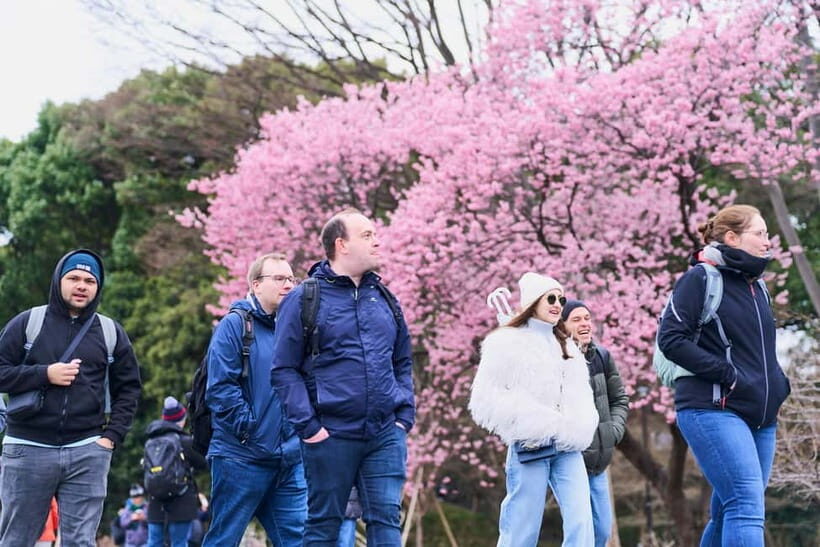
Walk Edo Castle’s moats, gates, ruins and gardens with an English-speaking local guide on this small-group Imperial Palace tour.
Edo Castle was once Japan’s largest castle, and its remains are woven into central Tokyo. This two-hour walk connects the moats, gates and stonework to the samurai era and the emperor’s present-day residence. I like that the small group keeps the history conversational, and that the route pairs substantial castle remains with peaceful gardens.
The guides’ storytelling is a major part of the value. Anju, Fuma, Tomo and other guides are praised for clear explanations, warm manner and patience with questions. I also like that you get context for details you could easily pass without noticing, from layered defenses to the purpose of the grounds.
One consideration: this is an outdoor walking tour, and the route does not offer entry to the emperor’s private residence. You’ll see the palace grounds and East Gardens, not a lavish interior tour. The group is limited to 10, but you’ll still want comfortable shoes and weather-ready clothing.
Key points
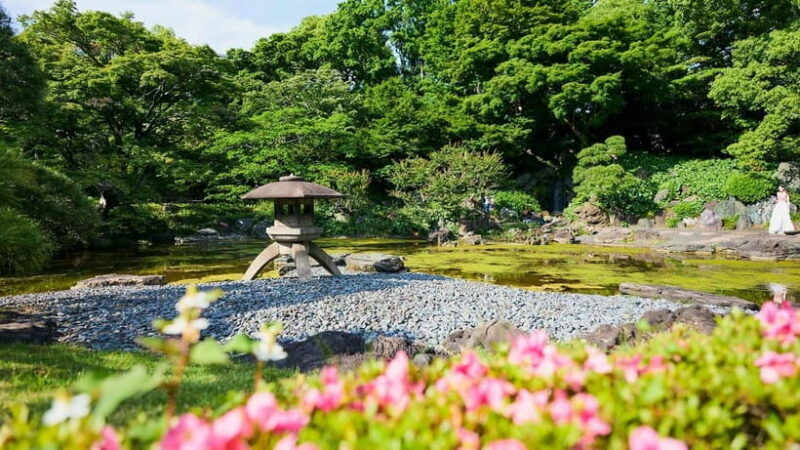
Tokyo can feel like a city built for the next train, the next meal and the next bright sign. The former Edo Castle grounds offer a change of pace, and a way to see how the city’s past still sits beneath its present. Rather than touring a reconstructed castle interior, you walk through its surviving setting: moats, gates, stone walls, gardens and open grounds.
The scale is the point. Edo Castle was Japan’s largest castle, and the guided walk helps you picture the size and defensive design of a place whose traces remain in Tokyo. Without context, a gate or stretch of stonework may read as a pleasant park feature. With a guide, those details become part of a story about the shogun, samurai retainers and a 260-year period of peace.
The walk also connects that history to the Imperial Palace, now the emperor’s residence. The tour introduces the long-running imperial system and the 2,600-year tradition associated with it. That gives the outing two strands: the political and military world of Edo, and the endurance of the imperial institution.
This is a good choice if you want a grounded introduction to Japanese history without spending half a day in a museum. You’ll be outdoors, moving from place to place, and able to ask questions as you go. The experience is less suited to anyone expecting access to palace rooms or an elaborate castle reconstruction.
You can check availability for your dates here:
Meet in front of Starbucks Coffee Kōkyo Gaien Wadakura Fountain Park Store, at 3-1 Kōkyo Gaien, Chiyoda City. Look for a guide holding a sign that says Local Guide Stars. The tour returns to this same spot, so you won’t need to plan a separate onward meeting point.
Arriving on time matters for a small group. With no more than 10 participants, it should be easier to hear the guide and take part in the conversation than on a large coach tour. That doesn’t mean the route is private, but it does make questions and explanations feel more natural.
The guide speaks English only; Japanese-language support is not available. If you’re brushing up on castle history before the walk, you don’t need to arrive with a stack of facts. The tour is designed to explain the place as you see it, and guides such as Anju, Fuma and Tomo have been praised for clear delivery and an easygoing manner. Guide assignments vary, so you can’t count on a particular person.
If you enjoy exploring Tokyo on foot, these walking tours might also suit your style
The first listed stop is Sakurada Tatsumi Yagura, with about five minutes for a visit and introduction. It’s a short start, but a useful one: the guide sets the scene for the castle grounds and helps you begin looking at the site as a former seat of power, rather than simply a green break in central Tokyo.
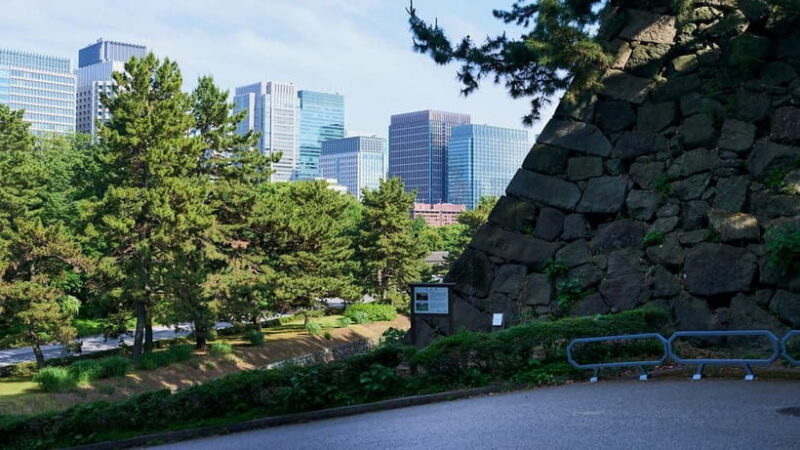
Next comes Ote-Mon Gate, with roughly 15 minutes for a guided visit, sightseeing and photographs. The gate is one of the clearest opportunities to understand how entry to the castle was controlled. The tour focuses on the layered defenses and the scale of the old stronghold, explaining why Edo Castle was considered so difficult to penetrate.
This is a good place to slow down and look closely. A gate is more than a landmark to pose beside; it is part of a system. Guides have been singled out for pointing out features and details that are easy to miss when walking through the grounds on your own. Ask questions if you’re curious about how the defenses worked or what the structures were used for.
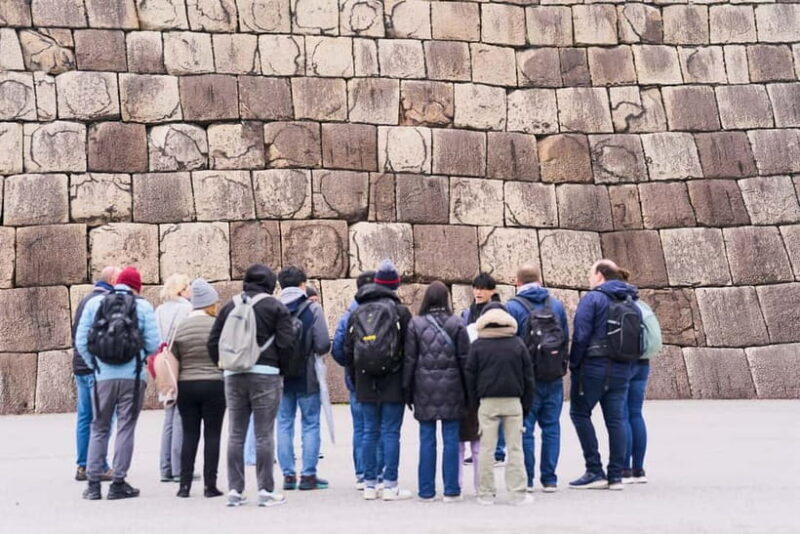
The route then spends about 20 minutes at Tokyo Imperial Palace. Here the tour shifts from the castle as a military and political center to the palace as the current residence of Japan’s emperor. You’ll be walking the grounds and learning about the institution, not entering private residential rooms.
That distinction is worth keeping in mind when you book. The appeal is not an ornate interior tour. It is the contrast between the former stronghold and the present-day palace, and the way a local guide can explain how these grounds have changed roles over time. The tour also puts the imperial system into the wider story of Japan, including the tradition described as extending back 2,600 years.
A miniature structure of the former palace is among the included features. It gives you a visual reference for imagining what the old palace looked like, filling in some of the gaps left by a site where much of the experience comes from open grounds and surviving remains.
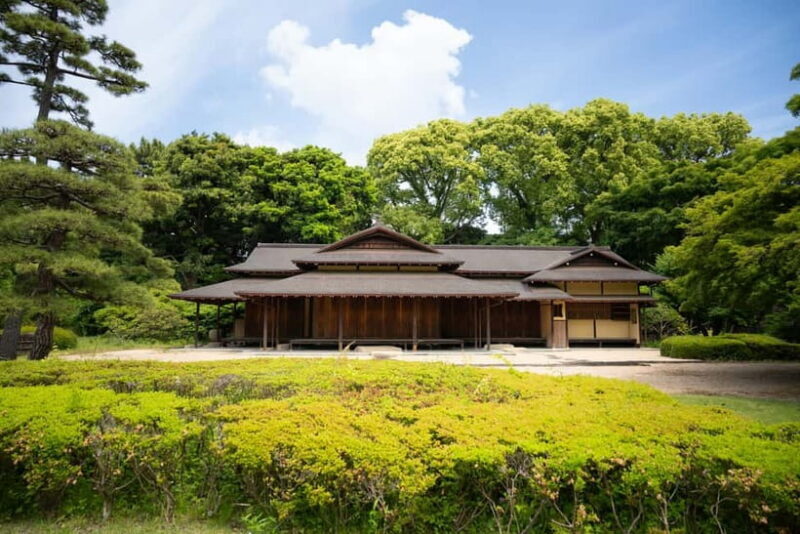
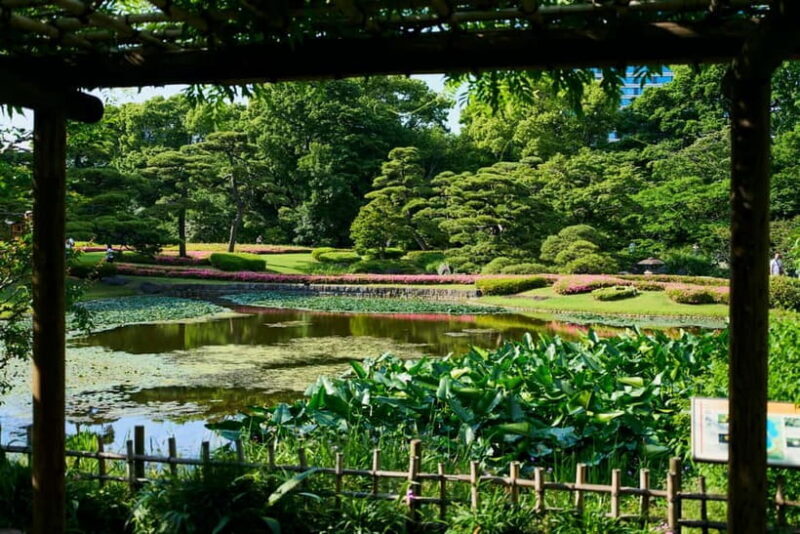
At Ninomaru Garden, the group has about 15 minutes to look around. It’s a shift in mood from gates and defensive walls. The garden adds a quieter, more cultivated side to the walk, and gives the guide a chance to connect the grounds’ design with the history you’ve just heard.
The visit is brief, so treat it as a guided introduction rather than a long garden stroll. Seasonal scenery and careful planting make this a pleasant place for photos, but the value is also in having someone explain what you’re seeing. The broader tour includes encounters with koi and diverse trees from across Japan, details that give the garden stops a distinctly local character.
You then spend around 10 minutes at the Edo Castle ruins. This stop brings the central idea of the tour into focus: the castle is no longer standing as a complete fortress, yet its remains still shape the grounds and help tell Tokyo’s story. Your guide will help you imagine the scale of the original site and explain the parts that survive.
The time at each stop is limited, but the route is not meant to turn every wall into a long lecture. If you’re especially interested in the samurai period, ask questions as the walk unfolds. Guides are often praised for being patient and for making room for conversation, and that exchange can add useful detail without slowing the group too much.
More Great Tours NearbyThe Imperial Palace East Gardens receive about 20 minutes, making this the longest stop on the listed route. It’s a fitting finish: after learning about military defenses, the shogun and the imperial system, you have time to take in a quieter stretch of the grounds.
The gardens are also a reminder that this tour is not history in a vacuum. You’ll see seasonal planting, trees from different parts of Japan and special koi. Photography is encouraged, so bring a camera or make room on your phone. The combination of old stonework, garden paths and open views gives you plenty to frame, though the tour’s pace means you won’t have unlimited time at every spot.
The tour then returns to the Starbucks meeting point. Across the route, the scheduled stop times add up to about 85 minutes, leaving the rest of the two-hour duration for walking between locations and transitions. Expect a steady outdoor stroll, not a full two hours standing still to listen.
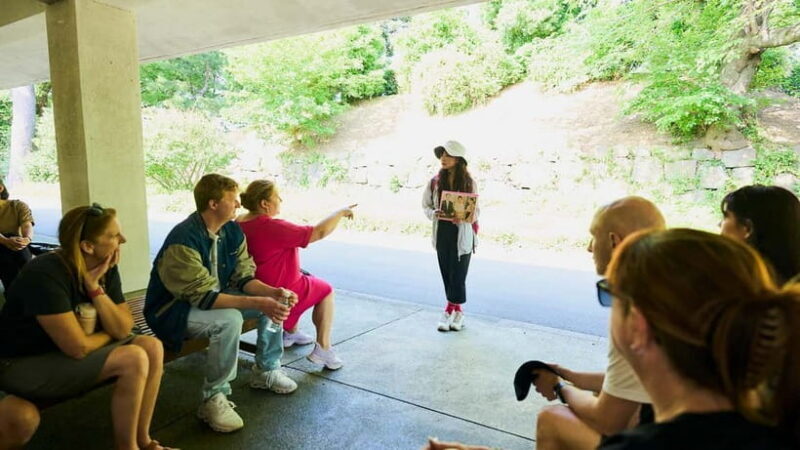
The strongest reason to choose a guided visit is interpretation. The grounds are extensive, and it’s easy to look at a gate, wall or garden and move on without understanding its role. Guides including Anju, Fuma, Tomo, Yuuka and Keiko have been praised for explaining the history clearly, answering questions and keeping a comfortable pace.
The best guidance here seems to combine facts with stories. Visitors have appreciated explanations of the Edo period and the palace’s changing functions, as well as smaller details about buildings and gardens. Some guides also offer recommendations for the rest of a Tokyo trip, which can make a short tour useful beyond its two-hour route.
The quality of a tour can depend on the guide, and no named guide is guaranteed. Still, the consistent emphasis on friendly communication, clear English and a relaxed pace is reassuring if you’re wary of a dry, lecture-heavy walk. One Japanese participant described the outing as calm and unhurried, with small quizzes mixed into the history. That suggests the tone can be engaging without turning the grounds into a classroom.
If you’ve watched Shōgun or already have an interest in the samurai era, this tour gives you a real place to attach to that curiosity. It also goes beyond samurai stories, covering the imperial family and the development of Tokyo. If your main interest is only the modern emperor’s private life, the walk may feel broad rather than intimate.
At $23 per person, this is a fairly modest outlay for a small-group, English-language tour in central Tokyo. You’re paying for the guide’s explanations and the structure of the walk, not just access to a garden. The grounds are large enough that a guide can make a real difference: they tie the gates, moats, palace and ruins into one account instead of leaving you to piece the story together.
The price is especially reasonable if you enjoy history and want to ask questions. At up to 10 people, the group is small enough to feel more personal than a standard large walking tour. If you would rather explore quietly at your own pace, you may prefer to visit the grounds without a guide; the main trade-off is that you’ll miss the explanations that bring the castle defenses and palace history into focus.
The tour’s value also depends on expectations. It is a two-hour outdoor walk, not a full-day historical program, and you won’t see the palace interior. For someone wanting a compact orientation to Edo Castle and the Imperial Palace grounds, the price makes sense. For someone expecting an extensive castle visit with access to rooms and exhibits, it is the wrong format.
A large part of the route is outdoors, so dress for the forecast and wear shoes you’re comfortable walking in. There is a security check when entering the Imperial Palace grounds. Do not bring knives or alcohol.
Wheelchairs are available and can be used within the grounds, but the route includes some slopes and places where visitors need to walk or go down on foot. If access is a concern, check the specific route details with the provider before booking rather than assuming every section is step-free.
You can take photographs, and the gardens, stonework and views offer plenty of reasons to do so. Just keep in mind that this is a group walk with a schedule, so you’ll need to balance camera time with staying alongside your guide.
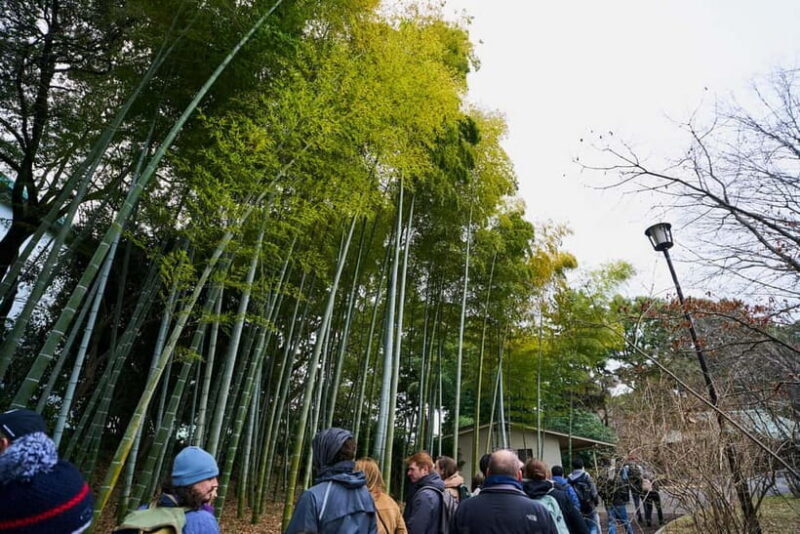
Book it if you want to understand what you’re looking at as you walk through the palace grounds. History fans, first-time visitors to Tokyo and anyone curious about samurai, shoguns or the imperial system should find the two-hour route useful. It also suits you if you prefer a guide who can answer questions over a self-guided walk with a map.
Think twice if you want indoor palace access, a long unstructured garden visit or Japanese-language guiding. The route is outdoors, the pace is steady, and the tour is conducted in English only.
For $23, the best reason to go is the guide: a clear, personable explanation can turn moats and stone walls into a story about power, defense and the evolution of Tokyo. If that’s the kind of context you value, this is a practical and well-paced way to spend two hours.
“The tour was very good. Anju was a great guide, we learned a lot! Super recommend”
The tour lasts two hours. It visits the listed stops and returns to the starting point.
The live tour guide speaks English. Japanese-language support is not available.
The small group is limited to 10 participants.
Meet in front of Starbucks Coffee Kōkyo Gaien Wadakura Fountain Park Store at 3-1 Kōkyo Gaien, Chiyoda City, Tokyo. Look for a guide holding a Local Guide Stars sign.
The tour visits the Imperial Palace grounds and East Gardens. Entry to the emperor’s private residence is not listed as part of the experience.
There is a security check when entering the Imperial Palace. Do not bring knives or alcohol.
Wheelchairs are available and can be used within the Imperial Palace grounds. Some slopes and areas require visitors to walk or go down on foot.
Yes. Photography is encouraged, so bring a camera if you’d like to capture the scenery.
You can check availability for your dates here: