Physical Address
304 North Cardinal St.
Dorchester Center, MA 02124
Physical Address
304 North Cardinal St.
Dorchester Center, MA 02124

Race through Tokyo by guided go-kart, passing Tokyo Tower, Harajuku and Shibuya Crossing. Check the strict driving-permit rules before booking.
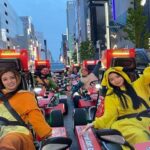
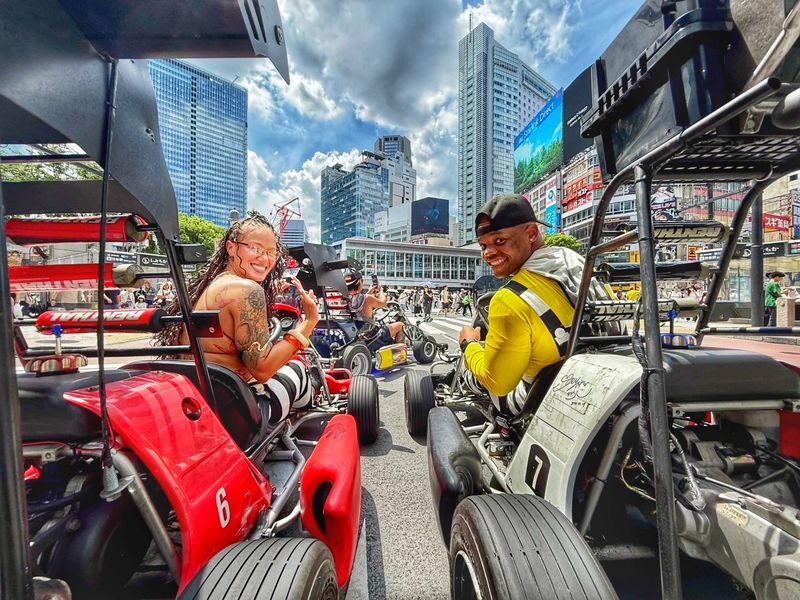
A low-slung go-kart takes you through Tokyo’s real traffic, past Tokyo Tower and into the famous Shibuya Crossing. It is a very different way to see the city: less sightseeing from a comfortable seat, more wind, engine noise and close-up views from the road.
I like two things in particular: the route links several major districts in one outing, and the guide leads the way while taking photos, so you can focus on driving. Night departures add Tokyo Tower’s lights and a sharper city glow.
The main catch is practical, not small: you must arrive with the right driving documents. Japan’s rules are strict, and an invalid permit means you cannot take part or receive a refund. City traffic may also feel daunting at first, especially if you have never driven a kart on public roads.
ALOHA GO-KART’s meeting point is at 1-4-10 Shiba, Minato City, on the first floor of the Toiya Building. That puts you close to Tokyo Tower, a useful landmark for finding the shop and a fitting place to begin a tour built around city views.
You can select a departure time of 9:30, 11:30, 13:30, 15:30, 17:30 or 19:30, subject to availability. The return time depends on the departure slot and tour length. The experience is often described as lasting around an hour, but allow extra time for check-in, the safety briefing and the return to the shop.
The instructions say to arrive 15 minutes before your reservation, while the meeting-point details ask you to arrive 20 minutes early. I would follow the more cautious 20-minute instruction. The operator says late arrivals and no-shows are not refundable, and arriving five minutes or more late can also rule out a refund. Tokyo traffic is an entertaining part of the tour, but it is not a good excuse for missing the start.
Looking for more options in Tokyo? Here are some other experiences worth considering.
After check-in, expect a briefing before you set off. The guide explains how to operate the kart, what to do on the road and how to follow the group. Riders who feel nervous may find that useful: the tour has a leader to follow, and riders have described being reassured by patient instructors such as Singh and Nao.
The first major sight is Tokyo Tower. From a kart, you see the tower against the surrounding streets rather than from an observation deck. At night, its lighting makes this section feel especially atmospheric. The view is brief, though, so think of it as a moving city tour, not a stop where you get time to explore or take your own photos on foot.
The route then heads through Roppongi 7-chome. Here, the appeal is the transition between districts and the feeling of being part of Tokyo’s traffic. You are close to the street, not tucked behind a bus window. That height makes the ride exciting, but it also means you should be ready to pay attention and follow your guide’s directions.
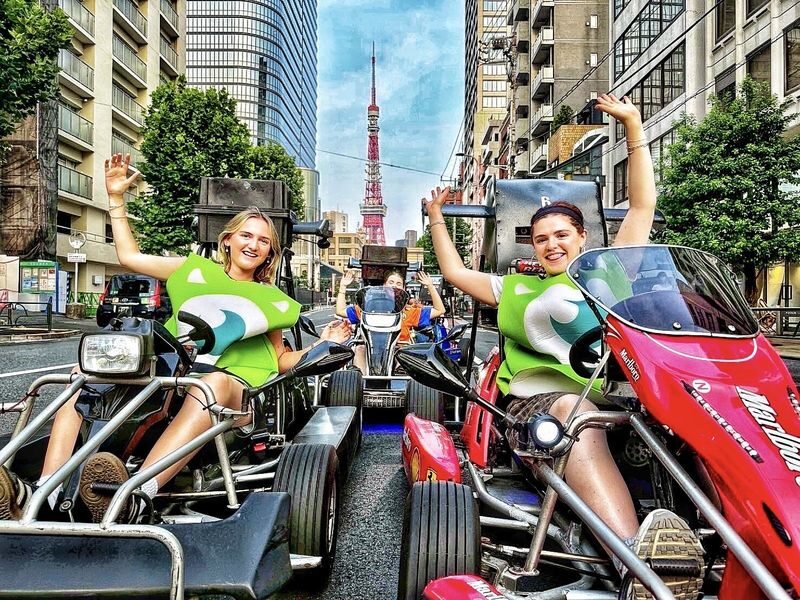
Japan National Stadium adds a different landmark to the route. It helps break up the drive between the central Tokyo sights and the busier western districts. The schedule can change with traffic and weather, so the exact order or amount of time spent near each place is not guaranteed.
Harajuku brings you into one of Tokyo’s best-known areas for youth culture and fashion. From the kart, you get a street-level impression rather than a proper visit to its shops or lanes. That is the trade-off throughout: you cover ground and see the city from an unusual angle, but you do not stop to wander.
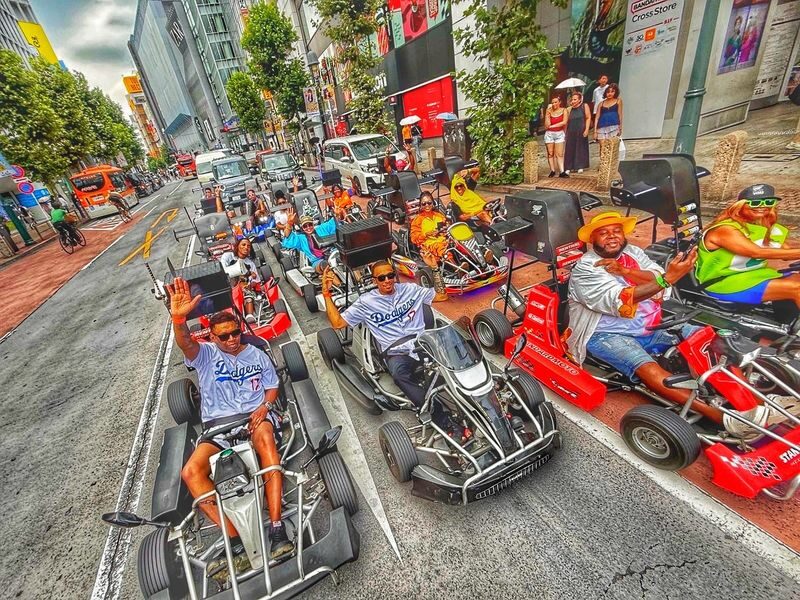
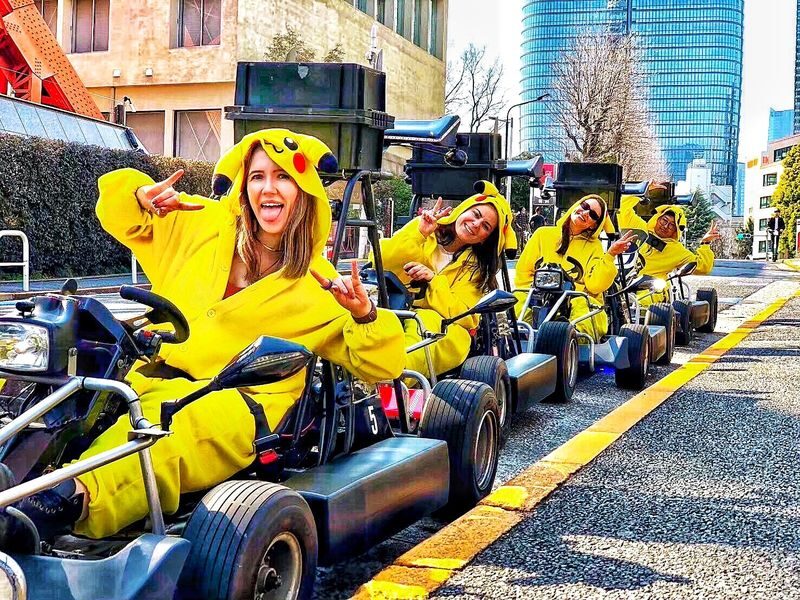
Some guides add music and point out where the group is as you travel. They also take photos when conditions allow. I would treat those pictures as a welcome extra, not the main reason to book: you are there to drive, and the guide’s first job is to manage the group and route safely.
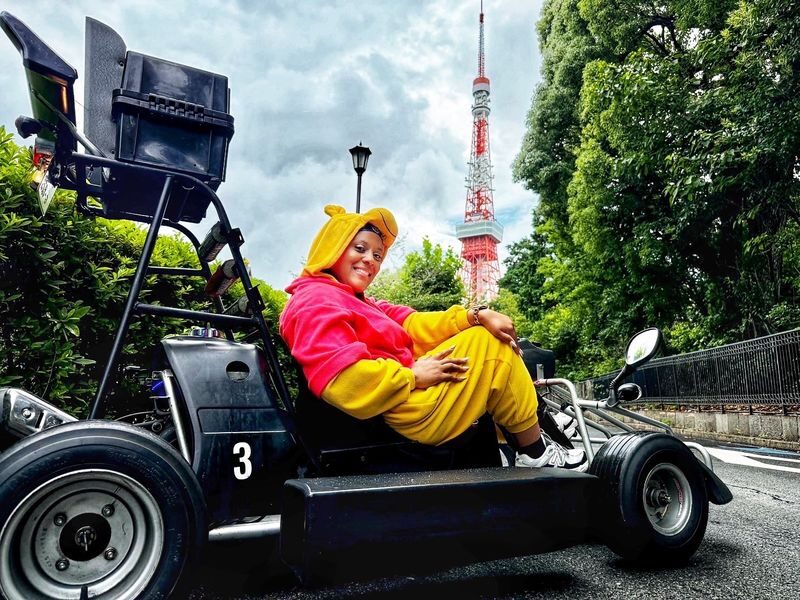
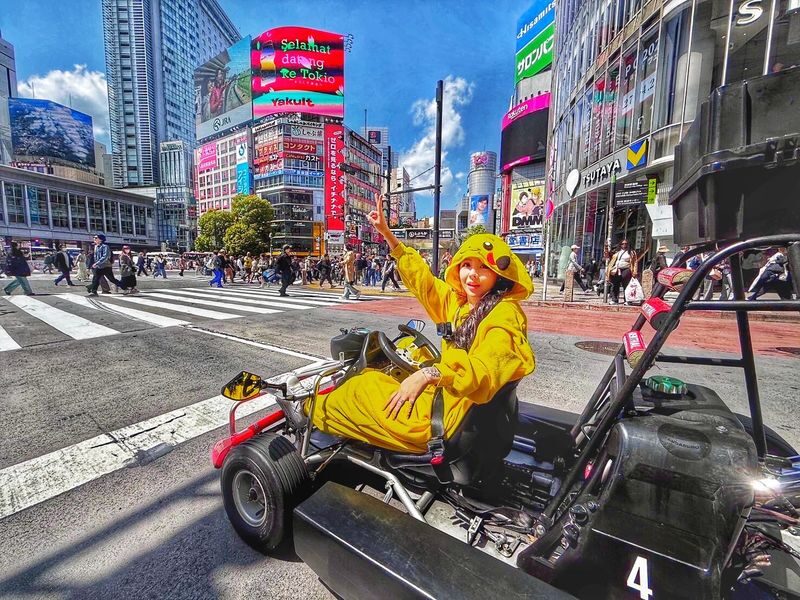
The high point for many riders is reaching Shibuya Crossing. The crossing is famous from above and from the pavement; arriving in a go-kart gives you a much closer, more kinetic view of the surrounding streets. You are part of the traffic flow, not an observer looking down from a building.
That proximity can feel thrilling and a little intimidating at first. One rider described the first few minutes as nerve-racking before settling into the drive. If you are unsure, tell the team before setting off. The guide stays at the front, gives directions and works to keep the group together, but you still need to be comfortable controlling your own kart and responding to traffic.
This is not a private photo stop at the crossing, nor a way to walk through it at your own pace. It is a guided drive on a planned route. Traffic and weather can affect the schedule, so go in expecting a memorable pass through the area rather than a fixed sightseeing timetable.
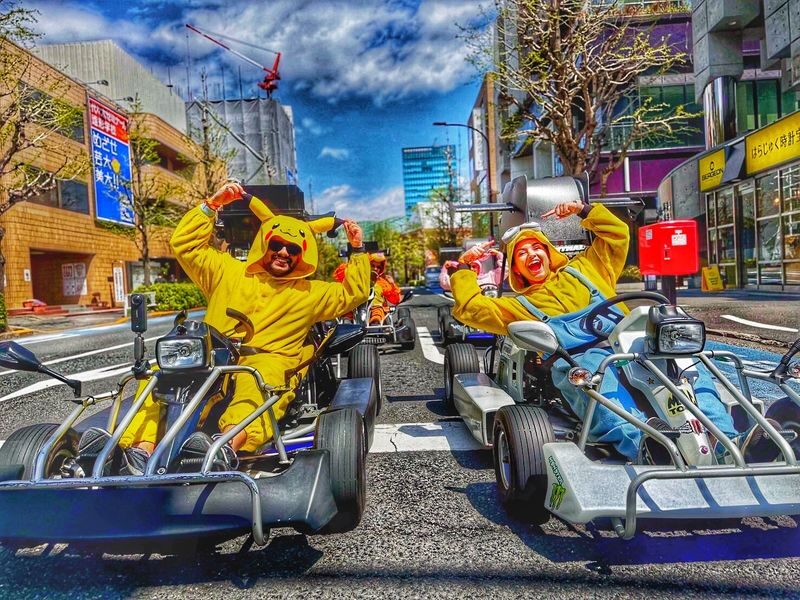
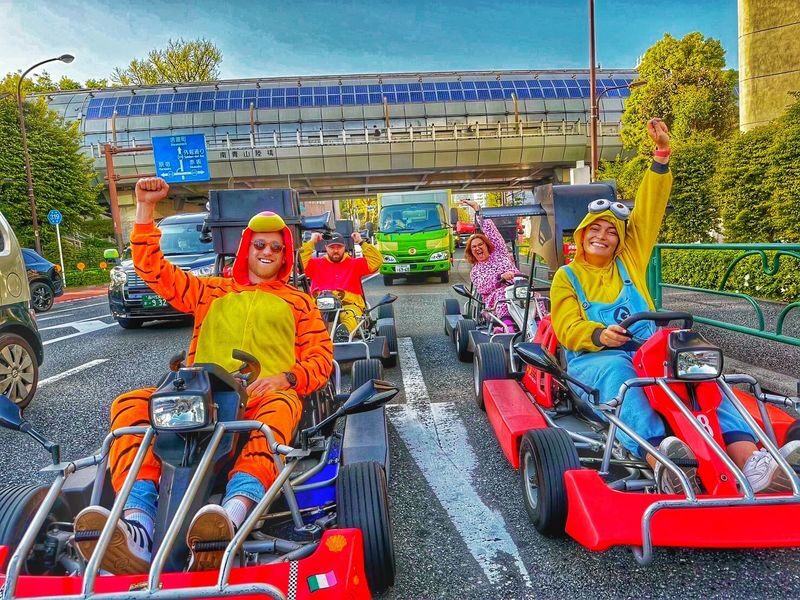
The low seating position is a big part of the experience. You feel close to the road, and tunnels and busy streets can make the drive feel faster and more dramatic than the route’s length suggests. The karts are described as easy to operate, and the group follows a guide, but this is still public-road driving, not a closed track.
I would recommend it most to confident drivers who want an active, unusual way to see Tokyo. It can also suit friends, couples and families with eligible drivers who are comfortable with the permit rules. Some riders have joined with a nervous companion, and the staff’s clear instructions helped them settle in. That is reassuring, but it cannot replace your own judgment about whether road driving feels right for you.
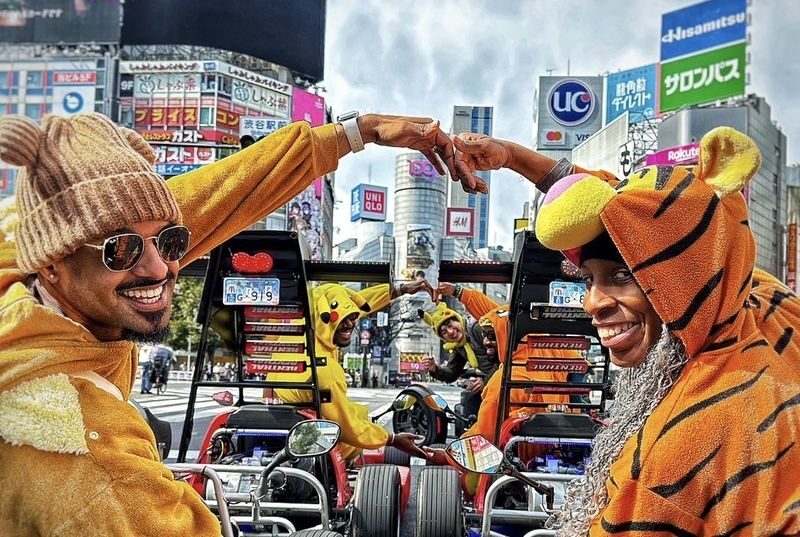
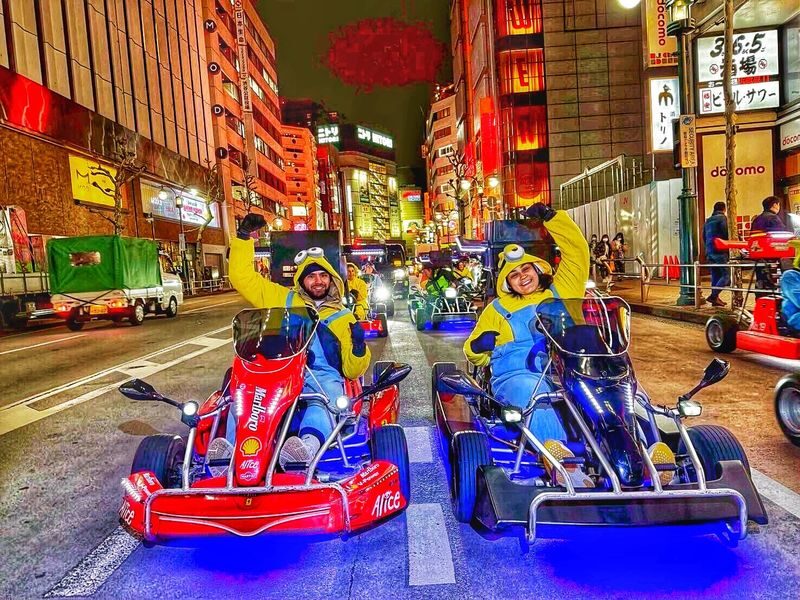
Costumes are available, adding a playful touch and making the group more noticeable. You do not need to dress up to enjoy the route. The main attraction is the combination of driving and city sights, not the outfit.
The tour is less suitable if you want a relaxed, detailed history tour, time to shop in Harajuku or a guaranteed stop for photos. It is also a poor choice if you dislike traffic, cannot meet Japan’s driving-document requirements, or want to explore the landmarks at your own pace.
The advertised starting price is $61.95. For that, you get a guided city drive that joins several major areas in roughly an hour, rather than paying for separate transport between them. The value is strongest if you want the driving itself to be a major part of your Tokyo day. If you only want to see the landmarks, public transport and walking will give you more time at each place for less effort.
Photo-taking adds value because it is hard to use a camera while driving. Guides have been known to take many pictures, share them digitally and print a photo as a small souvenir. These touches appear to vary, so ask the shop what is included for your chosen package rather than assuming every photo option or printed keepsake is guaranteed.
There are two package choices: the GOAT tour that includes Shibuya Crossing and Tokyo Tower, and a 30-minute trial around Tokyo Tower that does not go to Shibuya. Check which one you select. The shorter option is not a cheaper version of the same full route; it leaves out the crossing.
The permit rules deserve more attention than the fun parts of the tour. The activity requires a valid driving document for Japan and your passport. The stated requirement is an International Driving Permit in booklet form issued under the 1949 Geneva Convention. A permit under the 1968 Vienna Convention is not accepted.
A4 paper, photographs, PDFs, online data and cards are not accepted in place of the physical document. The permit must be issued in your home country, where your national licence was issued, and cannot be obtained online while travelling. Some countries are not covered by the 1949 Geneva Convention, and licences from those countries cannot be used for this activity in Japan.
There are additional instructions for licences issued in Switzerland, Germany, France, Taiwan, Belgium and Monaco: holders must obtain a Japanese translation of the licence from the Japan Automobile Federation (JAF). Because the package information also states that an IDP and passport are required, check directly with the operator about the precise documents that apply to your licence before paying. Do not rely on an online permit seller or assume that a digital copy will work.
Bring your passport and the required physical driving documents on the day. If your documents are not valid, you cannot participate, and the operator says it will not issue a refund.
The activity offers instant confirmation and can be booked as soon as tomorrow, subject to availability. The voucher is valid only for the date and time selected. You can cancel for a full refund at least 24 hours before the activity date, using Tokyo local time.
The operator may cancel because of extreme weather or unforeseen events. In that case, you can request a full refund or reschedule, subject to availability. Weather and traffic may also change the route or schedule, so keep your expectations flexible. Do not book this as a tightly timed link between other activities.
Book it if you are a qualified driver who wants Tokyo to feel close, loud and fast for an hour, and you are happy to follow a guide through city traffic. The Tokyo Tower to Shibuya route, attentive instruction and frequent photo-taking make this a distinctive break from temples, trains and observation decks.
Skip it if you want a calm sightseeing tour, need lots of time at each stop, or have any doubt about your driving documents. The best first step is to confirm that your licence and permit meet Japan’s rules. Once that is settled, choose the full Shibuya route if the crossing is your reason for going, and arrive early enough to start without a last-minute scramble.
“thanks for accommodating us, we had a great time”
Prices start at $61.95. The final price may depend on the package and availability.
It starts and returns to ALOHA GO-KART at 1-4-10 Shiba, Minato City, Tokyo, on the first floor of the Toiya Building.
The planned route includes Tokyo Tower, Roppongi 7-chome, Japan National Stadium, Harajuku and Shibuya Crossing. Traffic and weather may change the schedule.
No. The GOAT package includes Shibuya Crossing and Tokyo Tower. The 30-minute trial around Tokyo Tower does not go to Shibuya.
The activity requires a valid driving document for Japan and a passport. Its stated IDP requirement is a physical booklet issued under the 1949 Geneva Convention. A 1968 Vienna Convention IDP is not accepted.
No. The instructions say A4 paper, photos, PDFs, online data and cards are not accepted. Bring the required physical documents.
The meeting details ask you to arrive 20 minutes before departure. Another instruction says 15 minutes, so plan for 20 minutes to be safe.
A full refund is available if you cancel at least 24 hours before the activity date, using Tokyo local time. Late arrival, no-show or invalid driving documents are not eligible for a refund.