Physical Address
304 North Cardinal St.
Dorchester Center, MA 02124
Physical Address
304 North Cardinal St.
Dorchester Center, MA 02124

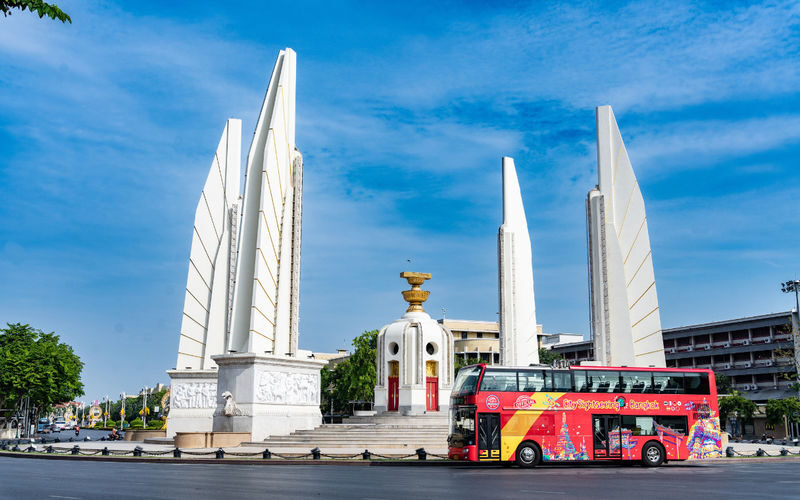
See Bangkok’s temples, markets and malls by air-conditioned hop-on hop-off bus, with a 48-hour pass and plenty of flexibility.
Bangkok’s great sights are spread across a big, hot, traffic-choked city. This bus gives you an easy first look, linking Siam Paragon and MBK with Chinatown, the Grand Palace area, Wat Arun and riverside ICONSIAM. I like that you can ride in air-conditioned comfort and hop off when a temple or market deserves more time.
I also like the 48-hour validity, which gives you a second day to pick up where you left off instead of cramming every stop into one circuit. The trade-off is Bangkok traffic: a full loop can take about three to three and a half hours, and the buses run only during the day. Allow for delays, not clockwork connections.
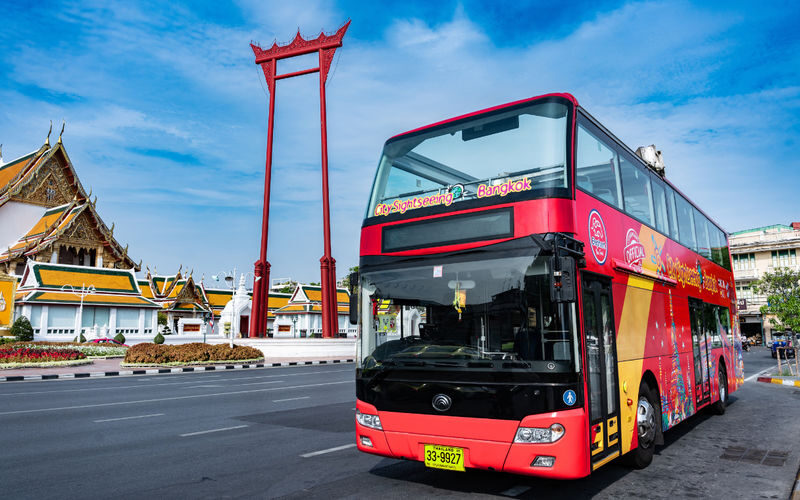
Think of this tour as a moving introduction to Bangkok, rather than a shortcut from one attraction to the next. From the bus, you get a sense of how the city’s shopping districts, temples, old streets and riverfront fit together. Then you can choose which places deserve a proper visit.
That overview is most useful on your first day. Stay aboard for a full loop before deciding where to return, or get off at a stop that matches your plans. If you already know exactly which sights you want, the BTS, other public transport or a taxi may be more direct. This bus follows one route, and Bangkok traffic can make even a short stretch take time.
The pass is sold in 48-hour and 72-hour versions, with prices starting at $25.29. A longer pass can help if you want to split sightseeing across more than one day, but it does not mean the buses run around the clock. The service operates during the day, and the ticket’s validity is counted from the time you first use it. For example, a 24-hour pass activated at 2:00 pm Tuesday remains valid until 2:00 pm Wednesday, though you still need to travel within operating hours.
Looking for more options in Bangkok? Here are some other experiences worth considering.
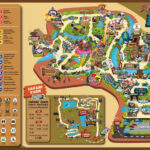
You can begin at Siam Paragon or CentralWorld. At Siam Paragon, find the Elephant Gogo counter at Gate 1, next to Bangkok Bank. At CentralWorld, the counter is in front of Hug Thai Gate on the first floor. Show your mobile voucher and exchange it for a physical ticket. Arriving about 10 minutes before your planned departure gives you time to sort that out.
Siam Paragon makes a useful starting point because it is both a major shopping center and a central landmark. The route also serves MBK Center, another large mall, so the first stretch gives you a look at Bangkok’s modern retail side before the tour moves toward older neighborhoods and temples. If shopping is on your list, you can make one of these stops a proper visit. If not, stay aboard and save your time for the historic district.
The listed service hours are 10:00 to 15:00 daily, and buses are described as arriving roughly every 45 minutes. That timing is a guide, not a promise: road congestion, weather and closures can affect the route. Service frequency is also scheduled to be reduced temporarily from May 1, 2026, so check the latest timetable before planning your day. Some stops may be harder to identify on the street than their names suggest, so confirm the exact pickup point when you get off.
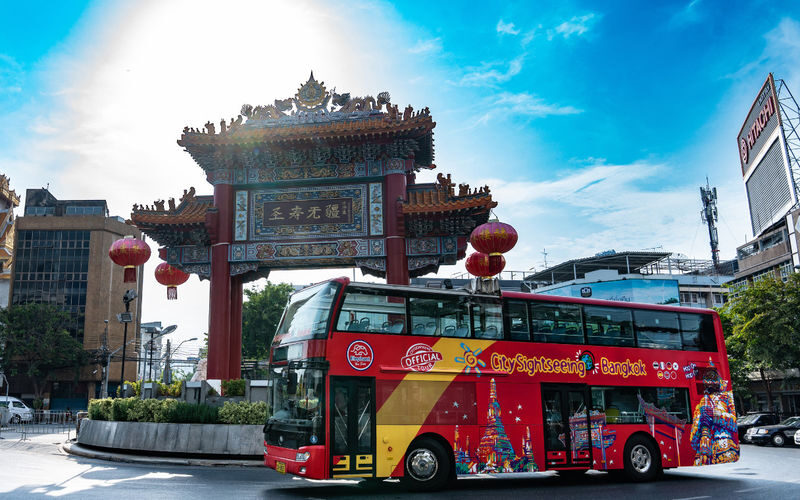
After MBK, the route heads toward Samyan Mitrtown and Wat Hualumpong. These stops place you between a contemporary shopping and dining complex and a prominent city temple. This is a good stretch for noticing how quickly Bangkok changes character from one district to the next, though the bus gives you only a passing view unless you get off.
Next comes the Golden Buddha Temple, also known as Wat Trai Mit, followed by Chinatown. The Golden Buddha is a major attraction, while Chinatown is a rewarding area to explore on foot if you have the time. The bus is useful for reaching the district without walking the whole way in the heat. But don’t expect a short stop to reveal every lane or food stall; the route is an introduction, and the neighborhood rewards a longer wander.
The next listed stops are Grand China Hotel and Dragon Temple Kammalawat. This part of the route keeps you near Chinatown’s temples and streets, but it is worth checking your map before stepping off. The stop names combine landmarks and nearby areas, and the precise bus position can be confusing when traffic forces a detour.
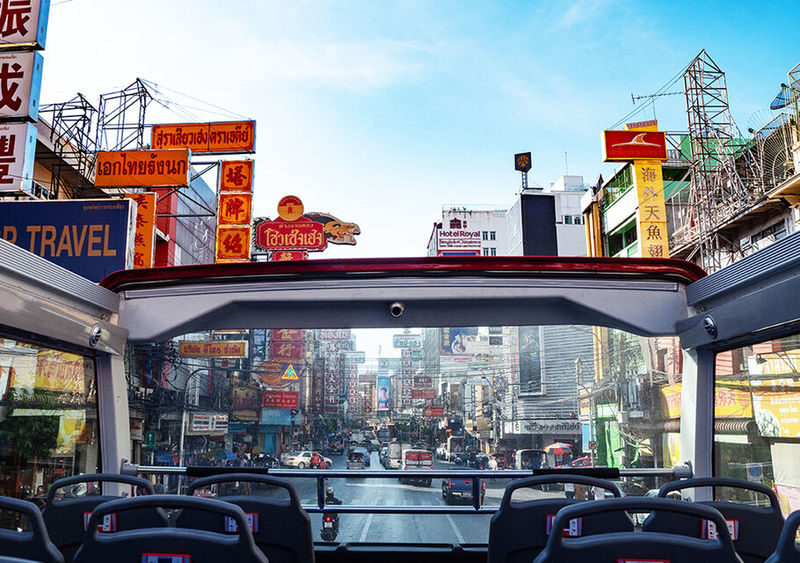
The route continues toward Loha Prasat and Pra Tu Phee, then Khao San Road and the Giant Swing. Loha Prasat is a striking temple complex, while the Giant Swing sits in a district full of important religious and civic landmarks. Khao San Road offers a different mood, with souvenir shops and a well-known backpacker strip. You can choose between a temple visit, a street walk or a quick look around, depending on your energy and the bus schedule.
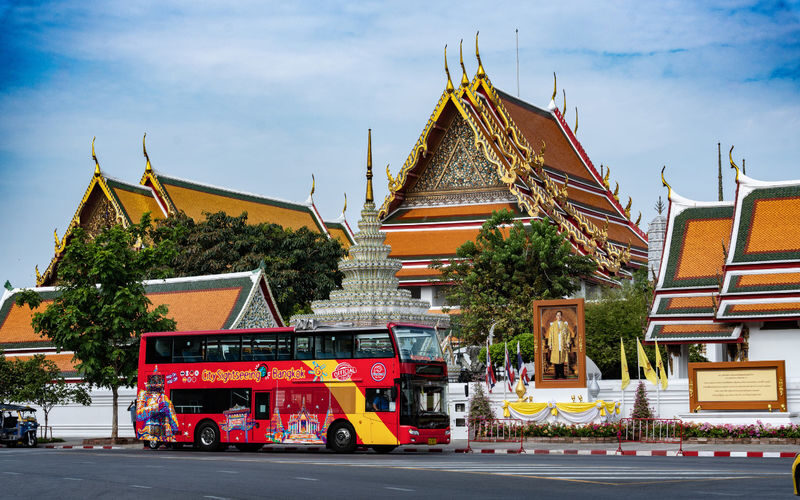
Wat Pho and Sanamluang, near the Royal Grand Palace, are among the route’s most useful stops for anyone focused on Bangkok’s major sights. Give these places enough time: a bus pass does not include admission, and getting off is only the start of the visit. The Grand Palace has a dress code, so plan suitable clothing if you intend to enter. The stop is also an area where it pays to follow your own map and walk directly to the attraction you want, rather than accepting unsolicited directions or transport offers.
Wat Rakhangkhositaram and Wat Arun Rajvararam extend the route toward the river and its temples. Wat Arun is one of Bangkok’s best-known landmarks, and seeing it from the bus is not the same as visiting it. If it is a priority, check the current route and stop arrangements, then leave time to explore on foot. Road conditions and closures can alter how the bus moves, so don’t build a tight connection around a precise arrival time.
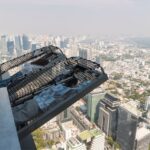
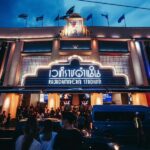
From the temple district, the bus serves ICONSIAM, a major riverside shopping center, followed by Mahanakorn Skywalk and Patpong Night Market. ICONSIAM gives you another chance to pause in air-conditioned surroundings, while the Skywalk stop puts a modern Bangkok landmark on the route. Patpong adds a market area to the mix, though the bus itself is a daytime service. Don’t assume a stop at a night market means the bus will run late enough for an evening visit.
This final section shows the tour’s range: temples and historic streets on one side of the itinerary, malls and high-rise sights on the other. You can ride the route for the changing views, or use the stops as a rough framework for independent visits. Just remember that the loop takes about three to three and a half hours in traffic. If you hop off several times, you may not make it around the entire route in one operating day.
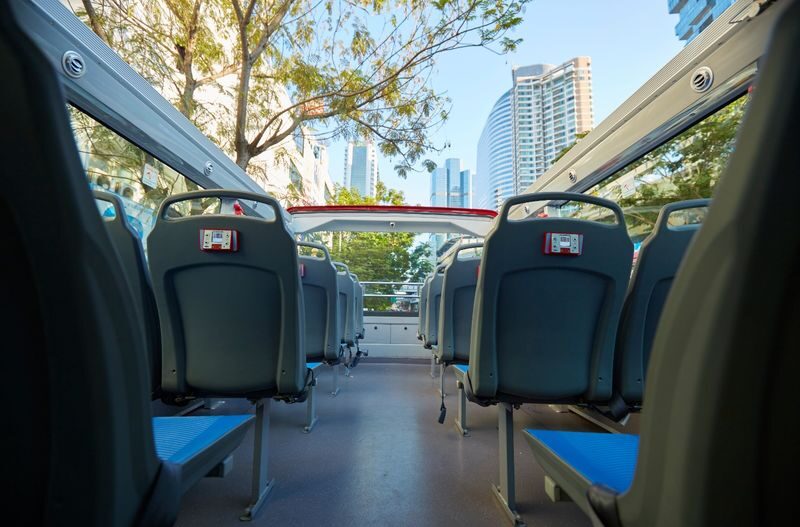
The bus’s strongest practical advantage is air conditioning. Bangkok’s heat can make a long walk between sights tiring, and the cool interior offers a welcome reset. The bus also lets you see more of the city than you might on foot, especially when you are still getting your bearings. Some buses have an upper outdoor section, which can be good for views and photos, but it may be uncomfortable in strong sun.
The main drawback is waiting. Although the stated frequency is about 45 minutes, traffic can stretch the gap between buses, and you may wait longer after getting off at a sight. Bus tracking is available, but don’t rely on it as an exact countdown. Some stops have limited shelter or seating, and figuring out the precise pickup point can take extra attention. Keep water with you and use the time to check your next destination rather than standing in the sun without a plan.
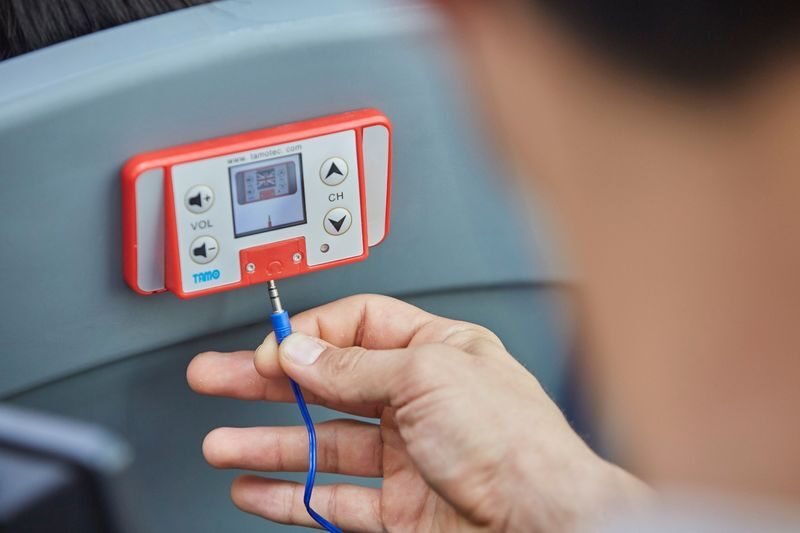
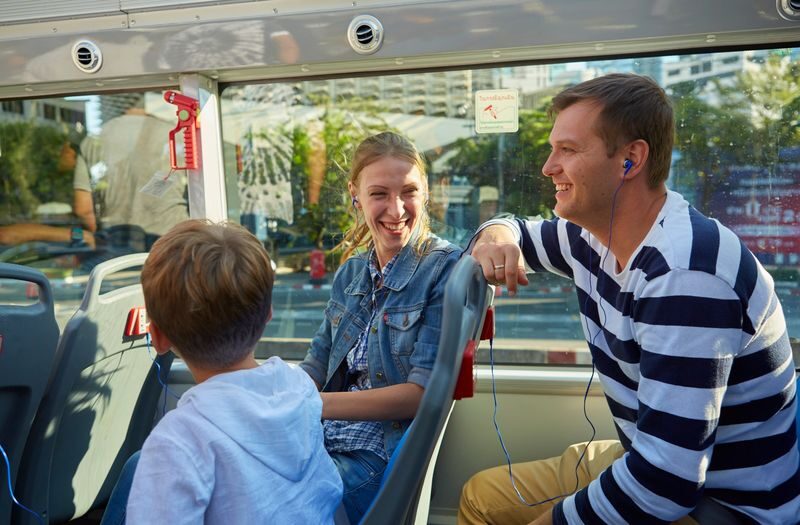
Audio-guide quality can vary. The digital guide is available in seven languages, including English, Thai, Chinese, Spanish, German, Korean and French. Download it to your phone and bring headphones if you want the commentary. Sound quality and equipment can be uneven, so treat the guide as a bonus rather than the only way to understand the city. Guide Ali has been praised for explaining details clearly, but guide assignments can vary.
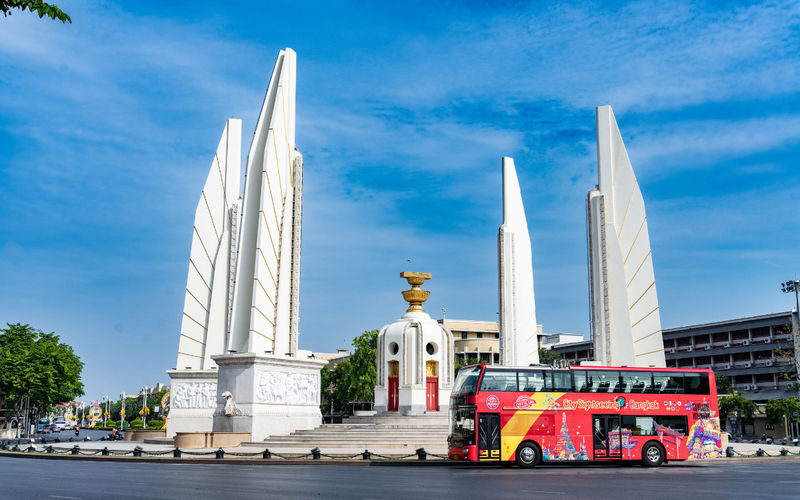
At a starting price of $25.29, the pass makes the most sense if you value comfort, a broad overview and the option to stop at several places without arranging a new ride each time. It can also be a sensible choice for a first visit, particularly if you want to see where the key districts are before choosing your own route. Children aged 0 to 5 ride free.
The value falls if you expect rapid transport or a tightly timed sightseeing plan. Bangkok’s traffic can slow the whole loop, and the operating window is short compared with a full day of sightseeing. For a group of four or five, comparing the cost with point-to-point taxi rides may be worthwhile. A taxi can be more direct, though it will not provide the same fixed sightseeing route or the option to rejoin the bus at later stops.
A 72-hour pass is available if you want more time to spread out your visits. Before buying, check the current schedule and decide how many stops you realistically want to make. One or two longer temple visits can use up much of the service day, especially if a bus is delayed. The pass is stroller- and wheelchair-accessible, but you should still allow extra time for boarding and navigating busy stops.
Book it if you want an easy first look at Bangkok, appreciate air conditioning, and are happy to let traffic set the pace. The route links many of the city’s headline sights with shopping districts and the riverfront, while the 48-hour validity gives you room to split your plans across two days.
Skip it if punctual transport is your main goal, or if you already have a precise list of places to visit and want the quickest way between them. The single route, daytime hours and possible waits are real limits. For many first-time visitors, though, the bus is a comfortable orientation ride and a useful way to decide which parts of Bangkok deserve a closer look.
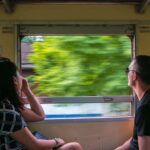
“It was nice to be able to see the scenery of Thailand from the cool interior of the vehicle❗ It was convenient because we stopped at famous templ…”
The route from the first stop to the last takes about 3 to 3.5 hours, depending on traffic and road closures.
The stated frequency is every 45 minutes. Timings can change with traffic and weather, and frequency is scheduled to be reduced temporarily from May 1, 2026. Check the current operating schedule before you go.
The listed starting points are Siam Paragon and CentralWorld. At Siam Paragon, the counter is at Gate 1 next to Bangkok Bank. At CentralWorld, it is in front of Hug Thai Gate on the first floor.
The digital audio guide is available in Chinese, English, Spanish, German, Korean, French and Thai. It can be downloaded to your phone.
No. Admission to attractions and personal expenses are not included in the bus pass.
Yes. Children aged 0 to 5 are free.