Physical Address
304 North Cardinal St.
Dorchester Center, MA 02124
Physical Address
304 North Cardinal St.
Dorchester Center, MA 02124

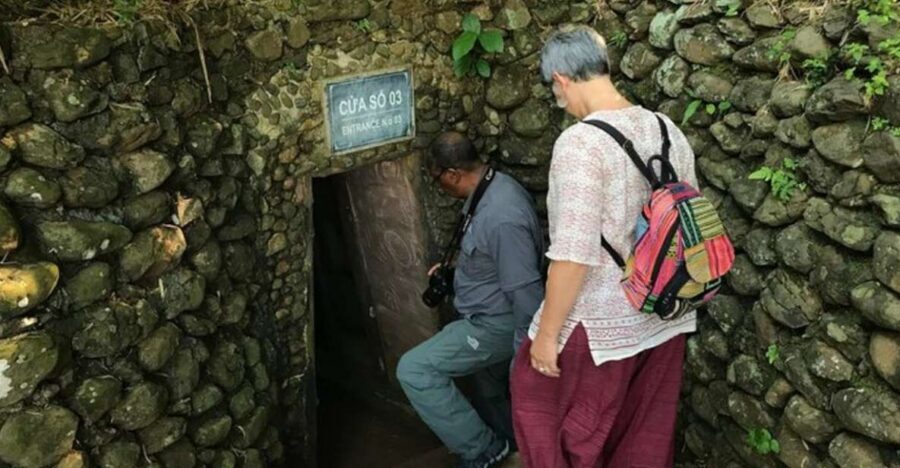
Explore the Vinh Moc Tunnels, Khe Sanh and Quang Tri’s wartime sites on a full-day DMZ tour from Hue with lunch and an English-speaking guide.
The Vinh Moc Tunnels are the emotional center of this 10-hour DMZ tour from Hue. You can walk through sections of the underground network where local villagers lived during the war, then see the places above ground that shaped the conflict, from Khe Sanh to the former dividing line at the Ben Hai River.
I like two things in particular: the route pairs the tunnels with major sites such as Khe Sanh and the Quang Tri Citadel, and the guide brings the long drives to life with stories, history and, at times, war-related music. Guides named Hoa, also called Flower, Thuy and Morning have been praised for clear English and engaging storytelling.
The trade-off is time on the road. The sites are spread across Quang Tri province, so this is a long day with several substantial drives and relatively short visits at some stops. If you want a slower visit to one or two places, a shorter tour may suit you better.
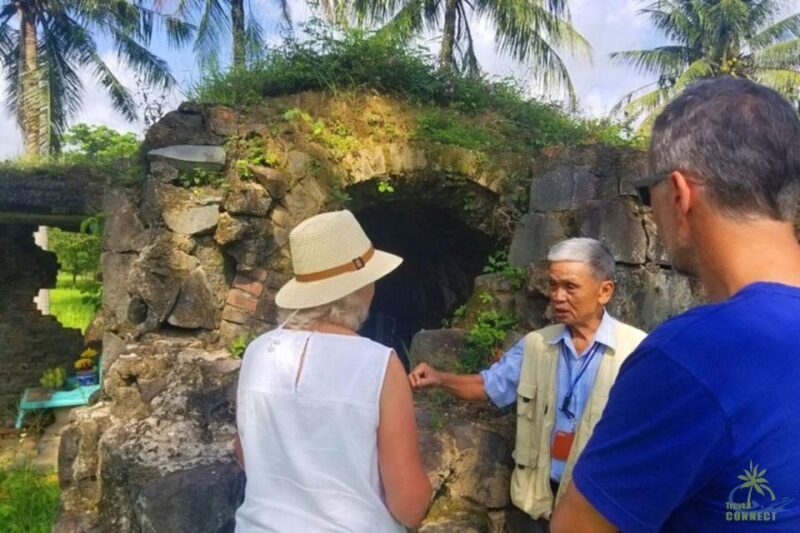
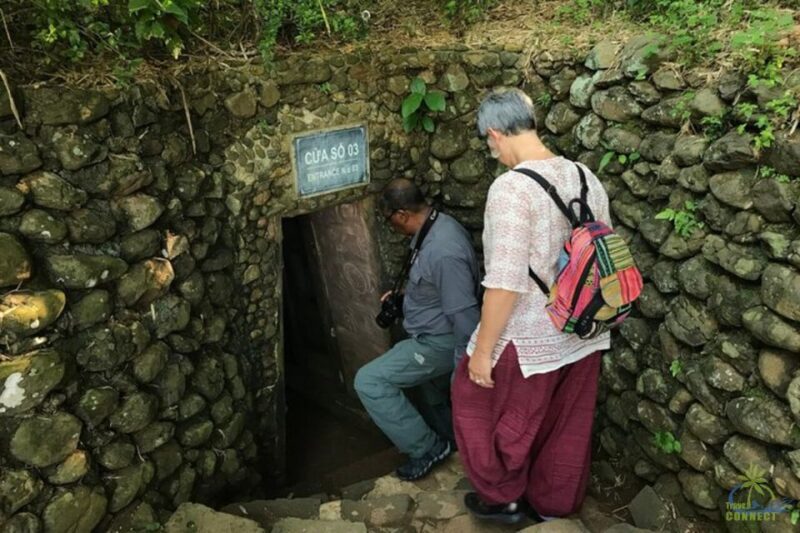
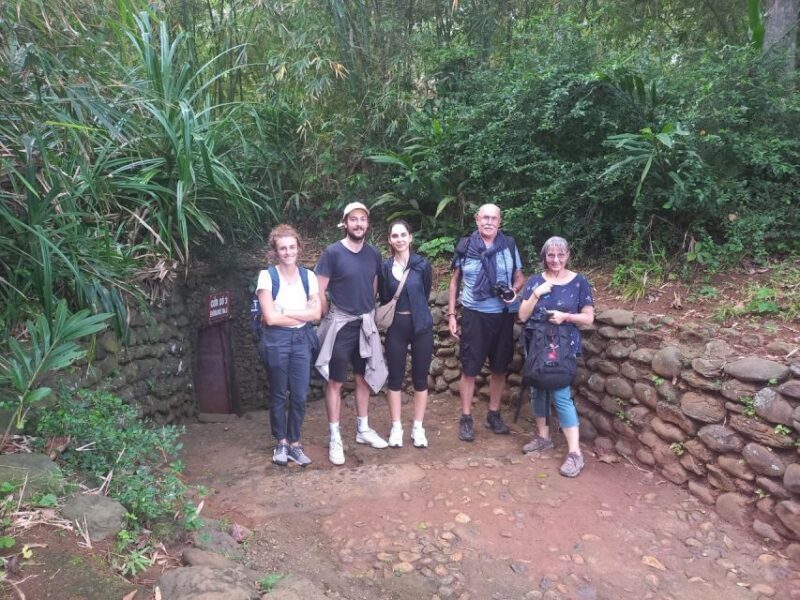
The tour starts with pickup at your Hue hotel from 7:30 a.m. You travel north into Quang Tri province by car, with an English-speaking guide and a group capped at 12. The day is scheduled to end back at Hue hotels around 6 p.m.
The driving is a real part of the experience, not just a short transfer between nearby monuments. One account of the day describes nearly two hours to the first stop, followed by more long stretches between sites. That time can feel worthwhile if you want a broad picture of the region, but it is worth knowing what you are signing up for.
A good guide makes a marked difference. Hoa, often called Flower, is especially praised for turning history into a clear narrative, and for using songs in English and Vietnamese to add context during the drive. Other named guides include Thuy, Thai and Morning. Your particular guide may vary, but the tour’s strongest feature is the interpretation along the way, not just the stops themselves.
Looking for more options in Hue Vietnam? Here are some other experiences worth considering.
The first stretch introduces the human cost of the fighting. The route passes the area known as the Horror Highway, a name tied to the killings of civilians and soldiers on May 1, 1972, when people were caught in hours of artillery and infantry fire. The date is remembered locally for the violence, not for the holiday that falls on the same day.
This is a sobering place to hear about the war’s effects on ordinary people. The tour gives you a setting for the story, though it is not a long, standalone visit with extensive time for reflection. The guide’s account matters here: listen for how the military events affected residents of Quang Tri and neighboring Thua Thien.
Long Hung Church is one of the few buildings in Quang Tri town to remain from the 1972 Eastern Offensive, known locally as Fire Summer. Its damaged structure makes a stark contrast with the working town around it. It is a compact stop, but it helps make the scale of destruction tangible.
At the Quang Tri Ancient Citadel, you see a site that endured 81 days of fighting in 1972 and was nearly destroyed by bombing. Today it serves as a national relic and a place of remembrance. The scale of the battle is difficult to take in from the grounds alone, so the guide’s context helps connect the ruins to the events.
Dress modestly for the citadel. Shorts are not suitable there, but a cover can be rented for 10,000 Vietnamese dong if you arrive in them. It is a small detail that can save you a last-minute scramble.
The route continues through the mountainous region around Dakrong Bridge. During the war, the area was a contested access point and the bridge fell more than once. Today’s large suspension bridge marks the beginning of the Ho Chi Minh Trail network in this account of the route, a useful reminder that the roads and crossings here had strategic importance as well as local value.
You may also pass a Paco minority village. The information provided does not promise a dedicated village visit, so think of this as a chance to see the area on the drive rather than a cultural stop with a planned program.
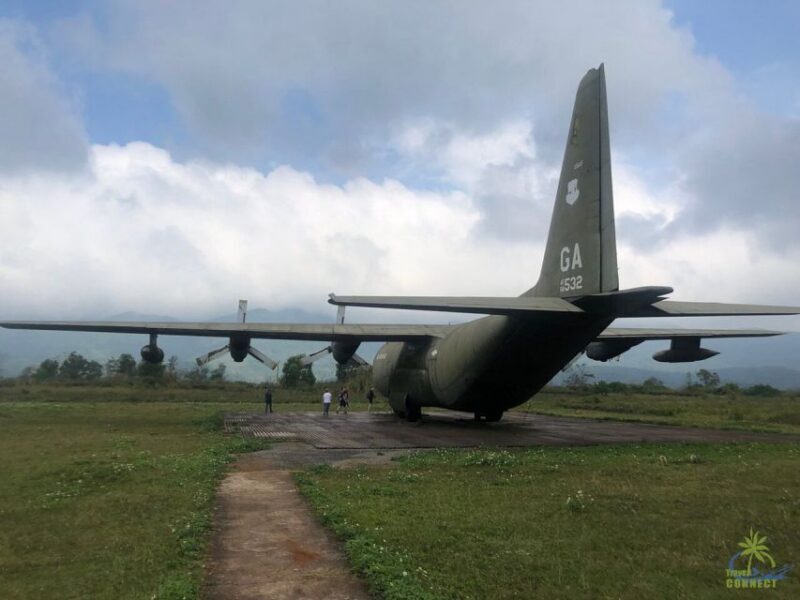
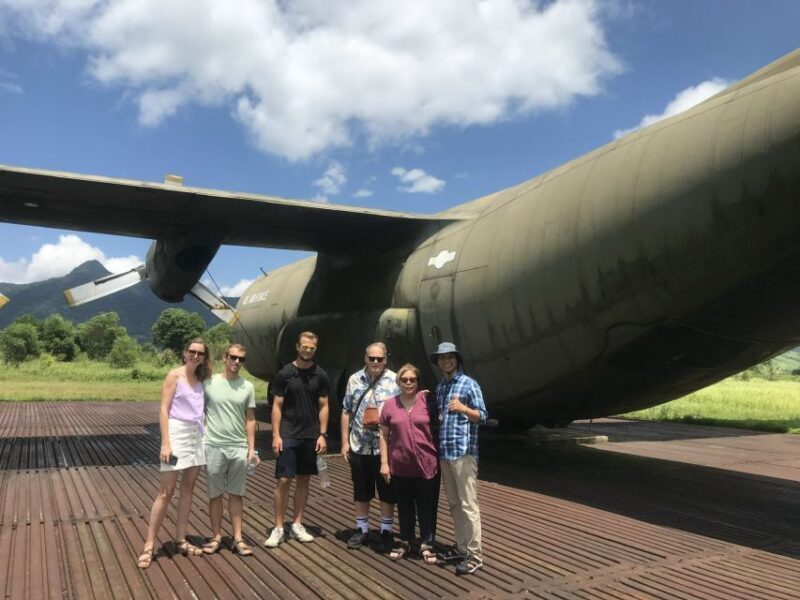
Ta Con Airport, now the Khe Sanh Combat Base Museum, is one of the day’s most compelling stops for military history. The site holds a collection of war remnants, including captured or destroyed US tanks and aircraft. The museum’s official account says 197 US planes were shot down or captured during the 170-day battle.
The open-air displays make the base’s military role easier to picture than a history lesson alone can. You can examine the machinery and then place it within the story of the siege. Allow for the fact that the site is a museum area, not a preserved battlefield untouched by time.
Free snacks are provided here, and you can buy local Khe Sanh coffee at your own expense. The coffee is an optional extra, not part of the included lunch. Several people find Khe Sanh a highlight in its own right, especially if the battle has caught your interest and you want to follow up with more reading later.
Lunch is included, and the day’s meal is described as a local, traditional Vietnamese lunch served at a family restaurant or home in the area. It is a welcome pause in a schedule otherwise built around driving and historical sites. The meal has been praised for its quality, though exact dishes can vary.
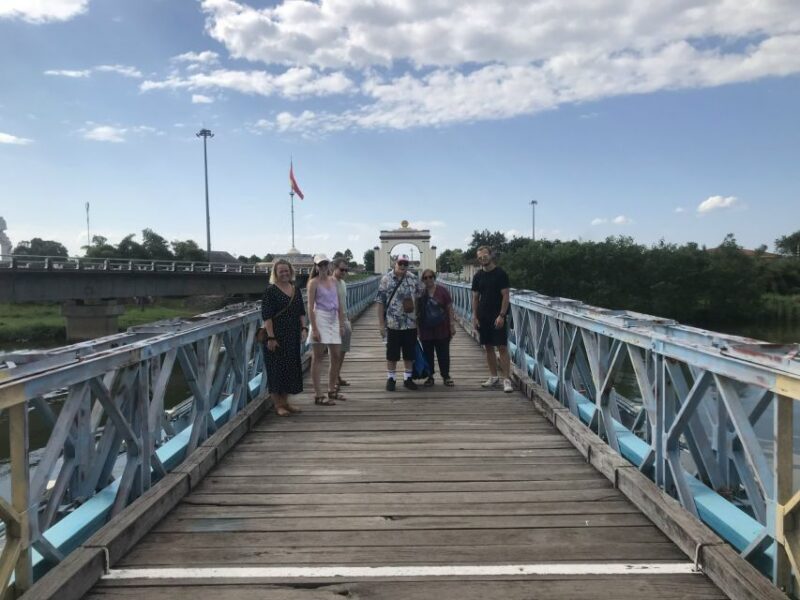
In the afternoon, you visit Hien Luong Bridge and the Ben Hai River. Under the 1954 Geneva Agreements, the river marked the temporary boundary between North and South Vietnam at the 17th Parallel. The French built Hien Luong Bridge in 1950; it is 178 metres long, yet the division it represents lasted 21 years before reunification.
Walking across the bridge gives you a direct sense of the dividing line that once split the country. The bridge is also known as the Peace Bridge, a name that takes on weight when you consider the years it took for people in the two regions to be reunited. It is a relatively simple stop physically, but a powerful one with the history in mind.
More Great Tours Nearby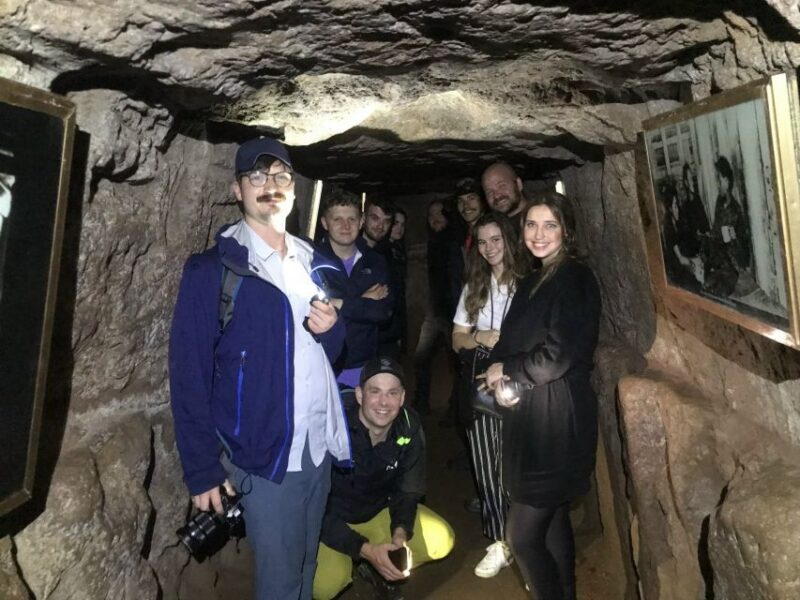
The Vinh Moc Tunnels are the day’s signature stop for many people, and the clearest reason to choose this full-day route over a visit focused only on the military sites. The tunnel complex sheltered people from Vinh Linh district during intense bombing and provided space for village life underground. You also visit the tunnels museum, which helps explain the purpose and history of the network.
You can explore sections of the tunnels, including the lower levels. The experience is physical and close-up: you are not simply looking at a display about underground life, but entering part of the space itself. That makes the visit memorable, although anyone who dislikes confined spaces may prefer to take it slowly and decide how far to go.
The tunnels are often the highlight, but they are more meaningful after the day’s wider context. By this point, you have heard about the civilian toll, the battles around Quang Tri and the division represented by the Ben Hai River. The tunnels then feel less like an isolated attraction and more like one response to the dangers faced by local people.
At $54 per person, the price includes hotel pickup and drop-off, transportation, an English-speaking guide, lunch, bottled water, entry tickets, travel insurance and a souvenir. You do not have to arrange separate transport to a string of distant sites or pay each admission fee along the way. Other expenses are not included, such as the Khe Sanh coffee.
The value depends on how much you want to see in one day. For a single price, you cover a large area and several important sites, with a guide to connect them. If you would rather spend more time inside one museum or site, the pace may feel brisk, especially after the long drives.
The small-group limit of 12 is useful for hearing the guide and asking questions. It does not remove the road time, but it makes the day feel more personal than a large coach excursion. Transport has been described as clean and comfortable, and the driver’s safe, courteous approach is another practical plus on a long route.
Choose this tour if you want a wide-ranging introduction to Quang Tri’s wartime history and are comfortable spending much of the day travelling between sites. The mix of the Vinh Moc Tunnels, Khe Sanh, Quang Tri Citadel and Hien Luong Bridge gives you more than one angle on the region, while the guide’s stories help fill the distances between them.
It is a particularly good fit for history-minded visitors, but you do not need to arrive as a military expert. Guides such as Hoa and Flower are praised for making the subject understandable and engaging, including for people who joined because a partner was interested in war history. The Vietnamese perspective and the focus on local civilian experience help keep the day from being only a catalogue of military hardware.
Think twice if you dislike long drives, need a slow pace, or want extended time at each museum. One person who preferred the tunnels most felt a shorter tour might have been a better fit. If the route’s range appeals to you, though, the long day buys context as well as mileage. Book it for the full story, not just a quick look underground.
“Flower was an excellent tour guide, she knew a lot of information and was so helpful. The underground tunnels were a highlight for us. Would recomm…”
The tour lasts about 10 hours. Pickup begins at 7:30 a.m., and the planned return to hotels in Hue is around 6 p.m.
Pickup and drop-off are included at hotels in central Hue. Be ready from 7:30 a.m.
The price includes transportation, hotel pickup and drop-off, an English-speaking guide, lunch, bottled water, travel insurance, entry tickets and a souvenir. Other expenses are not included.
Yes. Lunch is included, and the meal is described as local Vietnamese food. Free snacks are also provided at Khe Sanh.
Yes. Khe Sanh coffee is available at your own expense.
The tour is a small-group experience limited to 12 participants.
The live tour guide speaks English.
You can check availability for your dates here: