Physical Address
304 North Cardinal St.
Dorchester Center, MA 02124
Physical Address
304 North Cardinal St.
Dorchester Center, MA 02124

Kyoto sumo show with retired wrestlers, English commentary, chicken chanko hot pot, unlimited drinks, audience challenges, and standard or VIP seats.
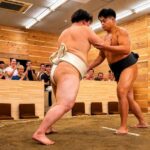
Sumo here is close-up theater, not a tournament or a look at active wrestlers’ training. Retired professionals demonstrate basic moves, explain the rules, and face off in three exhibition bouts, with an MC keeping the action lively in Japanese and English.
I like two things in particular: the show makes sumo easier to understand without turning it into a lecture, and the hot pot and unlimited food and drinks make the evening feel like dinner as well as entertainment. If you’re lucky, you can also enter a sumo challenge in the ring.
The trade-off is that this is a comedy-forward performance, not a formal sporting event. Some banter may not suit every child, and the sumo bouts take up only part of the two-to-three-hour visit.
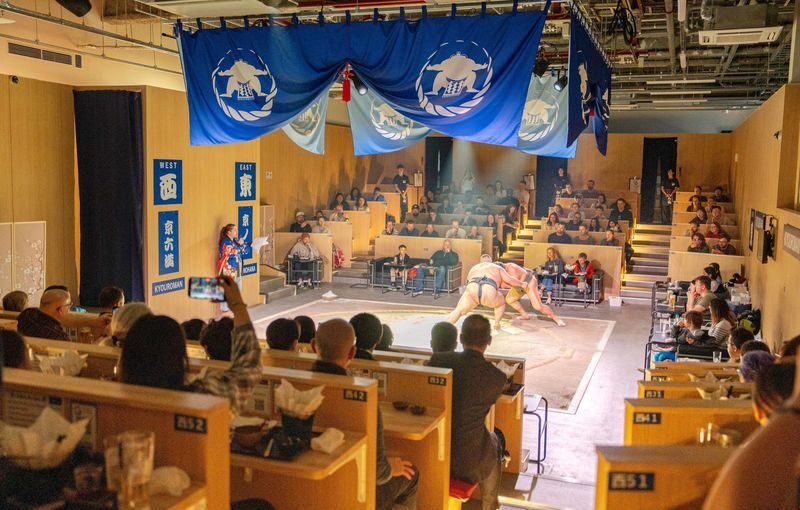
Kyoto Sumo Club puts a dohyo, the raised sumo ring, at the center of a restaurant. You watch from nearby seats while retired professional wrestlers explain the sport, show its basic movements, and perform three bouts. There is a Japanese dance before the sumo program, too.
That makes this a friendly introduction to sumo culture, especially if you have never watched a match and want the rules explained as you go. The show is designed for entertainment and audience participation. It is not an official tournament, and you will not see active wrestlers training.
That distinction matters. An official bout is a serious sporting contest, while this performance mixes instruction, comedy, demonstrations, and staged competition. If you come expecting the formal intensity of a tournament, you may find the tone light. If you want to understand the basics and have a playful evening, the approach makes sense.
You might also be interested in these Kyoto experiences
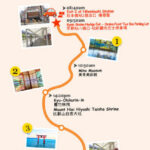
The venue is at 525-1 Higashigawacho, on the fifth floor of the Passaggio building, also known as the Yoshimoto Building, in Nakagyo Ward. It is a three-minute walk from Hankyu Kyoto-Kawaramachi Station or about seven minutes from Gion-Shijo Station on the Keihan Main Line.
Those central stops make this a practical evening plan if you are already exploring downtown Kyoto. The location is easier to reach by train than by adding a separate trip across town, and you do not need to arrange transport as part of the experience. The address can be written in Japanese as well as English, so keep the full address handy when navigating.
Arrive five minutes before your scheduled start time, as requested. The program lasts about two to three hours, and it is worth leaving enough room in your evening for the full meal and show rather than planning a tight connection immediately afterward.
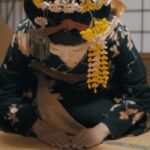
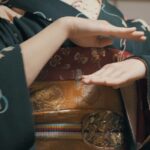
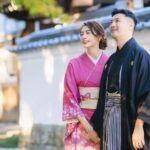
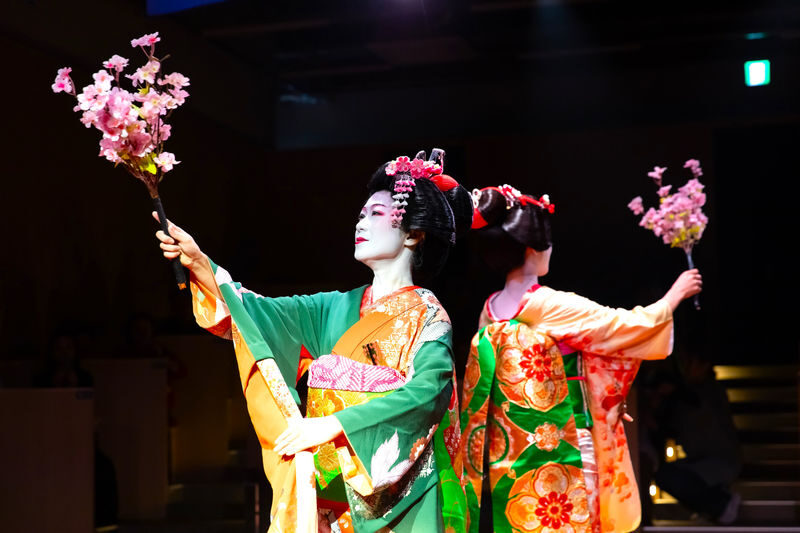
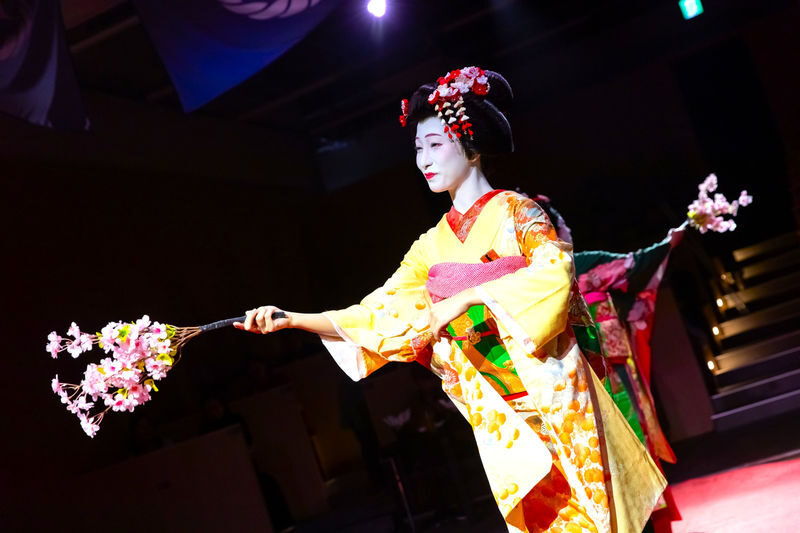
The evening begins with a Japanese dance performed in kimono, a brief opening that sets a cultural tone before the sumo presentation. Treat it as an introductory performance rather than a long dance program. The dance is short, and its style may feel more staged than intimate.
The MC then gives context about sumo and the way the sport has developed. The explanations cover basic rules and what wrestlers can and cannot do, making the demonstrations easier to follow. English commentary is included, so you do not need to know Japanese to keep up with the main points.
This is useful groundwork. Sumo can look simple from the outside: two wrestlers try to force one another out of the ring or onto the ground. But the rules, rituals, and techniques give each exchange more meaning. The show offers enough explanation to help you see those details without asking you to sit through a long classroom-style talk.
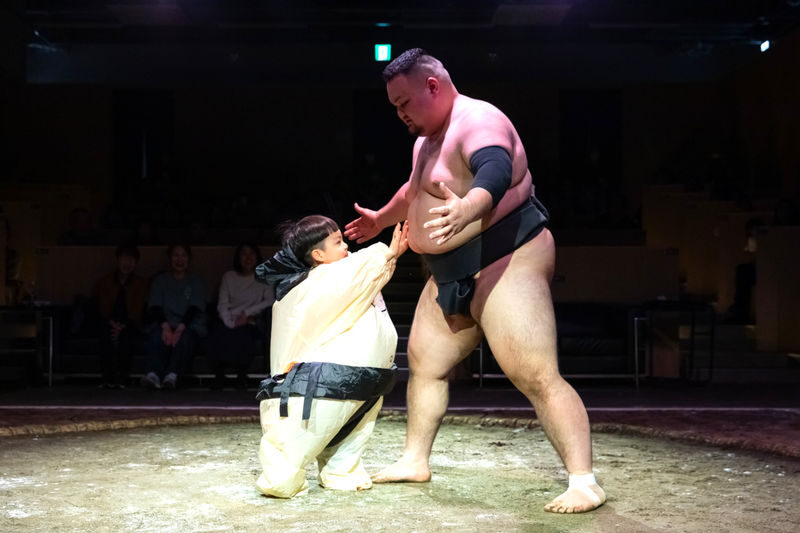
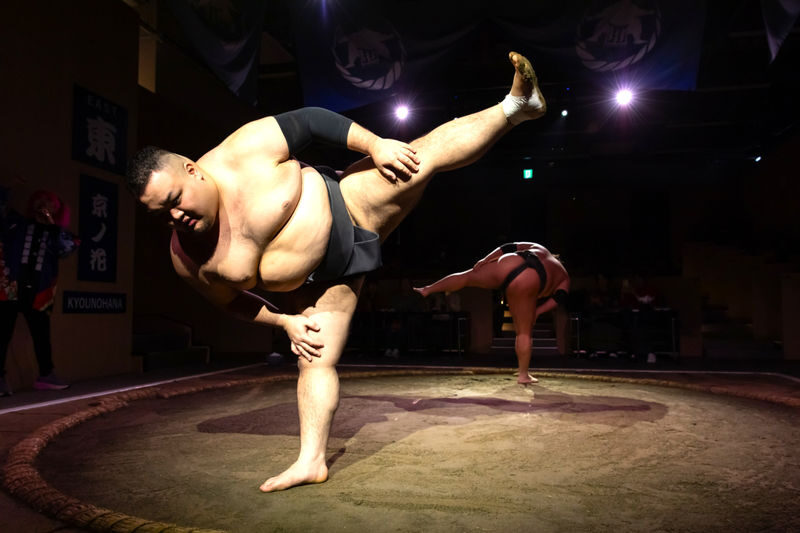
Before the main matches, the wrestlers demonstrate basic sumo movements and traditional techniques. You see how a bout is set up and learn some of the actions involved before watching the wrestlers use them in the ring.
The instruction is deliberately light. The performers and MC mix explanation with jokes and audience interaction, so the show can keep its pace even if you arrive with little interest in wrestling. The humor is one of its strengths, but it also shapes the experience: this is not a solemn display of every sumo custom.
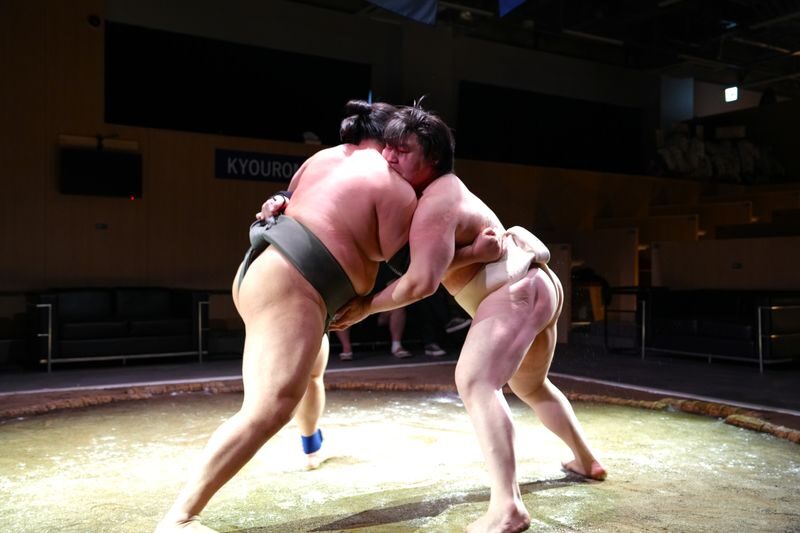
The wrestlers are retired professionals, and their experience gives the demonstrations a physical edge. Even in a playful show, you can see that the movements take strength, balance, and control. The commentary adds context, while the live demonstrations give you something a video or museum display cannot: the sound and force of bodies meeting on the dohyo just a few steps away.
The main sumo segment consists of three exhibition bouts. The wrestlers compete in the ring while the MC explains what is happening and keeps the atmosphere relaxed. The matches are not the whole evening, but they are the show’s central event.
Comedy and banter run through the program. The wrestlers play off one another and the audience, which helps make the rules memorable and keeps the show engaging for people who may not follow sumo. The trade-off is that the action is presented as a performance, not as a serious tournament. If you want a sporting contest with no interruptions, this is the wrong format.
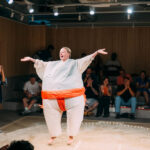
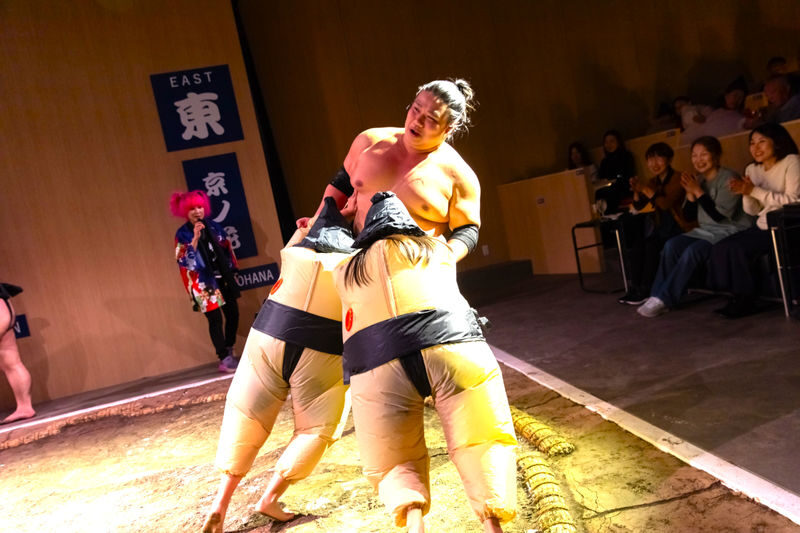
The audience challenge is a highlight for people who want to take part. Volunteers may get the chance to step into the dohyo and face a wrestler, but places are limited. If more people want to join than there are spaces, a lottery decides who gets a turn. Enjoy the demonstration even if you are not selected; participation is a bonus, not something to count on.
You might also be interested in these Kyoto experiences
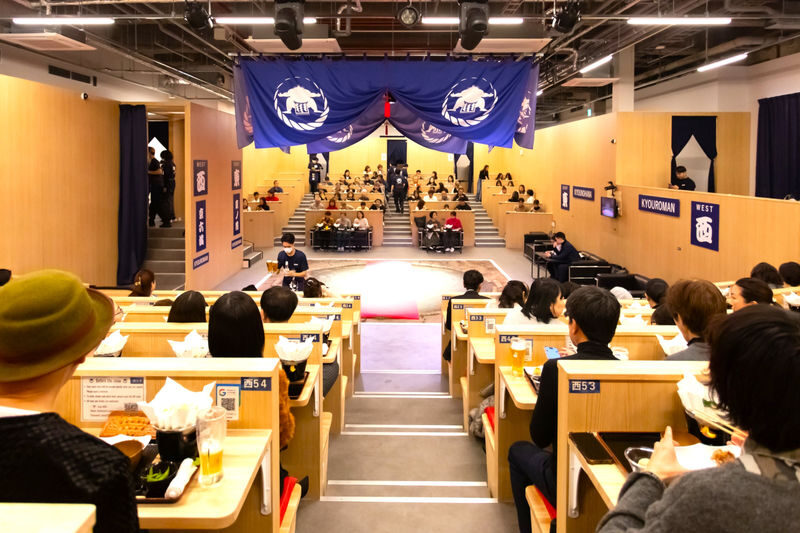
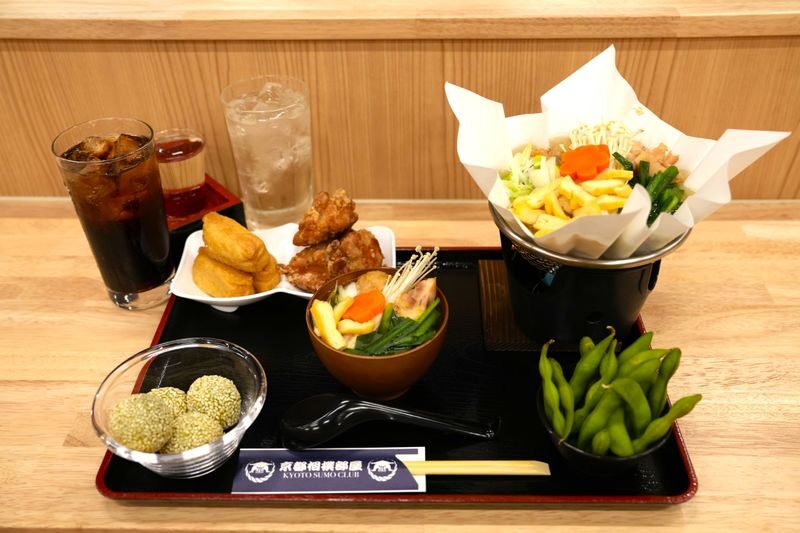
Food is built into the experience, not an afterthought. You receive chicken chanko nabe, a sumo-style hot pot, along with a Japanese set meal. The food selection is not especially extensive, but the meal is generous enough to make this a convenient dinner plan, and you can order more food and drinks during the event.
All-you-can-eat and all-you-can-drink service is included. That can add real value to the ticket, especially if you would otherwise pay for dinner and drinks elsewhere. The food is also a good fit for the show: hot pot is closely associated with sumo meals, so you get a taste of the cuisine as well as an explanation of the sport.
There is a practical timing point here. If you want to enjoy the meal before the show begins, arrive around 15 minutes early when possible, even though the formal meeting instruction is to arrive five minutes before the scheduled time. Food and drinks can continue during the show, so you do not have to rush through dinner. The exact food selection is limited compared with a full restaurant menu, so come for the included meal and the evening as a whole, not for a gourmet tasting.
Vegetarian and vegan meals can be arranged if requested at least two days ahead. The operator cannot accommodate halal or gluten-free meals, so this experience is not a good fit if either is essential to your diet.
Standard seating is described as comfortable, with a good view of the whole dohyo. All seats are arranged to keep you close to the ring, so standard does not mean you are watching from far away. It is the sensible choice if you want a clear view without paying extra for the front row.
VIP seats place you at the front and bring the wrestlers’ movements closer. They also include a printed commemorative photo in a special frame. A souvenir gift set is included with the experience, making the photo an extra keepsake for VIP buyers rather than the only item to take home.
The listed starting price is $101.25, though the final price depends on the selected package and date. To judge the value, count the two-to-three-hour program, meal, unlimited drinks, live English commentary, and souvenir together. It is not a bargain if you are looking only for a short sumo match. It makes better sense as a full evening out, with the food and interaction included.
I would recommend the show to first-time visitors who want a clear, entertaining introduction to sumo, and to families or groups looking for an activity that combines dinner with live performance. The audience participation gives children and adults a reason to pay attention, and the food means you do not have to organize a separate dinner afterward.
Still, it may not suit every family. The general atmosphere is family-friendly, but some of the jokes and banter may not be ideal for younger children. If your group prefers quiet cultural performances, or if you want to observe formal sumo training, choose another activity.
The experience also works for people with little prior interest in sumo. The MC explains the basics, and the wrestlers carry much of the show through their interaction with the room. A few performers have been identified by name as Kyouyuki and Kyonokaze, but do not assume you will see a particular pair on your date.
The activity runs all year, Monday through Sunday, from 11:30 a.m. to 11 p.m., with shows at specific times. Your voucher is valid only for the date and time selected, and you redeem it by showing your mobile voucher. Free cancellation is available up to 24 hours before the activity, based on local time.
Children aged zero to two can attend free. The venue is listed as stroller- and wheelchair-accessible, but wheelchair seating is limited, so tell the operator when booking if you need it. The show is available to book on the day, with instant confirmation, though you should still choose a time that leaves room for the full program.
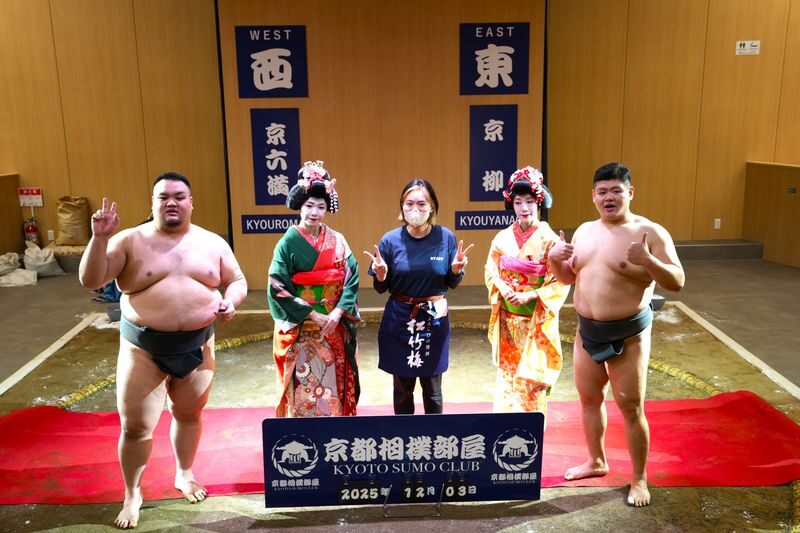
Book it if you want an easy-to-follow, interactive sumo introduction with a proper meal and a good chance of laughing along with the performers. The English commentary, three bouts, and audience challenges make the sport approachable, while the included hot pot and drinks give the ticket more value than a show-only admission.
Skip it if your priority is an official tournament, active wrestlers’ training, or a highly formal cultural performance. For an upbeat evening in central Kyoto that joins food, explanation, and live entertainment, this is a strong choice. If front-row proximity matters to you, compare the VIP option before booking; otherwise, standard seating offers a good view of the ring.
“This has got to be the highlight of our trip so far! we honestly enjoyed every moment. we had many many laughs, joined in on the action and came aw…”
No. It is an entertainment show performed by retired sumo wrestlers, not an official tournament or a viewing of active wrestlers’ training.
Allow about two to three hours for the show and meal.
The ticket includes chicken chanko nabe, a Japanese set meal, and all-you-can-eat food and all-you-can-drink service.
Yes. The live MC commentary is in Japanese and English.
You may have the chance to challenge a wrestler. Places are limited, and if there are many applicants, participants are selected by lottery.
Standard seats provide a good view of the dohyo. VIP seats are in the front row and include a printed commemorative photo in a special frame.
The venue is a three-minute walk from Hankyu Kyoto-Kawaramachi Station and a seven-minute walk from Gion-Shijo Station on the Keihan Main Line.
Yes, if you request one at least two days in advance. The operator cannot accommodate halal or gluten-free meals.
The activity is stroller- and wheelchair-accessible, but wheelchair seating is limited, so inform the operator when booking. Children aged zero to two can attend free.