Physical Address
304 North Cardinal St.
Dorchester Center, MA 02124
Physical Address
304 North Cardinal St.
Dorchester Center, MA 02124

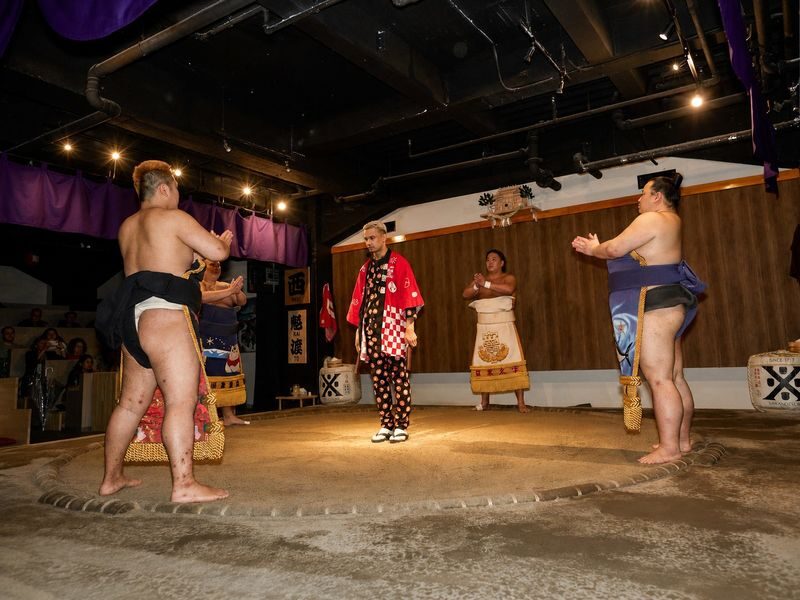
Compare a lively Ginza sumo show with hands-on training led by retired wrestlers, and get practical advice on food, seating, price, and who should book.
In Ginza, you can watch retired sumo wrestlers demonstrate the sport, then learn why the rituals matter, or trade the seats for a 60-minute training session. I like that you can choose between a lively introduction and a more physical lesson, and that both options put former wrestlers close enough to explain sumo beyond the big collisions.
I also like the chance to try shiko leg stomps and salt throwing, with a lottery for a turn in the ring during the show. The trade-off is that the performance is designed for entertainment, not a tournament, and food details are inconsistent, so check what your selected plan includes before you count on dinner.
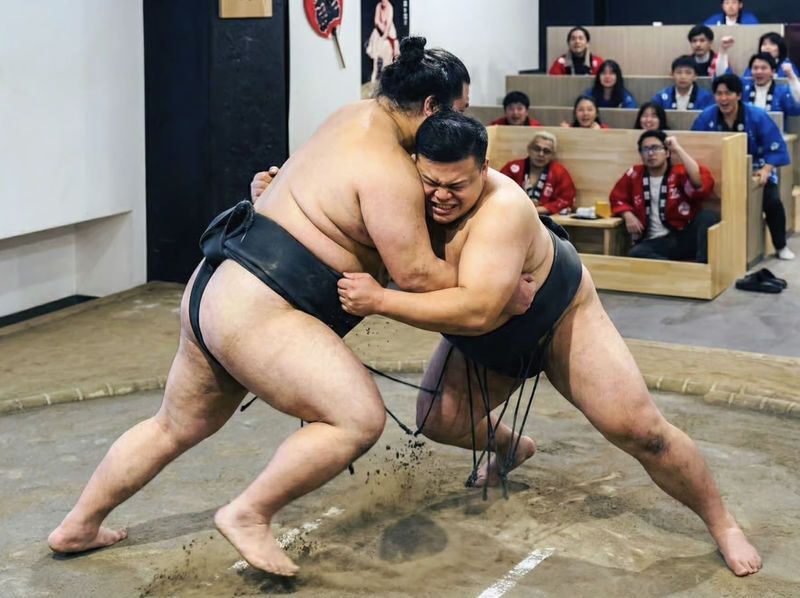
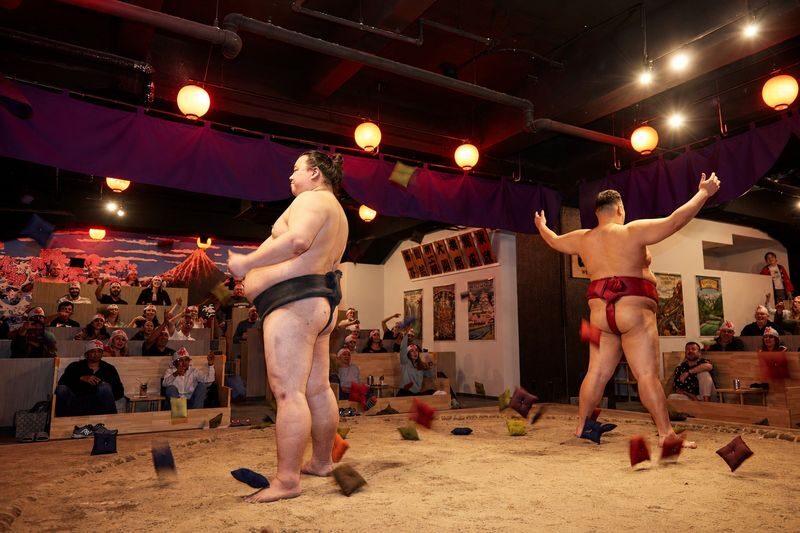
Sumo makes an impression even when you know little about the rules: two wrestlers crouch, size each other up, and collide with startling force. This Ginza experience makes that scene easier to understand by pairing bouts with explanations and small chances to take part.
You choose between two plans, and they are not simply different ticket tiers. Plan A is a hosted show built for a broad audience, including families. Plan B is an intensive training session, closer to a physical introduction to practice than an evening of spectator entertainment.
The setting is Tokyo Sumo Festival in Ginza, at Ginza Inz 1, basement level, 3-3-1 Ginza-nishi, Chuo-ku. It gives you a way to meet the sport in central Tokyo without needing to attend an official tournament.
That distinction matters. Plan A is explicitly not a honbasho, the formal professional tournament. If you want to see competition in its official setting, this is not a substitute. If you want an accessible introduction, with room for questions and participation, the show has a clear purpose.
Looking for more options in Tokyo? Here are some other experiences worth considering.
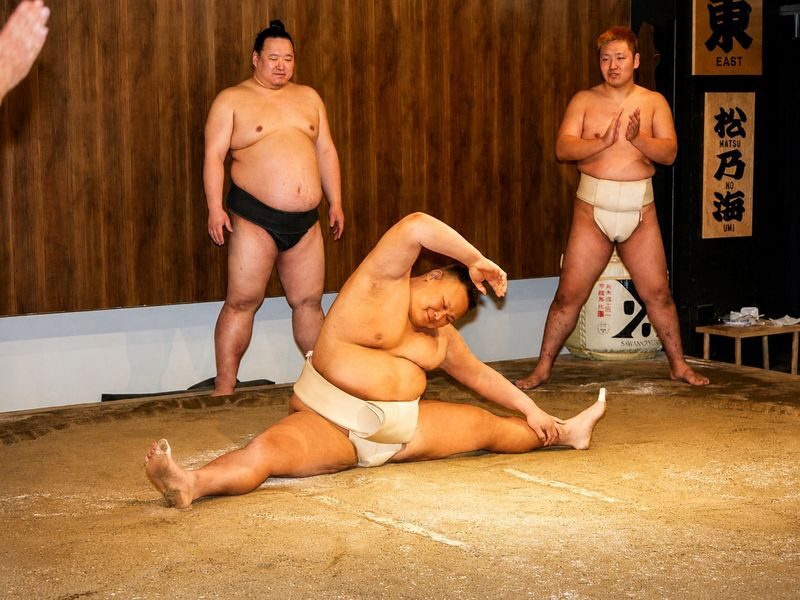
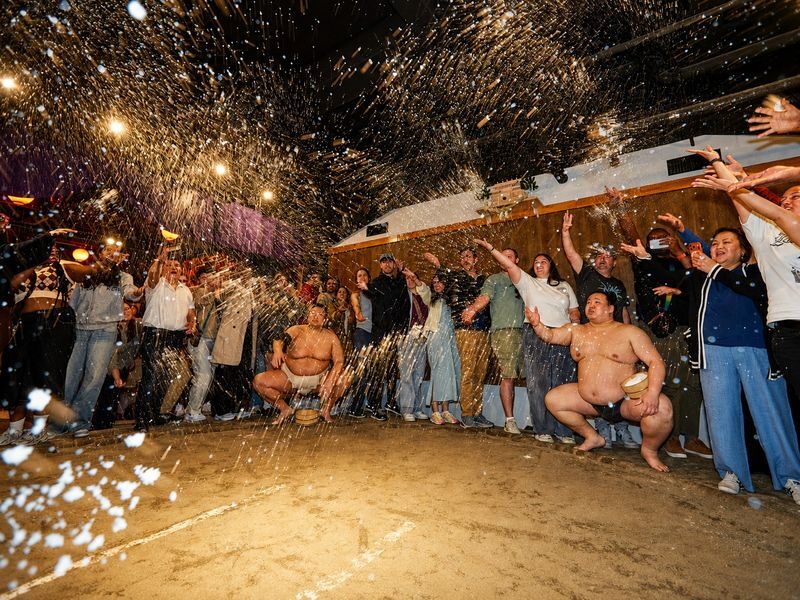
Plan A begins with the elements that make sumo more than a contest of strength. You can watch wrestlers perform familiar actions such as shiko, the leg stomp, and salt throwing, while English-speaking staff help explain what is happening. Japanese-speaking staff are also available.
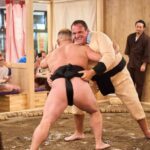
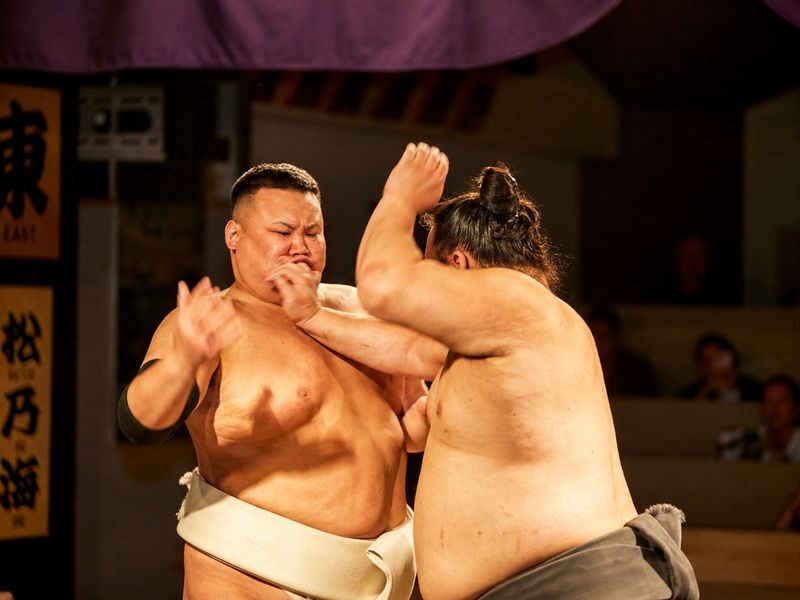
The live bouts bring the physical side into focus. From close to the dohyo, the ring, you can see the wrestlers’ size and balance, and appreciate how quickly a bout can turn. The demonstrations are meant to be engaging rather than part of a competitive tournament, so go expecting a performance with explanations, not the formal hush and stakes of a championship match.
There are ways to join in without stepping into the ring. You may be invited to try a ritual or gesture, and a lottery selects someone for the Challenge Sumo face-off with a wrestler. Selection is not guaranteed, so enjoy the show even if you do not get picked. If you do, you will have a memorable story and, most likely, a strong reminder that sumo wrestlers are not easy to budge.
The host helps set the tone. Names mentioned by visitors include Hillary and Nick, alongside wrestlers such as Maru, Shido, Bun Go, and Matsu. Staff and performers can vary, so treat those names as examples rather than a promise. What you can expect is a format that leans on clear explanations, humor, and audience involvement.
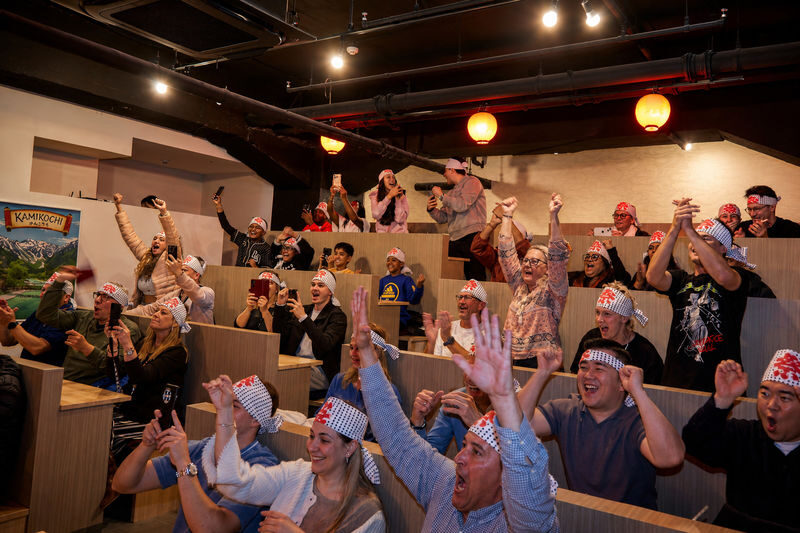
That combination is a real strength for families and first-time sumo watchers. You do not need to know the rules before you arrive, and children may find the chance to meet the wrestlers more memorable than a long explanation of tournament rankings. The show also gives you a chance to ask questions, something you do not get in the same way at a formal match.
It is also quite deliberately tourist-friendly. If you prefer a quiet, unmediated look at a wrestling stable, the hosted format may feel staged. But if you have limited time and want context along with the spectacle, a short, interactive show can be a sensible way to begin.
Plan B swaps the audience seat for the practice ring. A retired wrestler leads a 60-minute session covering shiko, suri-ashi, and butsukari-geiko, with instruction paced to the group. These are not just poses for a photo. The drills introduce the balance, footwork, and pushing that make sumo demanding.
Expect to move. Even a session described as suitable for different abilities can be more strenuous than it sounds, particularly when you repeat movements or push against a wrestler. People who choose this option should be comfortable with physical activity, and should not book it if they have a health issue that makes exertion unsuitable.
The training has a different appeal from Plan A. Instead of seeing several demonstrations from a seat, you get a taste of what the movements ask of the body. You may laugh at your own attempts, but that is part of the point: the drills help explain the discipline behind the entertainment.
A kesho-mawashi, the ceremonial apron worn by wrestlers for formal entrances, is available for a memorable photo. Participants also receive a signed tegata, a handprint board that makes a more distinctive keepsake than a standard souvenir. Souvenirs may vary by season, so do not assume every detail will be identical each time.
This plan has important limits. It is not for children under five, pregnant participants, or people with health issues. Children need a guardian, and infants and children must be included in the passenger headcount. There is no food service for Plan B, so plan your meal separately.
The two plans are alternatives, not a combined package for one group. The information provided says each group can book only one of Plan A or Plan B. If your party includes people who want to watch and others who want to train, check directly before booking rather than assuming you can split the group across plans.
Prices start at $60.65 per person, with Plan A offered in general and premium seating. The exact price can vary by package, so compare the option shown for your date. Premium seating may suit you if being close to the action matters, while general seating is the lower-cost way to see the show.
The value depends on what you want from the hour. Plan A bundles a live performance, explanations, ritual demonstrations, interaction, and a chance at a ring challenge. Plan B buys something less passive: instruction from a former wrestler, physical practice, a photo opportunity, and a signed handprint board. If you are curious about sumo but do not want a workout, A is the safer fit. If trying the movements is the main attraction, B offers more than a standard show.
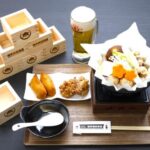
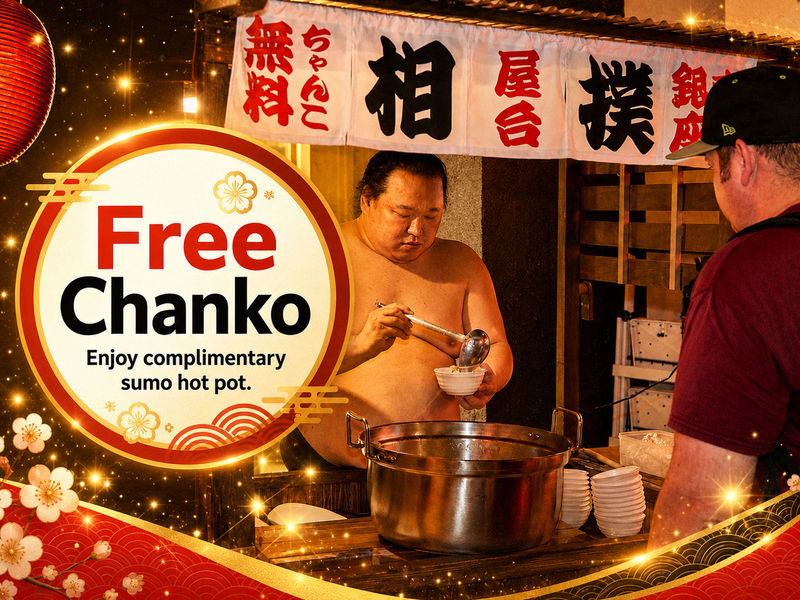
Food is the detail to verify before you book. One description says Plan A includes all-you-can-eat chanko-nabe, the hot pot associated with sumo stables, and drinks. Other information says both plans exclude meals and that Plan A visitors can order from an on-site menu. The safest approach is to check the meal arrangements for your specific package and date. Do not treat chanko as guaranteed unless your booking confirms it.
You can also buy food and drinks on site, but on-site payment is cashless and must be made by credit card. Food and drinks have been described as expensive, so if the hot pot is not included or you want a full meal, eating before or after may be the better-value plan.
Vegetarian and vegan meals are available on request, and you should tell staff when you arrive. The venue cannot provide halal-certified or gluten-free food, and the listed restrictions also include lactose intolerance and allergies. Outside food is allowed only for visitors with halal requirements or severe food allergies. If you have a dietary need, contact the venue in advance and confirm what applies to your case.
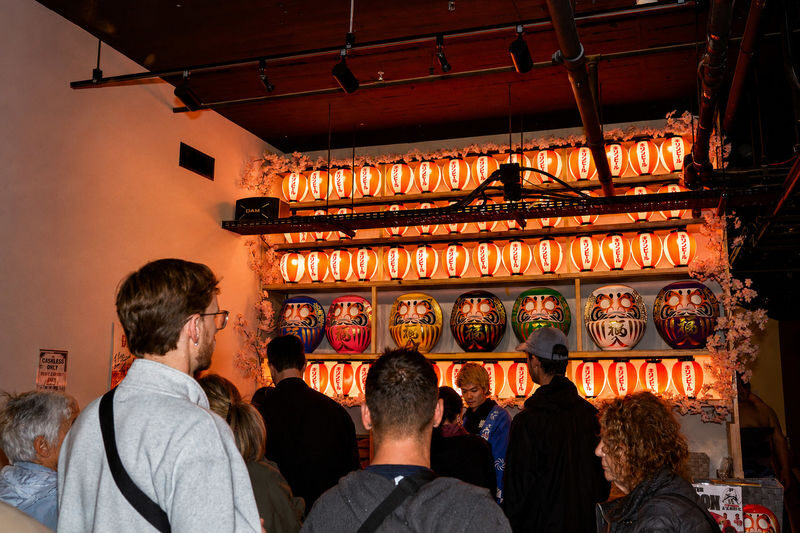
The venue address is Ginza Inz 1, B1, 3-3-1 Ginza-nishi, Chuo-ku, Tokyo 104-0061. If you take a taxi, the venue provides Japanese directions asking the driver to stop near the entrance to Ginza Inz 1 on Sotobori-dori, since the event space is downstairs. Having the Japanese address ready can make that handoff easier.
Seating is limited. For a group, buy all tickets together in one transaction to improve your chances of sitting together. General and premium seats are available for Plan A. If you need wheelchair access, contact staff before booking; accessible seating is limited, and advance notice is requested.
Photos and video recording are allowed, which is useful if you want to remember the demonstrations or take a picture with the wrestlers. Still, be considerate during the show and follow staff instructions around the dohyo. The ring is the center of the event, and a clear view matters to everyone.
The voucher is valid only for the date and time specified. If the operator cancels because of extreme weather or another unforeseen event, you can reschedule or request a full refund. Standard cancellations receive a full refund when made at least 24 hours before the activity date, in local time.
Plan A is the better choice for families, first-time visitors, and anyone who wants an entertaining introduction without needing prior knowledge. Its English support, demonstrations, and chance of audience participation make the sport easier to follow. It can also fill a gap if you cannot attend a formal tournament but still want to see sumo up close.
Choose Plan B if you are keen to test the movements yourself and are ready for a workout. It will suit active adults and older children who meet the restrictions, especially those who value instruction and a keepsake more than a performance. It is not the right pick for anyone who wants a relaxed seated show or needs food served during the session.
If you are seeking the atmosphere of an official tournament or serious morning practice, look elsewhere. The show is built to be approachable, and the training is a guided introduction rather than a full day inside a sumo stable. That is not a flaw, but it is important to book the experience you actually want.
Book Plan A if you want an upbeat, explanatory look at sumo with a chance to join the fun. The strongest reasons are the close-up bouts, approachable teaching, and the possibility of taking part in the ring challenge. Confirm the food arrangement before you rely on it as dinner.
Book Plan B if physical participation is the point and you are comfortable with exertion. The 60-minute training, photo opportunity, and signed tegata give it a more hands-on character. If you are looking for formal competition, a guaranteed face-off, or a quiet practice session, this is not the right match.
“Lovely experience and very informative on sumo wrestling history,good sumo wrestling also”
No. Plan A is an entertainment show designed to make sumo accessible, not a competitive honbasho.
Plan A is a hosted show with bouts, rituals, and audience participation. Plan B is a 60-minute training session covering shiko, suri-ashi, and butsukari-geiko.
No. Participants are selected by lottery, so you may not be chosen.
The food information is inconsistent. One description says Plan A includes all-you-can-eat chanko-nabe and drinks, while other details say meals are excluded and food can be ordered on site. Confirm the arrangement for your selected package. Plan B has no food service.
Plan B is not for children under five, pregnant participants, or people with health issues. Children need a guardian.
No. The venue is cashless, and on-site food, drinks, and other services must be paid for by credit card.