Physical Address
304 North Cardinal St.
Dorchester Center, MA 02124
Physical Address
304 North Cardinal St.
Dorchester Center, MA 02124

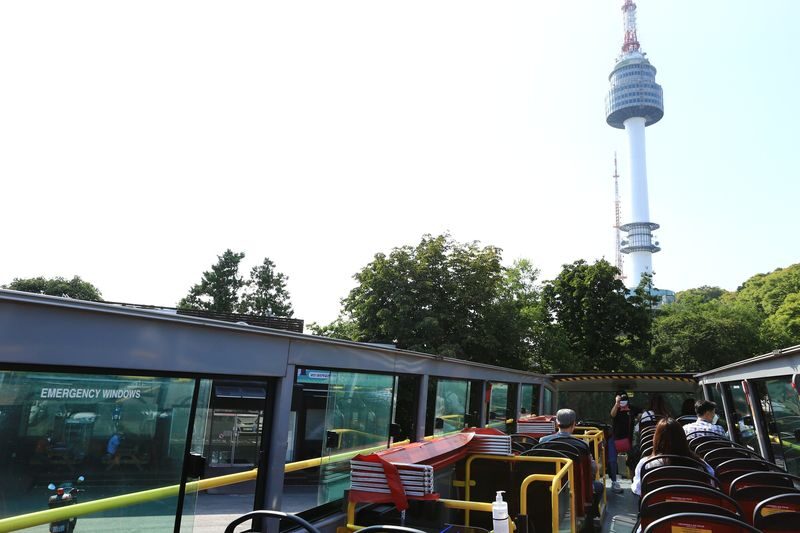
See Seoul’s palaces, Myeong-dong, Namsan and more on a flexible 15-stop hop-on hop-off bus, with practical tips on timing, heat and value.
Seoul’s central sights are spread across a big city, and this bus links many of them on one 15-stop loop. I like that you can ride the full route for an overview or get off to explore, and I like the chance to see the city from above ground instead of from another subway platform.
The main caution is timing: buses are scheduled every 30 minutes, but traffic, full buses and missed arrivals can stretch the wait. The open upper deck is fun in good weather, but Seoul’s summer sun can turn sightseeing into a hot-seat test.
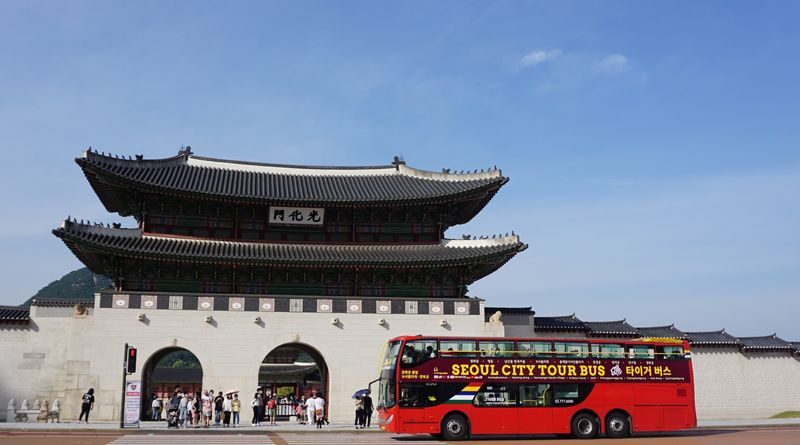
This is a sightseeing route first and a transportation shortcut second. It begins at Gwanghwamun and loops through central Seoul, with 15 stops that include Myeong-dong, Cheong Wa Dae, Namsan and Hanok Village. You can remain aboard for a broad look at the city or use the bus to reach a few areas that interest you.
I see the greatest value here on your first day. Seoul’s scale can be hard to grasp from subway stations and underground passages. From the bus, you get a better sense of how the central districts relate to one another, and you can spot places to revisit on foot or by public transit.
The ticket is listed from $20.25, with a typical visit taking three to five hours. That can be worthwhile if you use several stops or want an easy overview without planning each leg yourself. If you ride only between two nearby stops, the fare may feel less compelling than ordinary transit.
Looking to discover more of Seoul? Consider these other city tour options
Before boarding, exchange your voucher for a physical ticket at the Gwanghwamun ticket office. The address is 68-2 Taepyeong-ro 1-ga, Jung-gu, Seoul, near Gwanghwamun Station. Arrive 15 minutes before your planned departure, and keep the paper ticket handy: you need to present it whenever you board again.
The exchange requirement is a small chore, but it matters. You cannot simply show the electronic voucher at each stop, and ticket exchange is not described as available elsewhere on the route. Build the office visit into your schedule rather than arriving at the bus at the last minute.
Service runs Tuesday through Sunday from 9:20 a.m. to 4:50 p.m. It is closed on Mondays, except when Monday is a public holiday, when it operates normally. The published interval is every 30 minutes; from September 1, 2026, the Downtown Palace and Namsan course is scheduled to run every 25 minutes. These are intervals, not a guarantee that every bus will arrive on the dot.
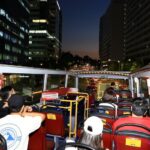
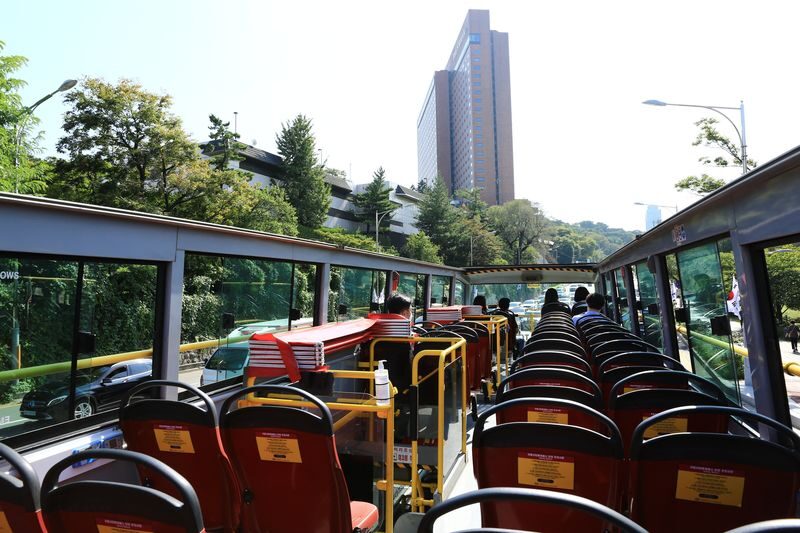
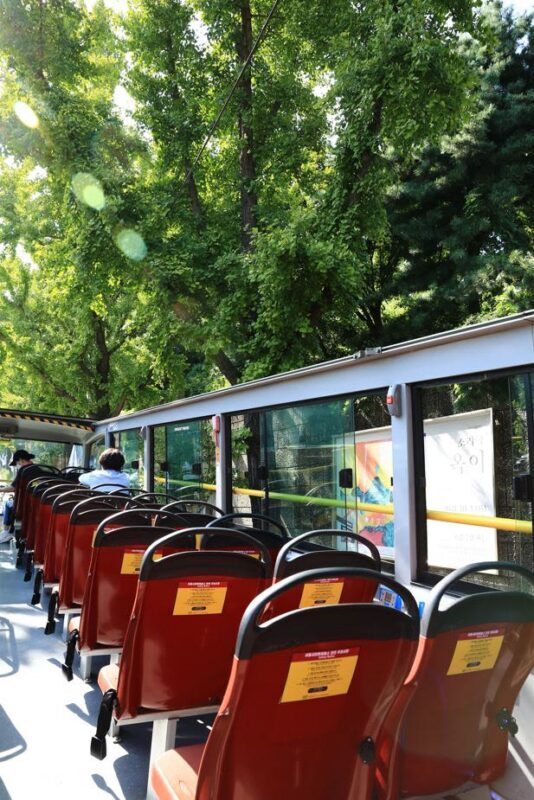
The vehicle depends on bookings, traffic and availability. It may be an open-top double-decker, a glass-top double-decker or a semi-open single-decker, so don’t choose this tour on the assumption that you will definitely get the classic open upper deck.
When conditions cooperate, the upper level gives you a fine, unobstructed view of the streets and nearby hills. It also exposes you to sun, wind and rain. On hot days, several hours upstairs can be uncomfortable; one family found the lower level’s air conditioning useful when the sun became too strong. Other passengers have found the cooling insufficient, so treat the enclosed deck as a possible refuge, not a promise of perfect comfort.
Rain can change the experience quickly. The operator may fit a roof during heavy rain, and an open-top vehicle may not stay open in poor weather. If comfort matters more than the view, choose a seat downstairs when available and bring a hat or sun protection for any time you spend above.
The tour includes audio commentary, with free headphones and multiple language options reported on board. The commentary gives context as you pass, though the amount of information may feel brief if you want a detailed history lesson. Check that your headphones work early in the ride, while you still have time to ask for help.
The route starts and finishes at Gwanghwamun, a handy base for the historic and civic center. From here, you can connect the bus ride with time around the square and nearby palace area. These are busy parts of town, and rallies or traffic disruptions can affect access or force changes to the route, so keep some flexibility in your day.
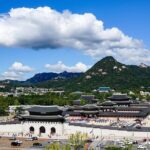
The palace and Cheong Wa Dae area gives the tour its historical focus. Cheong Wa Dae, also known as the Blue House, sits among the route’s named stops, while the wider central area is a natural place to get off and explore. The bus can reduce the effort of moving between districts, but it does not remove the walking once you leave it. Check the current route map before you set out, since a stop name does not always put you at the door of every attraction.
Myeong-dong offers a different feel: a dense central shopping district, useful for a break between more traditional sights. The hop-on format lets you spend as little or as much time there as you like. Just remember that leaving the bus means waiting for the next one, and the schedule can be less predictable than the posted interval suggests.
The Hanok Village area brings older-style homes and narrow lanes into the day. It can be rewarding to explore on foot, but the walk involves slopes and uneven effort. If you are travelling with older relatives or anyone who finds hills difficult, check the precise stop location and walking route before getting off.
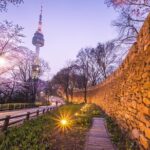
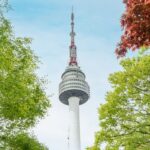
Namsan is one of the route’s strongest reasons to ride. The bus takes you toward the hill, where the views of Seoul can be a highlight even if you stay aboard. If you want to visit the Namsan Tower observatory, its admission is not included in the bus ticket; allow separate time and budget for it.
Other stops serve places such as Dongdaemun and the Gwangjang Market area. These give you a chance to see more of the city’s shopping and food districts, but the best way to enjoy them is to choose one or two rather than attempt every stop in a single outing. The route is a sampler, not a promise that you can thoroughly explore all 15 locations in three hours.
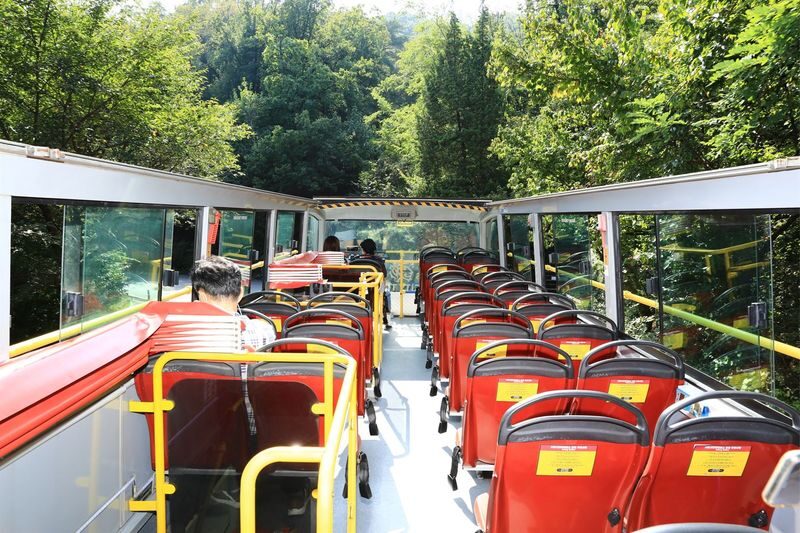
You may hop off at a stop, explore, and board a later bus. The stated service interval is 30 minutes, so plan for a wait, and leave a buffer if you have a timed attraction, meal reservation or train to catch. Buses can run late, fill up, or fail to arrive when expected, and traffic around central Seoul can affect the whole loop.
I would choose two or three stops in advance, then treat any extra time as a bonus. Starting early gives you more room to explore before the last departure window. A late-afternoon ride can still be worthwhile as a complete circuit, but the bus stops operating at 4:50 p.m., so it is not a way to see the city after dark.
One useful approach is to ride the loop without getting off first. You will see the shape of the route and decide which neighborhoods deserve a longer visit. A full ride is also an option when the weather is poor or you want a low-effort overview, though you’ll get less value from the hop-on feature if you never leave the bus.
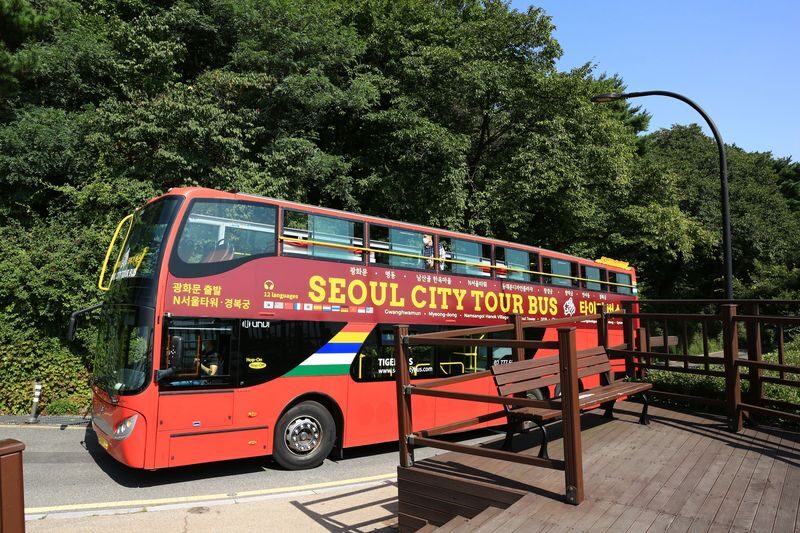
At this price, the tour can be a sensible way to combine transport and orientation. It is especially useful if you are short on time, travelling with children, or would rather avoid planning every subway connection. Families have also found the bus spacious and easy to board, and the route can make a full day of central sightseeing feel less fragmented.
There are clear limits. The service ends in the late afternoon, the route covers only part of Seoul, and the commentary may not satisfy anyone seeking a long, detailed account. The ride is also sensitive to traffic and service gaps. If a bus is late and you have a firm schedule, a taxi or the subway may be the more dependable choice.
The bus is not a ticket to every attraction along the route. Admission, food and personal expenses are not included, and outside food and drinks are not allowed on board. Children under 48 months may ride free with a guardian, one child per guardian, but no seat is provided for the child. Children from 48 months through age 18 are classed as children for ticket purposes.
When booking, note that the voucher is valid only on the selected date. Cancellation charges rise as the activity date approaches, and a used ticket cannot be refunded. If extreme weather or another unforeseen event leads the operator to cancel, you may request a full refund.
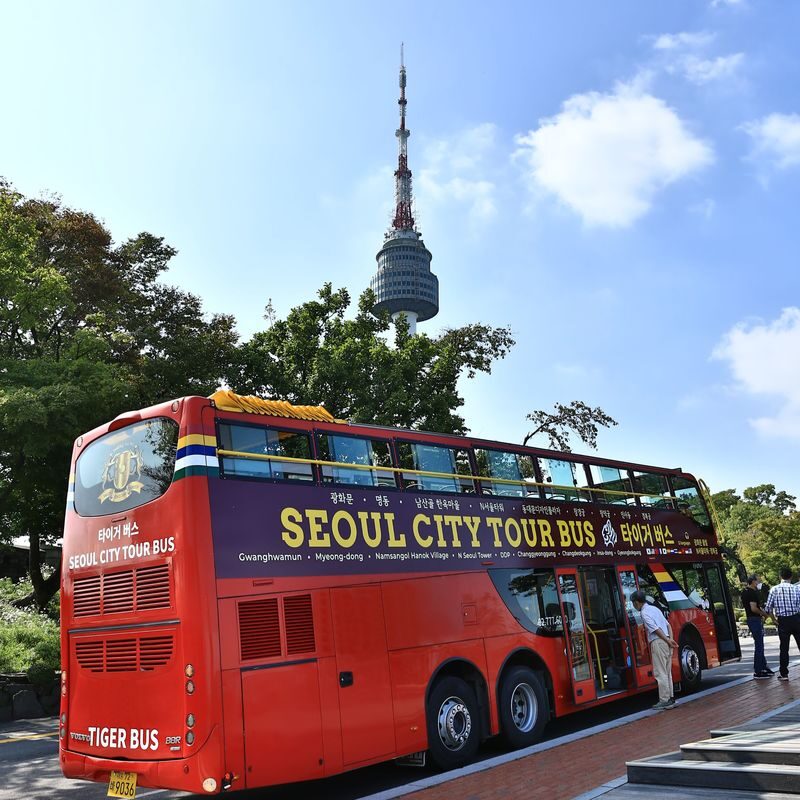
Book it if you want an easy first look at central Seoul, value the freedom to stop and explore, and can stay flexible about departure times. It is a particularly good fit for a first visit, a family day out, or a day when you want to connect several sights without spending all your energy navigating.
Skip it if you need precise arrival times, want to explore every stop in depth, or are expecting a full-day or evening service. For the best balance, start early, exchange your ticket before boarding, pick a few priority stops and leave room for delays. If you can do that, the bus offers a practical view of Seoul and a helpful sense of how the city fits together.
“Really enjoyed it, having the convience of getting off and on the bus for places i didn't know about. I was hoping to use the bus again the next da…”
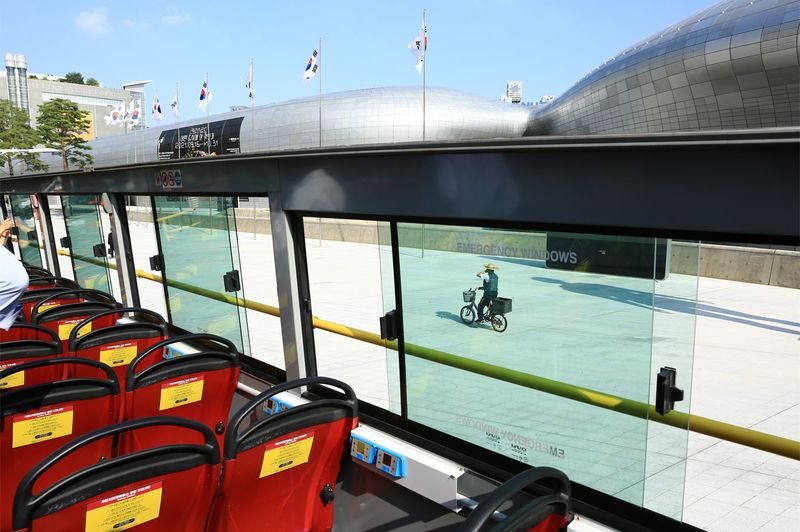
The meeting point and ticket office are at 68-2 Taepyeong-ro 1-ga, Jung-gu, Seoul, near Gwanghwamun Station. Exchange your voucher for a physical ticket before boarding.
The tour operates Tuesday through Sunday from 9:20 a.m. to 4:50 p.m. It is closed on Mondays, unless Monday is a public holiday, when it operates normally.
The stated interval is every 30 minutes. From September 1, 2026, the Downtown Palace and Namsan course is scheduled to run every 25 minutes.
The bus circulates through 15 stops, including Myeong-dong, Cheong Wa Dae, Namsan and Hanok Village.
Depending on bookings, traffic and vehicle availability, you may ride an open-top double-decker, a glass-top double-decker or a semi-open single-decker.
Children under 48 months may enter free when accompanied by a guardian, with one child per guardian. No seat is provided for the child. Ages 48 months through 18 years are classed as children.
No. Outside food and drinks are not allowed inside the bus.