Physical Address
304 North Cardinal St.
Dorchester Center, MA 02124
Physical Address
304 North Cardinal St.
Dorchester Center, MA 02124

Cross from Bali to Java for Ijen’s night hike, possible blue flames, sunrise over an acid lake, home-cooked meals, and a private room.
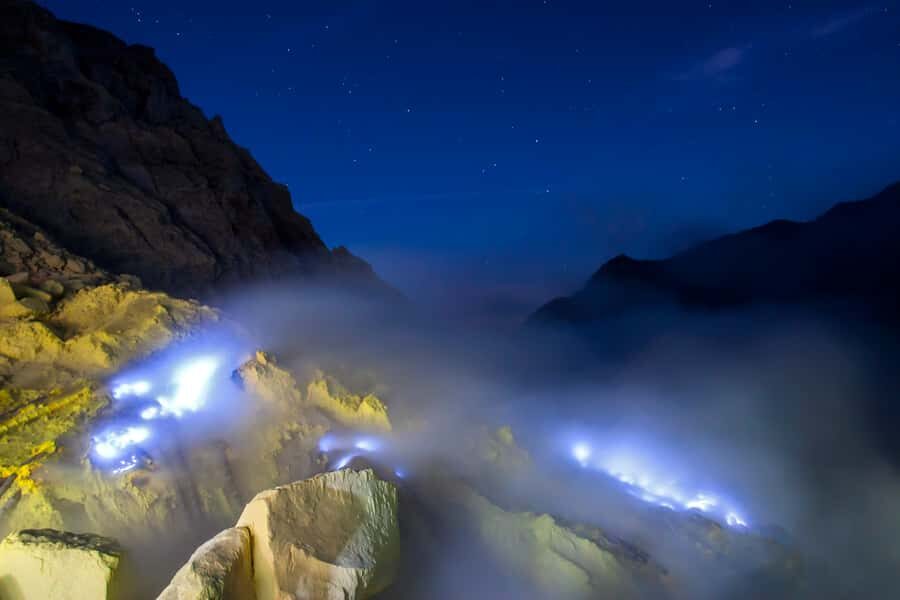
Kawah Ijen’s blue flames are not a light show on a schedule. They are a natural volcanic phenomenon, visible only when conditions cooperate, and the effort to see them takes you across the Bali Strait for a night hike inside an active volcano. At dawn, the crater’s vast acid lake shifts into view, a second spectacle that does not depend on seeing the flames.
I like two parts of this trip in particular: former sulfur miners often guide the hike, giving the work in the crater a human context, and the overnight stay includes a private room and generous home-cooked Javanese meals. Those comforts matter when you have spent much of the day traveling and face a demanding walk before sunrise.
The trade-off is the schedule. You may spend 20 to 28 hours on the round trip, with long van and ferry rides and only a short rest before the hike. The trail can be rocky and slippery, and sulfur smoke can sting even through a mask. The blue flames are never guaranteed.
Pickup is offered from Gusto Gelato & Caffé in the Seminyak area or Indomaret Mengwitani, the meeting point for people coming from Canggu, Mengwi, and Ubud. The stated departures are 1:00 PM from Seminyak and 2:00 PM from Mengwitani. Bali traffic can affect the schedule, so keep the afternoon free rather than arranging a timed appointment or onward activity.
The first van ride is about four and a half hours, followed by a ferry crossing of roughly 75 minutes, then another hour by van into East Java. These are not small transfers between nearby attractions. You are crossing an island and a strait, and the long road sections are part of the cost in time and energy. If winding roads make you queasy, bring motion-sickness medication; one participant specifically found the drive challenging for that reason.
The ferry adds a change of pace and a glimpse of the crossing between Bali and Java. But it is still transport, not a sightseeing cruise, and the full journey can feel slow after an early start or a busy Bali itinerary. The operator organizes the transfers and ferry, so you do not have to piece the route together yourself.
You might also be interested in these Bali experiences
On arrival in East Java, you check into a clean, comfortable room and have dinner prepared by a local family. The stay is a practical part of the experience, not just a place to sleep: a warm meal and a private room make the hours before the hike more manageable. The accommodation is described as having hot water and Wi-Fi, and you can leave your belongings there while you hike.
The food is one of the strongest parts of the package. Expect a generous Javanese meal rather than a token snack, followed by breakfast after the hike. The team has been able to accommodate vegan and gluten-free diets, but tell them about dietary requirements in advance so they can plan accordingly.
You should not count on a long night’s sleep. The stay is listed as about six hours, but that includes the evening arrival and the early departure for Ijen. A 1:00 AM start has been used for the hike, though the exact timing can vary. Treat the room as a chance to rest, shower, and get organized, not as a full night in bed.
Before setting out, the host gives a safety briefing and explains the hike. Take that time seriously. It is your chance to understand how the group will move through the crater, what equipment you will use, and how to follow your guide in the dark.
The volcano rises to 2,370 meters above sea level. From the trail, you make your way toward the crater and descend inside it to look for the blue flames. The walk is rated moderate to demanding, and the dark, rocky, sometimes slippery ground makes it more taxing than the rating alone might suggest. Comfortable sports or hiking shoes are essential.
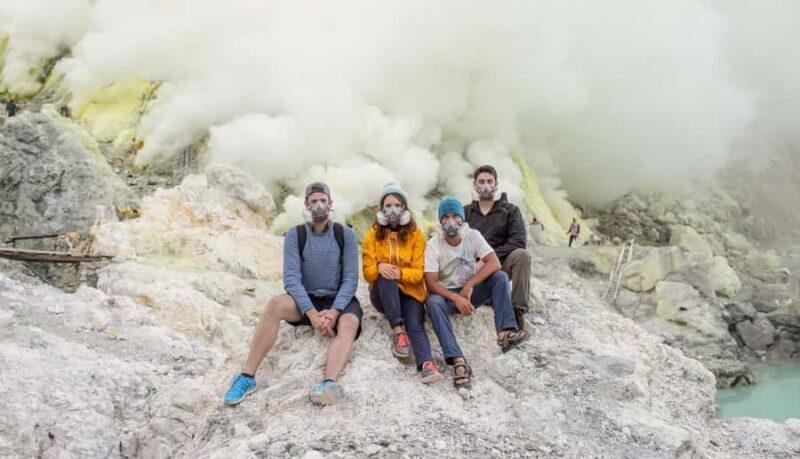
You get a gas mask, flashlight, and wool gloves as part of the tour. Warm clothing is still your responsibility, though jackets, gloves, and a beanie may be available to borrow free of charge, subject to supply. Pack a raincoat and a small backpack for water, snacks, and personal items. Large bags are not allowed on the excursion, so travel light.
The mask is important, but it does not make sulfur fumes harmless or comfortable. Smoke can sting even when you are wearing one, so this is not a good choice if you have breathing problems. Follow the guide’s directions, keep your mask fitted as instructed, and do not assume that the equipment makes every condition easy.
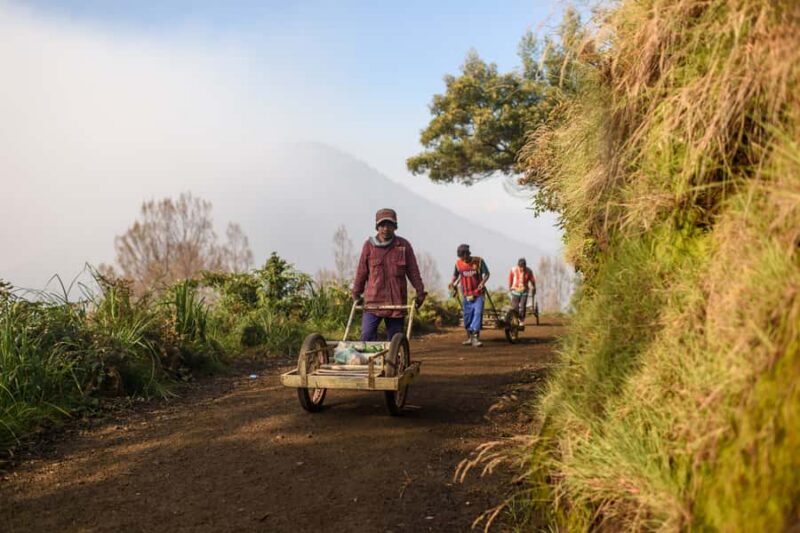
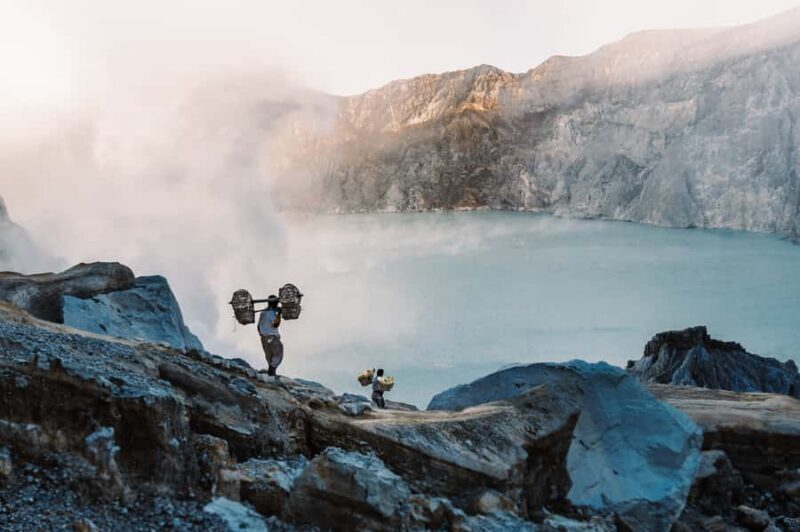
One of the most meaningful parts of the hike is seeing the sulfur porters at work. They carry heavy loads through the crater, in conditions that are far more demanding than a visitor’s short excursion. Guides who have done this work themselves, including Hary, Pur, and Pol, can explain what you are seeing and help you move through the area with care. Their experience also helps them judge the route and support people who need a slower pace.
The blue flames are created by burning sulfur gases and can appear as striking blue light in the dark. But no guide can promise you will see them: natural and atmospheric conditions determine whether they are visible. A good plan is to value the full night hike and crater setting, rather than treating the flames as the only reason to go.
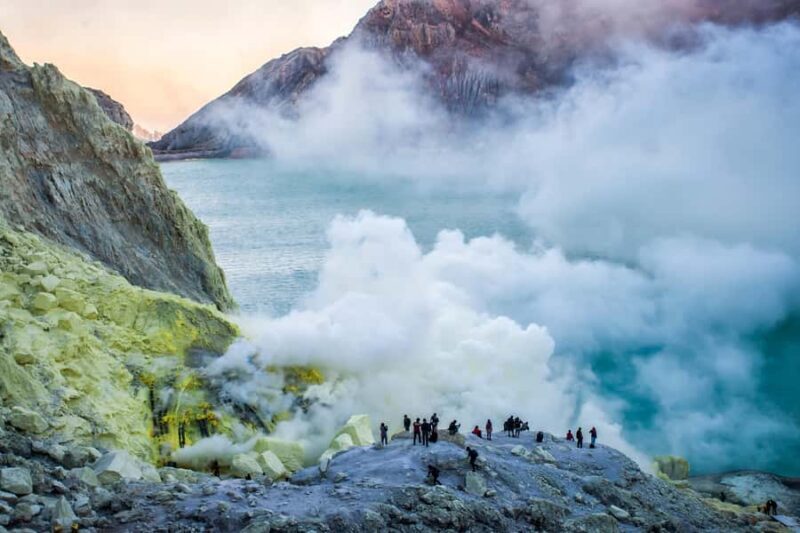
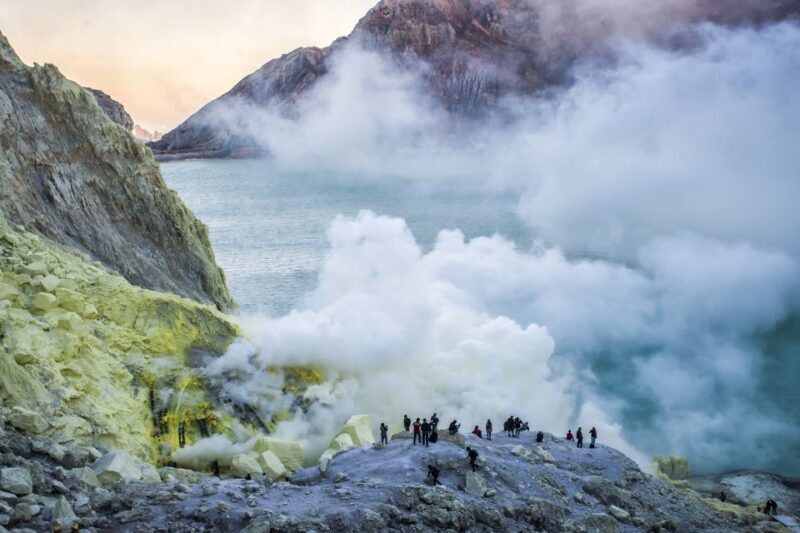
As dawn approaches, the tour turns to the crater lake, identified as the world’s largest acid lake. Its turquoise color emerges gradually as the sky brightens. That change from a dark volcanic night to a wide, colored lake is a powerful contrast, and it gives the outing a second major goal even if the blue flames do not appear.
This is a scenic moment, but it is also the end of a physically demanding night. You may be tired, and the route can be crowded, especially at busy times. Your guide helps you reach viewpoints and keep the group moving, but give yourself room to enjoy the view rather than expecting a quiet, private summit.
The hike and time at Ijen take about six hours in the stated itinerary. Your guide is not just there to lead the way: guides have helped with difficult sections, explained the crater, and taken photos for participants. If you want photos, ask politely and make sure you still have a moment to take in the scene without a screen.
More Great Tours NearbyAfter the hike, you return to the accommodation for breakfast. The meal is home-cooked and generous, and it gives you a chance to refuel before the return journey. A shower is available after the hike, a welcome comfort before getting back into the van.
The return route reverses the outward journey: about an hour by van, a 75-minute ferry, then longer van rides back to Bali. Drop-off is at Indomaret Mengwitani or Gusto Gelato & Caffé. The full experience may take 20 to 28 hours depending on your pickup and drop-off points, so plan for a tiring day and avoid booking a flight or another fixed commitment close to the expected return.
Some parts of the schedule can feel rushed, particularly when traffic or crowds affect the timing. The transport and overnight arrangements take much of the planning off your hands, but they cannot control road conditions, ferry queues, or volcanic conditions. Pack patience along with your warm layers.
At $112 per person, the tour bundles Bali pickup and drop-off, both ferry crossings, a private room, dinner and breakfast, park entry, an English-speaking guide, and basic hiking equipment. Arranging those elements separately would take time and coordination, and the private room is a useful inclusion for solo participants, not just couples sharing a room.
The price also pays for a guide-led visit in a demanding environment. The guide’s knowledge of the crater and sulfur-mining work adds context you would miss on a self-guided outing, while the transport team handles a complicated cross-island route. Meals and a place to shower after the hike make the return journey easier.
The package does not include personal expenses or insurance. Consider that when comparing the price, and check that your own travel insurance covers the activities you plan to do. This is good value if you want the full Bali-to-Ijen arrangement handled for you. It is less compelling if you dislike long transfers or prefer to arrange each stop yourself.
This tour suits solo visitors, couples, and small groups who are comfortable with a very long day and an early, physically demanding hike. It can also suit families, but access is limited under certain conditions for children under 10. Anyone with significant mobility issues should not book, and people with breathing concerns should think carefully about sulfur smoke.
You do not need to be an expert hiker, but you should be able to manage a moderate-to-demanding walk over uneven ground in low light. If you are unsure about your fitness, be honest with yourself before booking. The guides can help and set a patient pace, but they cannot remove the physical challenge.
Pack a copy of your passport or ID, comfortable hiking shoes, warm clothes, rain protection, and a small daypack. Leave large luggage behind and do not bring alcohol or drugs. A lightweight setup makes the transfers and hike easier, and a small amount of cash can be useful for personal needs.
Book it if you want to see Ijen with transport, meals, lodging, park entry, equipment, and a guide organized as one trip. Its best features are the combination of a night hike and sunrise, the practical comfort of a private room, and the chance to hear about sulfur mining from guides with firsthand experience.
Think twice if long road and ferry journeys leave you drained, if you need a full night’s sleep, or if sulfur fumes and uneven trails are a concern. And keep expectations flexible: the blue flames may not show. If you can accept that uncertainty and the effort involved, this is a distinctive way to visit one of Java’s most unusual volcanic sites from Bali.
“Trip was amazing! Such a unique experience. No blue flame but checking out the volcano was one of the highlights of our Indonesia trip. The crew wa…”
The full trip takes about 20 to 28 hours, depending on your pickup and drop-off point. It includes the journey from Bali to East Java, an overnight stay, the Ijen hike, and the return journey.
Pickup is available at Gusto Gelato & Caffé in the Seminyak area or Indomaret Mengwitani, which serves people coming from Canggu, Mengwi, and Ubud.
No. Their visibility depends on volcanic and atmospheric conditions, so the blue flames cannot be guaranteed.
The tour includes Bali pickup and drop-off, round-trip ferry crossings, dinner and breakfast, a private room, Kawah Ijen National Park entry, an English-speaking guide, and hiking equipment including a gas mask, flashlight, and wool gloves.
It is rated moderate to demanding. The trail includes rocky and slippery sections, and the hike takes place at night, so comfortable hiking shoes and a reasonable level of mobility are important.
Bring sports or hiking shoes, warm clothes, a raincoat, a small backpack, and a copy of your photo ID. A jacket, gloves, and beanie may be available to borrow, subject to availability.
Families are welcome, but access for children under 10 is limited under certain conditions. The hike is physically demanding, so check suitability before booking.
The tour is not suitable for people with mobility impairments or significant mobility issues because of the demanding hike and uneven trail.
The meals are home-cooked Javanese food, and the team has accommodated vegan and gluten-free diets. Tell the tour provider about your dietary needs in advance.
You can check availability for your dates here: