Physical Address
304 North Cardinal St.
Dorchester Center, MA 02124
Physical Address
304 North Cardinal St.
Dorchester Center, MA 02124

See Fuji’s 5th Station or a famous pagoda view, visit Oshino Hakkai, then choose Gotemba outlets or a hot spring.
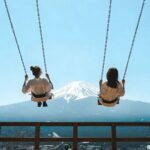
Mount Fuji is the star, but this day trip gives you more than one way to meet it: from the mountain’s 5th Station in warmer months, or from the pagoda and town view at Arakurayama Sengen Park in winter. You also get Oshino Hakkai’s spring-fed ponds, then a choice between outlet shopping and a hot spring.
I like that the tour pairs famous views with a village stop, and that you can spend the final two hours shopping or soaking instead of being locked into one kind of day. I also like the multilingual guide service, with Chinese, Japanese, English, and Korean offered, and guides such as Anna and Kim praised for clear explanations and helpful care.
The trade-off is that this is a packed day, and the final stop is a choice, not a double feature. Fuji can disappear behind clouds, traffic can squeeze the schedule, and the meeting-point departure requires punctuality.
This tour is for you if you want to see the Fuji area without arranging regional transport, and you like having a second activity built into the day. It combines a high mountain viewpoint or a classic pagoda photo stop with a spring-water village, then lets you choose between brand-name shopping and a Japanese bath.
That combination is useful, but it also makes the tour less focused than a trip devoted only to Fuji. You will not have time to linger at every stop, and the outlet and hot spring are alternatives. Before booking, decide which finish matters more to you.
The price starts at $49.29 for a meeting-point tour without lunch. In return, the package includes round-trip transport, tolls, parking, fuel, and a guide. For someone staying in Tokyo who wants to reach several Fuji-area stops in one day, that can be good value. The small-group and lunch-included options cost more, while a private charter offers hotel pick-up and drop-off.
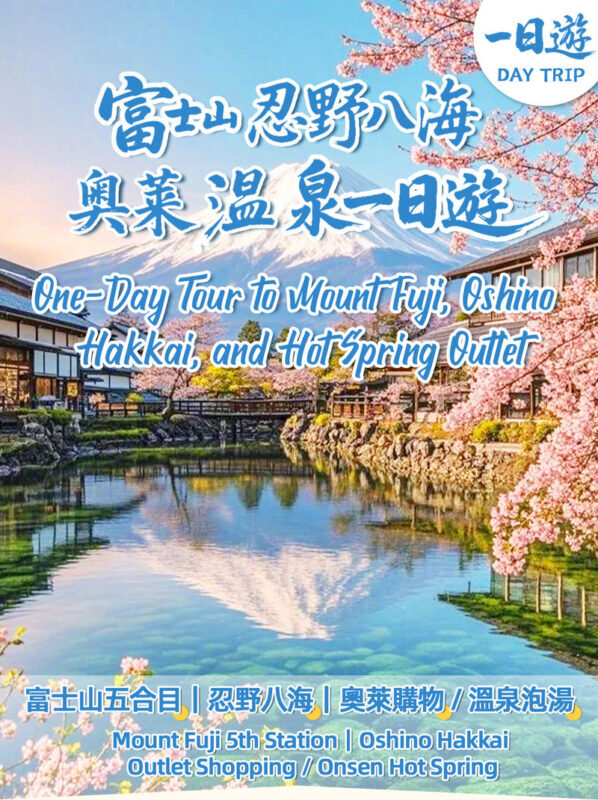
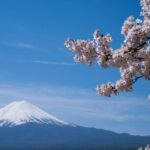
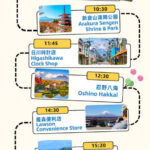
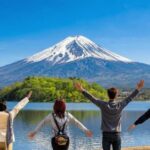
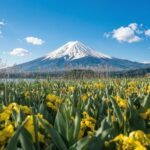
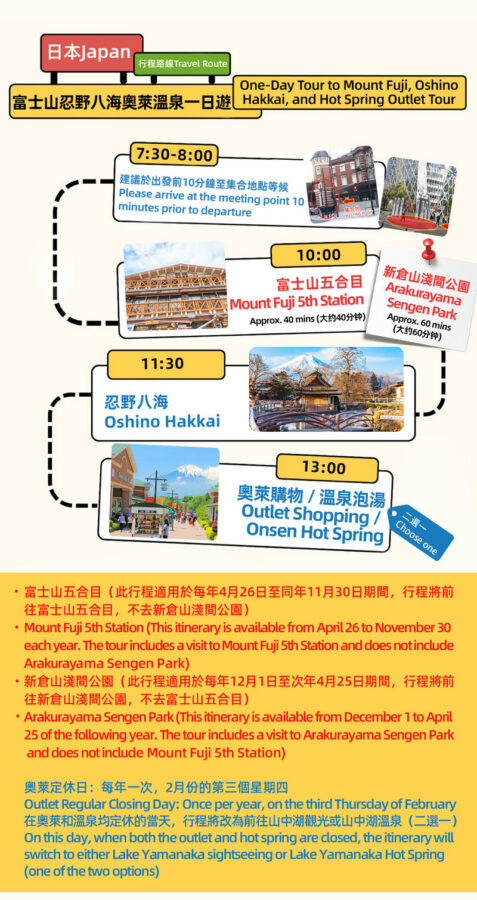
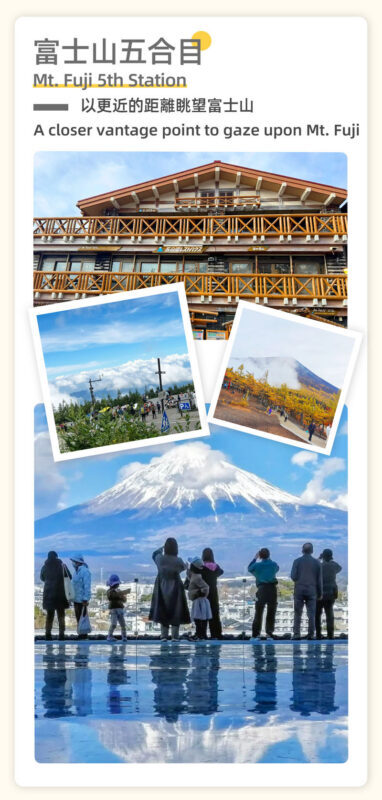
The tour’s first stop is one of two places, based on the time of year. From April 26 through November 30, you go to Mount Fuji 5th Station, partway up the mountain. The appeal is proximity: you can look toward the summit and out over the surrounding area, including Lake Kawaguchi when visibility allows. The listed stop is about 40 minutes, enough for a look around and photos, but not a long visit.
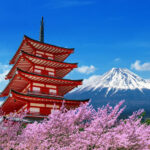
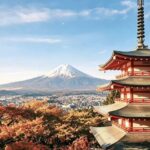
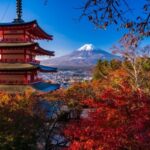
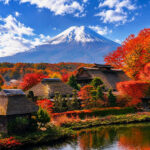
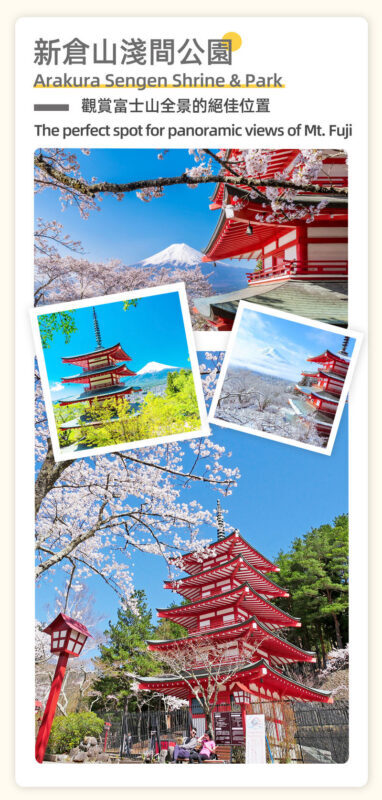
From December 1 through April 25, the tour substitutes Arakurayama Sengen Park. Its well-known view brings a five-story pagoda, Fuji, and the town below into one frame. It is a strong choice for photography, though the view depends on weather and visibility. One visitor described a cloud blocking Fuji at the viewpoint, a useful reminder that no tour can promise a clear mountain.
The seasonal switch is worth checking when you book. If you have your heart set on the 5th Station, select dates within its operating period; if the pagoda view is your priority, the park is the winter option. The park stop is listed at about 60 minutes, compared with 40 minutes at the 5th Station.
Shoppers can discover Fujiyoshida's markets and boutiques through these guided experiences
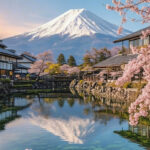
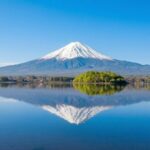
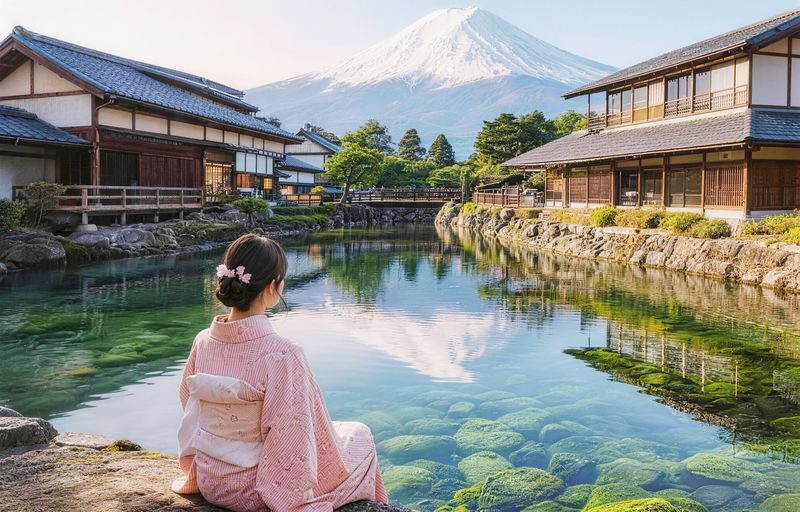
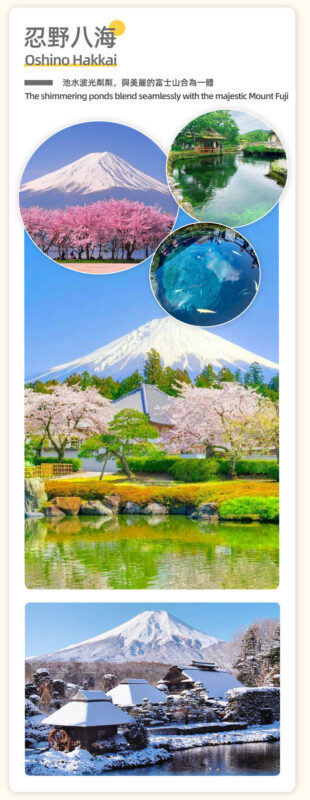
Next comes Oshino Hakkai, where the tour allows about an hour to explore independently. Its eight ponds are fed by snowmelt that has filtered through the ground beneath Mount Fuji. The water is known for its clarity, and on a good day you may see Fuji reflected in it.
This stop gives the day a different pace from the mountain viewpoint. You can stroll between the ponds, look at the water, and browse local snacks and food. It is not a long village visit, so keep an eye on the time and note where the bus is parked before wandering.
Some departures may include a lunch arrangement, but the base package does not include meals or drinks. Lunch-included packages are available, with udon or grilled eel rice listed as possible options; menus may change with the season and ingredient supply. If you prefer to choose your own food, check what your selected package includes before paying. A few people have found meal stops or restaurant arrangements disappointing, so do not assume the included option is a highlight in itself.
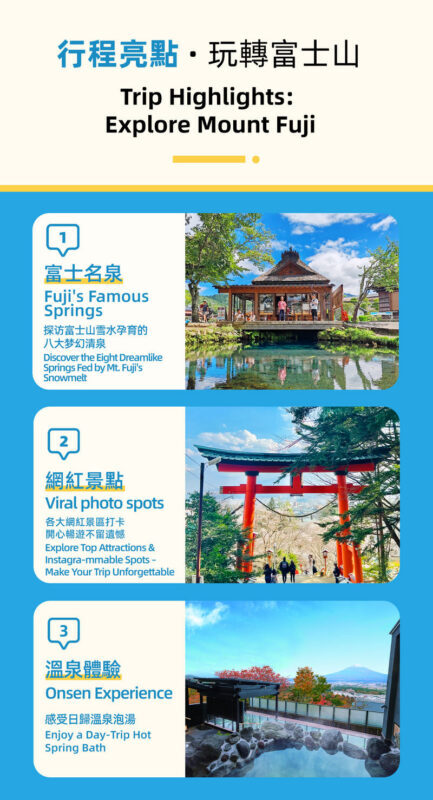
At around 13:00, the group splits by preference for roughly two hours. Gotemba Premium Outlets brings together many Japanese and international brand shops, including luxury names such as Gucci and Prada. The center is also known for views of Fuji, though cloud cover can affect them here too. Two hours lets you browse, but it is a short window if you intend to shop seriously across a large center. Have a plan, and note the meeting time.
The alternative is a day-use hot spring, listed as Yunohana Ryokan. The attraction is the chance to soak in an open-air bath with Fuji in view. Admission is extra, with reference prices of 1,600 yen on weekdays and 1,900 yen on weekends and holidays. Confirm the current charge and facility details before travel.
Hot springs in Japan generally require nude bathing, and this tour specifically notes that tattoos are not permitted in the baths. If either point makes you uncomfortable, choose the outlets. You cannot split the group and visit both stops; the two-hour slot is for one or the other.
There is one exception to the usual outlet plan: the outlet is closed once a year on the third Thursday in February. On that date, the alternative is a Lake Yamanaka sightseeing or hot spring visit. Check your travel date if this affects your choice.
The tour offers a guide speaking Chinese, Japanese, English, and Korean, with live commentary on the bus and guidance at attractions. The individual guide changes by departure. Anna Hayashida is frequently named in trip feedback for her energy, patience, explanations, and help with photos; other named guides include Kim Myung-cheol, Iris, Christie, Jack, and Rachel. Treat these names as examples, not a guarantee of who will lead your trip.
Most of the feedback about the guides is strongly positive, particularly about helpfulness, clear explanations, and keeping the group organized. That matters on a day with several stops and tight departure times. Still, one poor account described a guide who gave little commentary and unclear instructions, while another departure had confusion about where the bus was. The practical lesson: read the operator’s message carefully, identify the meeting point, and keep the guide’s contact details handy.
The standard group can range from 1 to 49 people. A separate nine-person small-group package is offered for a more compact outing, and private charter is another option. Vehicle type depends on the group size, so you cannot select a particular model. If extra space and a quieter ride matter, compare the small-group price with the basic fare.
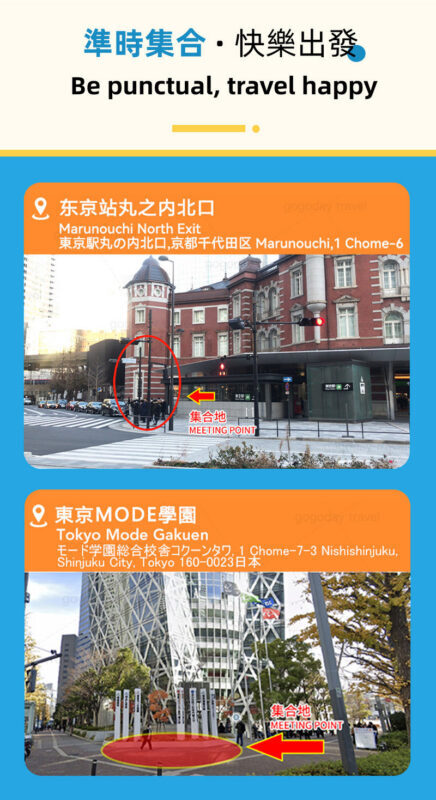
The listed day runs from a 7:30 or 8:00 departure to an expected 17:30 return near Tokyo Station’s Marunouchi North Exit Tourist Information Center. The return time is an estimate, not a promise. The drive is long, and traffic or weather can disrupt the schedule. The operator says it may adjust the itinerary to match conditions, and Japanese rules limit vehicle use to 10 hours. In unusual cases, an overtime charge of 8,000 yen per hour may be shared by the group.
Arrive at the meeting point at least 10 minutes early. The bus leaves on time, and late arrivals or no-shows are not refunded. The guide and vehicle details are sent by email between about 18:00 and 21:00 on the evening before the tour; check your spam folder as well as your inbox.
One piece of luggage per person is allowed, but you need to declare it when booking. The operator may refuse boarding if luggage or group size exceeds the vehicle’s capacity. Children aged three and older pay the adult rate; children aged zero to two may travel free if they do not need a separate seat, and anyone under 18 must be with a paying adult. The tour is not recommended for people with certain serious medical conditions, pregnant people, or people with disabilities, according to the supplied activity information.
You might also be interested in these Fujiyoshida experiences
Book this tour if you want a straightforward way to combine a Fuji-area viewpoint, Oshino Hakkai, and either shopping or bathing in one day from Tokyo. The guide, transport, and planned stops remove much of the coordination work, while the choice of final activity helps you tailor the day.
Skip it if you want a slow visit, a guaranteed clear view, or both the outlets and hot springs in the same outing. For the best fit, choose your seasonal first stop and your preferred final activity before booking, decide if lunch is worth adding, and consider the nine-person option if you value a smaller group. This is a full day with limited time at each stop, but for a first visit to the Fuji region, it offers a practical mix at a starting price that can make sense.
“Excellent trip session. Good visit location. Tourist guide Anna provide good guide and experiences.”
No. The 5th Station is scheduled from April 26 through November 30. From December 1 through April 25, the tour visits Arakurayama Sengen Park instead.
No. The itinerary gives you about two hours to choose one: the outlets or a day-use hot spring.
Not in the basic meeting-point package. Lunch-included options are available, with udon noodles or grilled eel rice listed as possible meals. The menu may vary.
Hot spring admission is extra. The listed reference price is 1,600 yen on weekdays and 1,900 yen on weekends and holidays.
Departure is listed at 7:30 or 8:00, depending on the option. The expected return near Tokyo Station is around 17:30, but traffic and weather can change the timing.
The tour information says people with tattoos cannot use the hot spring. It also notes that Japanese hot springs require nude bathing.
The operator sends the information by email between about 18:00 and 21:00 on the evening before the tour. Check your spam folder if you do not see it.