Physical Address
304 North Cardinal St.
Dorchester Center, MA 02124
Physical Address
304 North Cardinal St.
Dorchester Center, MA 02124

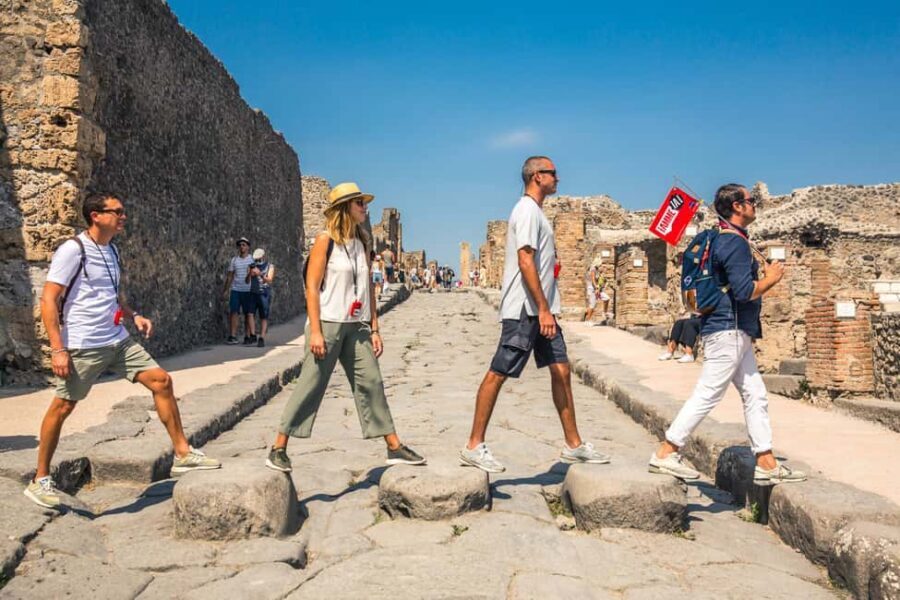
Reach Pompeii early from Sorrento, skip the main entry line, and explore its streets, houses, baths, and theaters with a local guide.
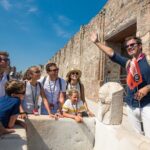
Pompeii makes more sense when someone helps you read its streets. This early half-day trip from Sorrento pairs priority entry with a guided walk through the Forum, baths, theater district, and House of the Faun, where the city’s public life and private wealth come into view.
I like two things about the plan: the early start, which can mean cooler air and fewer people at the site, and the route’s range, from food shops and a bakery to an elite villa and the plaster casts of victims. Guides such as Mimi, Lulu, and Nello have been warmly praised for making the past feel human, though you cannot choose your guide.
The main trade-off is time. The Pompeii walk lasts about two and a half hours, enough for a strong introduction but not enough to see this vast site at leisure. Expect uneven paving, steady walking, and little time to wander off on your own.
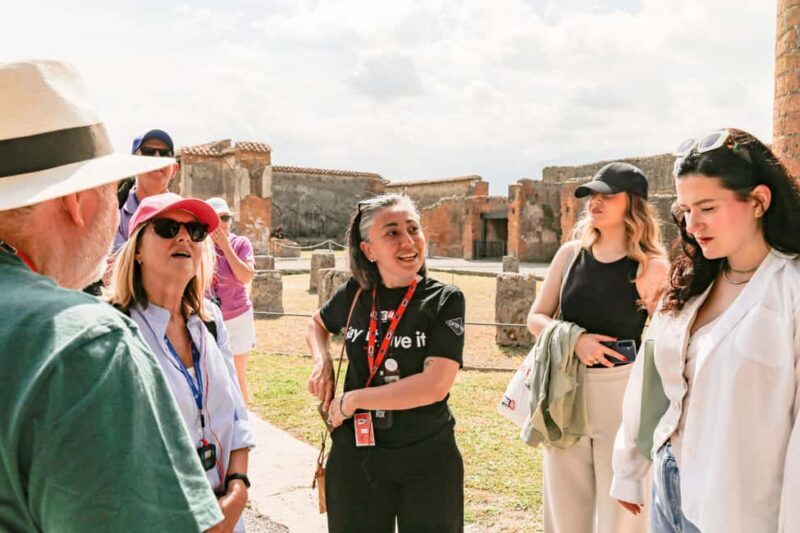
The tour starts at the IAMME IA! Gray Line office at Piazza Torquato Tasso 16, behind the statue of Torquato Tasso and beside the Fattoria Terranova shop. Arrive ten minutes early and look for a guide wearing a branded T-shirt. The departure point and time can vary by option, so check your booking details.
The coach ride is listed as about 40 minutes each way. You get a comfortable, air-conditioned bus and a professional driver, a welcome break from navigating Campania’s roads yourself. Traffic can make the return journey longer, so treat the four-hour total as a plan rather than a promise that every part will run to the minute.
A guide may talk about Sorrento and the surrounding area on the ride, then hand the group over to a guide inside Pompeii. That division makes sense: the coach guide handles the transfer and practical details, while the site guide can focus on the ruins. Names vary by departure. Past guides have included Mimi, Lulu, Nello, Louisa, and Dani, but booking this trip does not secure any particular person.
The advertised tour languages are English, Spanish, French, and German. The tour may be led by a multilingual guide, so if a specific language matters to you, confirm it when booking rather than assuming it is guaranteed.
If you prefer having a local expert, these guided Sorrento experiences could work well
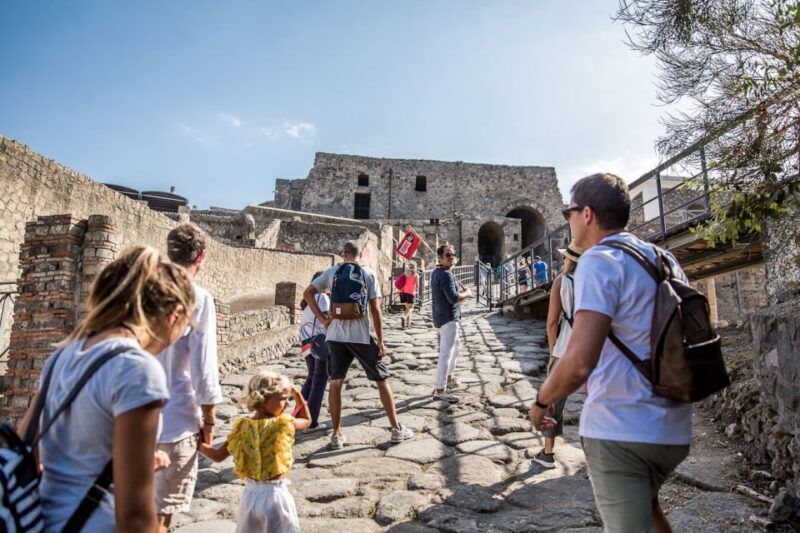
Pompeii’s ancient gate, Porta Marina, is the starting point for the walk. From here, the ruins are not a collection of isolated displays. They are the remains of a city, with streets, homes, shops, public buildings, and places of entertainment set within a large archaeological site.
Priority access uses a separate entrance to help you spend less time waiting to get in. It does not change the scale of Pompeii or remove the need to keep up with a group, but it makes a short visit more practical, especially on a busy day. The early departure adds to that advantage: arriving before the main crowds and the heat can make the first stretch of walking much more pleasant.
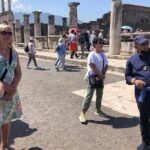
You will want comfortable shoes with a firm grip. The route passes over old stone streets, and the walking surface is uneven. It takes some attention to watch your footing while also looking at the buildings around you.
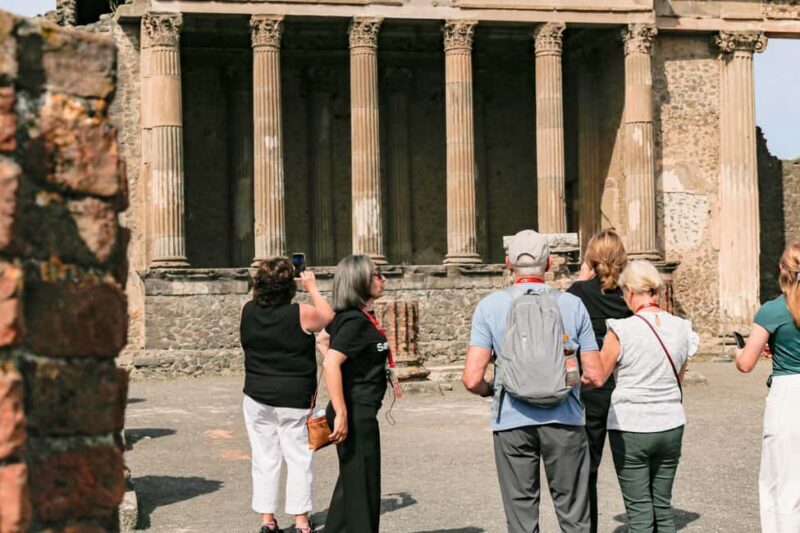
The Civil Forum was Pompeii’s main public center, where political, religious, and commercial life came together. The guide can point out the remains of temples and public buildings and help you picture the open square as part of an active city, rather than a quiet ruin.
The Temple of Jupiter gives the Forum a striking focal point, with Mount Vesuvius looming beyond the site. That view makes the volcano’s role in Pompeii’s destruction hard to ignore. It also offers a useful pause to take in the scale of the ruins before the group moves on.
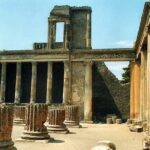
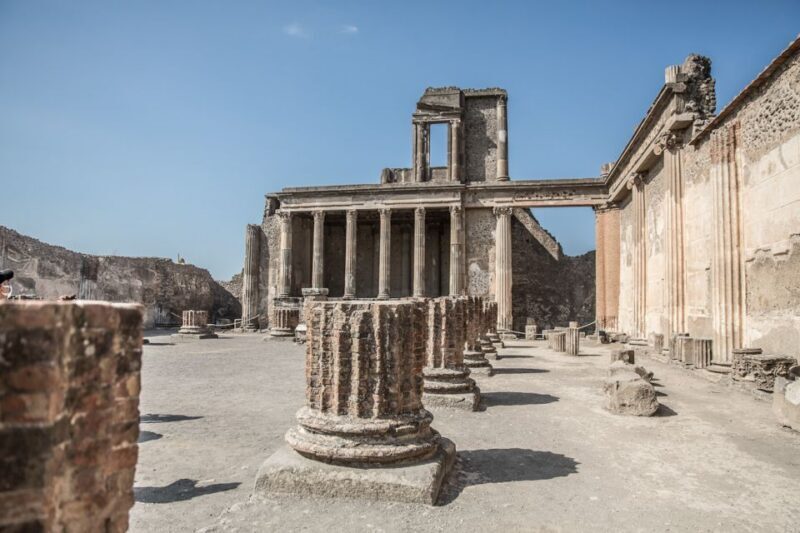
Nearby, the Basilica once served legal and business purposes. Its remains show that Roman public life was not confined to temples and markets. This was a place for practical affairs, and a guide’s explanation helps connect the standing walls and columns to the decisions and transactions that once took place there.
These early stops are among the most valuable parts of the guided format. Pompeii can be hard to interpret if you simply walk past foundations and fragments. A guide gives each space a purpose, then links it to the streets and buildings you see next.
Via dell’Abbondanza was one of Pompeii’s main streets. Shops and homes lined the route, and the deep grooves worn into the paving stones show where carts travelled. Those marks are a small but vivid detail: they make the street feel used, not staged for a modern visitor.
The route also reaches food-related sites, including a thermopolium, an ancient street food shop, and a pistrinum, or bakery. Millstones, ovens, and counters help explain how residents bought and prepared everyday meals. These modest places often make the city feel most legible, because the activities are easy to imagine.
The Macellum, Pompeii’s food market, gives the tour another view of trade and daily errands. It is a useful counterpoint to the grander houses and civic buildings. In a short visit, the guide’s job is to help you see how these different spaces belonged to one working city.
More Great Tours Nearby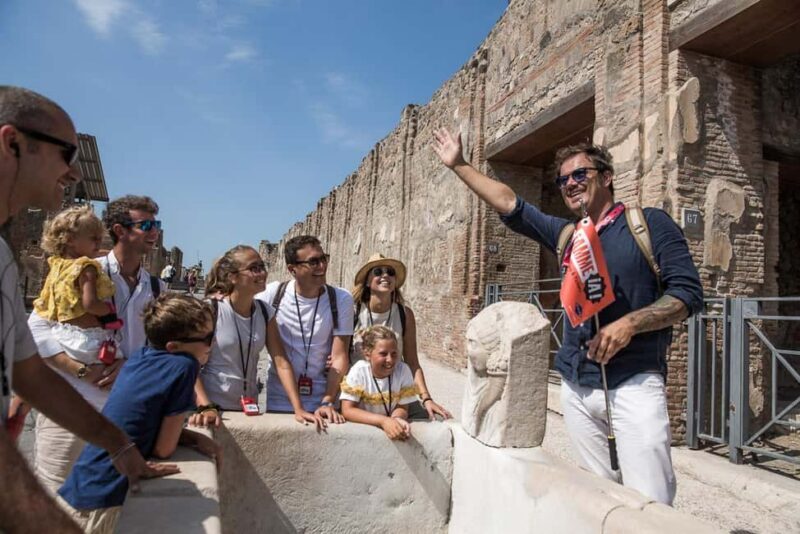
The Stabian Baths offer a look at Roman bathing and social routines. The remains of the complex help explain that baths were more than a place to wash. They were part of city life and a setting for relaxation and meeting others.
The Lupanare, Pompeii’s ancient brothel, is a striking stop for a different reason. Its compact stone rooms and vivid frescoes make the building’s purpose clear. A guide can give context without turning the visit into a spectacle, which matters at a site where human stories can easily be reduced to curiosities.
The route’s mix is one of its strengths. You move from civic life to bathing, food, and sex work, then on to public entertainment and private wealth. It is a brisk introduction to different sides of the city, though you should not expect long stretches of free time at every stop.
You might also be interested in these Sorrento experiences
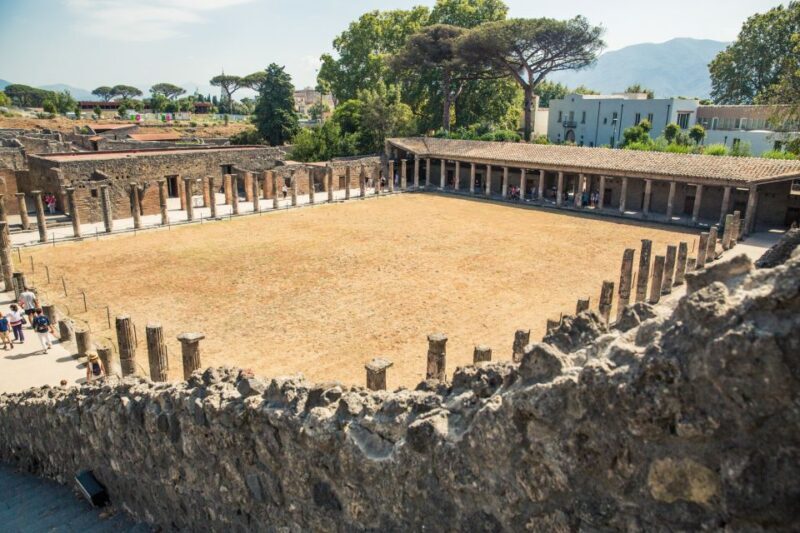
The Large Theater recalls Pompeii’s public entertainment. It was an open-air venue for comedies, dramas, and musical performances, and its scale helps you imagine the crowds that once gathered there. The nearby theater district adds a cultural dimension to a walk that might otherwise lean heavily on temples and houses.
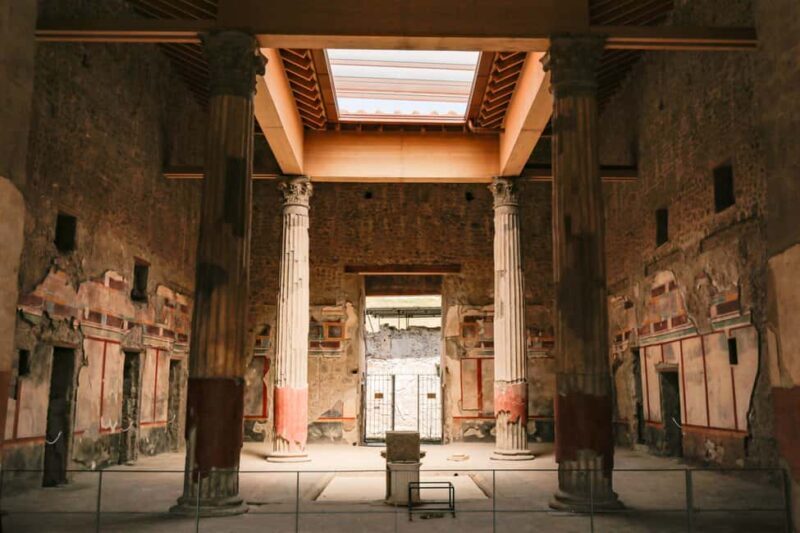
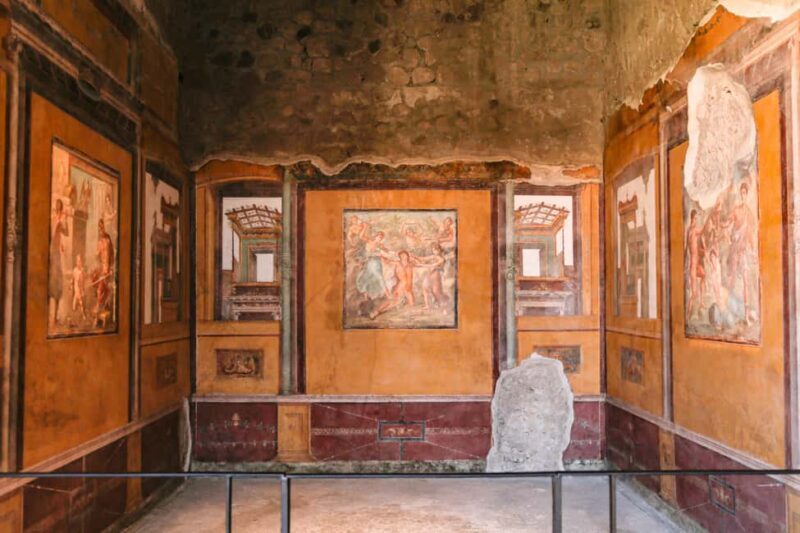
The House of the Faun is the most striking residential stop on the route. This grand Roman villa is known for its mosaics, including the Alexander Mosaic, a celebrated work depicting a battle between Alexander the Great and the Persian king Darius. The house offers a glimpse of the resources and taste of Pompeii’s elite, a contrast with the street shops and bakery seen earlier.
The Basilica is also included in the listed route, and the guide may cover stops in an order shaped by conditions at the site. Do not treat the visit as a checklist where every stop gets equal time. The point is to understand the major pieces of Pompeii and how they fit together.
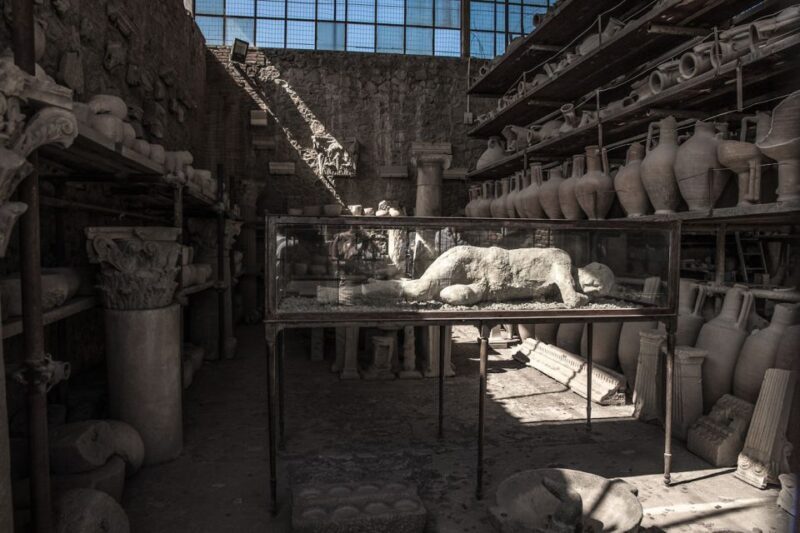
The plaster casts of Pompeii’s victims are among the most affecting sights on the tour. They preserve the shapes left by people caught in the eruption, including men, women, and children. They are not simply archaeological objects; they bring the catastrophe down to the scale of individual lives.
Give yourself a moment here. The casts can be difficult to look at, and the setting is a reminder that Pompeii was a lived-in city, not just an ancient monument. The guide’s interpretation can help put the scene in context, but you may also want a quiet moment before the group moves on.
The scheduled visit includes a 2.5-hour guided walk, with about 40 minutes by coach in each direction. That is enough to see major landmarks and get an informed first impression, particularly if you have never been to Pompeii. It is not enough to explore the whole site or linger at every house.
Pompeii is much larger than many first-time visitors expect. If you want to examine smaller streets, spend a long time at the mosaics, or move at your own pace, you may prefer a full-day visit. If your priority is to see the highlights with a guide and return to Sorrento around lunchtime, this shorter format is a sensible fit.
The pace can feel brisk. You will be asked to stay with the group, and explanations may mean less time to look around independently. Audio headsets are provided for groups of eight or more, which helps you hear the guide in a larger group, though it is still worth staying near the guide at busy or noisy stops.
The early start is a real part of the value, not just a scheduling detail. Pompeii can be exposed to the sun, and the stone streets make a long day on foot tiring. Starting early gives you a better chance of seeing the site before the hottest and busiest part of the day.
At $84 per person, you are paying for round-trip transport from Sorrento, a driver, a live guide, and priority access, not just a ride to the gate. The price makes the most sense if you value having someone explain the site and organize the transfer. You avoid arranging your own transport and trying to make sense of the ruins without guidance.
The guided commentary is central to the experience. Pompeii’s walls and street plan are impressive, but without context it can be hard to tell what a building was for or why a particular stop matters. A guide can tie the Forum, bakery, baths, theater, and villa into a picture of ordinary and elite life.
The price is less compelling if you already know Pompeii well or want to explore at your own pace. The guided route gives you a structured overview, not a full day of independent discovery. Food and drinks are not included, so plan for those separately.
This trip suits you if you are staying in Sorrento, have limited time, and want a clear introduction to Pompeii without arranging transport yourself. It is especially useful for a first visit, when expert interpretation can make a short walk more meaningful than simply following a map.
It also suits you if you prefer an early start and are comfortable walking steadily over uneven ground. Families and other groups should consider everyone’s stamina, since the walk is moderate but the surface demands care. Backpacks and pets are not allowed, and the tour is not suitable for wheelchair users, people with mobility impairments, or people with back problems.
Book it if seeing Pompeii with a guide matters more to you than having hours to roam. If you want a slow, detailed visit, choose a longer stay at the site instead. For a half-day from Sorrento, this tour offers a practical route through the city’s essential public, domestic, and human stories.
“Excellent, Both of our guides did a great job at telling about Sorrento and Pompeii. We had a great time.”
The activity lasts about four hours, including coach transfers of roughly 40 minutes each way and a 2.5-hour guided walk at Pompeii.
Meet at the IAMME IA! Gray Line office at Piazza Torquato Tasso 16 in Sorrento, behind the Torquato Tasso statue and beside the Fattoria Terranova shop. Arrive ten minutes before departure. Start times and locations can vary by option, so check your booking details.
Live tours are offered in English, Spanish, French, and German. A departure may use a multilingual guide.
No. Food and drinks are not included in the tour price.
No. Backpacks and pets are not allowed on this activity.
No. It is not suitable for wheelchair users, people with mobility impairments, or people with back problems, and it involves a moderate amount of walking over uneven surfaces.
You can check availability for your dates here: