Physical Address
304 North Cardinal St.
Dorchester Center, MA 02124
Physical Address
304 North Cardinal St.
Dorchester Center, MA 02124

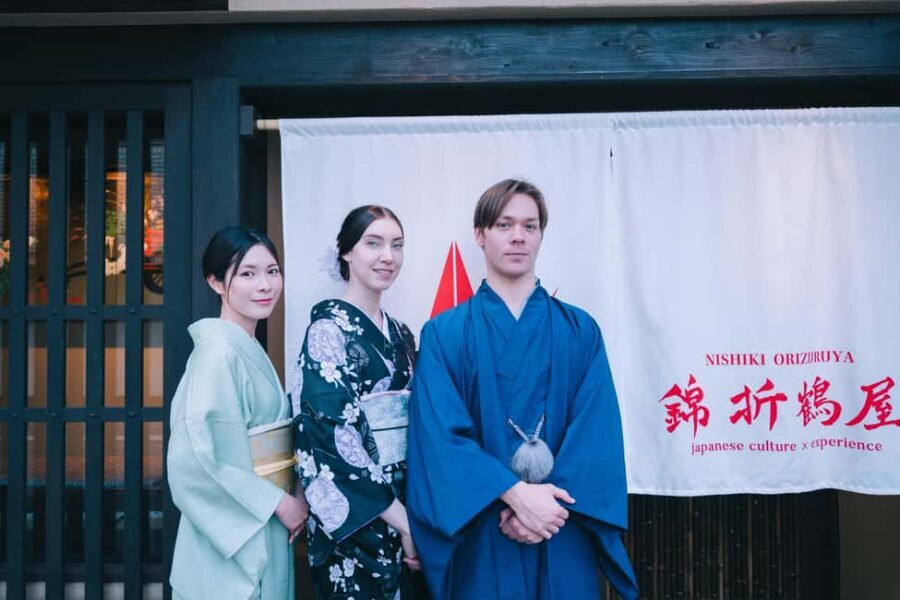
Dress in a kimono, learn matcha preparation, and enjoy a guided tea ceremony in Gion, with optional Japanese calligraphy.
In Gion, this experience makes the tea ceremony less mysterious: you put on a kimono, enter a tea room, and learn how to whisk your own matcha. It is a hands-on way to meet Japanese customs without needing to know the etiquette before you arrive.
I like the choice of more than 200 kimono designs and the chance to make matcha yourself, rather than only watch an instructor. I also like the small group, capped at 10, which leaves room to ask questions and follow the steps at a human pace.
One consideration: this is a shared, timed activity, not a private ceremony. The main session lasts about 90 minutes, so if you want to add calligraphy or linger in the kimono, check the option and timing when you book.
The meeting point is Gion Oritsuruya, at 572-7 Minamigawa, Gion-machi, in Kyoto’s Higashiyama ward. It is a 7-minute walk from Keihan Gion-Shijo Station and about 10 minutes from Hankyu Kyoto-Kawaramachi Station. Getting to the meeting point is your responsibility, so factor the walk and your route into your schedule.
The location is a practical plus. You are already in Gion, the district many people come to see for its traditional streets and temples, so the experience can fit neatly into a day exploring this part of Kyoto. Some participants have continued on foot to nearby sights in kimono after the ceremony. If you hope to do the same, confirm how long you may keep the outfit when you arrive, since the activity details do not promise a set rental period.
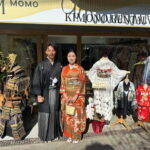
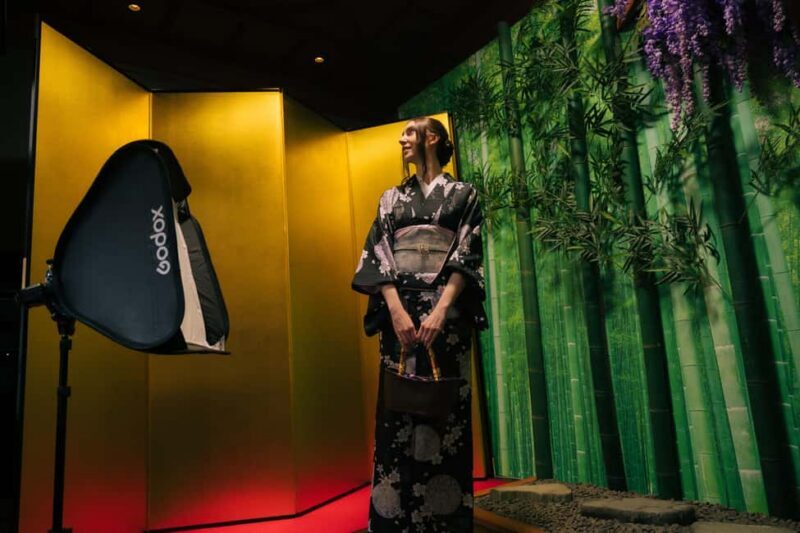
When you arrive, you choose a kimono from a collection of more than 200 designs. That choice is part of the fun, but staff are there to guide you through getting dressed, so you do not need to know how to tie or arrange the clothing yourself. The preparation is described as professional and efficient, which matters when a group is getting ready for a scheduled session.
Women receive simple hairstyling as part of the experience. This completes the traditional look without adding another appointment or fee. The included styling is described as simple, so do not expect an elaborate salon service.
Looking for more options in Kyoto? Here are some other experiences worth considering.
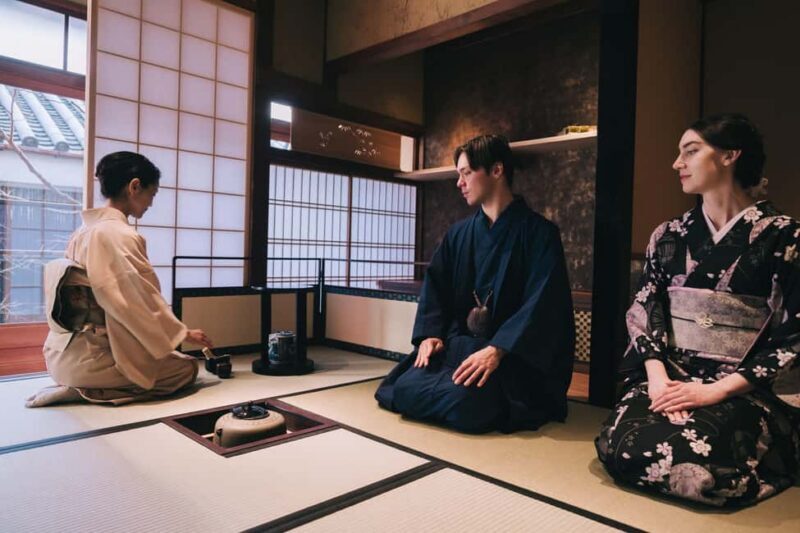
The kimono is not just a costume for a photograph. Getting dressed gives you a first, practical introduction to how much care goes into wearing traditional clothing. Staff help you through the process, and you have a chance to choose the design that suits you. That makes the opening portion feel personal, even in a small group.
The outfit can also change how you experience the neighborhood afterward. Several participants have been able to keep their kimono on for a walk and photos, with some describing permission to wear it until 5 p.m. Treat that as something to confirm directly rather than a guaranteed part of every booking. A kimono can be a lovely way to take pictures around Gion, but it may feel less comfortable outdoors in cold weather, so think about the season and your plans.
This is a good fit if you like activities that combine learning with a bit of dressing up. If you would rather spend your Kyoto time visiting sights in your own clothes, the kimono portion may feel like more preparation than you want. For many people, though, choosing the outfit is an enjoyable part of the visit, not a chore before the main event.
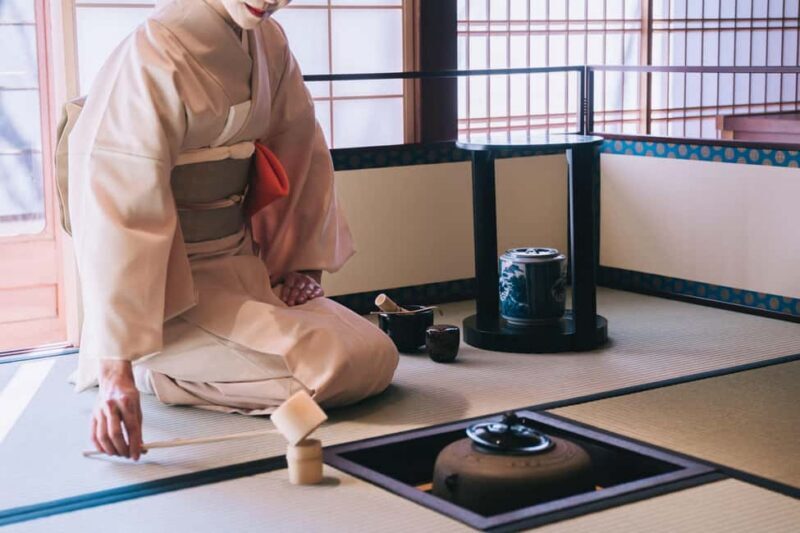
Once dressed, you move into a quiet tea room for an introduction to the ceremony. The English-speaking instructor explains what is happening and why, including the history and customs connected with tea. The point is not to memorize a long list of rules. You are there to understand the gestures and take part with guidance, which makes the experience approachable even if this is your first encounter with a tea ceremony.
The group is limited to 10 participants. That is small enough for a more personal lesson than a large demonstration, while still leaving you in a shared setting rather than a private one. The instructor can explain details and answer questions, and the small scale helps the ceremony retain a calm feel.
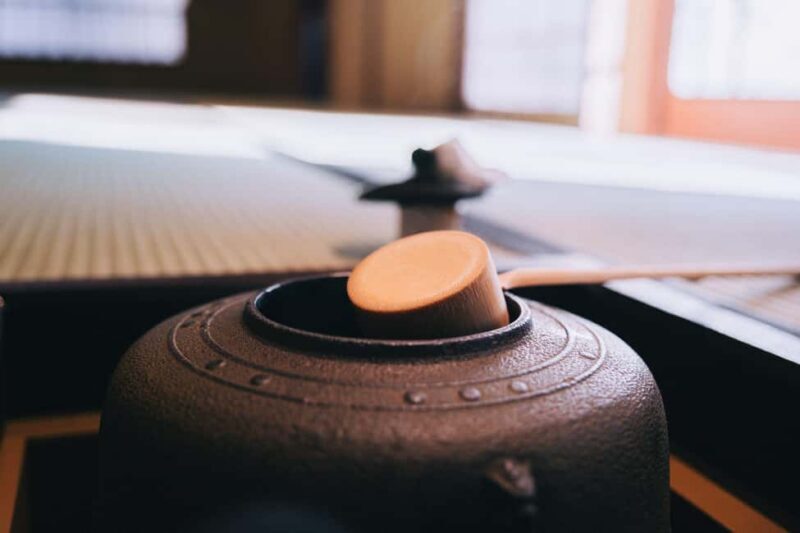
Then comes the hands-on part: you learn to prepare matcha with a traditional bamboo whisk, or chasen. The instructor demonstrates the technique before you make a bowl yourself. That small act is the experience’s strongest learning payoff. You do not just see the finished tea; you leave having tried the method and learned something about how matcha is prepared.
The ceremony is meant to be peaceful, but it is not a test of perfect form. Follow the instructor’s lead and ask questions when you have them. The activity is designed for people who want an introduction to Japanese culture without fear of committing a faux pas. If you are hoping for a long, highly formal ceremony, note that this is a compact visitor experience, with the standard session lasting about 90 minutes.
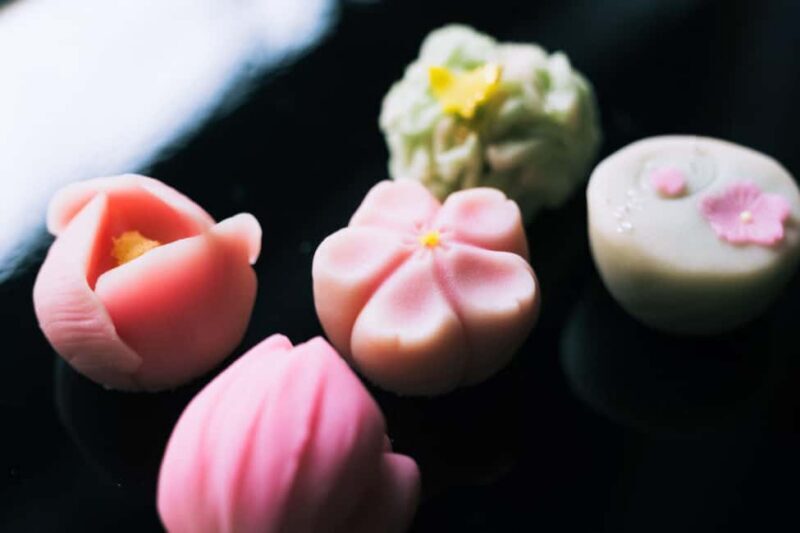
After preparing the tea, you enjoy it with wagashi, Japanese sweets supplied for the session. The sweets are described as coming from a century-old confectionery. That detail adds a little context to the tasting: the tea is not served as a standalone drink, but alongside a traditional sweet chosen to accompany it.
The matcha itself is part of the lesson, too. You can ask about tea and how different types vary, rather than simply following a recipe. If you are curious about Japanese tea but do not know where to begin, the instructor’s explanations make this a useful introduction. You leave with a new skill, plus a better sense of the care and custom around serving tea.
Snacks, matcha, tea utensils, and the kimono set are included in the experience price. All fees and taxes are included as well. You do not need to rent the basic equipment separately or arrange your own tea supplies.
More Great Tours Nearby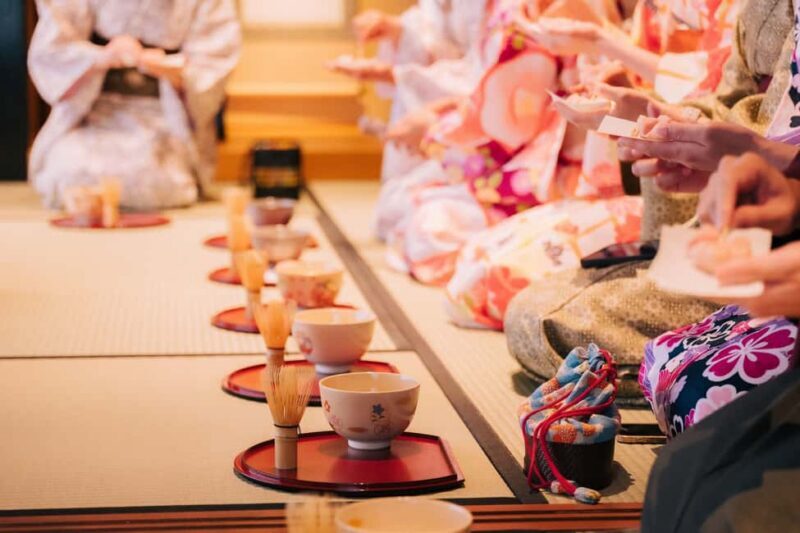
If you want more than the tea ceremony, select the Japanese calligraphy option. It extends the total visit to about two hours and includes a calligraphy set rental. The standard tea ceremony experience is approximately 90 minutes; the calligraphy lesson is an addition, not part of every booking.
Calligraphy gives you a different way to slow down and concentrate. You move from the measured process of preparing tea to practicing with a brush, with a teacher guiding you through the exercise. The lesson is described as patient and encouraging, and it can be a good choice if you enjoy learning a skill by doing it rather than watching a demonstration.
The extra session is especially appealing if you want a fuller cultural activity or are already planning to wear a kimono. But it does add time, and the price for the calligraphy option is not stated here. Check the available choices and current price before booking so you can compare the two versions fairly.
The experience is listed at $49 per person. For that price, the standard session includes kimono rental, tea utensils, matcha and wagashi, simple hairstyling, an English-speaking licensed guide, and taxes and fees. The value comes from combining clothing, instruction, and a hands-on tea lesson in one stop, rather than paying separately for a kimono rental and a tea activity.
If the kimono can be worn beyond the ceremony, that can add value, especially for an early booking. Several participants have used the outfit for photos and a walk in Gion afterward. Since the exact return time is not specified in the activity details, ask the staff before making plans around an all-day rental.
The $49 figure should not be assumed to include calligraphy. That option has its own selection, and you should check the price shown for it when choosing a session. For someone mainly interested in putting on a kimono and learning the basics of matcha, the standard experience already covers the key elements.
I would consider this experience if you want a cultural activity that is participatory but does not demand prior knowledge. Couples, friends, solo visitors, and families with older children can all find something to enjoy in choosing a kimono, learning the ceremony, or adding calligraphy. One participant brought a 14-year-old daughter, but the supplied details do not list a minimum age.
It is particularly useful for first-time visitors who feel unsure about etiquette. The instructor explains the process, the staff help with dressing, and the group is small. You can pay attention to the ceremony instead of worrying about whether you already know the right way to handle each step.
It may be less suited to anyone looking for a private or lengthy formal ceremony, or to someone who does not want to wear traditional clothing. The activity’s appeal depends on being willing to take part. And if you are visiting in cold weather and hope to walk around afterward, plan with the outfit in mind and confirm the return arrangements on the day.
Booking can be kept flexible: the activity offers reserve-now, pay-later booking, and free cancellation up to 24 hours in advance for a full refund. Starting times vary, so check the schedule that fits your day. You pay your own way to and from Gion Oritsuruya.
Book it if you want a friendly, hands-on introduction to tea culture, enjoy the idea of wearing a kimono, and value clear instruction over a long formal performance. The most satisfying version is the one that matches your pace: choose the 90-minute tea session for a focused visit, or add calligraphy if you have the time and want another practical skill.
Before you commit, check the calligraphy price if you are considering the longer option, and ask how long you can keep the kimono after the session. Those two details can shape the value of the outing. If the idea of making matcha yourself sounds appealing, this is a practical and memorable way to spend part of a Kyoto day.
“It was an incredible experience. From the moment we arrived, the part of putting on the kimono and doing the hair, to the pre-ceremony, the ceremon…”
The kimono tea ceremony takes about 1 hour and 30 minutes. The version that includes Japanese calligraphy takes about two hours.
Meet at Gion Oritsuruya, 572-7 Minamigawa, Gion-machi, Higashiyama-ku, Kyoto-shi, Kyoto.
It is a 7-minute walk from Keihan Gion-Shijo Station and a 10-minute walk from Hankyu Kyoto-Kawaramachi Station. You are responsible for your own transport costs.
Yes. The instructor’s language is English, and a licensed guide is included.
The group is limited to a maximum of 10 participants.
The standard experience includes a kimono set rental, tea utensils, matcha and wagashi, simple hairstyling, all fees and taxes, and a licensed guide. Calligraphy equipment is included only with the calligraphy option.
You can cancel up to 24 hours in advance for a full refund. The activity also offers a reserve-now, pay-later option.
You can check availability for your dates here: