Physical Address
304 North Cardinal St.
Dorchester Center, MA 02124
Physical Address
304 North Cardinal St.
Dorchester Center, MA 02124

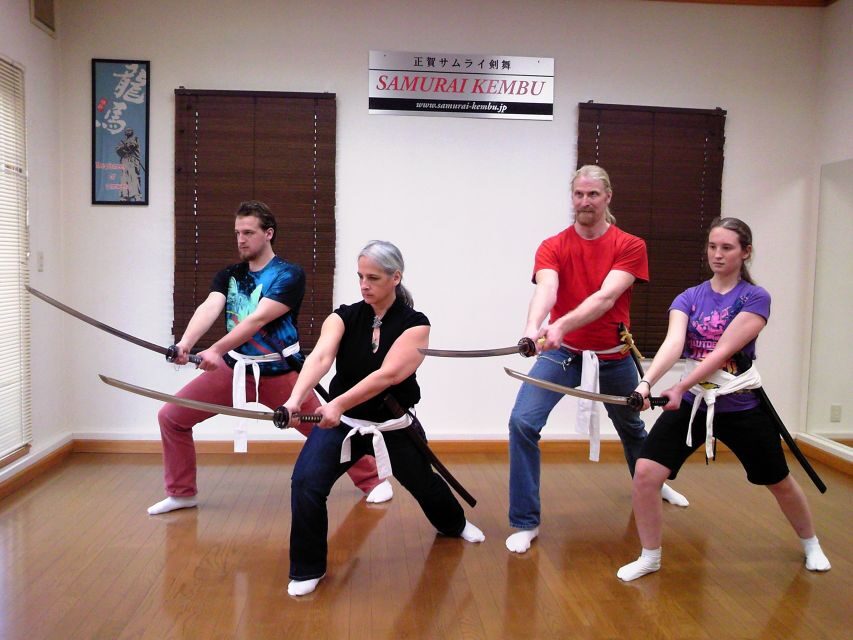
Learn samurai bows, sword handling, and Kenbu in Kyoto, with traditional dress, instructor-led practice, a photo session, and a short performance.
A samurai sword class in Kyoto is less about pretending to be a movie warrior and more about learning how bowing, drawing a sword, and controlled movement fit together in Kenbu, the art of samurai sword dance. In 90 minutes to two hours, you’ll watch a short film, dress for class, practise with an instructor, and see a performance that puts those movements in context.
I like two things especially: you get real hands-on practice instead of only watching a show, and the lesson makes room for costume photos without letting the camera session replace the teaching. One consideration: this is a group class for adults, so children aged 5 to 10 may find it easier if they have some martial arts or similar class experience.
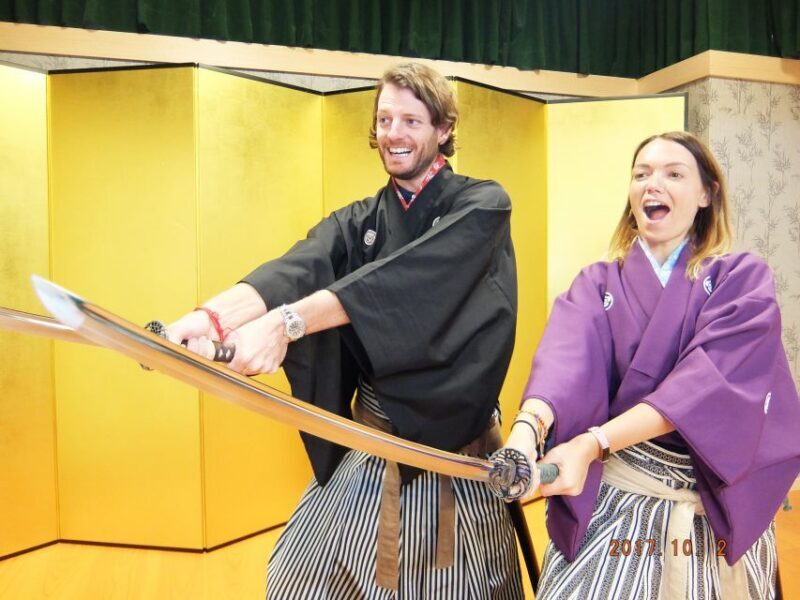
The session begins with a four-minute film about the basics of samurai culture. It is a brief introduction, not a full history lecture, but it gives you a little context before you pick up a sword. If you’re hoping for a long account of samurai politics or battle history, this class is not designed to provide one.
After the film, you change into a samurai-style outfit and take hold of your sword. The costume is part of the experience, but the lesson treats it as more than a photo prop: the instructor explains how to show respect to the sword and to an opponent, beginning with a bow.
That small ritual helps set the tone. The movements are practised with care and control, not as wild sword swings. You’ll learn how to draw the sword and return it to its protective scabbard before moving on to the more active part of the lesson.
You can check availability for your dates here: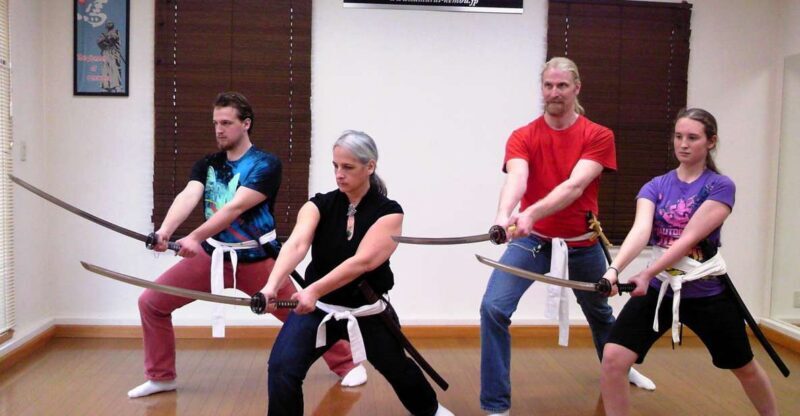
The class introduces Kenbu, a traditional sword dance passed down through generations. You’ll practise stylized movements and basic strikes, then work on putting them together with the instructor’s guidance. The point is not to train as a swordsman in one short session, but to feel how posture, timing, and movement make the sword part of a choreographed form.
That distinction matters. The class is a cultural introduction and a physical activity, not a combat course. Participants describe the training as challenging enough to hold their attention but manageable for beginners, with instructors who explain the steps and correct technique patiently.
The experience suits you if you’re curious about Japanese martial traditions but don’t consider yourself a sword enthusiast. The focus on discipline and form gives the lesson a broader appeal than simply dressing up and posing. Still, expect to move around and follow instructions. This is not an observation-only activity, and anyone booking should be ready to take part.
The small-group limit of 10 is a practical plus. A class that size can make it easier to get individual feedback, and some sessions may be especially small. The exact group size will depend on who books your time, so don’t count on a private lesson.
You might also be interested in these Kyoto experiences
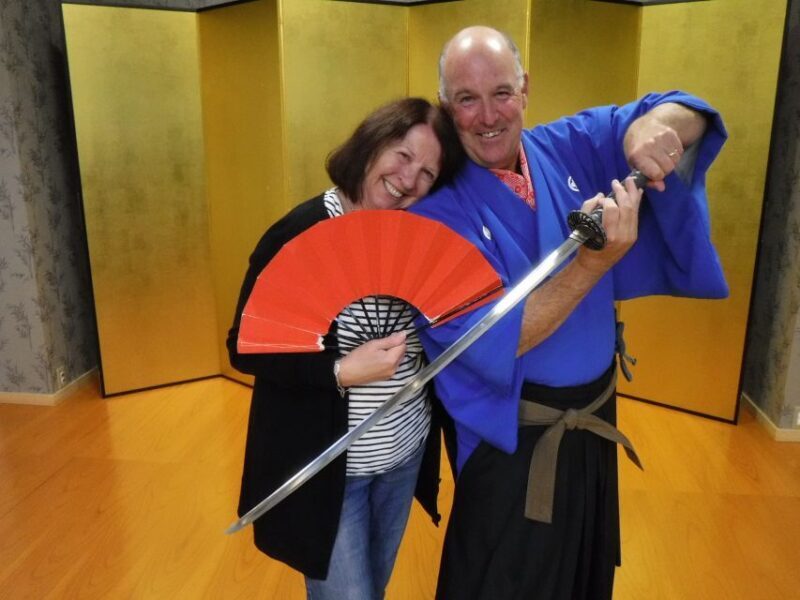
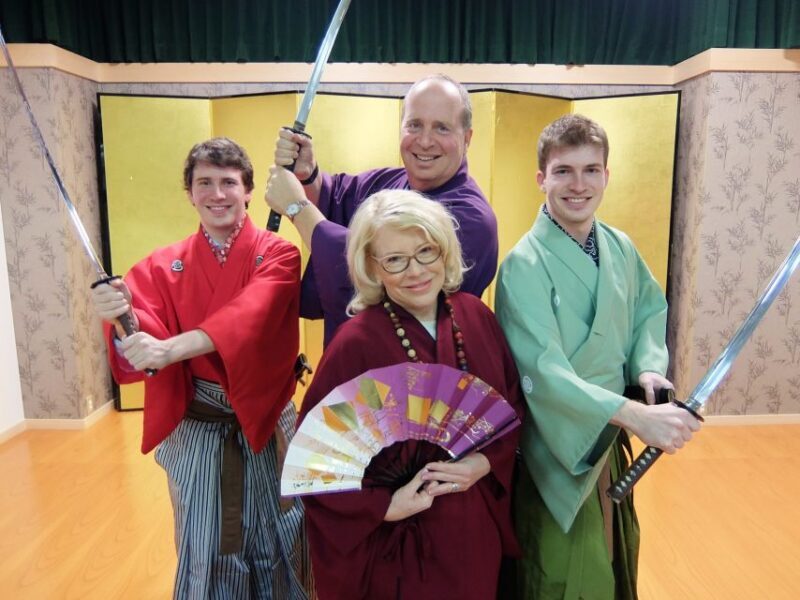
The costume change adds a playful side to the class, and you’ll have a short photo session in your samurai outfit. The time set aside for photos is useful: you can capture the costume and sword without having to keep interrupting the lesson to take pictures.
The costume is also a chance to see the clothing as part of the tradition rather than just a themed outfit. One instructor has been praised for explaining the components and how they are worn. You’ll receive a tenugui, a traditional Japanese towel, and a completion certificate as well.
Wear clothes that let you move and are practical for changing. The organizers specifically advise against arriving in only a hoodie or tights, which are not suitable for costume changes. Leave large bags and luggage behind: there is no room for them at the dojo.
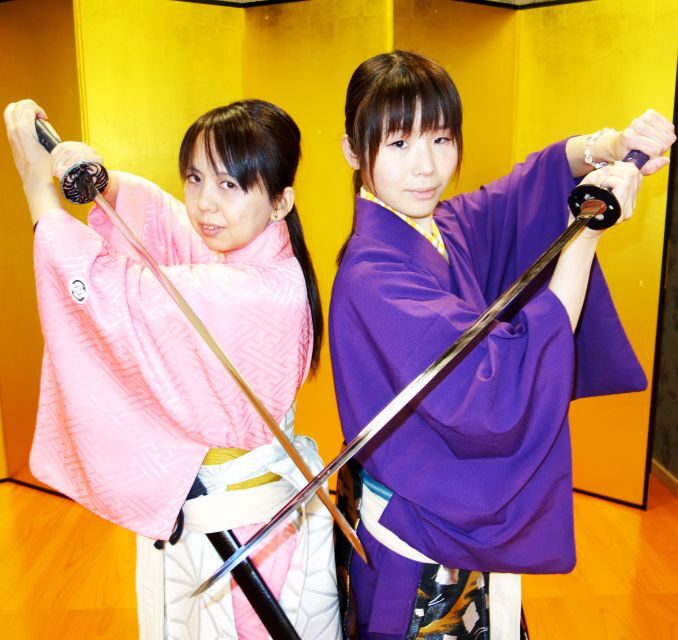
Depending on your chosen option, you’ll watch a 10- or 30-minute performance, with commentary from a sword dance instructor. It takes place either before or after the lesson. Check the option and timing when you book, since the length of the performance changes the overall visit.
The show is a valuable counterpoint to the practice. In class, you learn a few movements slowly; in the performance, you see how a trained practitioner shapes movement into a polished sequence. The distinction between sword dance and combat becomes clearer when you see the art performed with control and expression.
The demonstrations are one of the experience’s most praised parts. Instructors named Kazu, Hoga, Rui, and Hisyo have led sessions, and participants have highlighted their patience, clear directions, humour, and skill. The instructor for your date may differ, but the format pairs guided practice with a performance that shows what the technique can become.
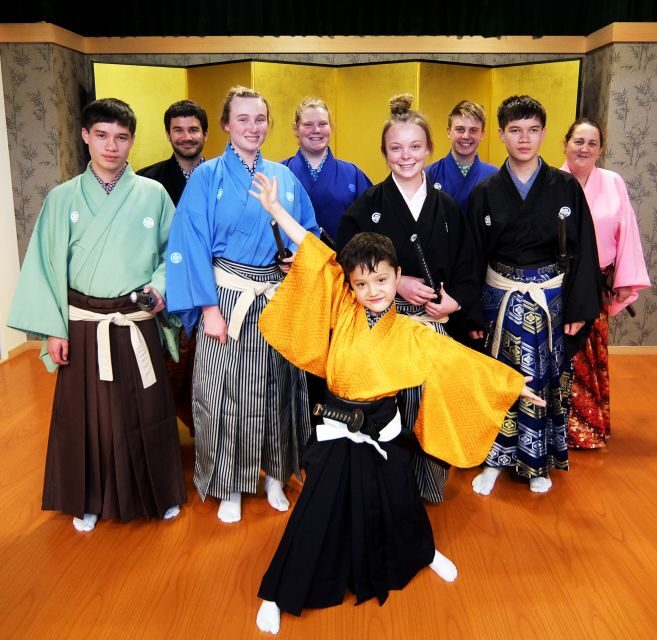
At $64 per person, the value rests on the combination of activities rather than the length of the sword lesson alone. The price includes an English-speaking instructor, the photo session, a tenugui towel, and a completion certificate. Depending on the option you select, you also get the short or longer performance.
You’re paying for a compact, hosted cultural activity with both instruction and demonstration. The costume, photos, and keepsakes make it a good fit for a family outing or a memorable break from temple visits. If you only want a detailed history lecture, or an extended martial arts course, the price may feel less worthwhile because this is a short introduction.
Food and drinks are not included, and there is no hotel pickup or drop-off. Plan your own transport to the venue and have a meal before or after if you need one. The class takes place at Samurai Kembu Theater, 35-7 Sanchome, Higashiyama-ku, in the B1F Gozan Building, Kyoto 605-0005.
More Great Tours NearbyI’d recommend it to first-time visitors who want an active cultural experience, families with older children, and anyone interested in traditional performance as well as samurai history. The mixture of instruction, costume, and a live demonstration gives you several ways to connect with the subject in a short visit.
Families should note the age guidance carefully. Children under 4 are not suitable for the activity. If a child aged 5 to 10 is participating, prior experience in a martial arts class or another learning setting is desirable because the lesson is conducted with adult participants. Older children and teens may find the hands-on practice especially engaging, but the class is not presented as a children-only session.
The activity is also a good choice if you enjoy learning through movement. You don’t need prior sword experience, but you do need to participate and follow the instructor’s safety directions. If you’d rather sit and watch, this is the wrong format.
The class lasts between 90 minutes and two hours, with starting times depending on availability. It is offered in English and Japanese, and the group is limited to 10 people. The exact length depends in part on the performance option you choose.
Arrive ready to change and move. Pets, weapons or sharp objects, smoking, food, alcohol, drugs, fireworks, and explosive substances are not allowed. Do not attend under the influence of alcohol, and follow the instructor’s safety instructions throughout the session.
There is no waiting room, and people without appointments cannot wait in the room. The venue cannot admit more people than the number booked, so contact the provider in advance if you need to bring an additional companion. If the name of a participant differs from the reservation, let the provider know ahead of time.
Booking offers some flexibility: you can reserve now and pay later, and cancellations made at least 24 hours in advance qualify for a full refund. If you need to cancel, you must do so yourself through GetYourGuide.
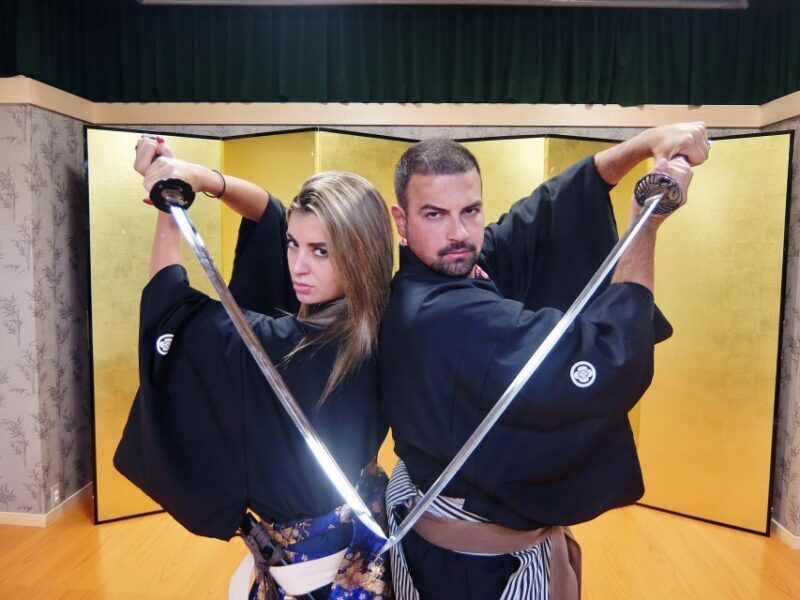
Book it if you want more than a costume photo: the best value comes from combining the etiquette lesson, beginner sword practice, and Kenbu performance. You’ll leave with a basic sense of how the movements work, a few photos, and a certificate, all in a manageable visit.
Skip it if you want an in-depth history seminar, a long martial arts course, or an activity where you can simply sit and watch. For a short, hands-on introduction to samurai sword dance in Kyoto, though, this is a well-rounded choice. Choose the performance length that suits your schedule, wear clothes that make changing easy, and leave your luggage at your accommodation.
“i was lucky enough to get the peivate lesson from Hoga sensei, thanks him for everything!”
The experience lasts 90 minutes to two hours. The exact duration depends on the option selected and its performance length.
You’ll learn how to bow, draw and return the sword to its scabbard, and practise stylized sword movements associated with Kenbu.
Yes. Instructors speak English and Japanese.
A performance is part of the experience, with a 10- or 30-minute option. Check which option you select when booking.
No. Observation only is not allowed. Participants are expected to take part and follow the instructor’s directions.
The price includes an English-speaking instructor, a photo session, a tenugui towel, and a completion certificate.
Children under 4 are not suitable. For children aged 5 to 10, prior experience in a martial arts class or another learning setting is desirable because the lesson is conducted with adults.
Wear clothes suited to exercise and movement, and practical for changing into the costume. A single hoodie or tights are not suitable for costume changes.
No. There is no space for large luggage or travel bags at the venue.
Meet at Samurai Kembu Theater, 35-7 Sanchome, Higashiyama-ku, B1F Gozan Building, Kyoto 605-0005.
You can check availability for your dates here: