Physical Address
304 North Cardinal St.
Dorchester Center, MA 02124
Physical Address
304 North Cardinal St.
Dorchester Center, MA 02124


See Tokyo from an open-top bus on three flexible routes, with audio in 10 languages and stops near Skytree, Asakusa, Tokyo Tower and Ginza.
Tokyo’s size makes it easy to spend half a day simply getting your bearings. This open-top bus links Skytree and Asakusa with Tokyo Tower, Tsukiji, Ginza, Shinjuku and Shibuya, giving you a broad first look without working out every train transfer.
I like two things especially: the three routes cover quite different parts of the city, and the audio guide on your own device offers 10 languages. One caution: this is not a bus every few minutes. Seats can fill, and gaps between departures may make frequent hop-offs slow.
For about $30 per person, this ticket gives you unlimited access to all three routes for one or two days. The main value is not simply transport. It is the chance to see several districts from above, get a sense of their distance from one another, and decide where you want to spend your limited time.
Tokyo’s train network is excellent, but it can feel like a project on your first day. A bus ride gives you a continuous view of the city rather than a sequence of platforms and tunnels. You can watch neighborhoods change, listen to commentary, and note sights you might otherwise miss.
The bus works best as an orientation tool, or as a relaxed way to cover ground between selected stops. It is less useful if you expect the frequent service of a city bus. Departures can be spaced 30 to 45 minutes apart, and longer waits have been reported. A full loop takes roughly two hours, though traffic can change that.
You can check availability for your dates here: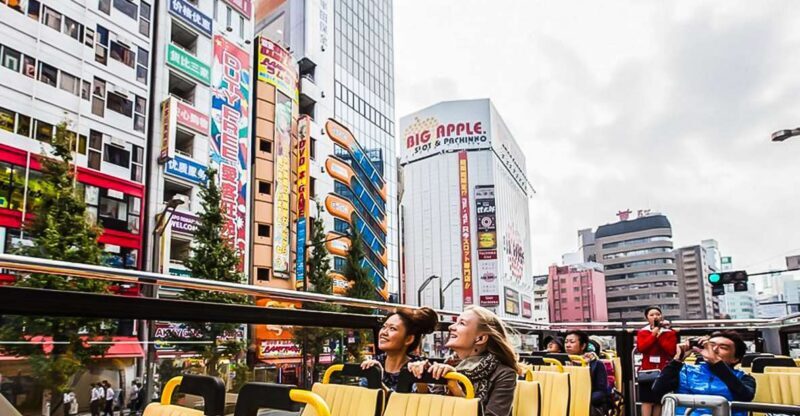
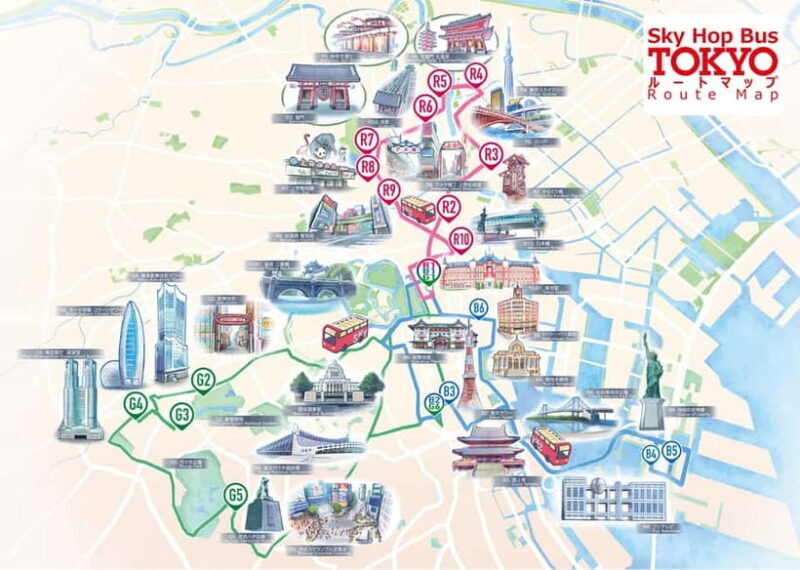
The TOKYO SKYTREE course begins at the Marunouchi Mitsubishi Building and heads east through Kodemmacho and Ryogoku before reaching Tokyo Skytree. It then continues to Asakusa, Ueno and Akihabara, returning to Marunouchi by way of Shin-Nihombashi.
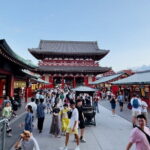
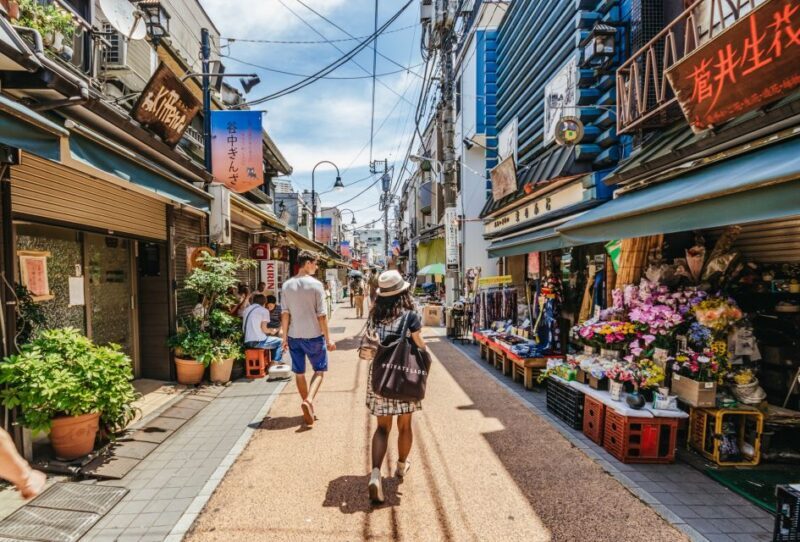
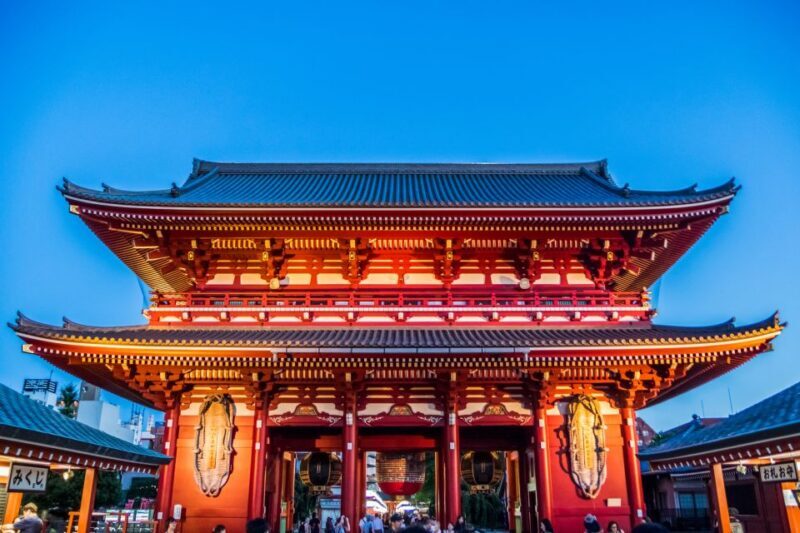
This route pairs one of Tokyo’s most recognizable modern structures with the older streets and temple district around Asakusa. Skytree is a natural place to hop off if you want to visit the tower or its aquarium, both of which are near the bus stop. Asakusa offers a different pace and a chance to explore on foot around its well-known temple area.
Ryogoku brings the route past the Edo-Tokyo Museum area, while Ueno and Akihabara offer further options for a stop. The bus provides a useful overview, but it cannot show you the small lanes, shops and local details that make these areas rewarding. For those, get off and walk.
The full loop is a sensible choice if you want to see the districts without committing to multiple stops. If you do hop off, take a photo of the stop timetable and mark the location on your map. That small bit of planning can save a long wait, especially if you miss the next bus.
You might also be interested in these Tokyo experiences
The TOKYO TOWER, Tsukiji Ginza course also starts at Marunouchi. It runs to Tokyo Tower and the Tokyo Prince Hotel and Zojo-ji Temple area, then crosses toward Tokyo Teleport Station before continuing to Tsukiji and Ginza.
This loop gives you a concentrated look at central Tokyo landmarks. Tokyo Tower is a good stop if you want a closer view of the tower and its surroundings. Zojo-ji Temple adds a contrasting setting nearby, with the tower rising over the area. The bus brings these sights together, but you will need to get off to experience the temple grounds rather than just see them from the road.
Tsukiji and Ginza make a useful pairing. Tsukiji is a name many visitors associate with food, while Ginza is one of the city’s best-known shopping districts. The route is most valuable if you are choosing between these areas or want a quick sense of how they fit into central Tokyo.
One limitation applies to all three courses: a stop does not guarantee a quick return ride. If you are set on seeing a particular sight, check the departure times before getting off and allow room for a missed bus. Trains may be the more efficient option if you want to move quickly between stops.
The SHINJUKU SHIBUYA course leaves Marunouchi for Shinjuku-gyoemmae, Shinjuku Station South Exit and the Hotel Century Southern Tower area. It then passes the Shinjuku Mitsui Building in Nishi-Shinjuku and continues toward Shibuya City Hall, Harajuku and Meiji Jingu Shrine before returning to the starting point.
This is the route to choose if you want a first look at Tokyo’s western districts. Shinjuku is a major hub, and the route gives you more than one point from which to explore it. Later, the bus heads toward Harajuku and Meiji Jingu Shrine, then Shibuya. The sequence is helpful for understanding the geography, even if you decide to return by train and spend more time in one district.
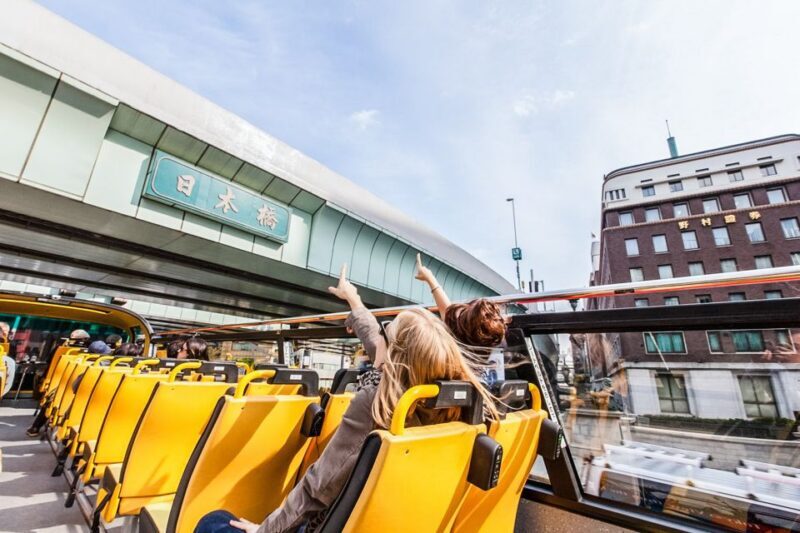
The open top is part of the appeal here. In good weather, you can take in city views and get a feel for the scale of the streets and buildings. At dusk, city lights add another reason to ride. The green course has been especially recommended for an evening ride, though confirm the current route and operating times before setting your plans around it.
Do not try to treat this loop as a substitute for exploring Shinjuku, Harajuku and Shibuya on foot. The bus is a sampler. Use it to decide which area deserves a longer visit, then let the train system and your own feet do the detailed work.
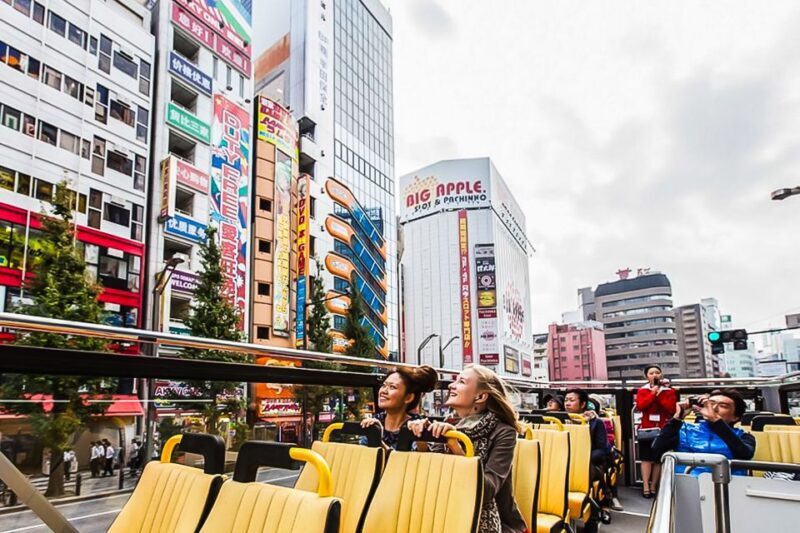
Every passenger seat is on the second floor. The first floor is used for storage, so there is no enclosed lower deck to retreat to if the weather turns or the temperature climbs. The bus has no air-conditioning, and the open top can feel very exposed in summer sun or on a windy stretch.
Raincoats are provided when needed, but umbrellas are not allowed on board. Bring suitable clothing and keep your hands free. In severe weather, including typhoons or thunderstorms, the service may not operate. Even in ordinary rain, the ride may feel less comfortable than a covered bus.
The open-air format pays off most on clear days, when you can see above street level and take photographs without a window in the way. It also means the experience is much less appealing in extreme heat. If the forecast looks rough, consider using the bus for a shorter stretch or choosing a different way to get around.
More Great Tours Nearby
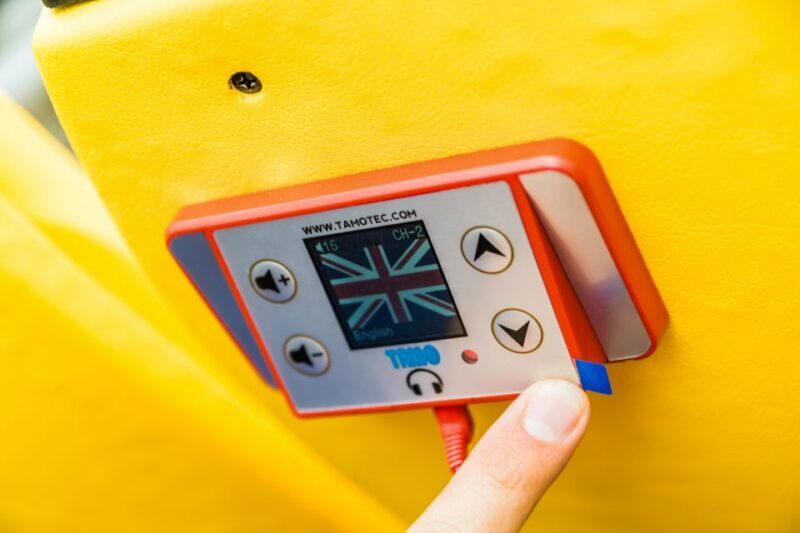
The new audio guide uses your own smartphone or tablet and supports Japanese, English, Korean, Chinese, French, German, Spanish, Thai, Vietnamese and Indonesian. Bring earphones. Data charges may apply, so it is worth checking your phone plan before you set off.
Some buses may have a vehicle-mounted audio guide, but it is not guaranteed. The mounted system supports Japanese, English, Korean, Chinese, French, German and Spanish. The personal-device system is the more dependable choice if you want commentary in one of the additional languages, or simply want to avoid relying on equipment fitted to the bus.
The commentary is recorded rather than a live guide’s running narration. That keeps the experience easy to follow in your chosen language, but it can be less flexible than a person responding to questions. Make sure your phone is charged, your earphones work, and the audio is ready before boarding.
This ticket is available for one or two days. If you have only one day, you can still ride several routes, but you will need to pay attention to starting times and how long each loop takes. A two-day ticket gives you more breathing room to ride for orientation on the first day and revisit selected areas on the second.
The service does not reserve a seat for you. If the bus is full, you must take the next one. That matters most when you hop off far from the start or are trying to fit several stops into a tight schedule. Traffic can also delay buses, so leave a buffer rather than planning a precise chain of connections.
You can board at the Mitsubishi Building meeting point or use the QR code on your voucher to board at another listed stop in Tokyo. The driver speaks English and Japanese. A free shuttle service is included, though the details of its route are not specified here.
My practical approach would be to ride one or two routes without getting off, then use the metro or JR lines to reach the places I want to explore properly. That makes the bus a useful map of the city, rather than a slow substitute for Tokyo’s public transport.
At around $30 per person, the ticket makes most sense if you value the views, the commentary and the convenience of seeing several districts in one ride. It can be good value for a first day, especially if you plan to cover all three routes or use the bus to choose where to spend the rest of your trip.
The price is harder to justify if your main goal is simply to travel from one attraction to another. Tokyo’s trains are a more practical choice for point-to-point journeys, and the bus’s departure gaps can eat into sightseeing time. The ticket’s value comes from the ride itself, not from being the fastest way around town.
A one-day ticket suits a focused overview. Choose two days if you want to take your time, ride at dusk, or make several stops without trying to fit everything into one long day. Either way, check the schedule before you start and keep a note of the next departure when you step off.
Book it if you are new to Tokyo, enjoy city views from an open-top bus, and want a broad introduction before choosing which neighborhoods to explore. It is particularly useful if you have a day or two to spare and like the idea of combining three different routes.
Skip it if you need frequent, fast transport or dislike sitting in heat, wind or rain. For many visitors, the best plan is to use the bus for orientation, then switch to trains and walking for the closer look.
“Great way to see more of Tokyo. I recommend this tour to anyone with limited time to see and hear about the various attractions and sights.”
The routes pass Tokyo Skytree, Asakusa, Ueno, Akihabara, Tokyo Tower, Zojo-ji Temple, Tsukiji, Ginza, Shinjuku, Harajuku and Shibuya, among other stops.
You can choose a one-day or two-day ticket. Check the available starting times when booking.
Yes. You can board from a Tokyo bus stop using the QR code sent with your voucher.
No. If a bus has no free seats, you need to board the next bus.
The guide on your own device supports Japanese, English, Korean, Chinese, French, German, Spanish, Thai, Vietnamese and Indonesian. A vehicle-mounted guide may also be available in Japanese, English, Korean, Chinese, French, German and Spanish, but not on every bus.
Bring your own smartphone or tablet and earphones. Data charges may apply and are your responsibility.
No. The passenger seats are on the open-air second floor, and there is no air-conditioning. The first floor is for storage.
Raincoats are distributed if needed, and umbrellas are not allowed on board. The service may not operate during severe weather such as typhoons or thunderstorms.
You can check availability for your dates here: