Physical Address
304 North Cardinal St.
Dorchester Center, MA 02124
Physical Address
304 North Cardinal St.
Dorchester Center, MA 02124

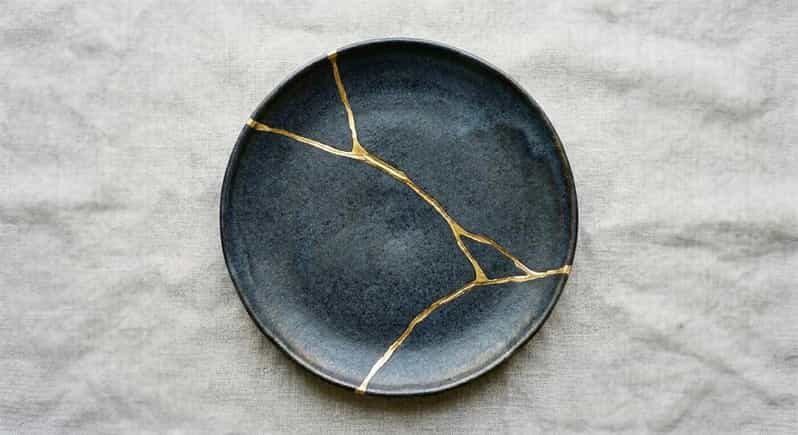
Repair a ceramic piece with gold in a one-hour Kyoto Kintsugi workshop, learn the art’s philosophy, and take home a decorative keepsake.
Kintsugi turns a broken ceramic piece into something marked, not marred. In this one-hour Kyoto workshop, you learn how lacquer joins the fragments and gold powder draws attention to the repair. It’s a hands-on introduction to an art form with a thoughtful message: damage can become part of an object’s story.
I like two things in particular: you leave with a piece you made yourself, and the instructor explains the craft’s meaning as you work. The calm, small-group feel described by participants also makes this a welcome pause from Kyoto’s busy sightseeing days.
One caveat: this is a short-format workshop, not a full course in traditional Kintsugi. The materials suit a one-hour class, and your finished piece is decorative, not food-safe. A basic white bowl is included; expect an extra charge if you choose another dish.
Kintsugi is the Japanese practice of repairing ceramics with lacquer and highlighting the joins with gold. Rather than disguising a crack, the repair makes it visible. That simple choice gives the craft much of its meaning: an object’s history does not have to be hidden for it to be valued.
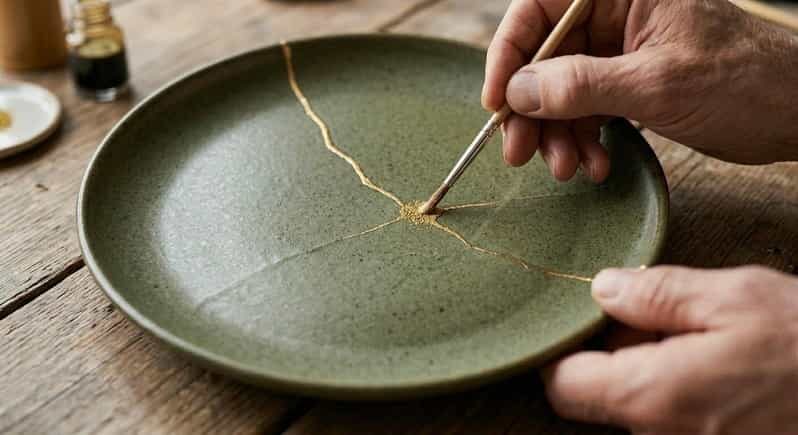
At this Kyoto workshop, you get to try the process rather than just hear about it. Your instructor introduces the basic steps, including joining broken ceramic pieces with lacquer and applying gold powder along the repaired lines. You do not need artistic experience. The instructor guides you through the work and can step in when a technique feels awkward.
The one-hour length is part of the appeal. You can fit the session between other plans, or use it to rest your feet and attention after a day of temples, shops, and crowded streets. It is also short enough that you should not expect to master a complex craft. Think of it as a guided first attempt, with a finished object to take home.
You can check availability for your dates here: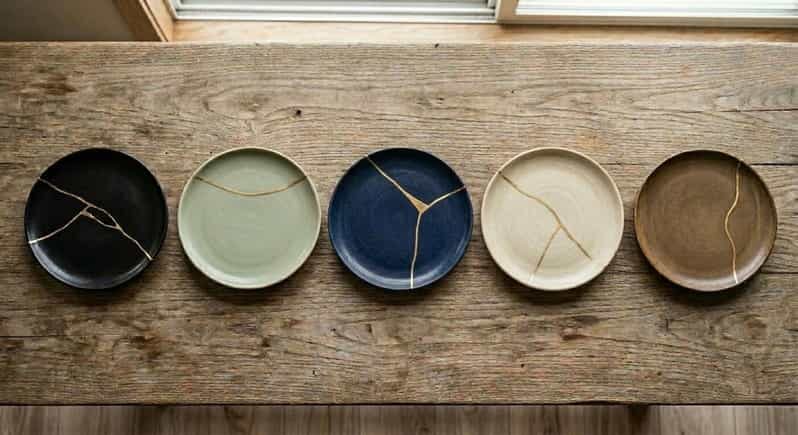
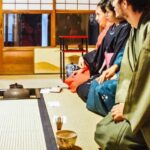
The class starts with an introduction to Kintsugi’s method and philosophy. You learn why the gold is applied to the breaks rather than used to make the repair disappear. The idea of finding beauty in imperfection is more than a slogan here: the finished piece makes the repair its most noticeable feature.
That context helps the hands-on work feel more connected to Kyoto’s craft traditions. You are not simply decorating a bowl. You are learning how a repair can become part of an object’s appearance and story. Instructors explain the process in English, and participants have found the explanations clear and easy to follow.
The exact balance of teaching and conversation can vary by instructor. Katie, Yuhi, Leyla, Alice, Natalia, and Bunon are among the instructors named by people who have taken the class. Their teaching styles are described as patient, friendly, and helpful, but you should not book expecting a particular person unless the provider confirms who is leading your session.
You might also be interested in these Kyoto experiences
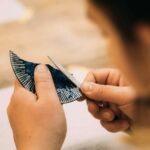
Once the introduction is over, you work on a ceramic piece. The instructor shows you how to bring the broken sections together with lacquer, then helps you through the careful steps. This is where the class rewards patience. Small adjustments matter, and the process is less about speed than giving each stage your attention.
The hands-on format makes the workshop accessible even if you do not think of yourself as artistic. You are following a method, not being asked to invent a design from scratch. Instructors help when needed while leaving room for you to make the piece your own.
The materials are designed for this one-hour experience. That distinction matters if you are comparing the class with a longer course in traditional Kintsugi. The workshop offers a useful introduction and a tangible result, but it is not presented as training in every stage of a traditional repair. The repaired dish is also not safe for serving food, so plan to display it rather than use it at the table.
After the pieces have been joined, you apply gold powder to mark the repair. This is the moment when the cracks become the visual focus. The gold gives the ceramic a new character, while keeping the history of the break in view.
You do not need a steady hand or a perfect result for the activity to make sense. The aim is to learn the process and finish a piece that reflects your own work. Your instructor can help with tricky steps, and the pace is intended for beginners. Several participants have described the hour as relaxing, which fits the concentrated, hands-on nature of the task.
Keep your expectations practical: this is a compact workshop, not a long studio session with time for repeated attempts. If you enjoy slow crafts, you may wish the hour lasted longer. One participant chose to stay for a second session to make matching sake bowls, which suggests an extra class can appeal if you want more time and another piece.
The basic workshop price includes a small white bowl. If you want a different ceramic piece, the available options may cost extra. One participant described the added choices as ranging from 1,000 to 4,000 yen, so ask about the current selection and charges before choosing.
That price detail changes how to judge the advertised $10 cost. At that starting price, the class is an inexpensive way to try a craft, get English-language instruction, and make a personal souvenir. The included bowl keeps the basic option straightforward. But if a particular shape or style matters to you, the final cost may be higher once you select an upgrade.
I would treat the included bowl as a perfectly reasonable choice, especially if your main goal is trying Kintsugi rather than acquiring a specific piece of tableware. The class’s value comes from the instruction and the chance to work with the technique, not from getting a premium ceramic object for the lowest advertised price.
More Great Tours NearbyThis workshop works well as a change of pace. Instead of moving from one sight to the next, you spend an hour concentrating on a small task and listening to the story behind it. That can be a welcome reset, particularly if you have already spent the day on your feet.
The studio atmosphere is described as calm, and participants have found the groups manageable enough for instructors to offer individual help. No exact group size is specified, so do not count on a private lesson. Still, the class is designed to include guidance as you work, rather than leaving you to figure out each step alone.
It can suit couples, solo visitors, and families with older children. People have enjoyed the class with teenagers, and one family with a very young baby described staff as considerate. However, the activity is not suitable for children under 10, and it is not wheelchair accessible. If either point affects your plans, check directly with the provider before booking.
The activity lasts one hour, and the instructor speaks English. The price is listed at $10 per person, with the basic white bowl included and optional ceramics available for an additional fee. All necessary tools and materials are provided, so you do not need to bring craft supplies.
Arrive on time. Anyone more than 15 minutes late may be asked to reschedule, since a delayed start can affect the next reservation. Payment at the workshop is cashless, with Visa, Mastercard, American Express, JCB, Diners Club, and Discover accepted.
You can reserve now and pay later, and cancellation is free up to 24 hours before the activity for a full refund. Those terms help if your Kyoto plans are still taking shape, but they do not remove the need to check the available start times when you book.
Book it if you want a cultural activity that involves doing, not just watching. The class is especially appealing if you like crafts, want a meaningful souvenir, or need a quiet hour between more demanding sightseeing plans. The explanation of Kintsugi’s philosophy gives the activity a little more substance than a simple make-and-take project.
It is also a good option if you are unsure of your artistic ability. The instructor guides you through the technique, and the task is structured enough for beginners. You do not need to arrive with a design plan or previous pottery experience.
You may want to skip it if you are looking for a full course in traditional Kintsugi, a food-safe repaired dish, or a long stretch of studio time. The short format is best understood as an accessible introduction, not a complete apprenticeship. And if you want a larger or more distinctive ceramic piece, factor the extra cost into your decision.
I would book this if you want a hands-on Kyoto experience that is calm, brief, and easy to fit into a sightseeing schedule. The best value is the combination of clear English instruction, a simple introduction to the craft’s meaning, and a keepsake you make yourself. Choose the included white bowl for the lowest cost, or ask about the price of other pieces before committing. Just remember that your finished ceramic is for display, not food.
“A super nice experience!! A fabulous technique, and all the guys and girls were super kind and friendly!”
The workshop lasts one hour. Check the available start times when booking.
The workshop, necessary materials and tools, and instructor guidance are included. A small white bowl is included as the basic ceramic piece.
Yes. Other dishes may be available for an additional fee. The extra cost has been described as ranging from 1,000 to 4,000 yen, but check the current options and prices.
No. The repaired piece is not food-safe and should be used for decoration.
Yes. The workshop is beginner-friendly, and an instructor guides you through the steps.
Instruction is in English.
The workshop is not suitable for children under 10.
You can cancel up to 24 hours in advance for a full refund.
You can check availability for your dates here: