Physical Address
304 North Cardinal St.
Dorchester Center, MA 02124
Physical Address
304 North Cardinal St.
Dorchester Center, MA 02124

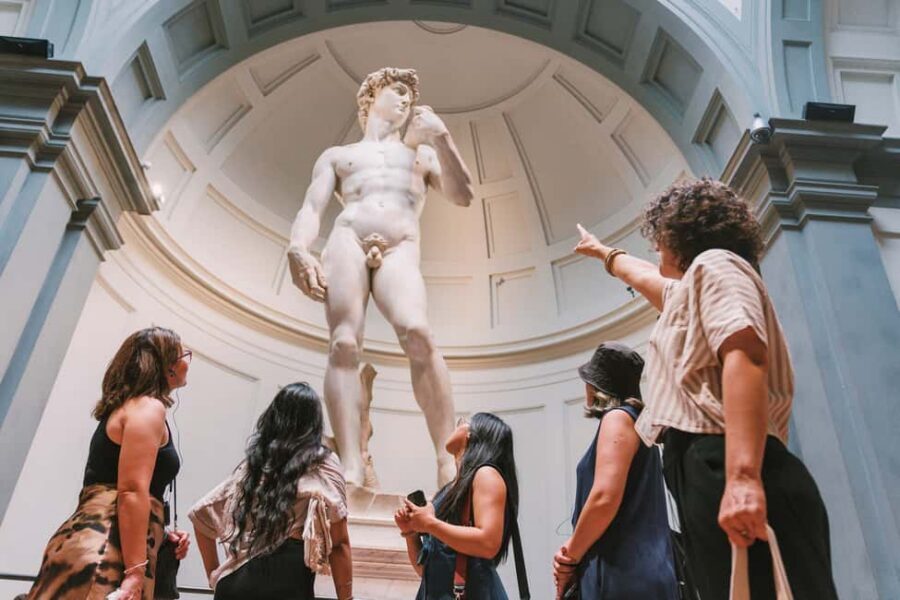
See David, Florence’s landmark squares and the Uffizi with a guide, skip-the-line tickets and a small group of no more than 15.
Michelangelo’s David is the star, but this tour’s real strength is the thread it draws between the statue, the Medici, Florence’s streets and the paintings in the Uffizi. Instead of meeting these landmarks as a string of photo stops, you get a guide to explain what connects them.
I like the small-group cap of 15 and the guided visits inside both the Accademia and the Uffizi. I also like that the walking route includes everyday Florence details, from the Porcellino market to local food tips, not just grand façades.
The trade-off is a long day on foot, and the Duomo is viewed from outside rather than entered. Skip-the-line tickets save time at the museums, but security checks can still mean a wait.
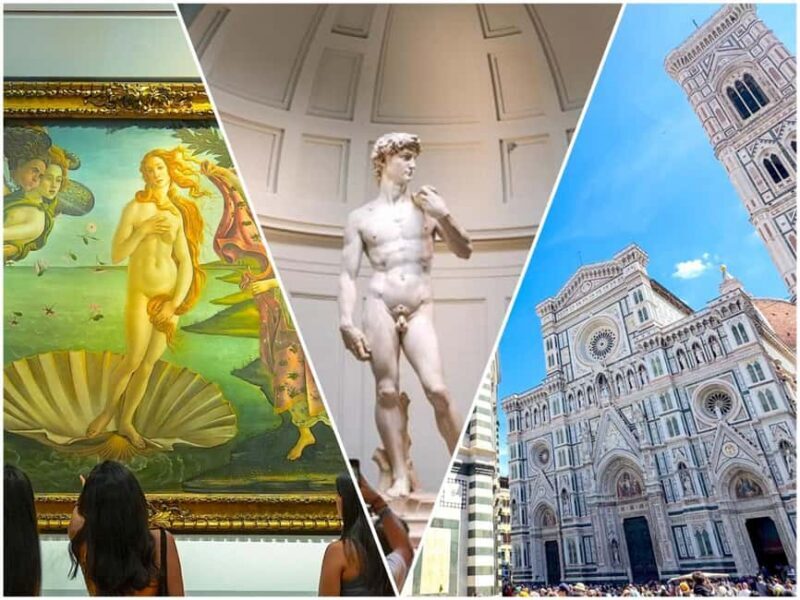
Florence packs a lot into a small center, but its museums can be hard to read without context. The Accademia and Uffizi are both major stops, and their collections can blur together if you rush from one famous artwork to the next. A guide can help you notice what matters and give the art a place in the city’s story.
The full-day option combines the two gallery visits with a walking tour past central landmarks. The schedule is substantial: around 45 minutes for the Accademia, roughly 15 minutes with David, short stops at several historic sites, an hour for lunch and about two hours in the Uffizi. The stated total duration ranges from four to seven hours, so check the available start time and selected option when booking.
This is an orientation as well as an art tour. You cover a lot of ground, but the stops are brief outside the galleries. Think of the walk as a guided introduction to central Florence, not a series of long interior visits to every building you pass.
You can check availability for your dates here: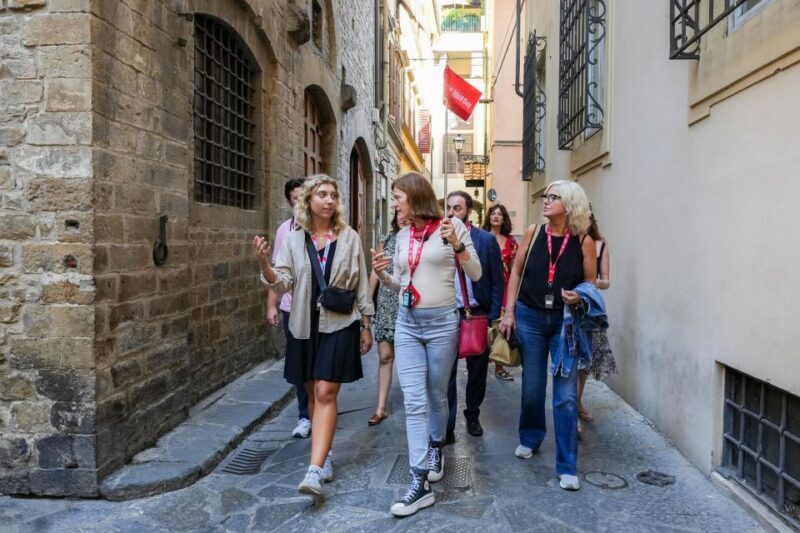
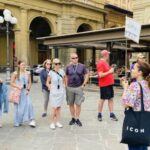
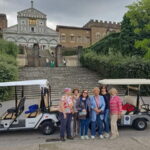
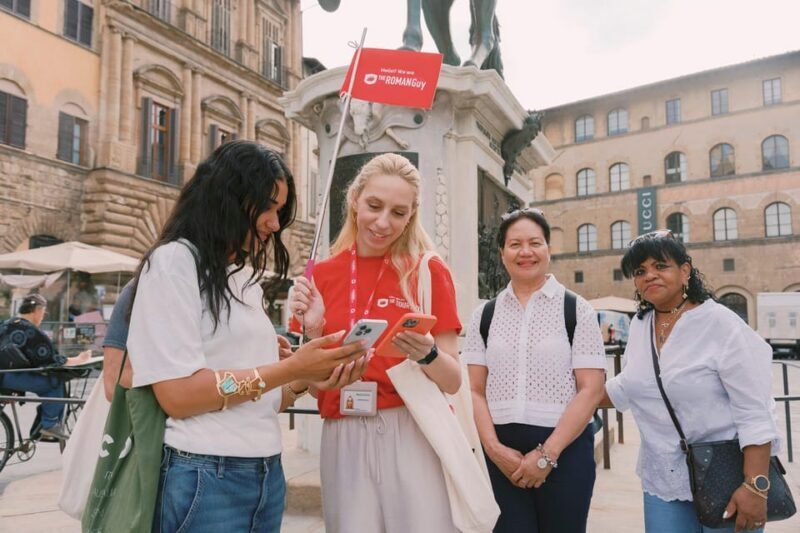
The meeting point is Piazza Santissima Annunziata, in front of the equestrian statue of Ferdinando de’ Medici. Look for a representative carrying a sign with The Tour Guy name. Arrive with enough time to find the group without starting the day in a hurry.
The route begins in an area associated with the Medici family, a fitting starting point for a day that returns often to Florence’s powerful patrons. Your guide can set the scene before you enter the Accademia, where the art is easier to appreciate once you have a sense of the city and the people who shaped it.
The group limit of 15 matters here. A small party is easier to keep together in crowded museum rooms, and you have a better chance to hear the guide and ask questions. Private groups are also available, though the specific arrangement depends on the option you book.
If you enjoy exploring Florence on foot, these walking tours might also suit your style
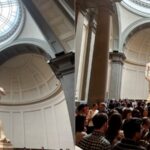
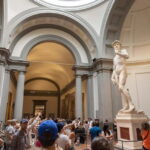
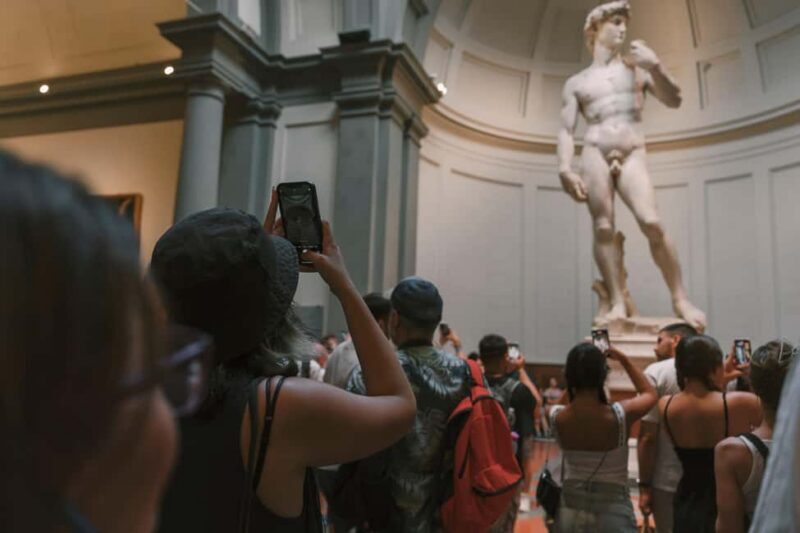
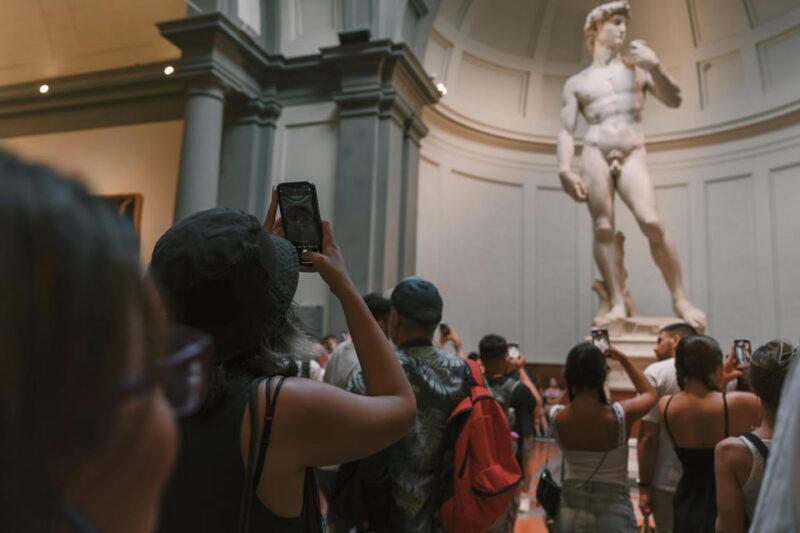
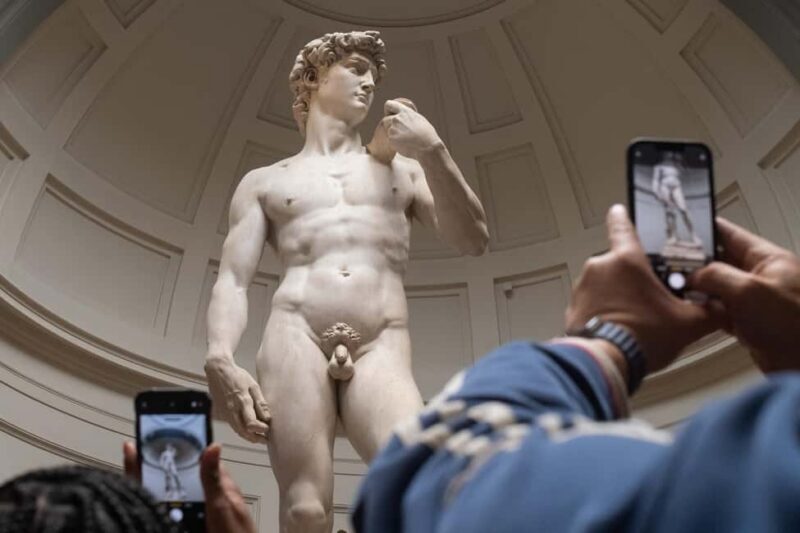
Your first major stop is the Accademia Gallery. Skip-the-line entry helps you avoid the regular ticket queue, then the guided visit gives you about 45 minutes to look at the museum’s works and hear their context. The visit includes Michelangelo’s David, with a separate viewing and explanation of about 15 minutes.
David is famous enough to arrive with a mental picture already in place. Seeing the sculpture in person lets you take in its scale and details, and a guide can point out features you might otherwise pass over. One guide, Angela, was praised for encouraging visitors to look at the work from different angles and notice specific details. Guides vary, of course, but this is the kind of close looking the stop is designed for.
The Accademia visit is not a leisurely, room-by-room examination of everything on display. The allotted time is better suited to a focused introduction to the main works. If you want to linger for longer, check whether you can remain in the museum after the guided portion under your chosen ticket arrangement; the tour details do not promise extra time.
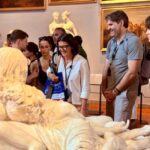
A guide can also help you balance art history with a broader sense of Florence. Several guides have been singled out for tying artists and artworks to the city’s people and history. Names mentioned by participants include Alma, Cosetta, Francesca and Angela, but the assigned guide can differ by date and language.
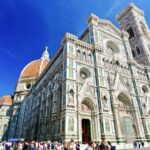
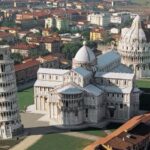
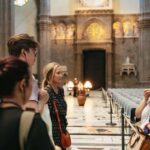
After the Accademia, the walk heads through the city center. You pass Palazzo Medici Riccardi, then reach the Duomo complex and the Cathedral of Santa Maria del Fiore. The stop is for viewing the exterior, photographs and commentary, not entry into the cathedral. If going inside the Duomo is important to you, you will need to plan that separately.
The cathedral’s Gothic exterior and red dome make this one of Florence’s defining sights. A short guided stop helps you place the building in the city’s story, but ten minutes is not enough to explore the whole complex. The same goes for the House of Dante and Orsanmichele, both visited from the outside as brief sightseeing stops.
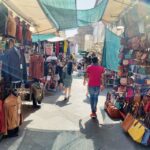
At Mercato del Porcellino, you get a little time to look around the lively market area, known for leather goods and its bronze boar. The familiar local ritual is to rub the boar’s snout for luck and toss a coin into the fountain if you hope to return to Florence. Treat it as a bit of fun, then keep an eye on the group’s meeting time.
Next comes Piazza della Signoria, the Loggia dei Lanzi and Palazzo Vecchio. These stops bring the city’s civic life into view, alongside stories of the Medici and Florence’s political past. The schedule allows only a few minutes at each place, so the guide’s explanation is what turns the route into more than a checklist of façades.
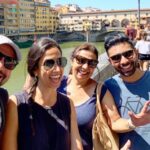
Ponte Vecchio is another short stop, with time to see the famous bridge and its jewellery shops. Local artisans’ work gives the crossing a different feel from the broader civic squares. You can take photos and get your bearings, but this is not a shopping visit with time to browse each store.
The walk’s value lies in the connections. Reviewers repeatedly praised guides for weaving together art, architecture, Medici history and details of local life, as well as sharing restaurant and gelato suggestions. Guides such as Lucia, Claudia and Cosetta have been described as lively and clear; the individual style will vary, but the tour’s route gives a good guide plenty to work with.
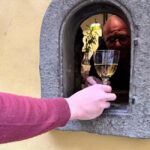
The full-day schedule sets aside an hour for lunch in Florence. Food and drinks are not included, so budget for your own meal and use the break to rest your feet. Some guides offer suggestions for places to eat, and past participants have appreciated recommendations for lunch, local food and gelato.
This pause is useful, not wasted time. The morning combines walking with the Accademia, and the Uffizi requires another substantial stretch of museum time. A proper break can help you arrive ready to pay attention rather than simply counting the remaining rooms.
Keep the lunch hour in perspective: it is a scheduled free-time block, not a hosted meal. If you want a relaxed sit-down lunch, choose accordingly and watch the time so you can meet the group promptly.
More Great Tours Nearby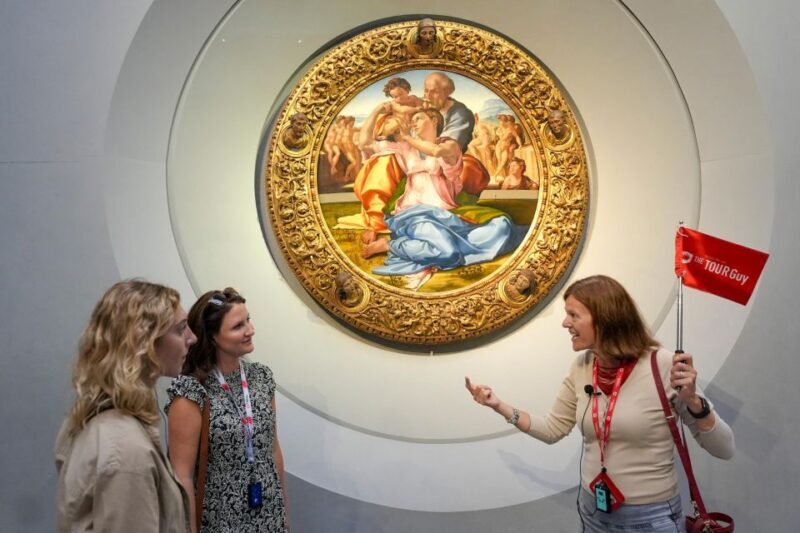
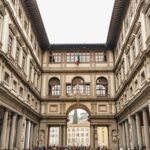
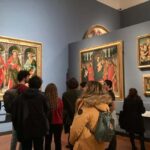
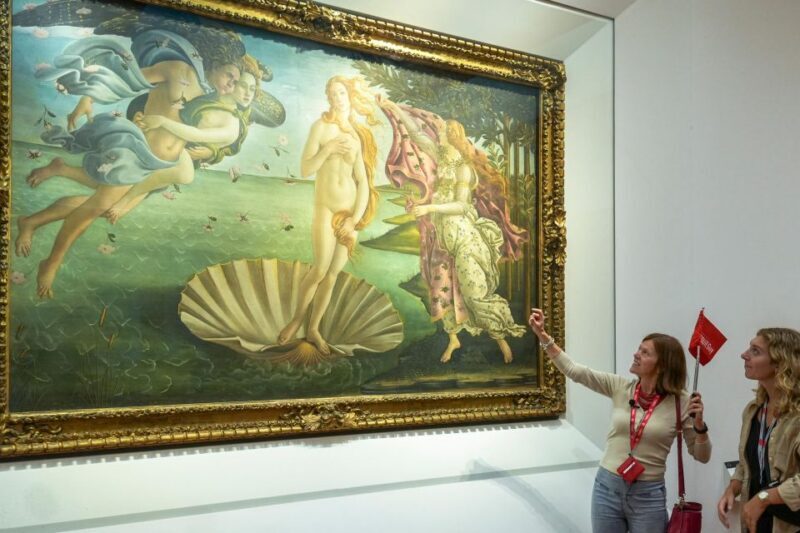
The final major stop is the Uffizi Gallery, where the guided visit lasts about two hours. Skip-the-line entry avoids the regular ticket queue, but you still need to pass security. Waiting at screening can vary with visitor volume, so priority entry does not mean walking straight in without any delay.
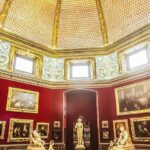
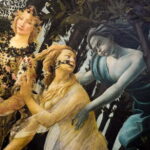
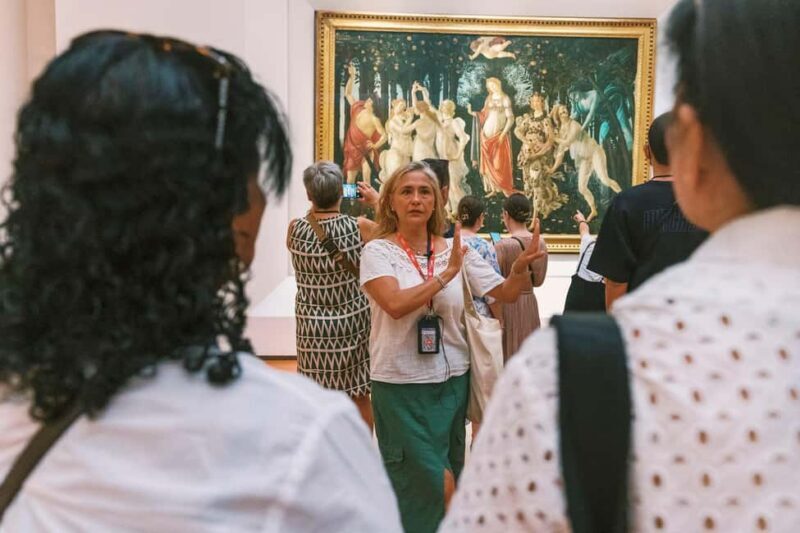
The Uffizi holds far more art than a two-hour visit can cover. The guide’s role is to pick out key works and explain what you are seeing, rather than attempt a complete survey. The tour highlights works such as Botticelli’s Birth of Venus and Leonardo da Vinci’s Annunciation, among other Renaissance paintings.
That focus is a real help if you find large museums overwhelming. Past participants have valued guides who identify the rooms and works worth prioritizing, then explain the people, techniques and stories behind them. One participant praised the way a guide connected historical events and artists’ personalities to the paintings, making the collection easier to understand as a whole.
The Uffizi portion is also where the day’s pace may feel demanding. Two hours in a major gallery, after a morning of walking and another museum, is a lot of standing and absorbing information. If you prefer to explore art at your own speed, a guided highlights visit may feel brisk. If you want an informed route through the essentials, it is a sensible use of limited time.
The tour ends at the Uffizi Galleries. That is handy if you want to continue exploring the area afterward, but the listed experience does not include hotel pickup or drop-off.
Culture seekers can explore more Florence museums and galleries
The tour is built around short outdoor stops and longer gallery visits. That pattern keeps the route moving, though you should not expect extended free time at the cathedral, Palazzo Vecchio or Ponte Vecchio. The one-hour lunch break is the main planned pause in the full-day version.
The strongest feature across the experience is the guide’s ability to explain art and history in a lively, approachable way. Past participants have praised guides for answering questions, keeping a good pace and making the city’s past feel relevant. Some also appreciated recommendations for eating and exploring after the tour.
Guiding style is personal. One participant found the art discussion more technical than they preferred, while others valued the detail and depth. If you enjoy learning the context behind paintings and sculpture, you are likely to get more from the tour than you would from simply walking through with an audio guide. If you prefer minimal commentary and lots of independent time, this format may feel too directed.
A few participants praised the audio equipment for making guides easier to hear in crowded galleries. One person, however, found the sound quality less clear. Equipment and conditions can vary, so do not count on perfect audio in every room. Ask the guide to repeat something if the crowd noise swallows a detail.
At $111 per person, the price buys more than entry to two museums. It includes skip-the-line entry and guided tours at both the Accademia and Uffizi, plus the full-day walking route if you choose that option. The value is strongest if you want expert context, help navigating the galleries and a compact introduction to Florence’s center in one day.
It is less compelling if you already have museum tickets, want to spend hours independently with each collection, or mainly want to enter the Duomo. Cathedral entry is not included, and meals are your own expense. The tour also does not include hotel transfers.
The 4.7 rating from 414 reviews suggests a consistently well-regarded experience, with particular praise for guide quality, clear storytelling and a pace that keeps the day engaging. Those strengths make the cost easier to justify for a first visit, especially when you might otherwise book separate museum tickets and arrange your own guiding.
Wear comfortable shoes. The day involves walking between central sights and standing in museums. The tour is not suitable for wheelchair users or people with mobility impairments, so check carefully before booking if stairs, long periods on your feet or crowded galleries are a concern.
Avoid large bags, which the Accademia and Uffizi require you to check. The Uffizi does not allow liquids inside, except for baby bottles or medicine liquids, so do not bring a water bottle into the museum. Security checks apply at all sites, and there may be a short wait even with priority entry.
The first Sunday of each month has free museum admission, but advance tickets cannot be reserved for that day and entry is not guaranteed. If visiting then, weigh the tour’s guided value against the uncertainty of getting into the museums.
English- and Spanish-speaking guides are offered. The tour may be private or in a small group, with the group size capped at 15. Free cancellation is available up to 24 hours in advance for a full refund, and reserve-now, pay-later booking is offered.
Book it if you want to see David and the Uffizi in one day, prefer a guide to explain what you are looking at, and like the idea of covering Florence’s central landmarks on foot. It is especially useful for a first visit, when the city’s art and Medici history can feel like a lot to sort through on your own.
Think twice if you need a slow museum day, cannot manage a long walk, or want to enter the Duomo as part of the experience. For most first-time visitors with a full day to spare, the combination of the two galleries, central Florence walk and lunch break offers a practical way to meet the city’s essential sights.
“Florence walking tour was well curated and guide was also very knowledgeable. overall very good experience and would recommend to everyone”
The stated duration is four to seven hours. The exact length depends on the option and available start time, so check the details for your selected booking.
Yes. The Accademia visit includes a guided look at Michelangelo’s David.
Skip-the-line entry and a guided visit to the Uffizi are included in the tour details. Security screening still applies, and there may be a short wait.
No. The cathedral is viewed from outside, and entry to the Duomo is not included.
No. The full-day itinerary allows an hour for lunch, but food and drinks are not included.
Meet in Piazza Santissima Annunziata, in front of the equestrian statue of Ferdinando de’ Medici. A representative will carry a sign with The Tour Guy name.
Wear comfortable shoes. Avoid large bags, and do not bring liquids into the Uffizi, except baby bottles or medicine liquids.
No. The tour is listed as unsuitable for wheelchair users and people with mobility impairments.
You can check availability for your dates here: