Physical Address
304 North Cardinal St.
Dorchester Center, MA 02124
Physical Address
304 North Cardinal St.
Dorchester Center, MA 02124

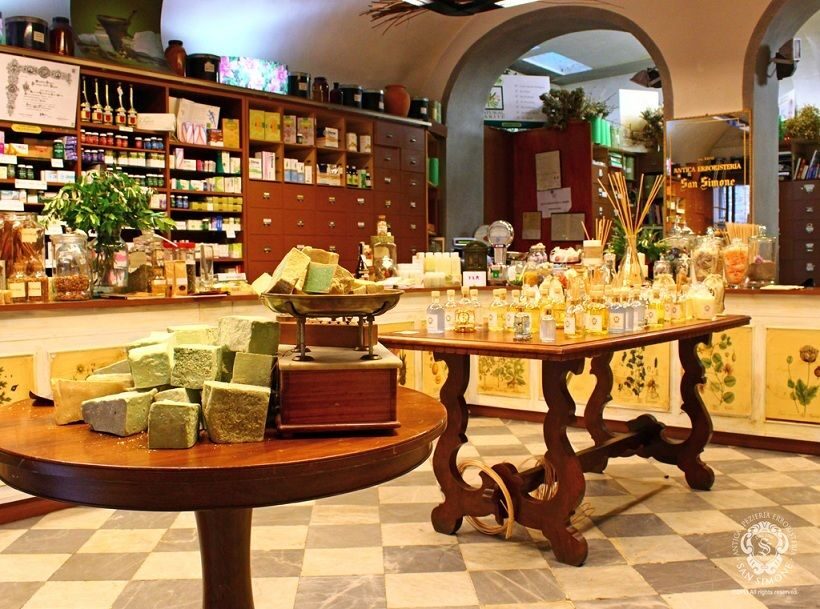
Make a 30 ml fragrance in a Florence perfume workshop, learn its Renaissance-era traditions, and take home your formula and a certificate.
Florence’s perfume tradition becomes a hands-on art in this small workshop: you smell a range of essences, choose the notes you like, and shape them into a fragrance that is yours. The setting is an old-fashioned apothecary, and the class connects its craft to Renaissance-era perfumers such as René le Florentin, associated with Catherine de Medici.
I like two things in particular: you leave with a wearable 30 ml perfume and its formula, not just a souvenir, and the master perfumer helps you make sense of the scents rather than leaving you to guess. The relaxed pace also makes this a welcome change from Florence’s churches and museums.
One consideration: choosing a fragrance can take more thought than you expect, and a tiny change in the blend can alter the result. The workshop is in English or Italian, but one participant found the instructor’s accent took extra concentration. Check the language details when booking if that could be an issue for you.
The experience begins at Antica Spezieria Erboristeria San Simone, an artisanal workshop in the heart of Florence. Rather than taking you to another major sight, it gives you a close look at a small-scale craft in a setting linked to the city’s history of perfume making.
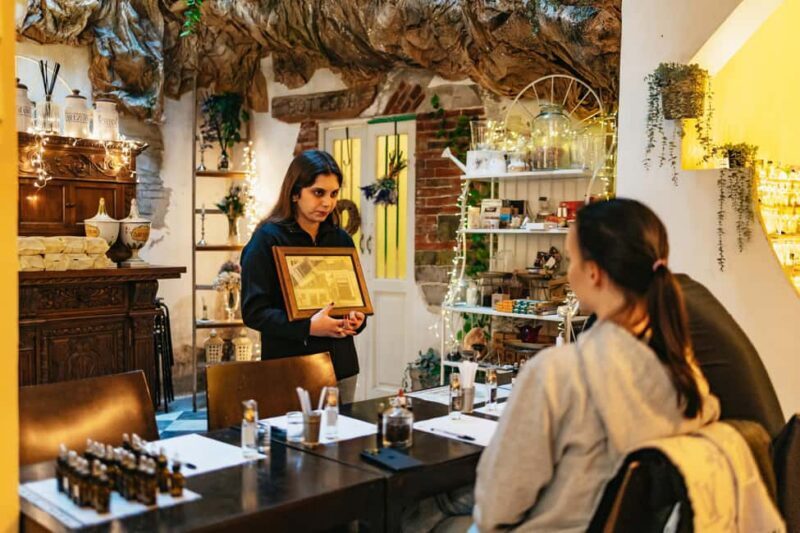
Your instructor introduces the shop and the traditions of Florentine perfumery. The class evokes the Renaissance world of alchemists and perfumers, including René le Florentin, who is associated with Catherine de Medici. It’s a useful bit of context: the workshop is not only about picking a nice smell, but about a craft with a long place in Florence’s story.
The room and its shelves of essences are part of the pleasure. You are working with scent at close range, so the experience feels more personal than a standard demonstration. Still, it is a working shop, not a grand museum. You come to learn and make something, not to tour an elaborate collection of historical objects.
The guides are a key part of the class. Elena, Debra, and Alina are among the instructors named by people who have taken it, though your instructor may differ. The role is part teacher, part sounding board: you make the choices, and the perfumer helps you understand how the notes may work together.
You can check availability for your dates here: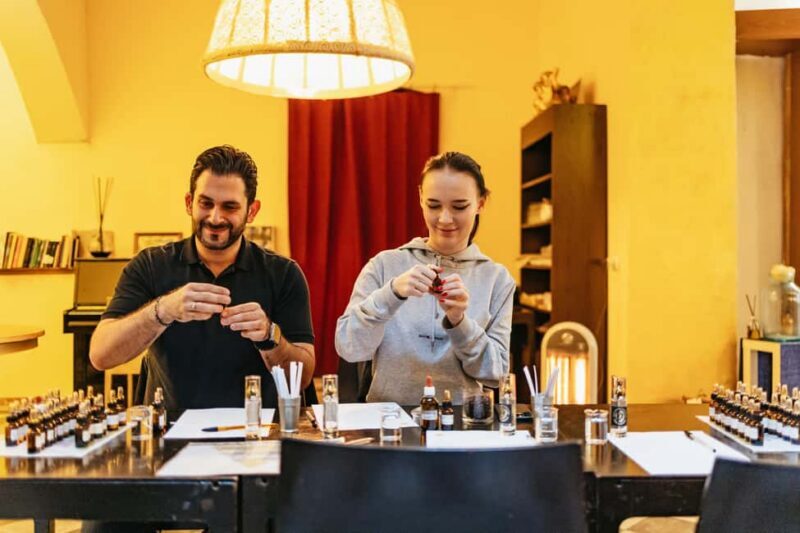
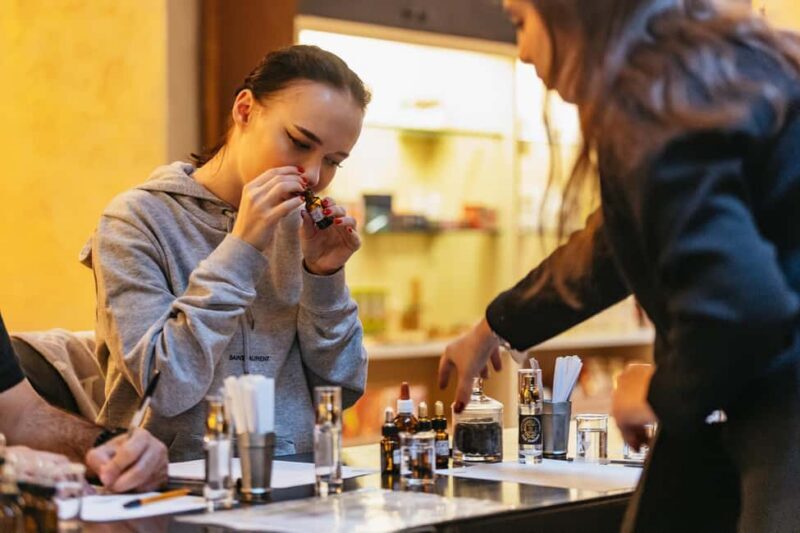
After the introduction, you begin exploring the available scents. You smell a range of essences, from gentle aromas to stronger ones, and work out which appeal to you. This is where the class becomes more than a simple souvenir activity. You are learning to notice your own preferences rather than selecting a finished fragrance from a shelf.
Take your time. It can be harder than it sounds to choose a group of scents that will work together. Some participants find a single drop can shift the formula and the way a blend smells, which is one reason the instructor’s guidance matters. You are encouraged to try notes, compare options, and ask for help when you are unsure.
The class has a social side, too. In a group of up to 10, you may find yourself smelling the same materials as other participants and comparing what each person likes. Friends and families can make a game of it, but the final fragrance is still personal. One person’s favorite combination may not suit another’s nose at all.
A practical tip: keep an open mind about what you will like. The point is not to arrive with a fixed recipe, but to explore the choices and see which scents feel right to you. If you already know the fragrance styles you enjoy, that can help you explain your tastes, but you do not need prior perfume-making experience.
Looking for more options in Florence? Here are some other experiences worth considering.
Once you have chosen your preferred notes, you move on to combining them into a personal fragrance. Your instructor guides the process and helps you refine the blend. The result reflects your choices, but it also benefits from an expert hand. This balance between personal taste and the perfumer’s experience is one of the most useful parts of the workshop.
There is a choice in how the final perfume is prepared. You can take a more hands-on role, or have the perfumer assemble the ingredients after you settle on the combination. If you are nervous about changing the proportions or making a mistake, letting the expert handle the final mixing is a sensible option. You still make the creative decisions.
That distinction matters if you expect to do every step yourself. The class is a guided masterclass, not an unsupervised lab session. The aim is to help you understand how the fragrance comes together and leave with a finished scent you like. Ask your instructor what parts you can do yourself if you want the most hands-on version.
The final blend is personalized, but it is not a promise of a scientific match to your body chemistry. Think of it as a fragrance built around your own scent preferences. That is the charm: you leave with something chosen and made for you, not a standard bottle that happens to carry a Florence label.
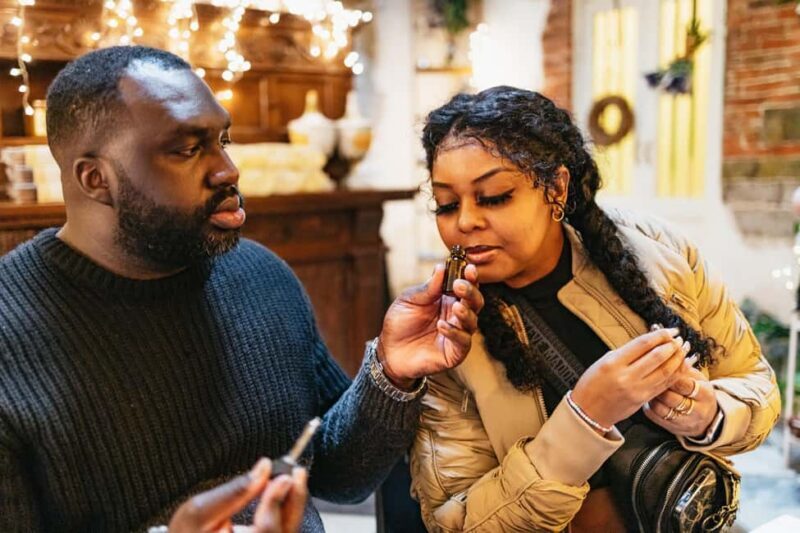
At the end, you receive a 30 ml bottle of your fragrance, the formula, and a certificate of your newly learned skill. The formula is especially useful. It records the blend so you do not have to rely on memory, and it can help you request the same perfume again from the shop. One participant reported being able to email the shop to reorder and have it shipped.
The bottle also gives the $82 price a more concrete value. You are paying for 90 minutes of instruction, access to the essences, help from a master perfumer, and a personal fragrance to take home. A participant compared the bottle’s size with a shop perfume priced around €70, though retail prices and bottle options can change. The class may therefore feel like a good value if you would otherwise buy a special fragrance, but it is less compelling if you are only interested in a quick demonstration.
You also receive coffee, tea, or water during the experience. It is a modest extra, not a meal, but it suits the unhurried feel of the class. There is time to smell and decide, rather than racing through a short presentation.
This class suits perfume fans, couples, friends, and adult family groups who want to make something together. It can also work well for a parent and teenager: the activity is tactile and creative, and the finished bottle gives you a shared memory that is easy to bring home. It is a good way to break up a Florence itinerary full of art and architecture.
You do not need to be an expert, or even a regular perfume wearer. Curiosity is enough. If you enjoy comparing scents and making choices, you will have plenty to do. If you strongly dislike fragrances or are sensitive to many smells, this may not be your ideal activity, since smelling a range of essences is central to the class.
The small group limit helps keep the session personal, though there can still be up to 10 people choosing and discussing scents at once. The class is listed in Italian and English. A participant who struggled with an Italian accent was still able to follow with some help, but if clear language instruction is essential, check the session language before you book.
There is conflicting accessibility information: the activity is described as wheelchair accessible, while wheelchair users are also listed as not suitable. Contact the provider to confirm the current arrangements before booking. Bring a camera if you want photos, and leave large bags and luggage elsewhere, since these are not allowed.
More Great Tours Nearby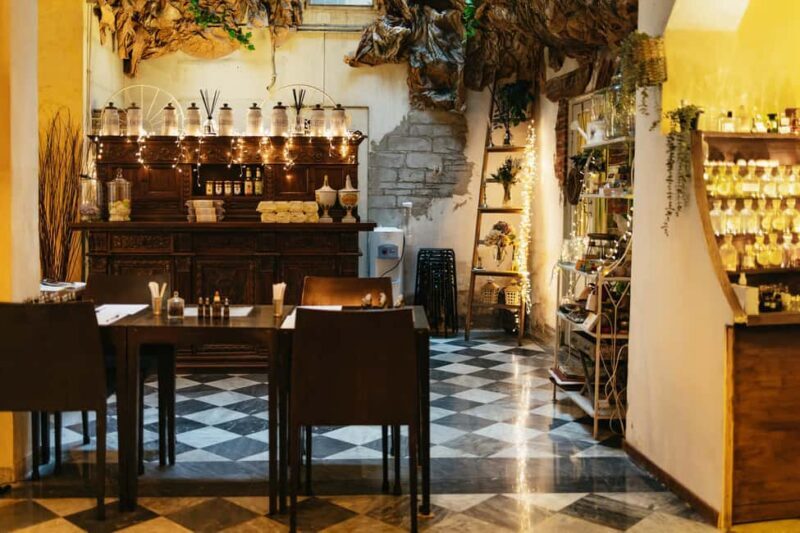
I would book this if you want an activity that is personal, creative, and rooted in Florence’s craft traditions. The 30 ml bottle and saved formula give you more than a pleasant hour indoors: you leave with a scent you helped shape and a way to recreate it later. The setting and the instructor’s guidance add substance to what could otherwise be a simple shopping stop.
I would skip it if you have little interest in fragrance, prefer a fully independent process, or are looking for a low-cost activity without a take-home purchase. At $82 per person, the value depends on whether you want both the class and the custom bottle. For perfume lovers, couples, or families looking for a hands-on break between sightseeing, it is a distinctive way to spend 90 minutes in Florence.
“Everything was good the guide was so helpful and we enjoyed every minute was very memorable”
The class lasts 1.5 hours.
It takes place at Antica Spezieria Erboristeria San Simone in Florence.
You take home a 30 ml bottle of your personalized perfume, its formula, and a certificate.
The instructor languages listed for the activity are Italian and English.
It is a small-group activity limited to 10 participants.
The information is inconsistent: it says both that the activity is wheelchair accessible and that it is not suitable for wheelchair users. Contact the provider to confirm access before booking.
You can check availability for your dates here: