Physical Address
304 North Cardinal St.
Dorchester Center, MA 02124
Physical Address
304 North Cardinal St.
Dorchester Center, MA 02124

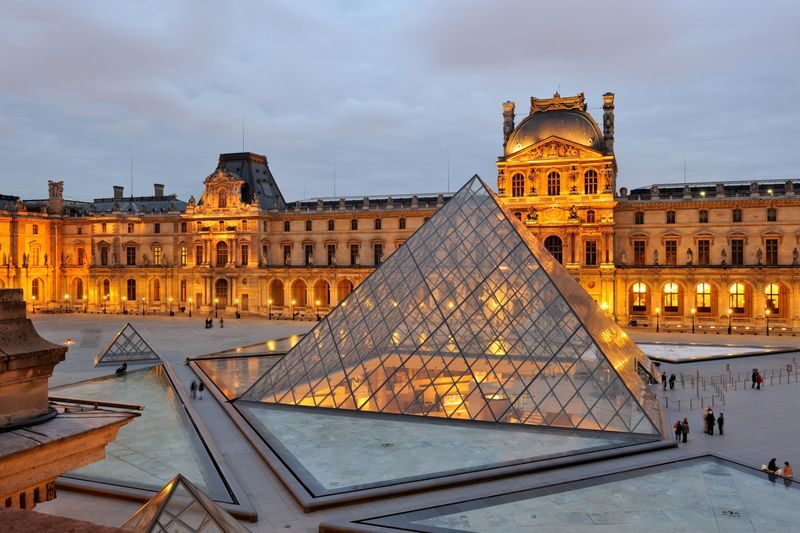
Plan a Louvre visit with reserved entry, optional guides, and practical advice on tickets, queues, the audio app, and seeing the museum’s great works.
The Louvre’s famous trio is a fine place to start: the Mona Lisa, Venus de Milo, and Winged Victory of Samothrace. I like that this ticket lets you choose between exploring at your own pace and paying extra for a guide, and I like that timed, reserved entry can spare you the ticket-purchase queue.
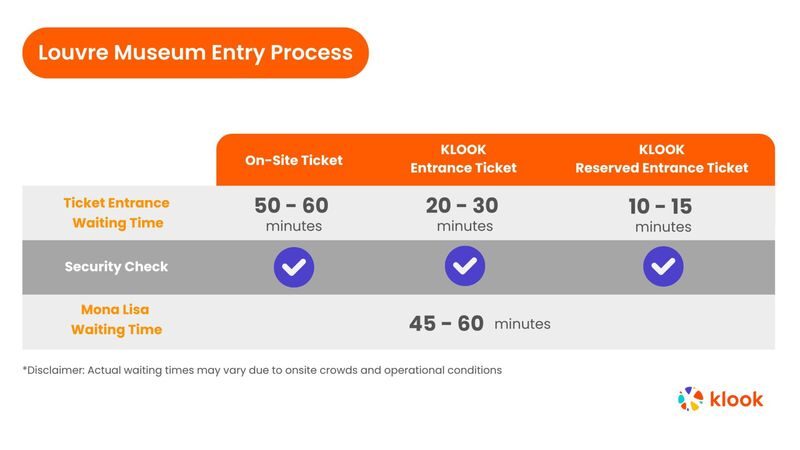
One caution: reserved entry is not a magic door past every line. Security checks still apply, and the official QR ticket is sent by email, often the day before your visit. Save that ticket where you can open it offline; the initial booking voucher may not get you through the museum gates.
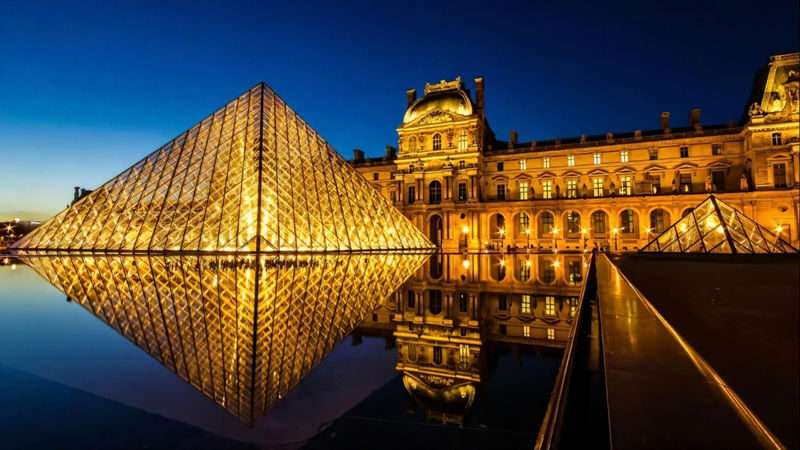

This is not a small museum where you can wander through every room and leave feeling you have seen it all. The Louvre has about 15 kilometers of galleries, and its collection reaches from Egyptian and Greek antiquities to Western art. Three to five hours is a sensible visit; it is not enough to cover the whole place.
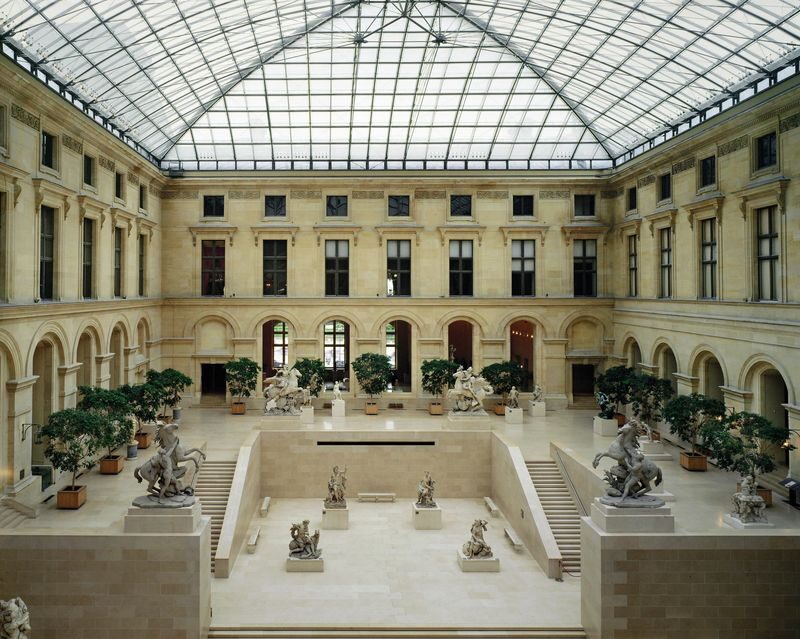
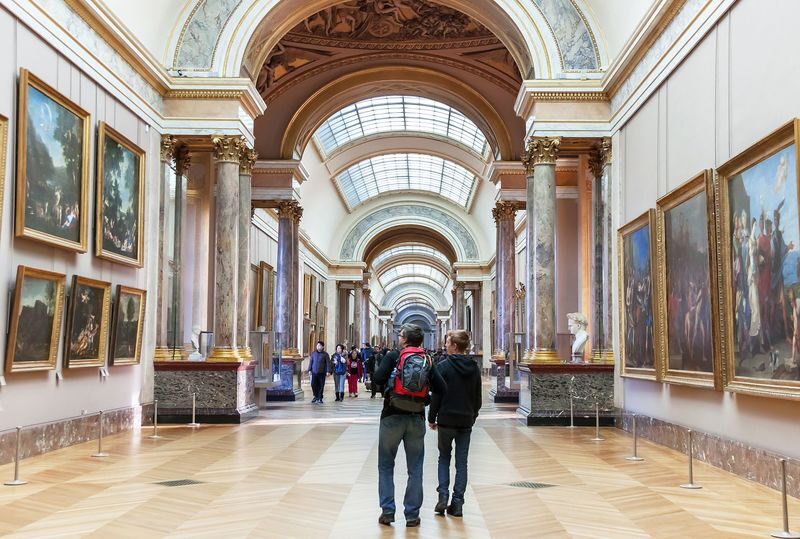
The building itself adds to the experience. The works are displayed in a historic royal palace, so your visit is also a walk through a grand setting shaped by centuries of French history. It is worth giving yourself time to notice the rooms, not just hurry from one famous painting to the next.
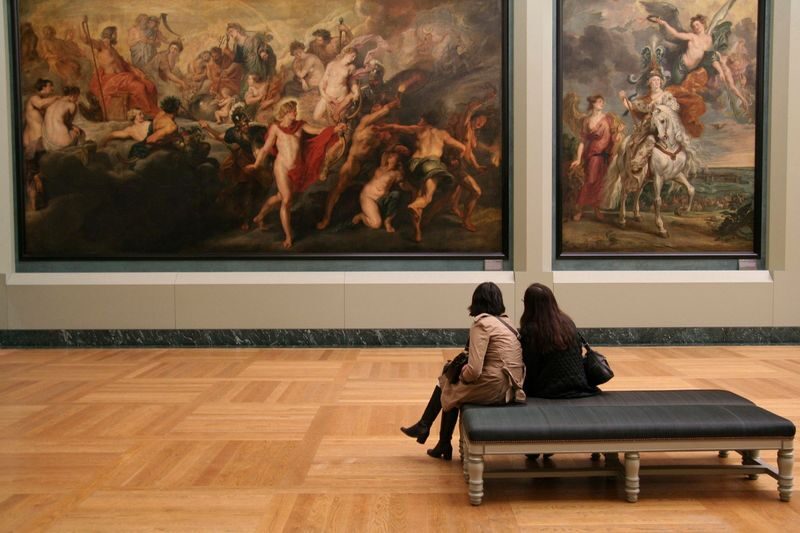
The Mona Lisa is part of the permanent collection, so this ticket does not require a separate Mona Lisa admission. Expect her to draw a crowd. If you have limited time, decide in advance how long you want to spend in that area, then move on to other galleries rather than letting the most famous painting take over your whole visit.
The Venus de Milo and Winged Victory of Samothrace are two other headline works. They give you a different kind of encounter from the Mona Lisa: large-scale sculpture, seen in the spaces around them. These are useful anchors for your route, but the pleasure of the Louvre is also in the works you find between the big names.
You might also be interested in these Paris experiences
The basic option gives you reserved access and a digital audio guide, so you can set your own pace. This works well if you already know what you want to see or prefer to stop for as long as you like. It also suits a return visit, when you may want to focus on a particular collection rather than follow a general highlights route.
The host-assisted option adds a meeting point and a short introduction to key works. The listed host commentary lasts about an hour, after which you can continue on your own. That hour can help you get oriented in a museum where the sheer number of rooms can make a first visit feel like a puzzle.
The host is not the same as a guide who stays with you for the whole visit. The host option is best understood as an entry assist plus a highlights introduction. If you want sustained explanation and a planned route, choose a guided tour instead.
The English-guided group tour lasts about two hours and has a group size of 7 to 20. A semi-private English or Spanish option is listed for a group of six. A guide can help you connect a work’s history, details, and artistic importance, rather than simply point out where it is. One guide named Mathis was singled out for clear explanations, humor, and keeping the group together, but the guide assigned to your visit may differ.
The guided choices cost more than the basic ticket. The host-assisted option is listed from $70.75, while the English group tour starts from $99.65. The semi-private tour and combined packages may cost more; check the selected option carefully before paying.
A timed ticket is valuable because it can spare you the queue to buy admission. At the Louvre, that is a meaningful convenience, especially if tickets on the official site are difficult to secure for your preferred date. Several ticket holders describe the process as straightforward once they had the correct QR code.
But reserved entry does not mean no waiting. Everyone still goes through security, and the wait can reach 20 minutes in high season. Rain, poor weather, or security requirements may slow the checkpoint further. Arrive around 15 to 20 minutes before your time, as a practical buffer, and follow the instructions on the official ticket.
Be punctual. If you arrive more than 30 minutes after the time printed on your ticket, you may face the same admission and waiting conditions as other visitors. If the time you reserved is fully booked, your entry time may be adjusted to 30 minutes earlier or up to an hour later. Check the final ticket rather than relying on the first confirmation.
The most important booking detail is the ticket delivery. The official e-ticket is sent by email, usually up to one day before your visit. The booking voucher in the app may not be accepted at the museum entrance. Look for the separate email, check your spam folder, and save or download the QR ticket before leaving your hotel. A few minutes of preparation can prevent a very frustrating scene at the door.
The included digital audio guide is a separate app and service, not the Louvre’s own audio-guide system. It offers commentary on the Mona Lisa and other works, themed routes, and help finding your way around. It is intended to work without an internet connection once you have downloaded the museum content.
Install the app and download its audio material while you still have Wi-Fi or mobile data. Bring personal earphones, which are not included. This is especially important if your phone is your only guide inside the galleries.
The app is the weaker part of the package. Some people find it useful, but others report that it can be awkward to navigate, has limited commentary, or does not work as expected. If rich explanations are important to you, a live guide is likely a better fit. You can also treat the app as a helpful extra, not the sole reason to buy the ticket.
Do not confuse the included digital guide with the museum’s own audio guide. The museum’s guide may cost extra, and the supplied digital service does not grant access to it. Check what your chosen package includes, particularly if audio commentary is a priority.
Before you arrive, choose a few priorities. The three famous works are an obvious starting point, but you could also select a period or type of art that interests you. A short list gives your visit shape and leaves room for discoveries without turning the day into a frantic march through galleries.
If you choose a guided tour, the guide’s route will supply that structure. The standard English group tour is two hours, while the host introduction is about an hour. After either, you can continue independently if you have the energy and time. A guided start is particularly useful if it is your first visit and you want help distinguishing major works from the museum’s seemingly endless supply of important ones.
For the audio-guide ticket, download the app before the visit and decide which route or works matter most. You can then explore more freely, stopping when something catches your eye. The trade-off is that you are responsible for navigating, and a phone-based guide may be less smooth than a person who can answer questions.
Give yourself a break if you need one. The museum’s scale makes fatigue a real part of the planning, and trying to see every room is a recipe for remembering your sore feet more clearly than the art. Leave some time for the building and the galleries that interest you, rather than treating the visit as a checklist.
Culture seekers can explore more Paris museums and galleries

The experience starts at about $59, with prices varying by package. The basic reserved-access ticket is the least involved option. For that price, the main value is the convenience of booking ahead and having access to the permanent collection, not a full guided experience.
If you want someone to orient you, the host option costs more but adds an introduction to key works. If you care about context and want a guide with you for a planned visit, the two-hour group tour is a stronger use of the extra money. The semi-private group of six may suit you if a smaller group matters, though its price is not specified here.
There are also combinations with a one-hour Seine sightseeing cruise. One option pairs the audio-guide visit with the cruise; another adds host commentary and starts from $79.70. A larger package combines the Louvre, a cruise, and an English or French-guided Eiffel Tower visit, with an eight-hour schedule. These bundles can make sense if you want several major sights in one booking, but they also make for a long day. Check the exact inclusions and timings before choosing.
Children aged 0 to 17 and disabled visitors can enter the Louvre free of charge, though you need to purchase a ticket if you want to use the audio guide. The ticket is nonrefundable, so confirm your date, time, and package before booking. Temporary exhibitions and special events are not included.
The Louvre is at 75001 Paris, France, on Rue de Rivoli. The nearest Metro stations listed are Palais Royal–Musée du Louvre, served by Lines 1 and 7, and Louvre–Rivoli on Line 1. Several bus routes stop nearby, including 21, 24, 27, 39, 48, 68, 69, 72, 81, and 95.
The museum is closed on Tuesdays, as well as January 1, May 1, and December 25. Listed hours are 9 a.m. to 6 p.m. on Monday, Thursday, Saturday, and Sunday, with last entry at 5 p.m. On Wednesday and Friday, it is open until 9 p.m., with last entry at 8 p.m. Hours can change, so check the official site before your visit. Free admission is available on July 14, but advance booking through the official website is required.
Large bags and suitcases over 55 by 35 by 20 centimeters are not allowed. Smaller items can be stored in free lockers, but anything left there must be collected the same day. Umbrellas must go in the cloakroom. The activity is wheelchair-accessible, though a host-led group may not be able to provide individual assistance throughout the visit; confirm the arrangements for your chosen option if you need support.

Book it if you want a reserved time at one of Paris’s essential museums and value having the option of a self-guided visit, a short host introduction, or a proper tour. The strongest reasons to buy are the advance entry arrangement and the chance to choose how much explanation you want. For a first visit, I would favor the guided tour if your budget allows; for an independent visit, the basic ticket is sensible if you prepare the audio app and route.
Be cautious if you need certainty about last-minute ticket delivery, cannot check email before your visit, or expect the audio app to work like a polished museum guide. Save the official QR ticket offline, arrive early, and treat the security queue as part of the plan. With those precautions, this is a practical way to get through the door and spend your time looking at art rather than sorting out admission.
“I would like it to be displayed much more clearly that we need to show the ticket sent later, rather than the initial voucher. Since I was already …”
Yes. The Mona Lisa is part of the Louvre’s permanent collection, and no separate ticket is required to see it.
No. Reserved access avoids the ticket-purchase queue, but you still need to pass through security. Security waits can be longer in high season or during adverse weather.
No. The official e-ticket is sent by email, usually up to one day before your visit. Present the official ticket’s QR code, not just the initial voucher.
It provides commentary on the Mona Lisa and other works, themed routes, and navigation help. It is a separate service from the Louvre’s own audio-guide system.
Yes. Personal earphones are not included, and you need them to listen to the digital audio guide.
The experience is listed as 3 to 5 hours. The Louvre is very large, with about 15 kilometers of galleries, so that time is enough for a selected route rather than the entire collection.
It is closed on Tuesdays and on January 1, May 1, and December 25. Hours may change, so check current information before your visit.
Children aged 0 to 17 and disabled visitors can enter free of charge. A ticket is needed if they wish to use the audio guide.
No. Bags and suitcases larger than 55 by 35 by 20 centimeters are not permitted. Free lockers are available for smaller items, which must be collected on the same day.
No. The ticket includes admission to the permanent exhibitions, but not temporary exhibitions or special events.