Physical Address
304 North Cardinal St.
Dorchester Center, MA 02124
Physical Address
304 North Cardinal St.
Dorchester Center, MA 02124

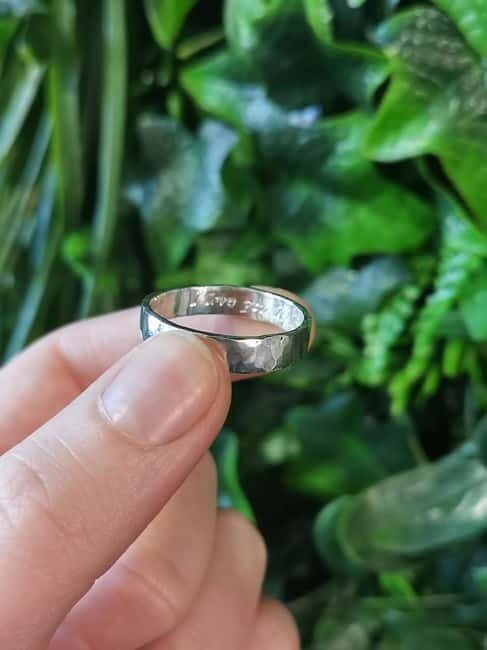
Forge a sterling silver ring in a two-hour Dublin workshop, learn hands-on techniques, and take home a personal souvenir.
A strip of silver becomes a ring in your hands: you mark it, saw it to size, shape it with a mallet, then choose its curve, texture, and polish. This is less a craft demonstration than a chance to make a wearable souvenir from scratch.
I like two things in particular: you get to try real workshop techniques, and the finished ring is personal, with choices that change how it looks and feels. Small groups with two instructors have also been reported, which can mean useful help at the workbench.
One thing to plan around: both studios have steep stairs, so the workshop is not suitable for wheelchair users or people with impaired mobility. Arrive early, too. Late entry is limited to 10 minutes after the start.
The workshop starts with a practical choice: which finger will wear the ring? You mark the silver to the length you need, then use a handsaw to cut it. That first step gives the piece its proportions, so take your time deciding rather than rushing to the tools.
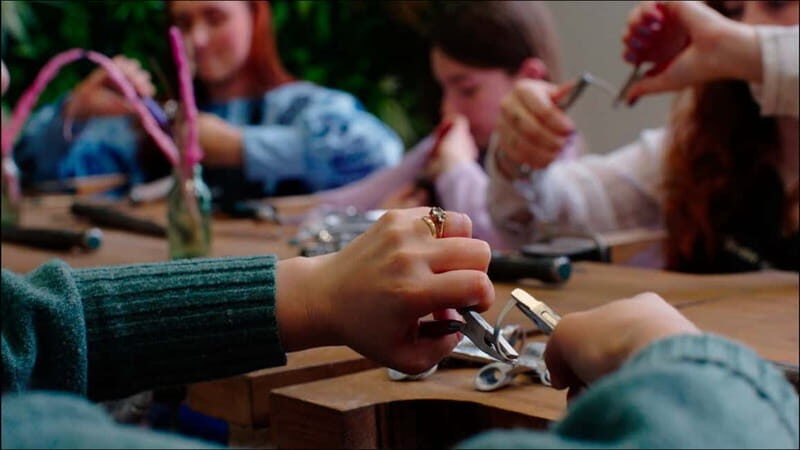
Next, you form the silver around a ring mandrel with a mallet. This is where the workshop begins to feel satisfyingly hands-on. You are not simply watching a craftsperson make something for you; you are shaping your own piece, with an instructor nearby to guide your technique.
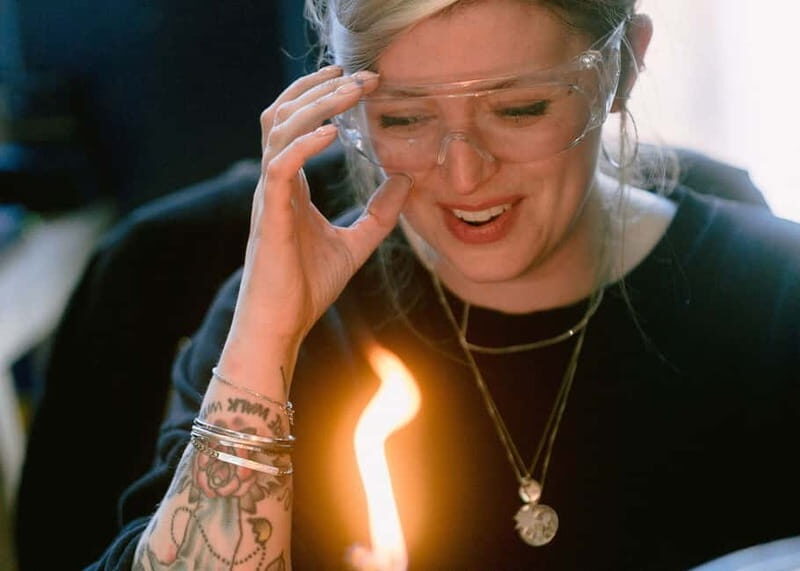
Soldering is part of the process, but the expert tutor handles that step. That is a sensible division of labour: you still get to make the ring, while a skilled instructor takes responsibility for a stage that needs particular care.
After soldering, you file the ring with different hand files. You also decide how much curve you want in its shape. These are small design choices with a visible effect, so the ring can look quite different depending on the decisions you make along the way.
Then comes texture. You choose from three options and use a planishing hammer to create the finish you want. The final choice is polish, which helps bring the ring’s look together. You leave with the piece you made, not a blank item to decorate later.
The sequence is well suited to a two-hour class because each stage has a clear purpose. You learn a few different techniques, but you do not need to master silversmithing in an afternoon. The aim is a finished ring and a taste of the work behind it.
You might also be interested in these Dublin experiences
Dublin has no shortage of things to bring home, but a ring you shaped yourself makes a more personal keepsake than a standard shop purchase. The process gives the object a story: you chose the size and finish, worked the metal, and watched the design take form.
That personal connection is a strong part of the value. You are paying for the workshop, guidance, and sterling silver ring together. The price is not provided here, so I would compare it with other hands-on activities and meaningful souvenirs rather than with the cost of a simple piece of jewellery.
The final ring is also meant to be wearable. People have described their finished pieces as good quality, and some say they wear them regularly. Still, your result depends on the choices you make and the work you put in. This is a handmade object, not a factory-perfect item, and that is part of its appeal.
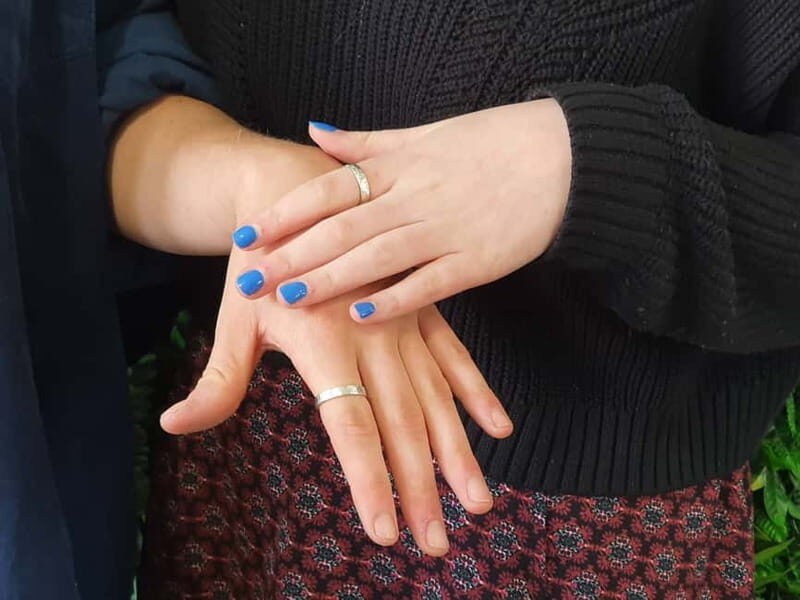
It works particularly well for couples, friends, and families who want an activity that leaves them with something lasting. Couples can make matching rings, and one person can choose a simple, polished finish while another tries a more textured look. You do not need to arrive with a design in mind; the workshop gives you decisions to make as you go.
The tutor’s role matters here. You are handling tools and learning a new process, so clear demonstrations and patient guidance can make the difference between feeling unsure and enjoying the work. The workshop is taught in English, and a good level of English is required to follow the instructions.
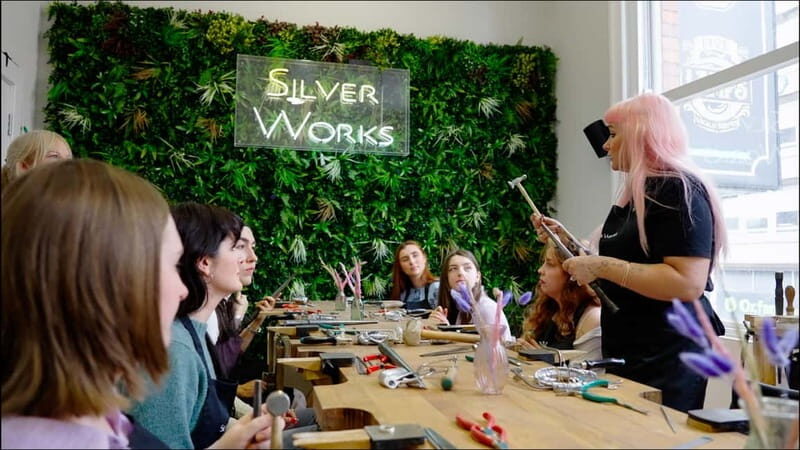
Some classes have had two instructors for groups of around 10 or 12 people. That can make it easier to get individual pointers without waiting long for help, though group size may vary. Instructors named in feedback include Audrey, Sinead, Jill, Owen, and Claire; the specific tutor for your session is not guaranteed.
The teaching style described by participants is friendly and clear, with instructors available to answer questions as the ring takes shape. That matters most during steps such as sawing, forming, and filing, when a quick correction can help you feel more confident using the tools.
The workshop is also social without requiring you to be a natural at crafts. Couples, families, and groups of friends have all found it enjoyable. Tea, coffee, and snacks are included, a small but welcome touch during a two-hour session.
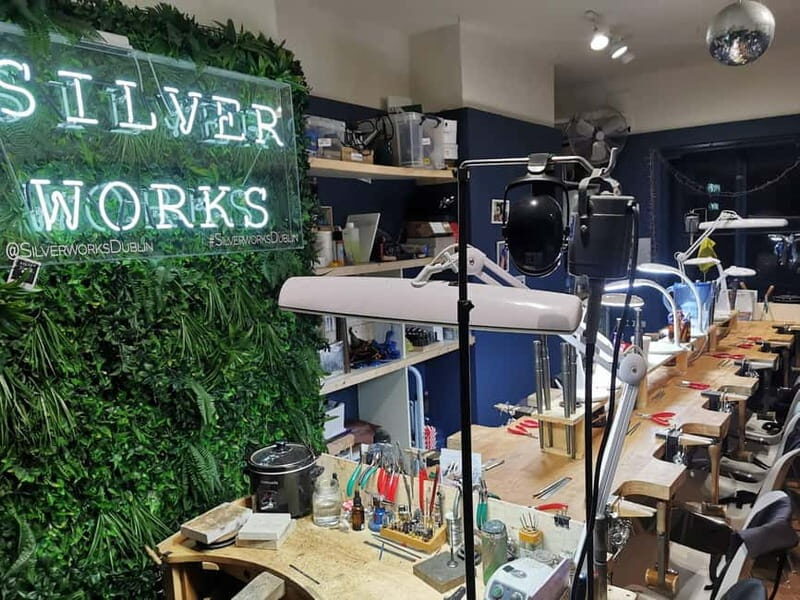
You can book at either Drury Street or Georges Street, both in Dublin 2. Check the location on your specific booking before setting off, since the meeting point depends on the option you choose. The activity ends back at its meeting point.
One workshop has been described as taking place upstairs in a jewellery shop, and finding the correct entrance may not feel obvious from the street. Use the map location carefully and allow a few extra minutes to find the door. Do not assume the two locations have the same entrance or layout.
Both studios have steep stairs. That makes the workshop unsuitable for wheelchair users and people with impaired mobility, so check carefully before booking if stairs could be a problem. The activity is suitable for children over 10; anyone under 16 must attend with a paying guardian.
Allow enough time to arrive 10 minutes before class. The workshop cannot accept late arrivals more than 10 minutes after it starts, and there is no airport transfer. If you are travelling from the airport, leave extra time for the journey rather than trying to fit the class around a tight arrival schedule.
More Great Tours Nearby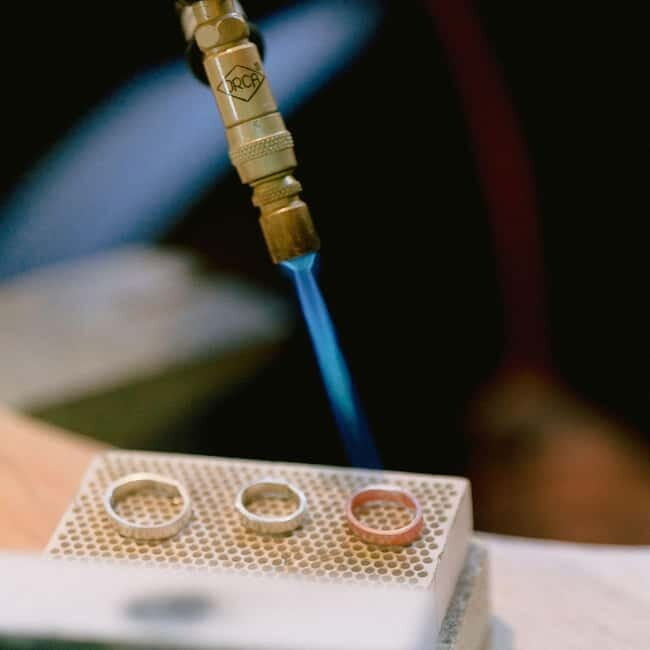
Two hours is a good fit for this project. You have time to work through several stages, make choices about the design, and finish the ring without turning the workshop into a full-day commitment. The work moves from measuring and cutting to shaping, filing, texturing, and polishing, so the session has a natural rhythm.
The time can pass quickly once you start making. That is a plus if you enjoy a focused activity, but it also means you should not arrive late or expect a slow, open-ended class. You are there to complete one ring, not to explore every technique used in professional jewellery making.
If you want to create a ring with someone else, book enough places for everyone making one. The included individual ring is part of the workshop experience, and the activity is especially suited to people who want to take home something they helped make.
I would put this near the top of the list for a couple seeking a shared activity, a family with older children, or anyone who prefers an experience over another bought souvenir. It is also a good choice if you like learning by doing and are curious about how a piece of jewellery takes shape.
It is less suited to someone who wants a passive demonstration, needs step-free access, or has limited English for following instructions. Children under 10 cannot take part, and those under 16 need a paying guardian. If you are unsure about the physical demands, remember that both studios have steep stairs and the session involves hands-on work with tools.
The workshop’s strongest appeal is the combination of process and result. You get to try several techniques, but the ring is the lasting part: a small object that carries the memory of an afternoon spent making it in Dublin.
Book if you want a hands-on activity with a clear takeaway, especially for a date, a family outing with older children, or a creative break in the city. The sterling silver ring, expert instruction, and choice of finish make the experience feel more substantial than a quick souvenir stop.
Skip it if stairs are a barrier, you need wheelchair access, or you would rather spend your time on a traditional sightseeing activity. For everyone else, this is a memorable way to spend two hours, with the bonus that you leave wearing something made by your own hands.
“It was so much fun doing this. The guide did her very best to make us comfortable with the tasks at hand, guided us through expertly, and was great…”
The workshop lasts two hours. Starting times depend on availability.
The available locations are Drury Street and Georges Street in Dublin 2. Your meeting point depends on the option you book.
You mark and cut the silver, shape it with a mallet, file it, choose its curve and texture, and select a polish. An expert tutor handles the soldering.
Yes. The workshop includes an individual sterling silver ring that you make and take home.
Children over 10 can take part. Anyone under 16 must be accompanied by a paying guardian, and children under 10 are not suitable for the activity.
No. Both studios have steep stairs, and the workshop is not suitable for wheelchair users or people with impaired mobility.
The workshop is taught in English, and a good level of English is required.
You can check availability for your dates here: