Physical Address
304 North Cardinal St.
Dorchester Center, MA 02124
Physical Address
304 North Cardinal St.
Dorchester Center, MA 02124

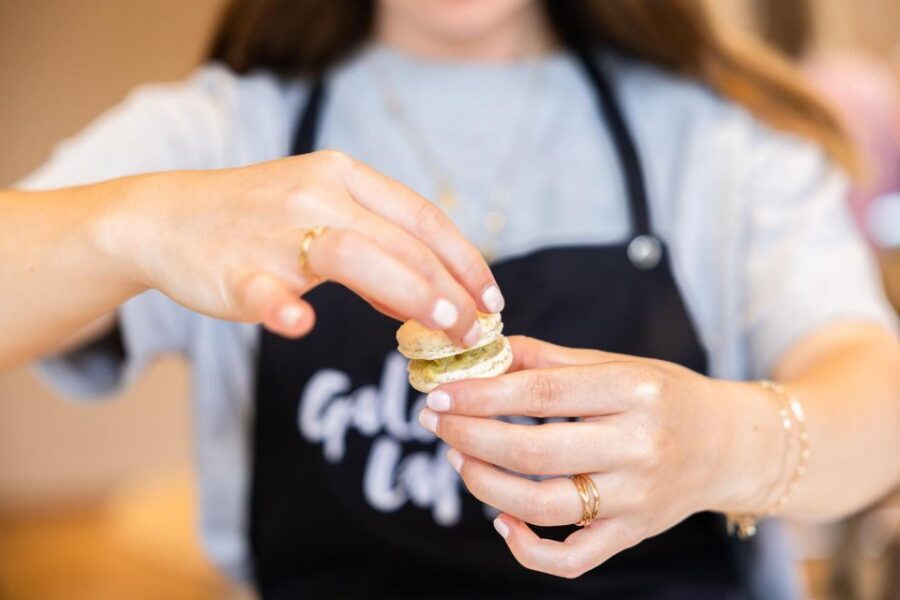
Make macarons with a French pastry chef at Galeries Lafayette in Paris. This 90-minute class covers shells, ganache, piping, and recipes to take home.
Macarons look dainty, but getting their shells right takes practice. In this 90-minute class at Galeries Lafayette, a French pastry chef explains the steps, demonstrates the tricky parts, and gets you working with piping bags and fillings.
I like two things in particular: you learn practical techniques from a pastry chef, and you make more than a decorated souvenir. You work with the dough and ganache, then leave with four macarons and two recipes. The main trade-off is time: the full process takes longer than an hour and a half, so the chef may prepare the shells in advance.
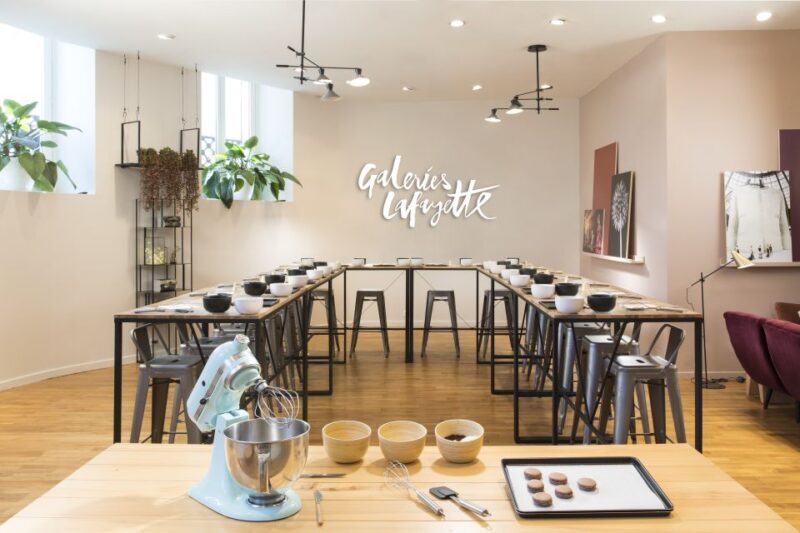
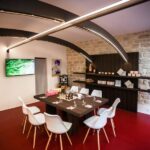
Galeries Lafayette is best known for shopping, but this class offers a more hands-on reason to visit. The workshop takes place in Appartement Lafayette, a quieter space on the third floor of the main La Coupole store. It’s a good way to add a practical food experience to a day in the Opera district.
The location can be harder to find than the store itself. Head to the third floor and look for the area near ReStore and the Concierge, around the corner by Chanel. Give yourself a little extra time to locate the room, rather than assuming the first department-store entrance will point you straight to the class.
The group size ranges from 4 to 18 people. That’s small enough to make the demonstration visible and leave room for questions, though a full group means you may share some of the hands-on work. The class runs for 90 minutes, so it suits a free afternoon or a break between Paris plans without taking up half the day.
You can check availability for your dates here: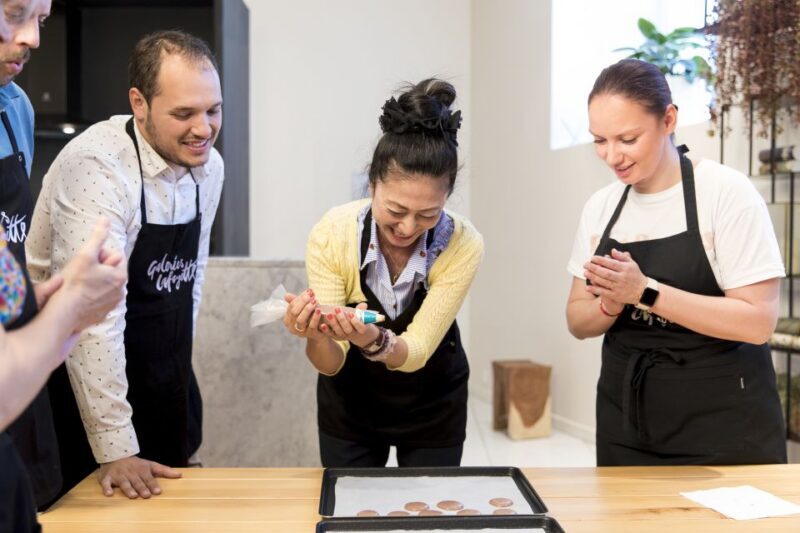
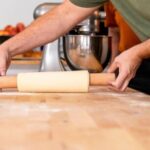
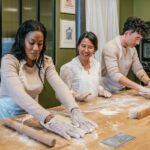
The class breaks macaron making into two main parts: the shells and the ganache. The chef explains how the mixture is prepared and what to watch for, then shows you how to handle the piping bag. Macarons are sensitive to technique, so advice on the process and its common pitfalls is useful even if you already bake.
The exact balance of demonstration and practice can vary with the session and its limited time. Some classes include piping the shell mixture yourself, while others focus on watching the chef prepare it and then practicing with shells that are already baked. You may also see the chef use a mixer rather than making every part of the mixture by hand.
That distinction matters if you expect to make a complete batch from raw ingredients to finished pastries. A full macaron process takes considerably longer than 90 minutes, and the shells need time to bake and cool. Think of this as a compact lesson in the method, with hands-on practice at selected stages, rather than a long workshop where you independently complete every step.
The ingredients are measured in advance, which keeps the class moving and makes the practical work less messy. You can pay attention to the chef’s explanations instead of spending time weighing ingredients. For a beginner, that’s a sensible trade: more time to learn what the stages involve, less time doing kitchen setup.
You might also be interested in these Paris experiences
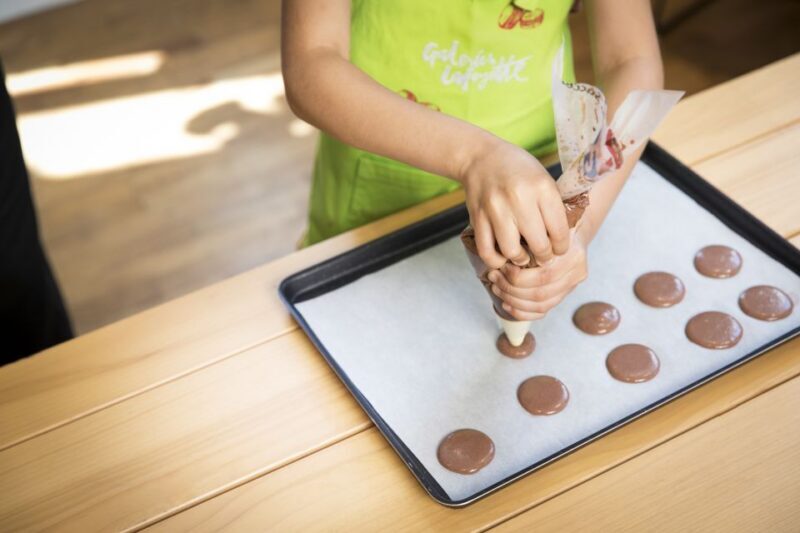
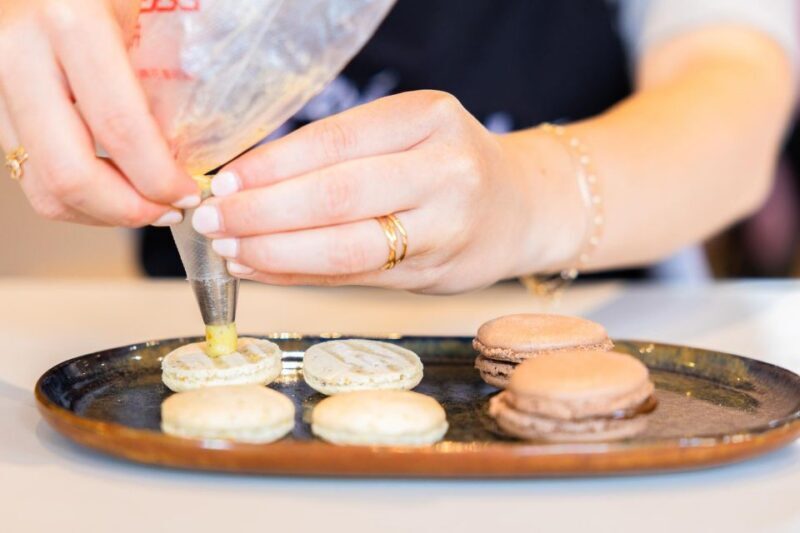
Piping is one of the most useful skills to practice. The chef demonstrates how the mixture goes into the piping bag and how to pipe circles, then you get a chance to try it under supervision. You may not use the shells you pipe in the finished macarons, but the practice gives you a better feel for the task than simply watching a demonstration.
The filling offers another hands-on stage. The class may include making chocolate and pistachio ganache, then piping it onto cooled shells and assembling the macarons. The recipe uses local organic produce, and the flavors include familiar favorites designed to suit a range of tastes.
Because shells must cool before filling, the chef may have prepared finished shells ahead of time. That lets you learn how to make and pipe ganache and assemble the pastries within the class schedule. In some sessions, the shells you piped are baked during class, but they may still be warm at the end and not ready for the filling. If working through the whole process is your main reason for booking, keep this limitation in mind.
You’ll still get a view of the full method, even when the chef handles some steps. The point is to learn why the stages matter, see how they fit together, and try several techniques yourself. It’s an approachable introduction, not a promise that you’ll master every detail in one sitting.
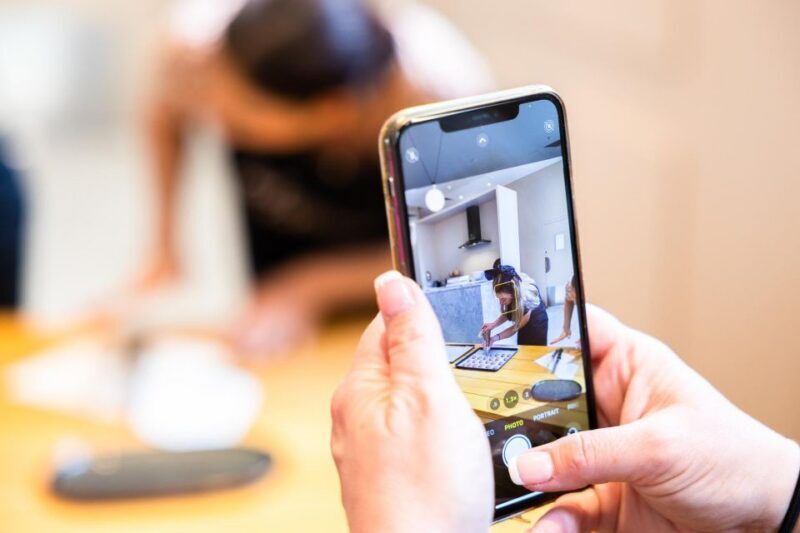
The chef’s explanations are central to the experience. A good instructor can make a fussy recipe feel manageable by showing what to do and pointing out where things can go wrong. The class is designed for beginners as well as people who already enjoy baking, and the instructor can answer questions as you work.
Marie has led some sessions and is described as warm, clear, and patient. The named instructor may vary, so don’t assume she will teach your class. What you can expect from the format is a French pastry chef, practical guidance, and instruction in English or French.
This is not a lecture in pastry history. You get a glimpse of French pastry culture through the work itself: ingredients, technique, and the attention to detail needed to make a small, polished dessert. If you like learning by doing, that’s more valuable than a longer talk with no time at the piping bag.
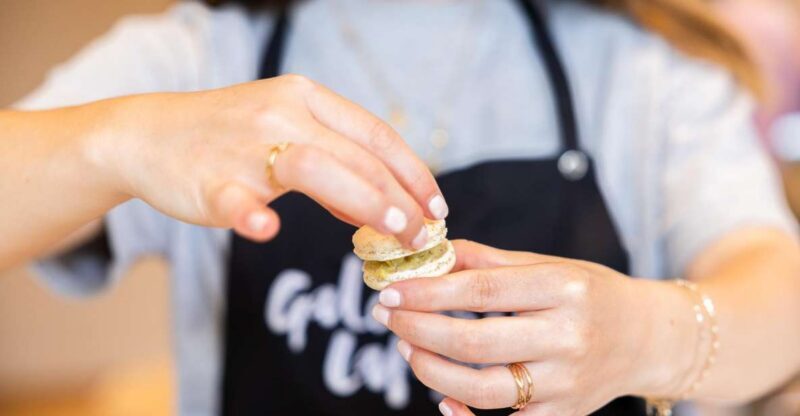
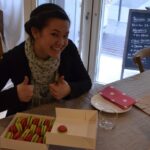
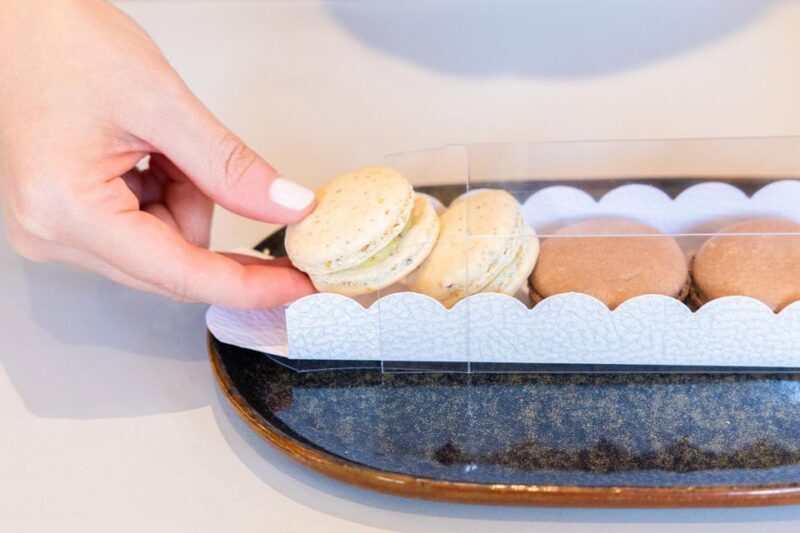
The class includes at least four macarons, which you can eat on the spot or take away. Some sessions provide a small gift box for the pastries. The two recipes give you a useful starting point for trying the method again at home, and they may be supplied in French and English.
Four pastries are a modest take-home, not a full bakery box. The value is in the combination of instruction, practice, tasting, and recipes. If your main aim is to leave with a large quantity of sweets, buying macarons from a pâtisserie will do that more cheaply. If you want a hands-on activity and a recipe you can revisit, the class offers more than a tasting stop.
The home-baking challenge is part of the appeal. Macarons can be temperamental, and one class won’t remove every source of uncertainty. But after seeing the stages and trying to pipe, you’ll have a clearer sense of what to do when you attempt the recipe in your own kitchen.
More Great Tours Nearby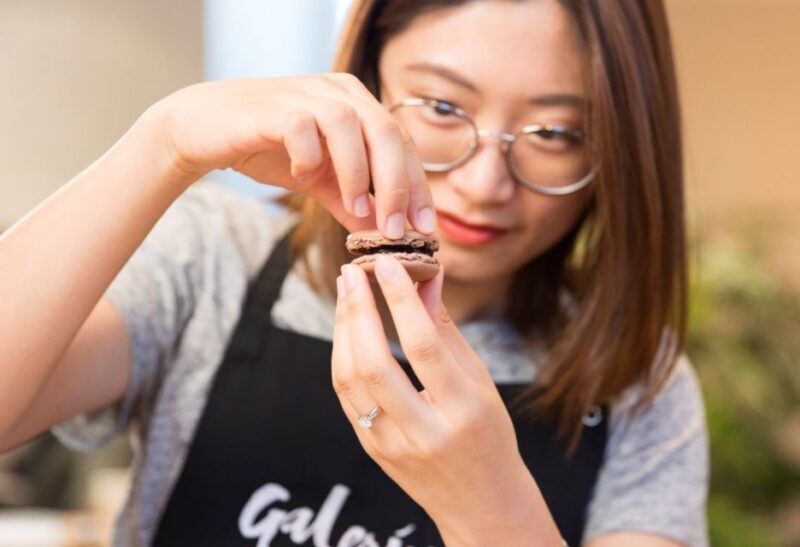
At $69 per person, this class costs more than a simple dessert tasting, but it includes instruction, equipment, ingredients, four macarons, and two recipes. You’re paying for access to a pastry chef and a chance to practice techniques that are hard to pick up from a shop display. For a couple or family interested in cooking, that can make it a worthwhile Paris activity.
The value depends on what you expect to do. If you want to make every shell and filling from scratch and complete the entire process yourself, 90 minutes may feel short. If you’re happy with a demonstration of some stages and practical work on others, the class gives you a compact, guided introduction.
A group of four to 18 also affects the experience. With fewer people, you may have more room to ask questions and get individual attention. At the upper end, expect to share the instructor’s time, though the class is still designed around participation rather than simply watching.
This is a good fit for couples, friends, families with eligible children, and anyone curious about French baking. You don’t need to be an experienced baker. The chef explains the process step by step, and the pre-measured ingredients keep the activity accessible.
The standard class is for participants over 13. Children aged 5 to 12 can join the parent-child option, offered on Wednesdays. Check the available session details before booking if you’re arranging a family visit, as the class language and format can vary by time and day.
The class may be less satisfying for serious bakers who want a full production session, or for anyone with an allergy to the listed ingredients. Egg, dairy, dark chocolate, almonds, and pistachios are identified as allergens. If any of these are a concern, check with the provider before committing.
The overall rating is 4.2 out of 5 from 1,196 ratings, which suggests a generally positive experience but not a perfect fit for everyone. The clearest reason to choose it is the friendly, practical teaching. The clearest reason to hesitate is the limited time for completing every step yourself.
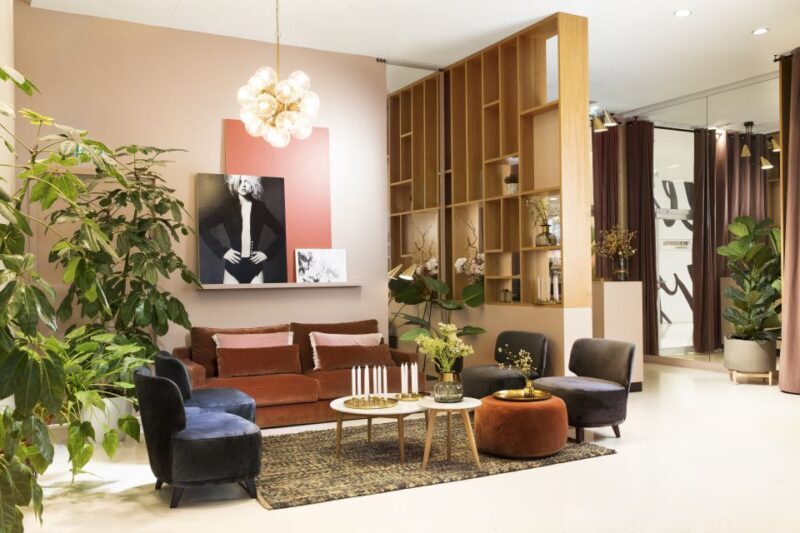
The meeting point is Appartement Lafayette, on the third floor of the main store, La Coupole, next to the ReStore area and Concierge. The department store can feel like a maze, so allow time to find the room and avoid arriving at the last minute.
Classes are offered in English and French. The schedule information states that sessions are in English, except Tuesdays at 5 p.m., which are in French. A French-language parent-child class is also offered on Wednesdays. Check the available starting times and language when selecting a session.
Bring a passport or ID card. You can cancel up to 24 hours in advance for a full refund, and the reserve-now, pay-later option lets you hold a place without paying immediately. If fewer than four people sign up, the activity may be cancelled and a full refund issued.
Book it if you want a friendly, hands-on baking activity with useful instruction, a taste of French pastry technique, and a small edible result to take away. It’s especially well suited to a parent and child, a couple, or friends who want to do something more participatory than shop for sweets.
Skip it if your priority is making a complete batch entirely from scratch, or if you expect a long, advanced pastry course. The short format means some preparation may be done ahead. But if you’re comfortable learning the method through a mix of demonstration and practice, $69 buys a pleasant and practical break in the Opera district, plus recipes to try again at home.
“The activity was wonderful and very interactive. Its kid friendly, family friendly and even great for couples.”
The class lasts 90 minutes.
The listed price is $69 per person.
Meet at Appartement Lafayette on the third floor of the main Galeries Lafayette store, La Coupole, next to the ReStore area and the Concierge.
The class includes the macaron bakery lesson, four macarons, and two recipes. Equipment is provided.
You’ll learn about the shells, ganache, piping, and assembly, but the 90-minute class may not allow time for every participant to complete every step. The chef may prepare shells in advance.
Classes are offered in English and French. The schedule information specifies English sessions except Tuesdays at 5 p.m., which are in French.
Participants must be over 13, except children aged 5 to 12 attending the parent-child option. A French macaron class for parents and children is offered on Wednesdays.
The listed allergens are egg, dairy, dark chocolate, almonds, and pistachios.
If fewer than four participants sign up, the class may be cancelled and a full refund issued.
You can check availability for your dates here: