Physical Address
304 North Cardinal St.
Dorchester Center, MA 02124
Physical Address
304 North Cardinal St.
Dorchester Center, MA 02124

Make matcha in a traditional Higashiyama tearoom, watch a Kyoto tea ceremony, and learn its customs in a welcoming 45-minute session.
A Kyoto tea ceremony is less about drinking a cup of green tea than noticing how each movement, object, and pause has a purpose. In this 45-minute session at a traditional machiya in Higashiyama, you watch a ceremony, learn about the room and its utensils, then make matcha yourself.
I like two things in particular: you get both the quiet demonstration and a chance to whisk your own tea, and the setting puts you within walking distance of major Higashiyama sights. One consideration: the tearoom is upstairs, and sitting on the floor for much of the session may be uncomfortable for some people.
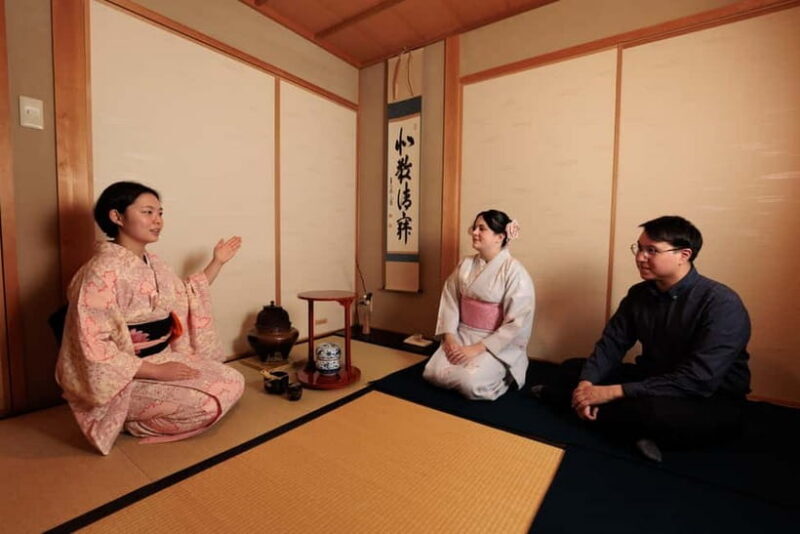
This session begins in a traditional machiya in Higashiyama, a neighborhood where old wooden buildings and popular sightseeing streets share the same lanes. The tearoom gives you a quieter setting than the busy streets outside. That contrast is useful: it helps you focus on the ceremony rather than rushing from one landmark to the next.
The address takes a little care. The teahouse is down an alley branching off Ninenzaka, near the Park Hyatt hotel. Look for the Studio Ghibli store opposite the hotel, then take the alley just to its left. Clear directions and a sign at the alley help, but give yourself time to find the entrance rather than arriving at the last minute.
Once inside, your host introduces matcha and the basic shape of the ceremony. You’ll hear about the utensils, the sequence of preparation, and the room’s decoration. These details are not background decoration: the ceremony asks you to pay attention to the objects and setting as well as the tea. A brief explanation makes the demonstration easier to follow.
The session is offered in English. Hosts such as Ikuko have guided participants through the process, though the person leading your session may vary. The format can be private or in a small group, so the amount of time you have to ask questions may depend on the group arrangement.
Looking for more options in Kyoto? Here are some other experiences worth considering.
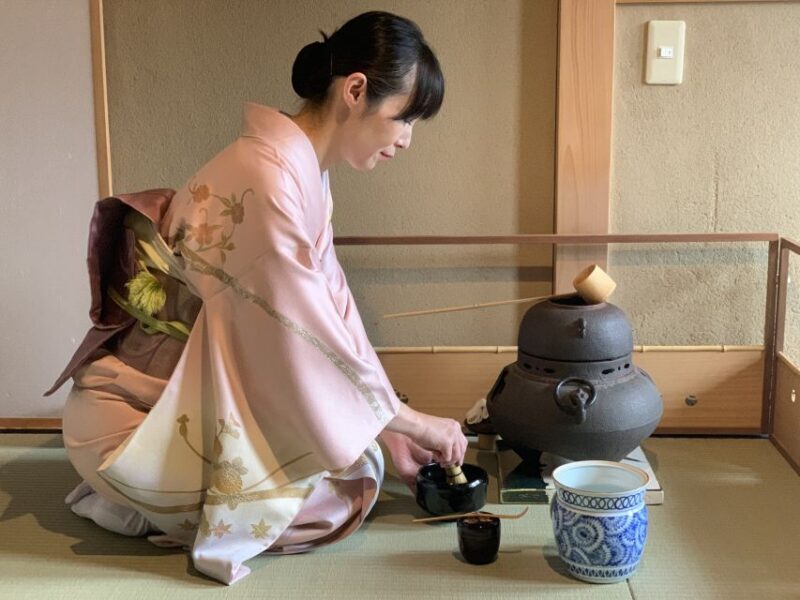
First comes the demonstration. Watch how the host handles the utensils and prepares the matcha, with movements that are measured rather than showy. The ceremony itself is brief, around ten minutes in one account of the session, but it gives you a clear look at the care and order involved.
As you watch, you can ask about the ceremony’s history, the schools of tea, or other aspects of Japanese culture. The host explains the meaning behind the process without turning this short visit into a formal course. That balance is valuable: you get enough context to understand what you’re seeing, while still having time to take part yourself.
You’ll also have a traditional seasonal sweet with the tea. It is a small but welcome part of the ritual, and a good counterpoint to matcha’s strong, grassy, sometimes bitter taste. If this is your first bowl, don’t expect a sweet, milky café drink. Matcha is more direct. The seasonal sweet helps round out the tasting.
Then it’s your turn. With the host’s guidance, you whisk matcha in a bowl and try to make a good foam. You are not expected to learn every formal movement of the ceremony in 45 minutes. Instead, you get a practical introduction to preparing the tea and a better sense of the attention it demands. That is a fair goal for a short cultural activity.
The room itself is part of the lesson. Your host points out how its decoration and layout contribute to the ceremony, and why the utensils matter. You need not arrive with any knowledge of tea to follow along. The explanations are designed for a first visit, and the small group format gives the session room for questions.
This is also where the experience feels more substantial than a quick matcha tasting. You are not simply handed a bowl and told what it is. You see a preparation, hear about the customs around it, and then handle the tea-making tools yourself. In a short time, that combination gives you a more useful introduction to matcha culture than a drink stop alone.
Still, keep expectations in proportion. The session provides a glimpse of the ceremony, not intensive training in the many formal steps. If you’re hoping to study the full practice in depth, 45 minutes will feel brief. If you want a thoughtful, accessible introduction while visiting Kyoto, the compact format works well.
The teahouse is well placed for a day around eastern Kyoto. Kiyomizu-dera, Kodai-ji, Yasaka-jinja, Maruyama Park, Chion-in, and Gion are all a short walk away. You could pair the ceremony with a visit to one or more of these sights, or use it as a calm pause after walking the area’s temple approaches and shopping streets.
Ninenzaka is a popular sightseeing area, so the contrast between the street and the tearoom is part of the appeal. You step away from the flow of people for a seated activity that asks you to slow down. That change of pace may be especially welcome if your Kyoto schedule has become a long chain of temples and photos.
Buses run along Higashi Oji, a major road about ten minutes from the teahouse. If you are heading to the city center and enjoy walking, the route takes about 25 minutes through Gion. The setting makes this a practical activity to add to an eastern Kyoto itinerary, rather than a separate excursion that consumes half a day.
More Great Tours NearbyThe ceremony takes place in upstairs tearooms, so stairs are a factor. Chairs and tables are available for anyone who finds sitting on the floor difficult. You do not have to sit in a formal floor position, and the host can help you get comfortable. Even so, if floor seating is painful for you, mention it when planning your visit.
For visitors with mobility impairments, the Garden Teahouse is wheelchair accessible. If you’re traveling with a baby or a child under three, the experience asks you to book a private ceremony at the Garden Teahouse. Restrooms are available, and an accompanying tour guide can wait in a waiting room with Wi-Fi and refreshments.
You can take still photos without flash, but video recording is not allowed. If you plan to bring an interpreter, book a private ceremony so the interpretation does not interrupt a shared session.
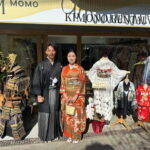
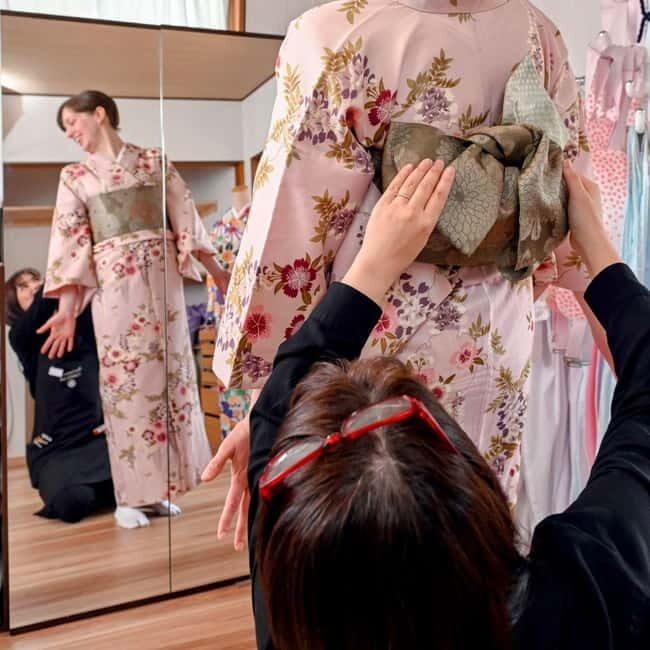
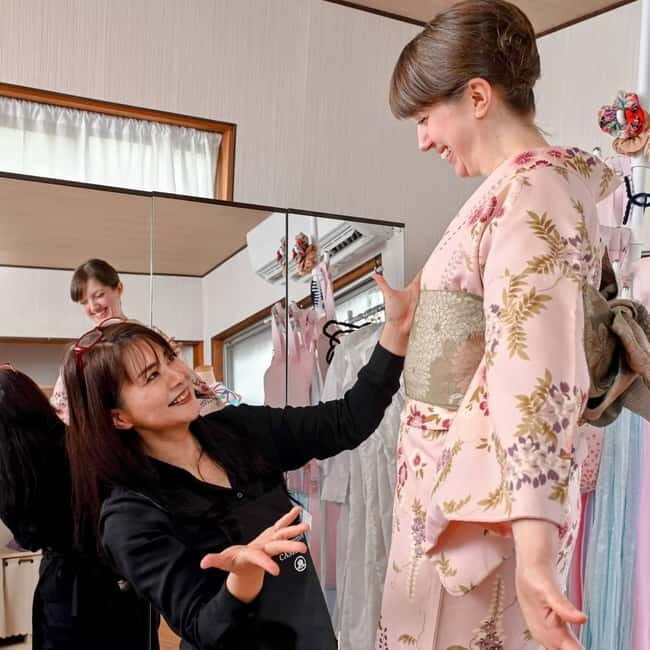
Kimono rental is not included in the $32 price. Rental options are close by, and wearing a kimono can add another layer to the outing if that appeals to you. Plan to arrange it separately and allow enough time before your ceremony. It is an optional extra, not a requirement for taking part.
At $32 per person, this is a short activity, so its value depends on what you want from it. You are paying for an English-speaking host, the ceremony demonstration, matcha, a seasonal sweet, the tea-making utensils, and the chance to prepare your own bowl. You also get a cultural introduction in a traditional setting, not just a cup of tea.
For a first-time visitor, the mix of watching, listening, tasting, and doing makes the price easier to justify. The session also takes little time out of your day and sits near several major sights. If you are already planning to explore Higashiyama, it can add context without requiring a long transfer or a full-day commitment.
The limitations are clear. The experience lasts 45 minutes, the hands-on portion covers basic matcha preparation rather than the complete ceremony, and kimono rental costs extra. If you mainly want a substantial meal or a long workshop, this is not the right use of your time or money. If you want a compact cultural activity that gives you a closer look at a familiar Kyoto tradition, it offers good value.
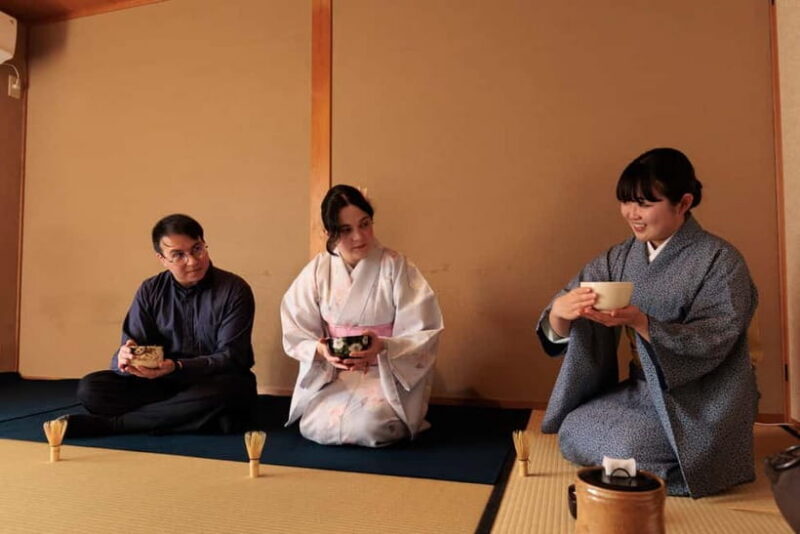
I’d recommend it to first-time visitors who want to understand more than the surface of matcha, and to anyone who would enjoy a calm, guided activity between temple visits. It also suits couples, families with older children, and solo visitors who want an activity with a clear structure and an English-speaking host.
Tea lovers may find the preparation especially satisfying, but you do not need to be a tea enthusiast. The host guides you through the basics, and the sweet and matcha make the lesson tangible. If you are interested in Japanese customs, the discussion of room details and utensils adds context that carries beyond the tea itself.
You may want to skip it if sitting indoors for a short guided session does not appeal, or if you are seeking a full course in formal tea practice. And if mobility needs or a young child affect your plans, check the Garden Teahouse arrangements before booking.
“Loved learning how to make the tea as well as watching a ceremony. We opted for kimonos both male and female and it was a deeper cultural experienc…”
The session lasts 45 minutes.
The price is $32 per person.
Matcha, a traditional seasonal sweet, tea-making utensils, and a personal instructor or host are included.
Yes. English is the stated language for the experience.
Yes. After watching the host’s demonstration, you can whisk your own bowl of matcha with guidance.
Private or small-group options are available.
The teahouse is down an alley off Ninenzaka in Higashiyama. The alley is just left of the Studio Ghibli store opposite the Park Hyatt hotel.
Non-flash still photography is permitted. Video recording is not allowed.
Yes. Chairs and tables are available for people who find floor seating difficult.
The main tearooms are upstairs. The Garden Teahouse is wheelchair accessible for people with mobility impairments.
You can check availability for your dates here: