Physical Address
304 North Cardinal St.
Dorchester Center, MA 02124
Physical Address
304 North Cardinal St.
Dorchester Center, MA 02124

Visit Newgrange, the Boyne Valley, the Battle of the Boyne Centre and Monasterboice on an eight-hour guided trip from Dublin.
Newgrange is older than Stonehenge, and its scale and age give this day trip a rare sense of perspective: you’re stepping into a part of Ireland’s story that reaches back more than 5,000 years. The tour pairs this Neolithic site with later chapters at the Battle of the Boyne and Monasterboice.
I like two things in particular: the guide’s history lessons connect the sites, and the route gives you three very different stops in one day without keeping you away from Dublin all night. One consideration: food is not included, and you may want to bring a snack in case the options at the visitor centre don’t suit you.
The tour begins at the Molly Malone statue on Suffolk Street. Arrive 10 minutes before departure and look for the small white minibus marked HilltopTreks. The drive to the first major stop takes about an hour, which gives your guide a useful window to introduce the area and its past.
The Boyne Valley follows the River Boyne through County Meath and County Louth toward the sea at Drogheda. Its green fields and rolling hills are pleasant in their own right, but the deeper appeal is how many layers of Irish history sit within a fairly compact area.
You’ll spend the day with an English-speaking guide, who may also drive. The names most often associated with the tour include Matt, Kevin and Richard, but you should not expect a particular person on your departure. The strongest guides use the time between stops to explain what you’re about to see, rather than treating the drive as dead time.
That makes a difference on a history-focused trip. You arrive at each place with some context, and the shift from prehistoric tombs to a seventeenth-century battle and medieval religious remains feels less like a checklist. Several visitors have valued this storytelling, especially when guides explain Irish history with care and answer questions without rushing the group.
Looking for more options in Dublin? Here are some other experiences worth considering.
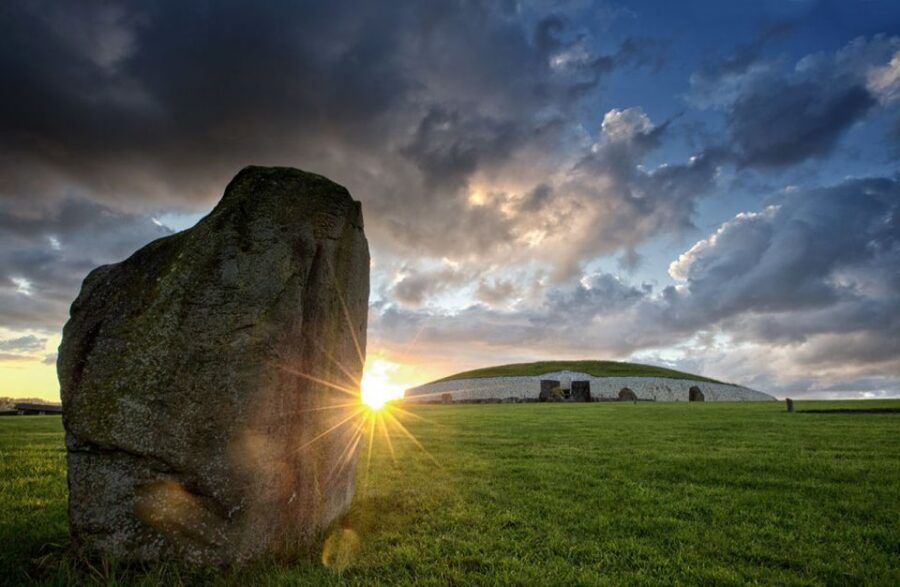
The main event is Newgrange, a monumental passage tomb built more than 5,000 years ago. Its importance is not only architectural. The site held religious, ceremonial and astronomical significance, and its age places it among the most striking prehistoric places in Ireland.
Entry to Newgrange and Bru na Boinne is included, along with skip-the-queue access. That saves you from having to arrange separate tickets and gives the day a more predictable shape. The tour allows about three hours at the Newgrange stop, including the visit and guided sightseeing, so this is not simply a quick roadside photo.
Bru na Boinne is the wider complex associated with the area’s major Neolithic monuments. Knowth is part of the experience when access is available, and the site’s interpretation helps you understand the people who built these tombs and the beliefs they held. If you’re visiting between November 1 and March 1, Knowth is not accessible, making the Bru na Boinne stop shorter.
That seasonal change is worth weighing when you book. The central draw, Newgrange, remains the focus, but you may see less of the wider complex in winter. If you’re especially keen to compare the monuments, check your travel dates before choosing a departure.
The site’s antiquity can be hard to absorb until you’re standing beside the stonework. I like that the visit asks you to think beyond the familiar story of castles and battles: people were shaping this place long before those later periods began. Pay attention to the guide’s explanation of its astronomical role. It gives the monument a purpose beyond its impressive age.
There is also a visitor centre stop within the Newgrange visit, with facilities and food options. Meal quality and choice can be a mixed bag, so I would not plan the day around a particular lunch. Food and drinks are not included in the tour price; bring a snack, especially if you have dietary preferences or want to avoid relying on what is available on site.
After Newgrange, a short drive of about 15 minutes takes you to the Battle of the Boyne Visitor Centre. The stop is scheduled for about an hour in the route, while the day’s description allows roughly an hour to an hour and a half. The exact time on site can vary, so think of this as a substantial visit rather than a leisurely half-day.
The Battle of the Boyne took place in 1690 and was fought between the Catholic King James II and William of Orange, the Protestant king of Holland. It was a contest for the English throne as well as a decisive event in Irish and British history. The centre explains the battle and its wider political consequences, including its place in the history of Northern Ireland.
This is a useful counterweight to Newgrange. The earlier stop takes you into a distant prehistoric world; the visitor centre brings you into conflicts that still shape how the past is remembered. The battle is commemorated by the Loyalist community each year on July 12, a detail that helps explain why it remains more than a military episode in a museum display.
The centre’s interpretation also traces what the victory meant for Irish Celts and their culture. You don’t need to arrive with a specialist grasp of Irish politics to follow the story, but it helps to listen closely. If you’re hoping for an outdoor battlefield walk, note that the stop is described as a visit to the centre, not a guided trek across the grounds.
From the visitor centre, the minibus takes about 20 minutes to reach Monasterboice, a monastic site founded by St Buithe in the fifth century. The stop is listed at 45 minutes, while the site description gives roughly half an hour. Either way, you’ll want to use the time well: this is a compact stop with plenty to examine.
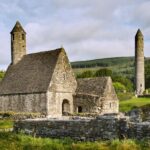
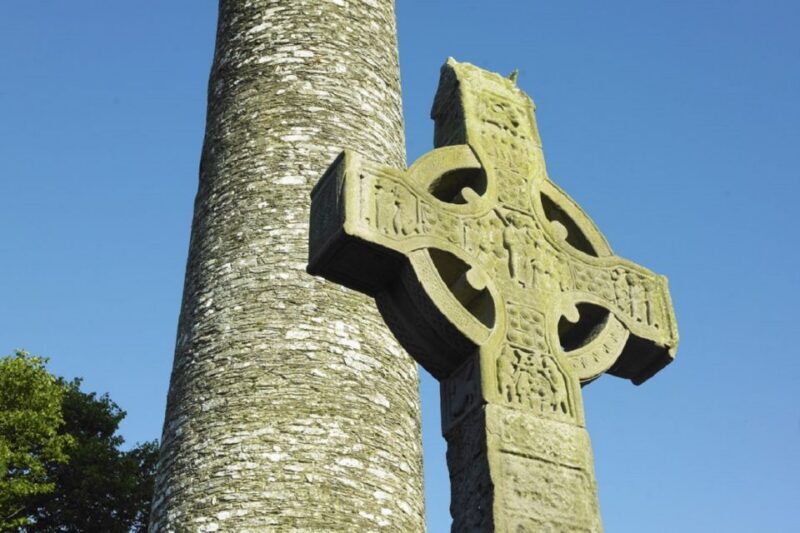
The remains include two churches built in the fourteenth century and a round tower dating to the tenth century. The tower stands about 28 metres tall and remains in good condition. It was likely built shortly after 968 and was damaged by fire in 1098, a timeline that gives this simple-looking structure a long and eventful life.
The site is best known for its three tenth-century high crosses, carved with biblical scenes. Muiredach’s High Cross is the star: at 5.5 metres tall, it is regarded as Ireland’s finest high cross. Its carvings draw on both the Old and New Testaments, turning stone into a visual account of scripture.
The cross is named for the abbot Muiredach mac Domhnaill, who died in 923. Even if you don’t recognize every scene, take time to look closely at the carvings. The scale and detail make this stop more than a quick photograph, though anyone who likes to study historic sites at length may wish for more time.
Monasterboice also gives the day a quieter finish. After the visitor centre’s account of a major battle, the crosses and tower bring your attention back to the religious communities that shaped this part of Ireland. It is a strong final stop because it is distinct from the other two, not simply another version of an ancient monument.
More Great Tours NearbyTransport from Dublin, a guide and the Newgrange and Bru na Boinne entry fees are included in the $96 per-person price. For a full day with several stops, that is a straightforward package: you avoid planning separate connections into the countryside and can use the drive to hear background on the places ahead.
The trip lasts about eight hours and returns to the Molly Malone statue, with arrival expected around 5 p.m. Actual timing can shift, so avoid making a tight evening reservation. Some departures have reached Dublin earlier, but planning for the stated return time gives you room for delays.
The minibus is described as small, but no group size is specified. That can make the outing feel more personal than a large coach tour, though it does not guarantee a particular group atmosphere. Guides have been praised for handling timing well, driving safely and keeping the day comfortable. Matt, Kevin and Richard are among the guides named, but assignments can change.
Expect a full schedule rather than long stretches of unstructured time. Newgrange gets the most attention, while the Battle of the Boyne centre and Monasterboice each have shorter visits. If you prefer to explore every site at your own pace, the guided format may feel brisk. If you want transport and context without having to manage every detail yourself, the structure is a real advantage.
At $96 per person, the value rests on three things: transport from Dublin, a guide for the day and entry to Newgrange and Bru na Boinne. The included access is particularly useful at the trip’s main attraction, where arranging entry separately would add both cost and planning.
The price does not cover food or drinks. Keep that in mind when comparing this tour with a day you organize yourself. Bring some money for a meal or carry a snack, and don’t assume the Newgrange visitor centre will have exactly what you want.
You’re also paying for a route that links sites from very different periods. That saves you from choosing between a prehistoric monument, a major political history centre and an early Christian site. The trade-off is that you have limited time at each place, especially at Monasterboice.
The tour offers free cancellation up to 24 hours before departure and a reserve-now, pay-later option. Those terms can be handy if your plans are not fixed, but the core decision is simpler: are you happy to spend a full day following a guide’s schedule in exchange for reaching these sites without arranging your own transport?
I’d choose this tour if Newgrange is high on your Ireland list and you want more than a visit to one monument. The Battle of the Boyne and Monasterboice add useful contrast, and the guide’s commentary can help connect places that might otherwise seem like unrelated stops.
It suits history-minded visitors, first-time visitors to Ireland and anyone with limited time in Dublin who wants to spend a day outside the city. It may also work well for people who usually avoid tours but still want a clear plan: guides have been praised for a comfortable pace, clear instructions and thoughtful storytelling.
Think twice if you want long, independent visits, dislike fixed schedules or are visiting in winter mainly to see Knowth. Also consider whether you’re content to arrange your own lunch. Wear comfortable shoes and bring an umbrella; the trip runs through outdoor sites, and the weather can change.
I’d book it for the combination of Newgrange, a strong guide-led account of Irish history and the convenience of transport from central Dublin. Just go in knowing the day is structured, food is on you and the winter itinerary has less time at Bru na Boinne.
“Knowth and Newgrange were awesome and the included Monasterboise and Mellifont Abbey ruins were the icing on the cake! Matt was great and very know…”
The tour lasts about eight hours. It starts and ends at the Molly Malone statue in Dublin, with return expected around 5 p.m.
Meet at the Molly Malone statue on Suffolk Street 10 minutes before departure. Look for a small white minibus with the HilltopTreks sign.
The $96 per-person price includes transport from Dublin, a guide, and entry fees with skip-the-queue access to Newgrange and Bru na Boinne.
No. Food and drinks are not included, so bring a snack or plan to buy food during the day.
Knowth is not accessible from November 1 to March 1. During that period, the Bru na Boinne visit is shorter.
The live tour guide speaks English.
Comfortable shoes and an umbrella are recommended.
The stops include Newgrange and Bru na Boinne, the Battle of the Boyne Visitor Centre, and Monasterboice.
It returns to the meeting point by the Molly Malone statue on Suffolk Street.
You can cancel up to 24 hours in advance for a full refund. The activity also offers a reserve-now, pay-later option.
You can check availability for your dates here: