Physical Address
304 North Cardinal St.
Dorchester Center, MA 02124
Physical Address
304 North Cardinal St.
Dorchester Center, MA 02124

Visit Blarney Castle, the Rock of Cashel, and Cahir Castle on a 12-hour Dublin day trip with transport and admissions included.
Blarney Castle’s stone gets the headline, but this 12-hour trip is really a three-part lesson in Ireland’s past: a medieval church complex on a hill, a famous castle and its gardens, then a stronghold built to defend a river crossing. I like that admission is included at all three stops, and that the route takes you beyond Dublin to the Curragh and the Galtee Mountains.
I also like the mix of guided context and time to explore Blarney on your own. Guides including Philip, Jonathan, Coileán, and Derrick have been praised for their stories, warmth, and humor. The trade-off is a long day on the road, and two hours at Blarney may feel short if you want to climb the castle, kiss the stone, and see the gardens at an unhurried pace.
This tour earns its place on a Dublin itinerary by bringing together three sites that feel distinct rather than repetitive. The Rock of Cashel is a striking cluster of medieval buildings set high above the surrounding countryside. Blarney offers a famous stone, a castle interior, and gardens that invite wandering. Cahir, perched on a rocky island in the River Suir, is a reminder that castles were built to hold ground and withstand attack.
You get a guided visit at Cashel and Cahir, while Blarney is self-guided. That change of pace is useful: at the first and last stops, a guide can help you read the buildings and their defenses; at Blarney, you can choose whether the stone, the gardens, or both deserve your time.
The itinerary gives roughly four hours at the sites, with long drives at either end of the day and time on the road between stops. The supplied schedule lists about two and a half hours from Dublin to the first stop and about two hours and 20 minutes for the return leg. That makes this a full-day outing, not a quick escape. You will spend a good part of the day seated, but the air-conditioned bus has USB ports, and some buses have also had USB-C charging outlets.
Looking for more options in Dublin? Here are some other experiences worth considering.
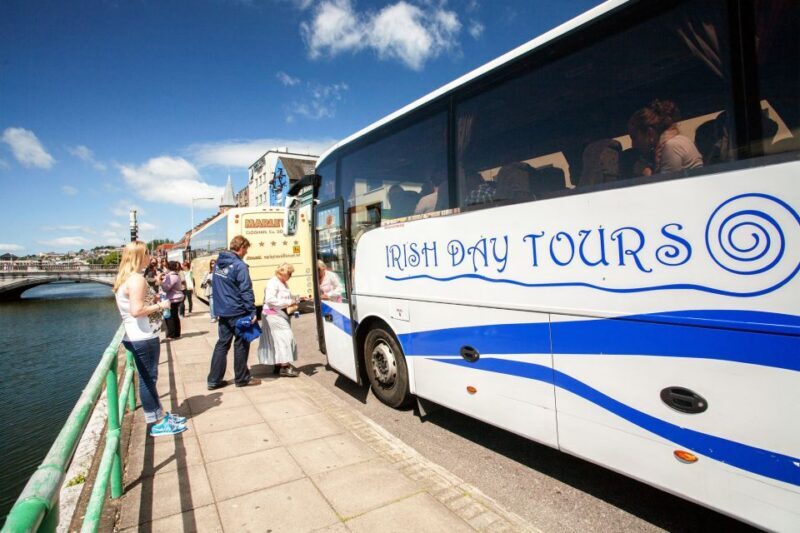
The meeting point is the Molly Malone statue outside the old stone church on Suffolk Street in Dublin 2. Arrive at least 10 minutes before departure, and check your booking for the exact start time. From there, the bus heads southwest, leaving the city behind for the countryside.
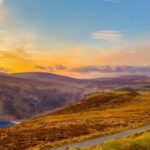
The drive is part of the experience, not just a transfer. The route passes the Curragh in County Kildare, known as the home of the Irish National Stud, and continues toward the Galtee Mountains. The changing view helps set the scene for the historic sites ahead. Still, take a snack and water with you. Lunch is not included, and the schedule leaves little room to linger over a meal.
A driver-guide handles both the road and the commentary. The guide changes by departure, so do not count on a particular person, but names praised on past trips include Philip, Jonathan, Coileán, Derrick, Adrian, Colin, Eden, and Barry. Visitors have valued guides who combine Irish history with personal stories, music, and jokes. That kind of commentary can make a lengthy bus journey feel less like dead time, though the style will naturally vary with the guide.
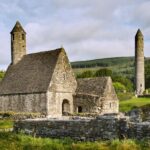
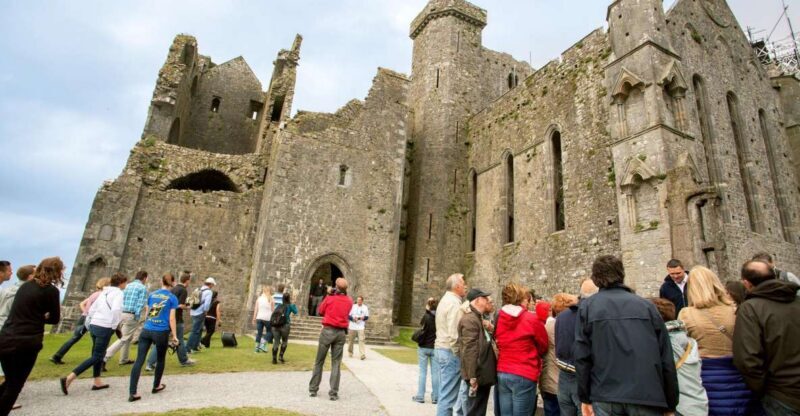
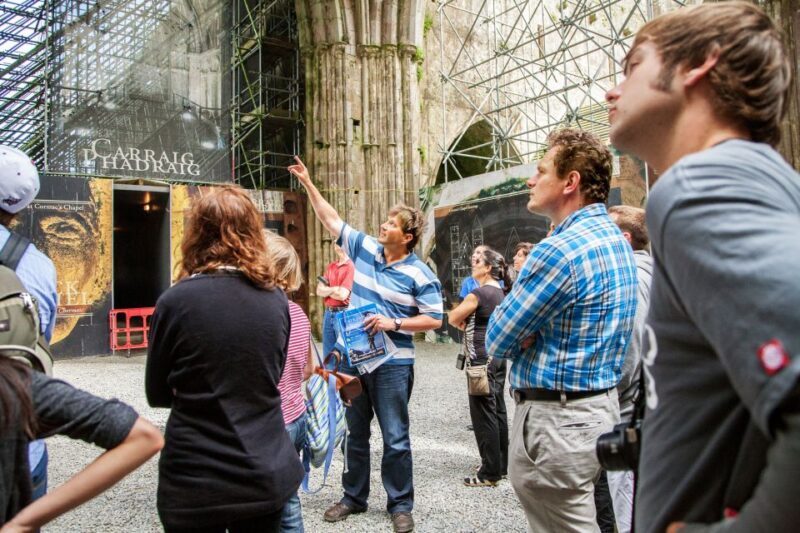
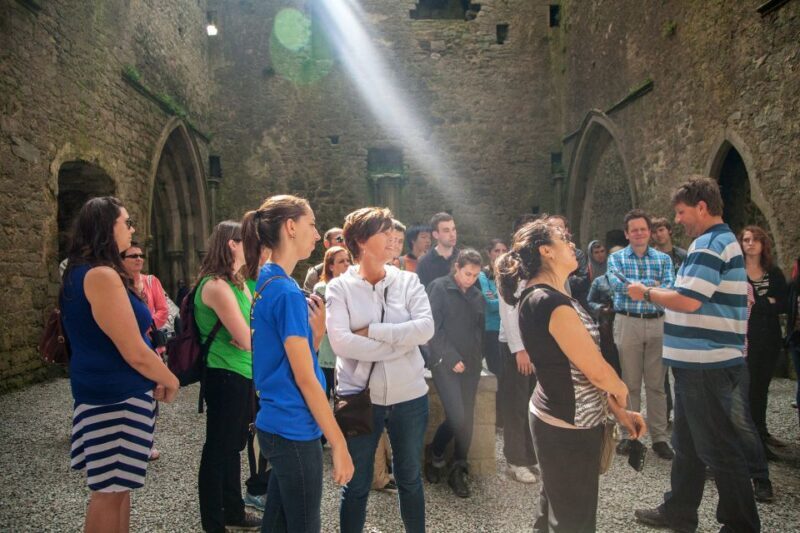
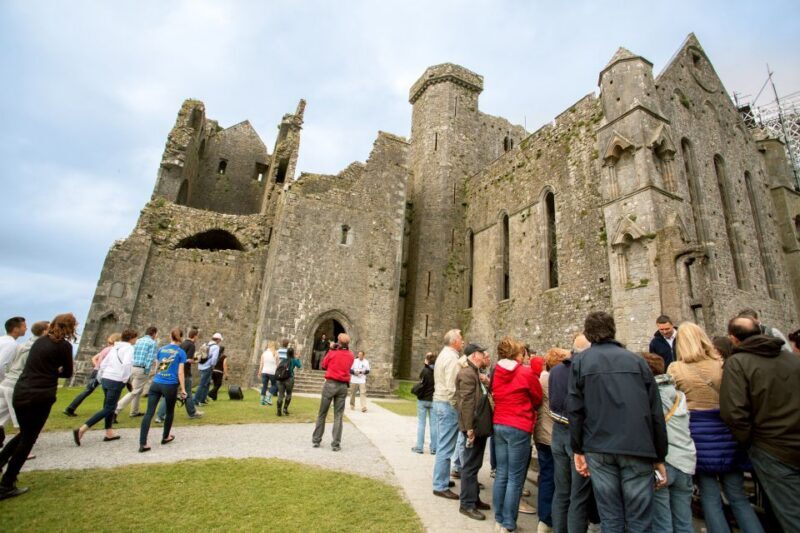
The first stop is the Rock of Cashel, with about an hour for a visit, guided tour, and photos. Its collection of buildings includes a high cross, round tower, abbey, Romanesque chapel, Gothic cathedral, and a 15th-century tower house. Rather than one castle built to a single plan, Cashel is a group of structures from different periods, gathered on a prominent rocky site.
That variety is what makes the stop rewarding. A guide can point out how the different forms and ages of the buildings fit together, helping you see more than a dramatic outline against the sky. The elevated setting also gives you a broad view of the surrounding countryside, so leave a moment for the outlook as well as the stonework.
An hour is enough to get a strong first impression, especially with a guided visit, but it is not a leisurely study of every feature. If you like to linger over architecture or take many photographs, keep an eye on the time. The route has two more major stops, and the bus cannot wait while you reconstruct the whole medieval period from one wall.
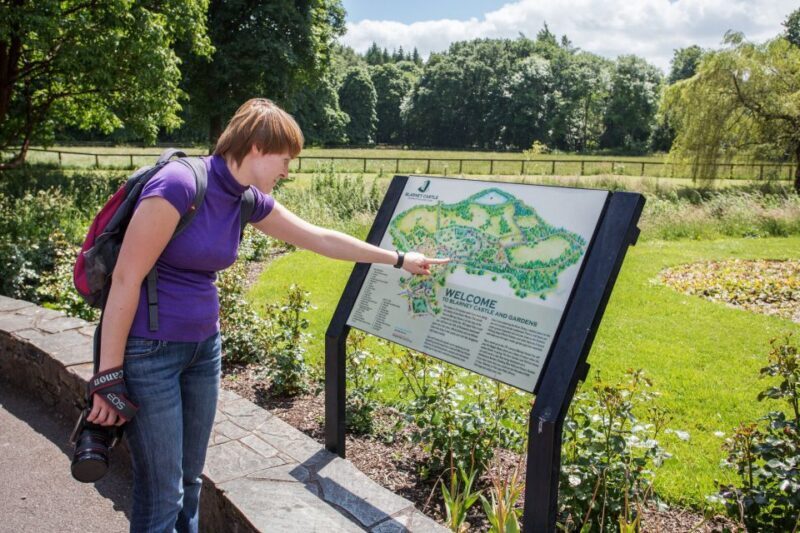
Blarney Castle is the longest stop, with about two hours for a visit, lunch, and self-guided exploration. The famous Blarney Stone is the obvious draw. Tradition says that kissing it gives you the gift of gab. Reaching it involves climbing steep steps, so be prepared for a physical ascent and consider your mobility before booking.
The castle grounds are a major part of the visit, not an optional footnote. The gardens include ancient ferns and a waterfall, while Rock Close offers a more atmospheric walk through a setting associated with local stories and folklore. The Wishing Steps add another feature to seek out. If you want the full experience, you will need to choose your priorities: the stone can take time, and the gardens reward a slower wander.
Two hours can work if you arrive with a plan, but it is the stop most likely to leave you wishing for more time. You may want to climb the castle, kiss the stone, eat, and walk the grounds; doing all of that at a relaxed pace is a tall order. Some people would happily spend a whole day here. If the gardens matter as much to you as the castle, keep lunch simple and use the available food options at Blarney rather than bringing a long sit-down meal into the schedule.
There is no lunch included in the tour price. The practical approach is to pack snacks and water, then decide whether to buy food at Blarney. Comfortable shoes matter here, and rain gear is sensible even if the morning looks clear. A charged phone is useful for photos, but the bus’s USB ports can help keep it powered between stops.
More Great Tours Nearby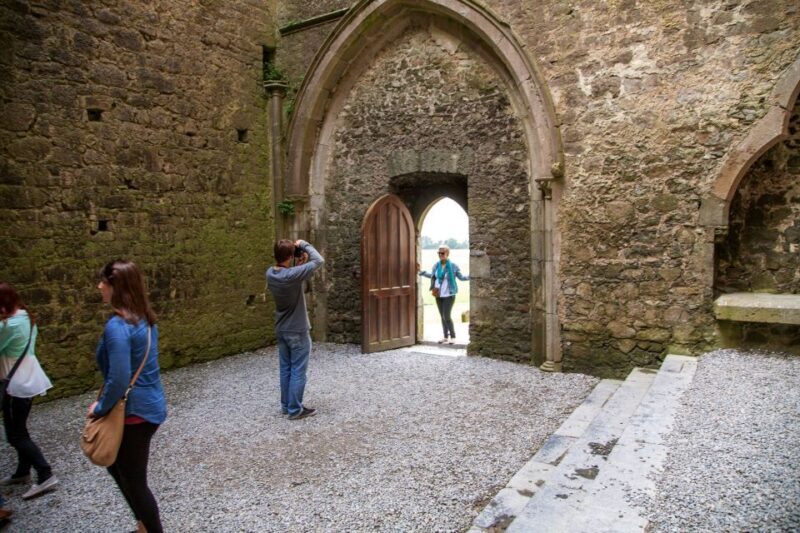
The final major stop is Cahir Castle, with about an hour for a guided visit and photos. Built by the Butler family in the 13th century, it stands on a rocky island in the River Suir. Its position makes the defensive purpose easy to grasp: the river and rock offered natural protection, while the castle’s walls and other features added another layer.
Cahir is one of Ireland’s largest and best-preserved castles, and its defensive architecture is a good counterpoint to Cashel’s religious buildings and Blarney’s gardens and legend. The guided visit and audiovisual presentations help explain how the castle worked and what its walls were designed to resist. Look for details that make its military past tangible, including a cannonball still lodged in a wall.
The hour gives you a structured look rather than unlimited time to roam. That is a reasonable compromise after a full day, especially since the guide can draw attention to features you might otherwise walk past. It also makes this stop a fitting finish: after the views and stories at Cashel and the varied paths at Blarney, Cahir brings the focus back to protection, conflict, and the practical business of holding a stronghold.
At $96 per person, the key value is that transportation and admission to all three sites are included. You do not have to arrange separate tickets or work out how to connect these far-flung stops by public transport. For someone based in Dublin without a car, that convenience matters, and the combination of sites makes a long day more worthwhile than a trip built around just one castle.
The price does not include lunch, so budget for food separately or bring your own snacks. The bus has air conditioning and charging ports, which are small but useful comforts on a day with several hours of driving. Guides have also been praised for pacing the visits and offering plenty of context, though the individual guide and vehicle can vary.
The main cost is not financial but time and energy. You are committing a full day, with an early departure, a lot of sitting, and visits that have fixed time limits. In return, you see three significant sites without needing to plan the transport yourself. If you have only a few days in Ireland and want to see more than Dublin, that is a strong use of one day.
I would consider this tour if you want a broad first look at Ireland’s castles and medieval sites, prefer having transport arranged, or have limited time in the country. The guide-led sections are especially useful if you want context rather than simply taking photos and moving on. Past guides have been singled out for their knowledge of Irish history, humor, personal stories, and, in Derrick’s case, songs.
It is also a good fit if Blarney Castle is high on your list and you want to pair it with two sites that have a different character. Just be realistic about the pace. If Blarney’s gardens are your main reason for going, a longer visit there might suit you better than a three-stop day.
This trip is not a good choice if long bus rides wear you down, if you need wheelchair access, or if steep castle steps are a problem. The tour is also not ideal for anyone who wants to linger at each site without watching the clock. For most people who want a practical, guided day out from Dublin, though, the combination of included admissions, three distinct stops, and a lively guide makes the long day worthwhile.
“driver Philip was tremendous looked after everyone.”
The tour lasts about 12 hours. Check availability for the departure time, and arrive at the meeting point at least 10 minutes before departure.
It starts and ends at the Molly Malone statue outside the old stone church on Suffolk Street, Dublin 2.
The tour visits the Rock of Cashel, Blarney Castle and Gardens, and Cahir Castle, in that order.
Yes. Admission to the Rock of Cashel, Blarney Castle and Gardens, and Cahir Castle is included.
No. Lunch is not included. Bring snacks, or plan to get food during the Blarney stop, where restaurants are available.
Bring comfortable shoes, an umbrella or rain gear, snacks, and a charged smartphone.
No. The tour is not suitable for wheelchair users, and the steep steps at Blarney Castle may be difficult for people with limited mobility.
The live tour guide speaks English.
You can check availability for your dates here: