Physical Address
304 North Cardinal St.
Dorchester Center, MA 02124
Physical Address
304 North Cardinal St.
Dorchester Center, MA 02124

Visit Nara’s deer, Fushimi Inari’s torii gates and Arashiyama’s bamboo forest in one guided day trip from Osaka or Kyoto.
Nara’s deer may be the day’s most cheerful distraction, but this tour also puts you beneath the seemingly endless torii gates of Fushimi Inari and into Arashiyama’s bamboo grove. For $52, you get an air-conditioned ride, a guide and three very different stops in a day that would take more planning by public transport.
I like two things here: the route makes a full day of Kyoto and Nara practical, and the Arashiyama free time lets you choose between temples, food, the bridge or a simple walk among the bamboo. Guides such as Amy, Willa, Christine and Fiona have been named for their clear explanations, careful timing and good humor.
The trade-off is pace. This is a sampler, not a slow visit, and the listed time for Arashiyama varies between about 1.5 and 2.5 hours. If you prefer to linger at one shrine or explore at your own speed, plan a separate visit instead.
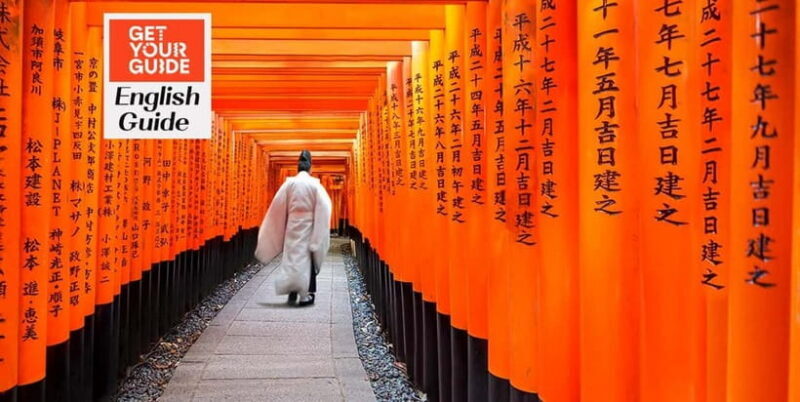
This route has a satisfying change of scene. Nara is open and animal-focused, Fushimi Inari is a shrine visit with a memorable walk, and Arashiyama offers a mix of nature, temples and town sights. You get a broad introduction to the region without spending the day working out train connections and transfers.
The day begins with a morning departure, listed as 8:00 a.m. from Osaka or 9:00 a.m. from Kyoto. It lasts about nine to ten hours, with the return time affected by traffic, weather and other delays. Arrive at the meeting point 10 to 15 minutes early. The bus leaves on time, and a late arrival can mean missing the day’s transport.
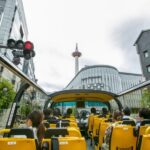
The transportation is part of the appeal. You can rest between stops, and a guide manages the group’s return times. Several guides are named in accounts of past trips, including Amy, Willa, Christine, Fiona, Laura and Frederick. The assigned guide can vary, but clear instructions and timely departures are central to a day with this many stops.
One important detail: the tour has two possible starting points and two possible drop-off points, Harimaya Nippombashi 1-chome in Osaka and Kyoto Station Hachijo Entrance Square Sunken Garden. Tell the operator whether you want to finish in Osaka or Kyoto when you book. If you do not specify, the drop-off defaults to your pick-up point.
Looking for more options in Kyoto? Here are some other experiences worth considering.
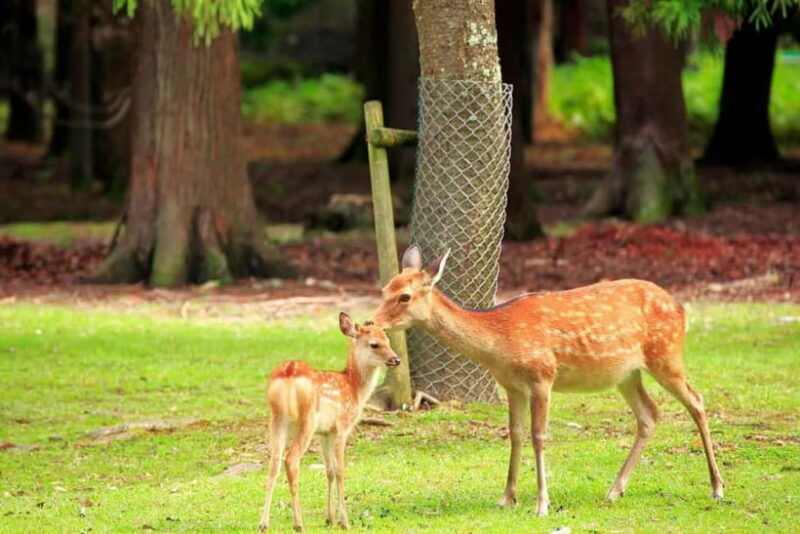
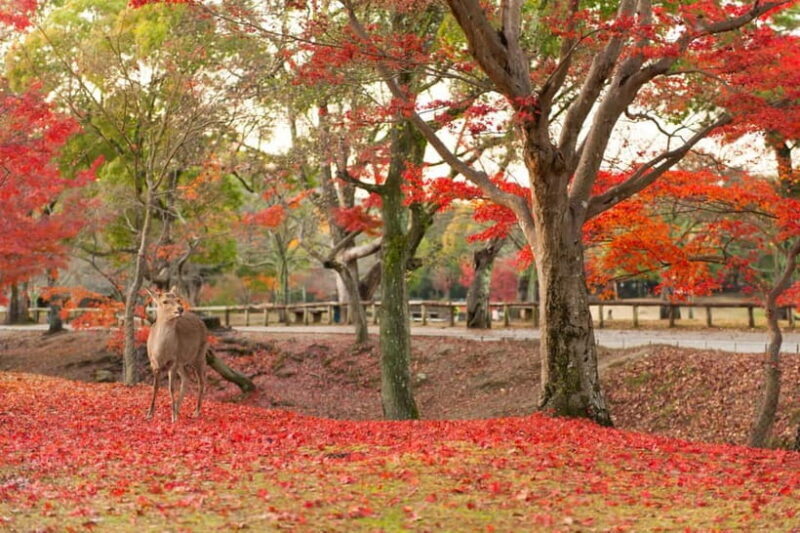
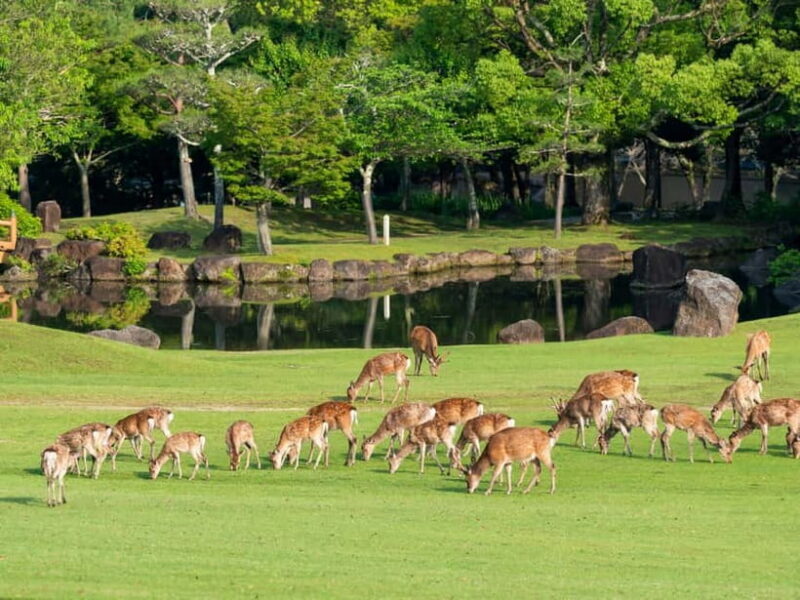
The first stop gives you about an hour at Nara Park. More than 1,000 deer roam freely here and are regarded as divine messengers. The best-known activity is feeding them shika senbei, special crackers sold for the deer. Keep a little room in your schedule for simply watching them: the deer, the park and the mix of visitors make this a lively start to the day.
Feeding deer is fun, but they are still animals, not plush toys with antlers. Follow the local signs and your guide’s instructions, and keep food put away when you are not feeding them. The tour information does not say that deer crackers are included, so budget for them as a possible personal expense.
An hour is enough for a taste of the park and a few photographs, but not a long ramble. If you want a quieter visit or more time to explore Nara beyond the park, this group itinerary will feel brief. For a first trip, though, it gives you a memorable stop without using half the day.

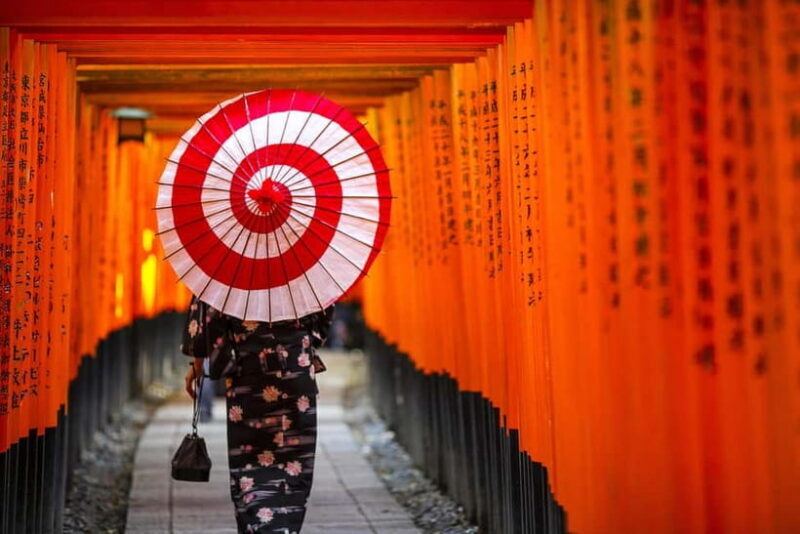
At Fushimi Inari Taisha, you have about 70 minutes to see one of Japan’s most recognizable shrine settings. The shrine honors the god of prosperity, and thousands of vermilion torii gates form a striking route up the mountainside. The repeated gates make a simple walk feel ceremonial, especially as the path shifts between open and enclosed sections.
That time is enough to experience the famous gates and take photos, but it is not a full mountain hike. The shrine route continues uphill, so you will need to choose how far to go and keep an eye on the time. If reaching the upper trails matters to you, this tour may not leave enough room for an extended climb.
The guide’s role is useful here. Before the bus reaches each stop, guides have been praised for explaining what to expect and making return times clear. That preparation helps you use a short visit well, particularly at a shrine where it is easy to keep walking and lose track of the group.
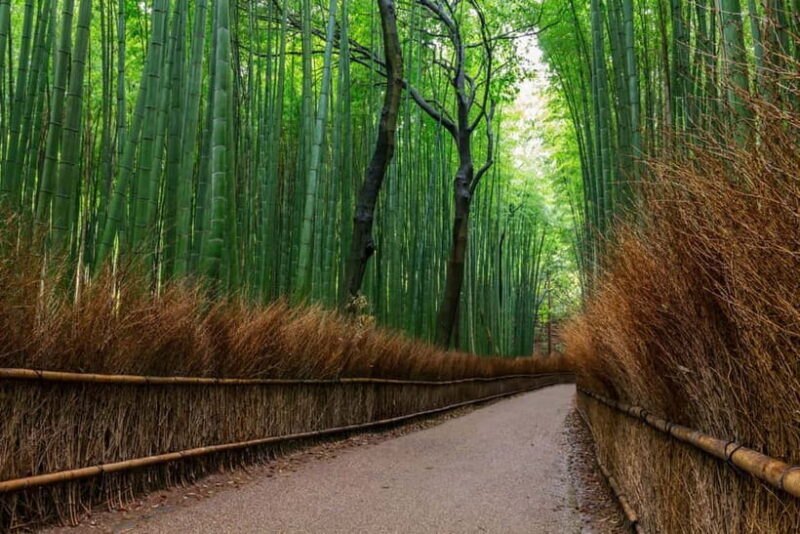
Arashiyama is the longest and most flexible part of the day. The schedule describes a main free-time block of roughly 1.5 hours in one place and about 2.5 hours in another, so check the final timing before booking if time here is your priority. Either way, there is more to see than you can comfortably cover in a short stop. Choose your priorities rather than trying to collect every sight.
The Bamboo Forest is the headline walk. Tall stalks rise along the path, filtering the light and creating the calm, enclosed feeling that draws people here. It is a short stop on the detailed itinerary, listed as about 15 minutes, so expect a taste of the grove rather than a long, solitary stroll. It can be busy, and the path is shared with other visitors.
Nearby, Nonomiya Shrine offers a smaller, quieter counterpoint. It dates to the Heian Period and is associated with love and academic blessings. Its unpainted Kuroki Torii is a distinctive feature. The stop is listed at about 15 minutes, which is enough to look around but not a lengthy shrine visit.
Tenryu-ji Temple is the best choice if you want to add a formal garden to the day. The UNESCO World Heritage site is known for Sogenchi Garden, which frames the surrounding scenery as part of its design. Admission costs extra, so decide whether the garden is worth your time and budget before you arrive. The temple is listed as a self-guided visit, and the tour information does not specify a fixed amount of time inside.
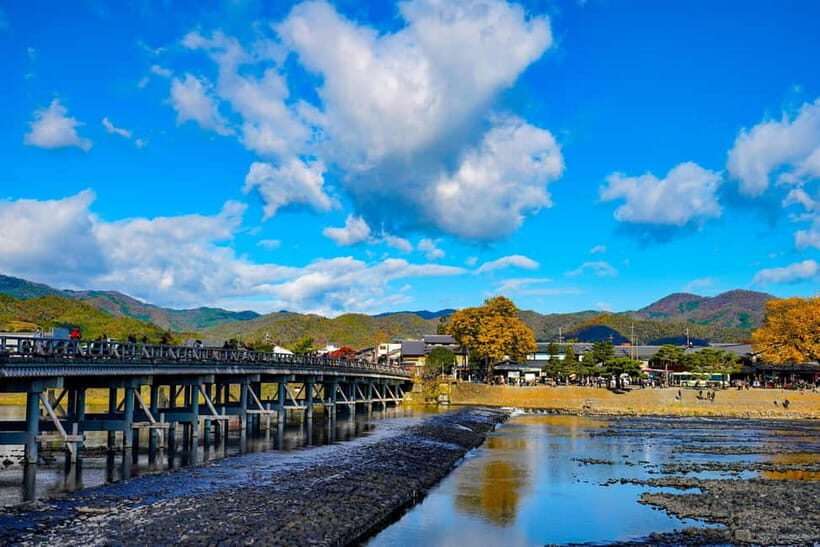
Togetsukyo Bridge gives you a different view of Arashiyama, with the river and surrounding hills as the backdrop. The listed stop is about 15 minutes. You may see rickshaws passing by, but the main attraction is the view and the chance to walk across or near the historic bridge, depending on the time allowed.
At Kimono Forest, hundreds of pillars display Kyoto Kyo-Yuzen textile patterns. It is a quick photo stop, listed at about 15 minutes, and offers a modern, decorative contrast to the shrine and temple visits. If you want to see all these stops, keep moving. If you would rather sit down for a meal or browse the shops, you will need to leave some of the sights for another visit.
Arashiyama also has local food and restaurants, the Rilakkuma Tea House, and a footbath at Arashiyama Station. These are possibilities for your free time, not included activities with reserved time or costs spelled out. The practical choice is to pick one or two priorities before the bus arrives. A temple, the bamboo path and a meal can easily fill your window.
More Great Tours Nearby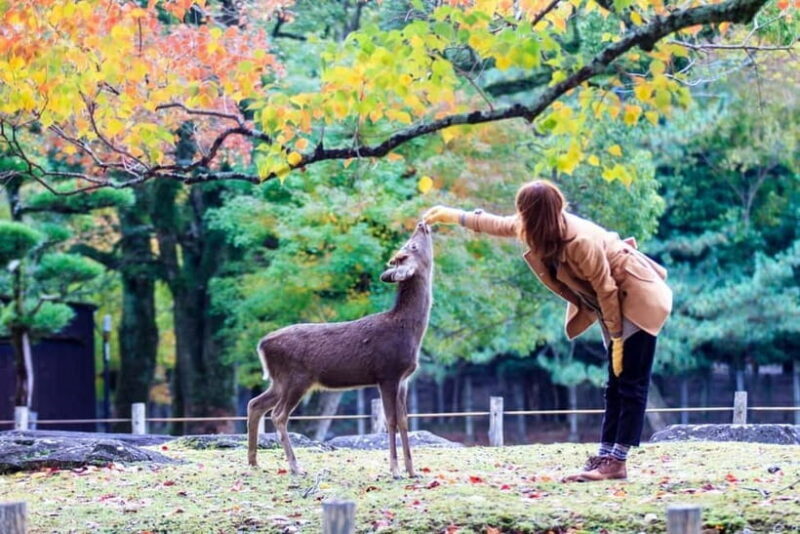
At $52 per person, this is good value if you want transport between the three destinations and a guide to keep the day on track. The price includes an English-speaking guide, an air-conditioned vehicle, taxes, parking, gas and handling charges. Chinese is also listed as a tour language, so check the option you are booking for the language available on your date.
The savings are not just financial. You avoid arranging separate transport between Osaka or Kyoto, Nara, Fushimi Inari and Arashiyama, and you do not have to coordinate each leg yourself. That matters on a full day, especially if you are new to the area or want to see several headline sights with minimal planning.
Bring extra money for food, drinks and personal purchases. Tenryu-ji admission is also an additional cost. The tour does not promise that deer crackers are included, so treat them as an optional expense. The price covers a guided day on the road, not every ticket and snack along the way.
The main strength of this format is organization. A guide keeps the group together, explains each stop and sets a clear return time. The bus gives you a break between walks, and the air-conditioning is a welcome feature on a long day. Past trips have named guides who were praised for being friendly, funny, helpful with recommendations and clear about timings. Those personal touches can make a bus day feel less like a checklist.
Still, the schedule asks you to watch the clock. Nara and Fushimi Inari each get about an hour, and Arashiyama has several sights competing for your time. Some people will find that just right; others will want to stay longer at the bamboo grove, temple or shrine. The best way to enjoy the day is to accept that you are getting an introduction, not an exhaustive visit.
Wear comfortable shoes and clothes, and bring water and an umbrella. You will be walking at several stops, and the tour is not suitable for wheelchair users or people with mobility impairments. Smoking is not allowed on the activity. If you are travelling with an infant, stroller or large luggage, say so when booking so the operator can plan suitable transport. Japanese traffic rules count babies as passengers.
People who are pregnant or aged 70 and above are asked to sign a travel waiver on arrival. The itinerary may change because of weather, traffic or other unforeseen conditions, and the return time can shift. Free cancellation is available up to 24 hours before the activity, and reserve-now-pay-later is offered.
Book this tour if you are based in Osaka or Kyoto and want to see Nara Park, Fushimi Inari and Arashiyama in one day without arranging the transport yourself. It suits first-time visitors, people with limited time and anyone who values a guide, a comfortable bus and a plan that keeps moving. The repeated praise for guide communication and organization speaks to the parts of a busy day that matter most.
Skip it if you want long, unhurried visits, plan to hike far up the Fushimi Inari route or hope to spend most of a day in Arashiyama. In that case, choose one or two places and explore them independently. If you do book, decide your Arashiyama priorities in advance, wear good walking shoes and confirm your drop-off city. That small bit of planning will help this fast-moving day feel like a pleasure, not a race.
“Everything was well planned and energetic, the guide was an absolute sweetheart!”
The tour lasts about nine to ten hours. Weather, traffic and other unforeseen factors can affect the schedule and return time.
The listed price is $52 per person. Food, drinks, personal expenses and Tenryu-ji admission are not included.
Yes. The two listed starting points are Harimaya Nippombashi 1-chome in Osaka and Kyoto Station Hachijo Entrance Square Sunken Garden.
The tour lists drop-off points in both Osaka and Kyoto. Tell the operator your preferred drop-off when booking. If you do not, the drop-off defaults to your pick-up point.
English and Chinese are listed as tour languages. The included guide is described as English-speaking.
The schedule gives about one hour at Nara Park and 70 minutes at Fushimi Inari. Arashiyama is described with different time blocks, about 1.5 to 2.5 hours, so confirm the schedule for your selected tour.
No. Tenryu-ji is listed as an extra-fee visit.
Bring comfortable shoes, comfortable clothes, water and an umbrella.
No. It is listed as unsuitable for wheelchair users and people with mobility impairments.
You can cancel up to 24 hours in advance for a full refund. Reserve-now-pay-later is also available.
You can check availability for your dates here: