Physical Address
304 North Cardinal St.
Dorchester Center, MA 02124
Physical Address
304 North Cardinal St.
Dorchester Center, MA 02124

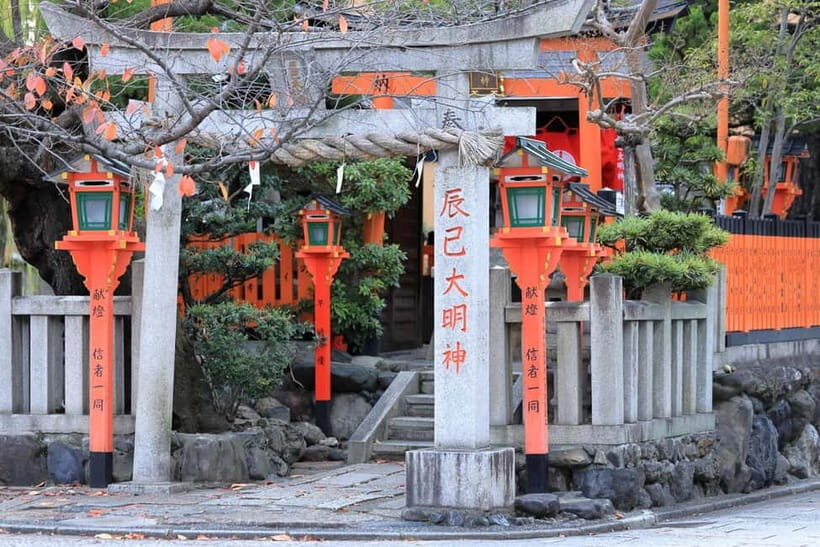
Explore Gion with an English-speaking guide, learn about geiko culture, see historic temples, and get useful Kyoto tips on this two-hour walk.
Gion is more than a photogenic row of wooden facades. On this two-hour walk, you get context for the district’s teahouses, geiko and maiko traditions, and the temples tucked among its lanes. You may spot a geiko or maiko heading to an appointment, but the walk is worthwhile even if you don’t.
I like the mix of cultural explanation and street-level detail: guides put the area’s customs and architecture into context, then point out places you might pass by alone. I also like that the walk ends with useful restaurant, bar, and sightseeing suggestions, so it can help shape the rest of your Kyoto visit.
The main consideration is that this is a walking tour, not a seated lesson. Expect to be outdoors for two hours, and don’t plan around a guaranteed geiko sighting. In winter, cold weather can make the walk feel long; wear comfortable shoes and dress for the forecast.
Gion can be easy to admire and hard to read. A teahouse may look like a handsome old building, but its private role and traditions are not always obvious from the street. A guide helps connect what you see with how the district works, including the place of geiko and maiko in Kyoto’s present-day culture.
The distinction matters. The tour describes the women you may see as geiko and maiko, the Kyoto terms commonly used for geisha and apprentices. You’ll hear about the origins of their traditions, their work, and the setting in which they meet clients. That context helps you approach the subject as a living culture, rather than treating a person in formal dress as a photo opportunity.
The guides appear to be a major part of the experience. Michael is named particularly often, while Anton, Yuri, and Ikuro are also mentioned. Names aside, the details that matter most are the explanations: participants describe guides who make the history clear, answer questions, and keep the walk friendly and engaging. One person even found the guide’s wider knowledge of Japanese history useful well beyond the geisha topic.
I’d treat this as a cultural introduction, not a formal lecture. You can ask questions as you go, and the walking format gives the stories a real setting: a street, a temple entrance, or a row of old houses. If you already know the basics of geiko culture, you may find the overview familiar, but the architecture and local context still add value.
If you enjoy exploring Kyoto on foot, these walking tours might also suit your style
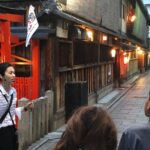
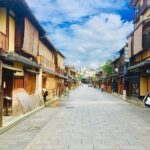
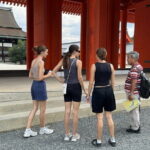
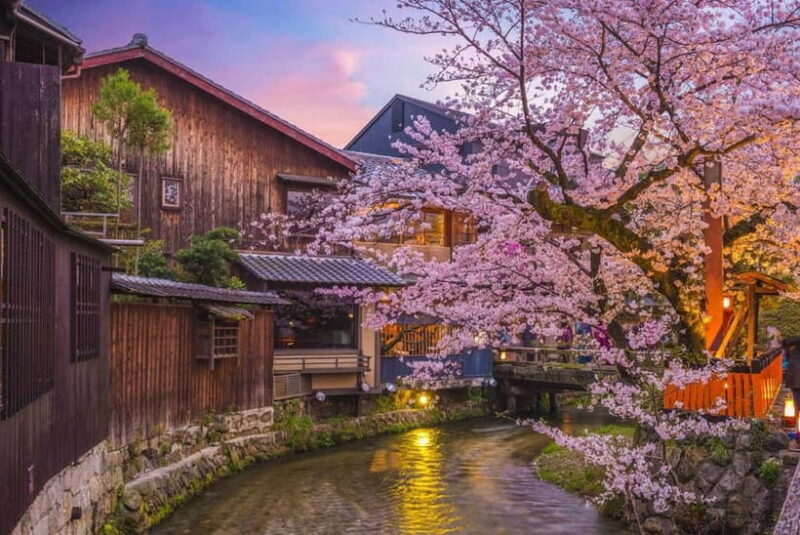
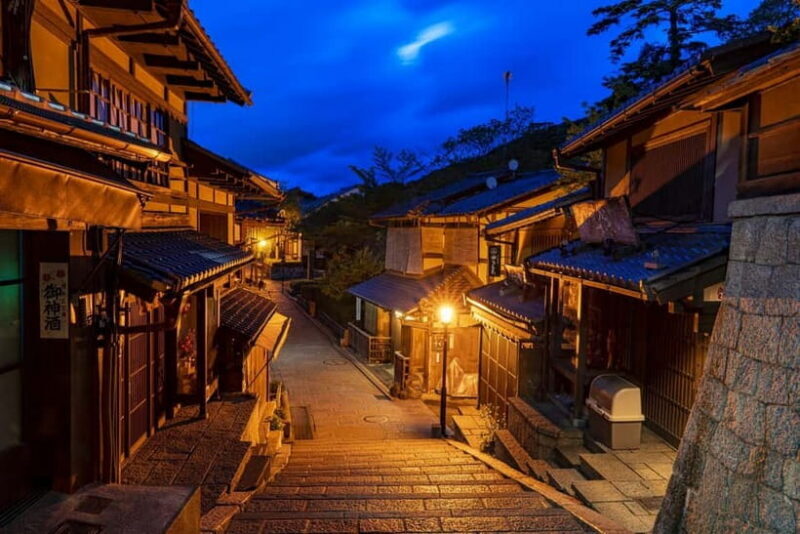
The walk begins near Hotel Alza Kyoto, at the side street marked by red parasols and marble seats. Check the exact meeting point before setting out, and arrive with enough time to find it. Once the group is together, the tour heads into the historic district, where narrow lanes, cobblestones, and traditional facades create a strong sense of place.
You’ll see beautifully preserved machiya townhouses and learn how these wooden buildings fit into the neighborhood. Their appeal is not only visual. They help explain Gion’s older streetscape and the way businesses and homes have occupied the district over time. The guide can point out details you might otherwise walk past while looking for a famous landmark.
Teahouses are another key part of the story. These are not ordinary cafés where you can casually step inside; the tour describes them as exclusive venues for private performances, historically associated with wealthy clients. That distinction gives the buildings a different meaning. You can appreciate their role from the public street, while recognizing that their interiors and performances are not generally part of this walk.
Gion’s small shops add a lighter note. The route includes quaint boutique-style souvenir shops, and the guide can help you understand how the district balances visitor-facing businesses with its traditional character. Don’t expect a long shopping stop during a two-hour walk, but note the places you’d like to revisit afterward.
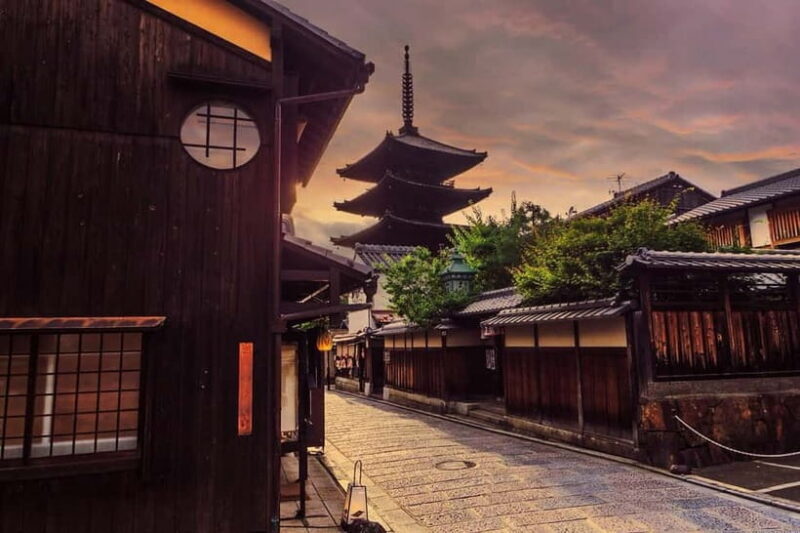
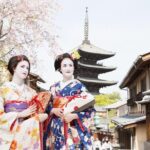
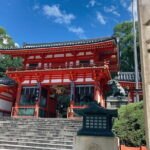
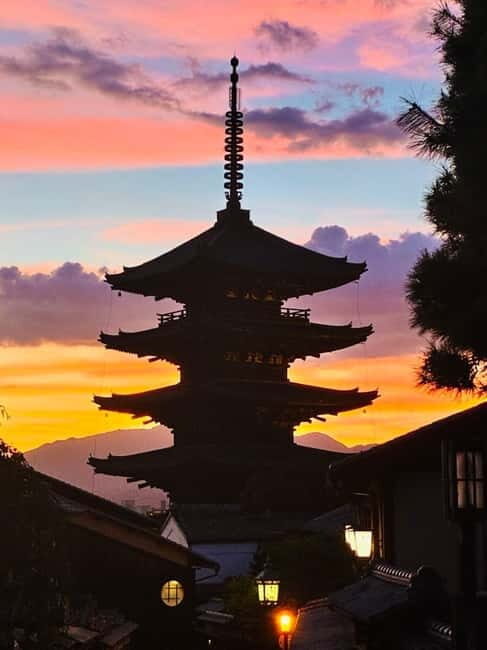
Hõkan Ji Pagoda is one of the route’s most recognizable sights and a striking symbol of Kyoto’s past. It makes a natural photo stop, especially against the surrounding old streets. The tour also points out photo locations away from the most obvious viewpoints, which can help you take in the area without simply following the busiest camera crowd.
Kennin-ji offers a shift in pace. Described as Kyoto’s oldest Zen temple, it brings the walk into a quieter, more contemplative setting. The contrast is useful: Gion’s narrow lanes show the district as a place of work and daily movement, while a temple visit gives you a chance to consider the religious and cultural traditions that shaped the city.
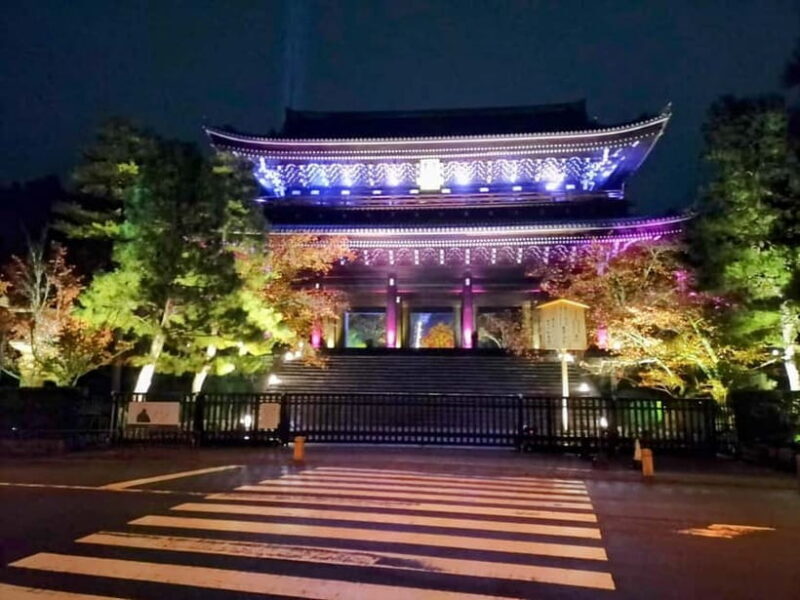
Chion-in is another substantial stop, and an easy one to underestimate if you know only the most famous Kyoto sights. The temple grounds are described as extensive and picturesque, and the site is home to three designated national treasures. That makes it more than a quick backdrop for a photo. Give the guide’s explanation your attention, since the significance of a temple is not always clear from its exterior alone.
The exact order and time spent at each place can depend on the route and pace. The point is not to tick off every temple in Kyoto. This walk connects a handful of important landmarks with the surrounding neighborhood, giving you a useful overview without turning the afternoon into a checklist.
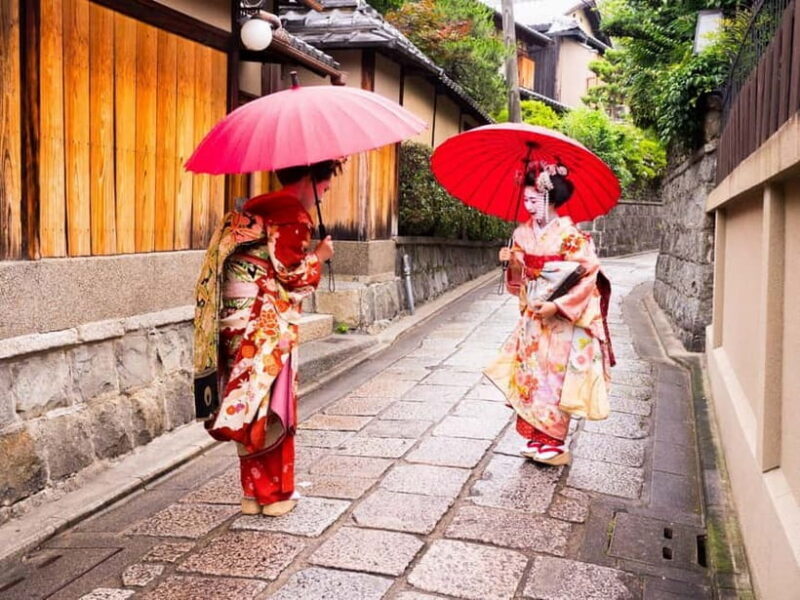
Seeing a geiko or maiko on the way to an appointment can be a memorable moment. Some tour participants have seen one; others have not. Their appearances are tied to their schedules, so no tour can promise a sighting. I’d book for the guided explanation and the district itself, and think of a sighting as a welcome bonus.
If you do see someone, be respectful. The tour is about understanding Gion, not interrupting people as they go about their work. Keep your attention on the guide’s advice and follow local expectations around photography and public behavior. The supplied details do not promise a particular photo opportunity or permission to photograph anyone.
Timing can shape the atmosphere. One participant found a 6 p.m. start especially pleasant because the streets were quiet, while another suggested an earlier afternoon departure to make better use of daylight. As evening falls, lanterns lend Gion a different mood, but winter days get dark early. Check the available start times against the season and decide whether you value daylight or the evening atmosphere more.
More Great Tours Nearby
Two hours is enough to get a strong first impression of Gion, but it is not an especially long time for a district with several major sights. The tour is best understood as an introduction: you’ll walk, listen, see important streets and landmarks, and leave with a clearer sense of where to go next.
Pace matters because the experience is outdoors and includes several stops. One participant described the walk as comfortable and unhurried, while another noted that it involved plenty of walking. Those points can both be true: a manageable pace can still cover ground. If you have mobility limitations or find long periods on foot difficult, this is probably not the right activity. The tour is listed as unsuitable for people with mobility impairments and wheelchair users.
Weather is worth planning for. A winter participant found the cold uncomfortable and wished for a warm-up stop. No indoor break is promised, so bring layers in cold weather and water when it’s warm. Comfortable shoes are a sensible choice on cobbled streets and temple grounds.
The tour’s recommendations at the end are part of its practical value. Guides share personal suggestions for restaurants, bars, shops, and other places to visit in Kyoto and elsewhere in Japan. One useful tip is to leave time after the walk: the surrounding area has places to eat and shop, along with activities such as pottery or perfume-making. These suggestions are not included activities, but they can help you plan an enjoyable follow-up.
If you can, schedule the tour early in your Kyoto stay. The history and local pointers can help you make better choices during the rest of your visit. It also gives you a chance to ask where to go next while the neighborhood is still in front of you.
At $25 per person, this is a reasonably priced way to get two hours of guided time in one of Kyoto’s most storied neighborhoods. The value is less about how many landmarks you can count and more about what you learn as you move between them. A guide can explain why a quiet-looking street matters, what a teahouse does, and how geiko culture fits into the city today.
The price also makes sense if you want a gentle start to Kyoto rather than a full-day tour. You get an English-speaking guide, a walk through Gion, visits to several notable places, and recommendations you can use later. The tour does not include a geiko performance, food, or guaranteed access inside teahouses, so don’t compare it with a ticketed cultural show.
Group size is not specified. Some participants found themselves in a very small group, even effectively on a private tour, but that is not something you should assume when booking. The guides’ willingness to answer questions seems to be a consistent strength, and a small group can make that easier, but your experience will depend on the day’s turnout.
This tour suits first-time visitors who want to understand Gion rather than just photograph it. It’s also a good fit for anyone curious about geiko and maiko traditions, Kyoto’s architecture, or the history behind the district’s temples. Families can consider it too: a participant specifically praised the guide’s rapport with children, though the walking and outdoor format still call for comfortable footwear and weather-appropriate clothing.
It may be less suitable if you want a guaranteed geiko sighting, an indoor activity, a detailed temple tour, or a route tailored to mobility needs. If you already have a packed Kyoto schedule, remember that the walk is an overview, not a substitute for spending more time at the temples and streets that catch your interest.
The tour is run by WooW Travel 株式会社, is conducted in English, and lasts two hours. You can reserve without paying immediately, and cancel up to 24 hours ahead for a full refund. Starting times vary, so check availability before settling on a time of day.
I’d book this walk if you want a compact, engaging introduction to Gion with a local guide who can explain the area beyond its famous images. The best reasons are the cultural context, the mix of streets and temples, and the practical advice you can put to use afterward. At $25, that’s a useful return for two hours.
Skip it if your main goal is a guaranteed encounter or photo with a geiko, or if walking outdoors for two hours is not comfortable for you. For everyone else, choose a start time that fits the light and weather, wear good shoes, and leave a little room afterward for dinner or a wander through the places your guide recommends.
“Michael was superb, knowledgeable and very friendly. Highly recommended!”
The tour lasts two hours.
The listed price is $25 per person.
Yes. The live guide speaks English.
Meet at the side street next to Hotel Alza Kyoto. Look for the red parasols with marble seats underneath.
No. The tour offers a chance to see geiko or maiko on their way to appointments, but sightings are not guaranteed.
The tour features Hõkan Ji Pagoda, Kennin-ji Temple, and Chion-in Temple, along with streets, townhouses, and teahouses in Gion.
Yes. You can cancel up to 24 hours in advance for a full refund.
No. The activity is listed as unsuitable for wheelchair users and people with mobility impairments.
You can check availability for your dates here: