Physical Address
304 North Cardinal St.
Dorchester Center, MA 02124
Physical Address
304 North Cardinal St.
Dorchester Center, MA 02124

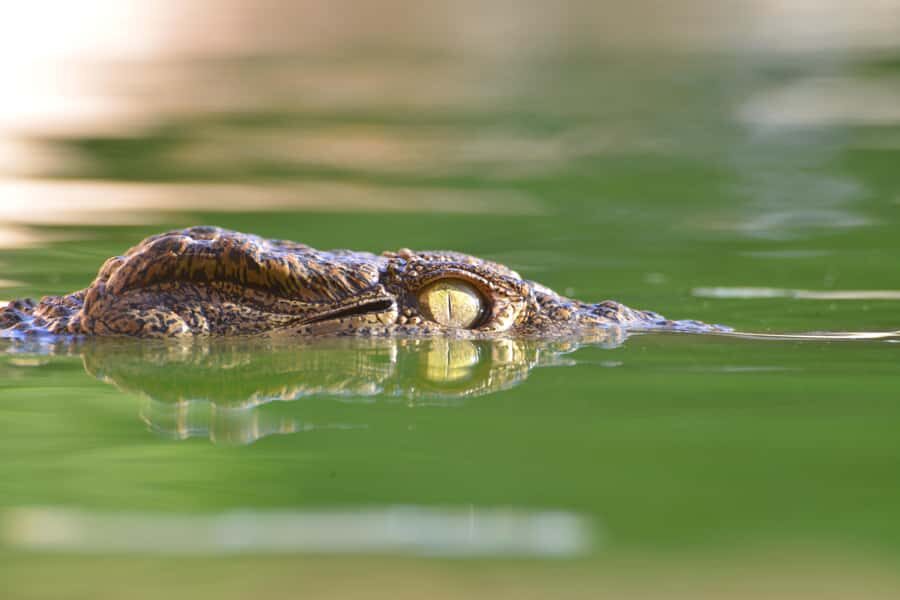
See 300 Nile crocodiles, reptiles and five botanical gardens at Crocoparc Agadir, with prepaid entry and optional activities for families.
At Crocoparc Agadir, the main event is hard to miss: more than 300 Nile crocodiles, including rare desert crocodiles, live among gardens built for easy viewing. I like that this is not just a reptile enclosure, and that a prepaid ticket lets you skip the ticket line while leaving you free to explore at your own pace.
I also like the five distinct garden areas and the mix of animals, from giant tortoises and iguanas to snakes and marmosets. One consideration: Crocoparc is outside central Agadir, and transportation is not included, so factor in the trip and any optional extras when you work out the cost.
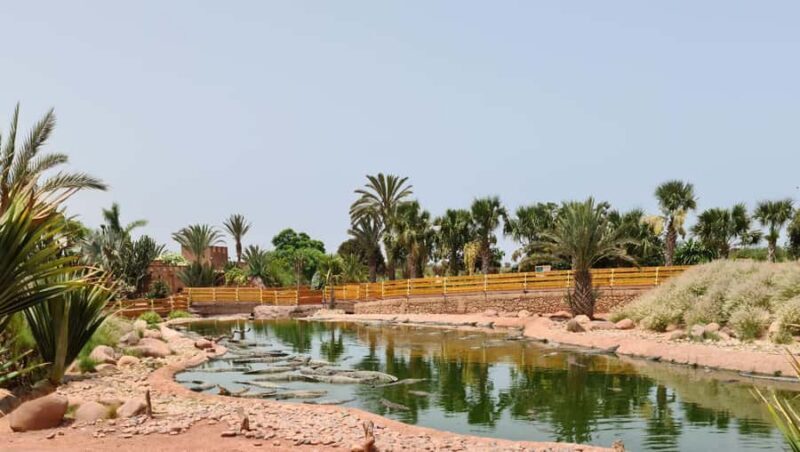
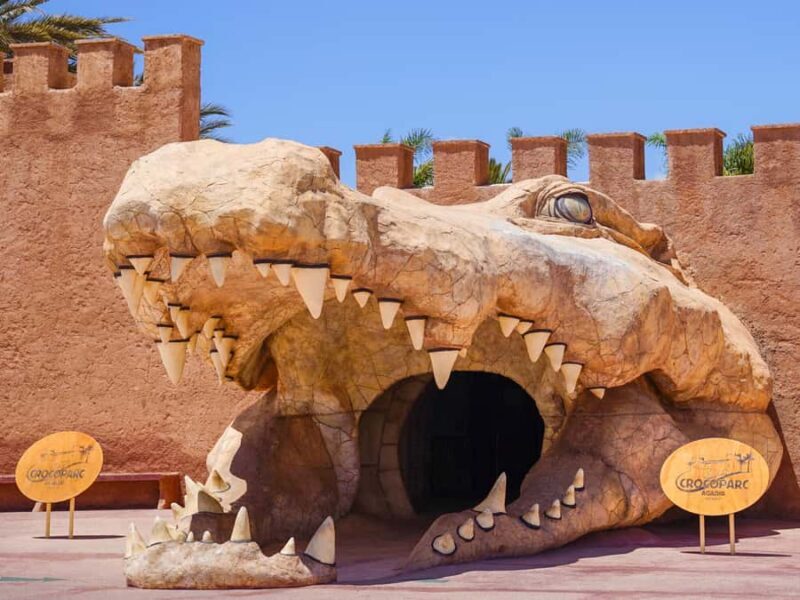
Crocoparc is in the Souss-Massa area, outside Agadir’s central hotel district. On arrival, you enter through the open mouth of a giant crocodile sculpture. It is a playful welcome, and a clear sign that this is a purpose-built attraction rather than a conventional city zoo.
The ticket is for admission, not a guided excursion. Once inside, you follow paths and footbridges through the grounds, stopping at viewing points as you go. That self-guided format suits people who like to set their own pace, linger over a favourite animal or keep children moving without having to stay with a group.
The prepaid ticket lets you bypass the ticket line. That can be useful at busy times, though it may not save much time if you arrive when there is no queue. Some visitors have found the ticket price the same online as at the entrance, so the clearest benefit is convenience and having entry arranged ahead of time, rather than a guaranteed discount.
Looking for more options in Agadir? Here are some other experiences worth considering.
Crocoparc’s large Nile crocodile population gives the visit its focus. You can watch the animals at close range from the park’s paths and viewing areas, often with a clear view of them lying still in the sun. Their stillness is part of the spectacle: crocodiles can look like sculptures until one shifts, slips into the water or opens its jaws.
The number matters. With more than 300 crocodiles, you are not relying on a single lucky sighting. You can see the animals in different parts of the park and compare their size and behaviour. For children, that makes the visit more immediate than a display of signs alone. For adults, the scale of the collection gives the park a clear purpose.
The park also has rare desert crocodiles. Their local context adds interest: this species has been extinct in Morocco since the 1970s. You can see them at Crocoparc, but the information provided does not explain their conservation programme or the details of how they came to be there. Treat this as a chance to see a species associated with Morocco’s past, rather than assuming the park is a reintroduction project.
Crocodile feeding is another draw. The animals are fed chicken, and feeding has been described as happening around midday. It can be exciting to see the crocodiles respond, but expectations matter: feeding a large group may not produce a dramatic moment every time. If it is a priority, check the schedule locally and plan your arrival around the confirmed time.
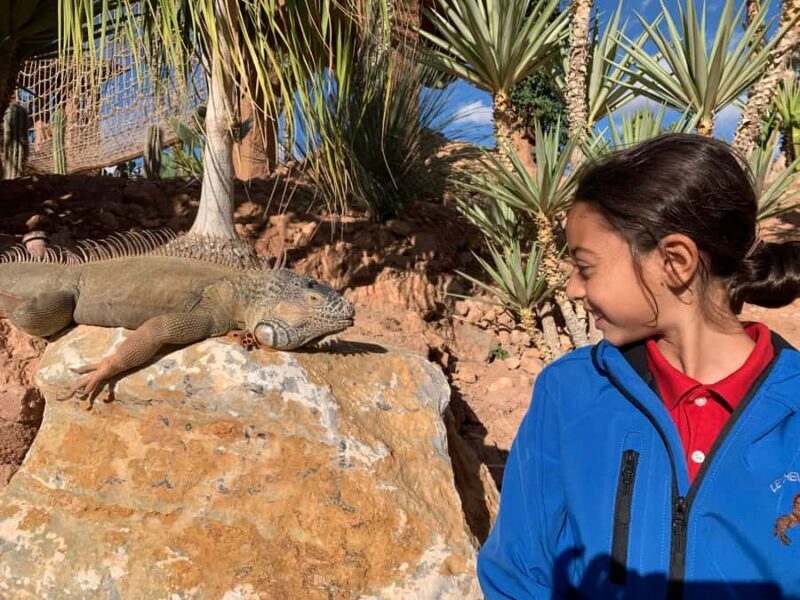
The park’s collection extends well beyond crocodiles. You may see iguanas, sulcata tortoises, pythons, anacondas, frogs and marmosets. The iguanas have proved a particular highlight for many, while the giant tortoises offer a slower counterpoint to the reptiles that tend to command more attention.
Snakes are displayed in enclosures, while other animals have their own areas. The variety helps make the visit work for mixed-age groups: a child who has had enough of watching crocodiles can move on to tortoises, monkeys or the play areas. It also makes Crocoparc more than a single-species stop, even though crocodiles remain the reason to come.
Don’t expect a huge zoo with a long list of unrelated animals. The appeal is the concentrated reptile collection, its gardens and the ease of walking between them. Depending on how much time you spend at each enclosure, you can make a fairly brisk circuit or pause for a more leisurely visit.

Crocoparc divides its botanical gardens into five areas. The blue garden features plants with blue tones; the exotic square includes large ficus; the aquatic garden has water lilies and other oxygenating plants; the tropical area includes giant bamboo; and the cactus garden displays succulents.
The variety gives you something to notice between animal enclosures. If you enjoy plants, the gardens can be as rewarding as the reptiles, especially when you see species that are usually grown indoors elsewhere thriving outside in Morocco. Even if you are not a keen gardener, the different sections break up the route and provide attractive settings for photographs.
Paths and footbridges connect the areas and provide viewing opportunities. The park is described as easy to get around, and it is wheelchair accessible. If you are visiting with small children, expect to move at their pace: between animals, garden stops and play breaks, a short circuit can turn into a longer outing.
More Great Tours Nearby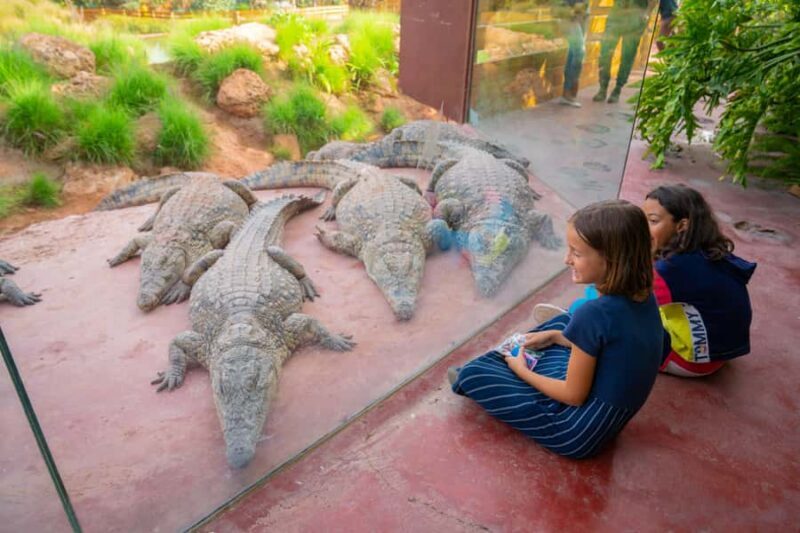
An optional zip line crosses over the main crocodile enclosure. It costs 50 Moroccan dirhams per person, according to the available visitor information, and adds an extra thrill that is separate from the entry ticket. It is a good choice if someone in your group wants a more active experience, but it is not necessary to enjoy the park.
There is also a lily-pad activity for an additional 20 dirhams per person, as well as an escape room. These extras can make the visit more engaging for children or teens, but they change the final cost. Check prices and availability when you arrive, as the entry ticket does not cover them.
Families also have small playgrounds where children can take a break from the animal enclosures. A café or restaurant sells food and drinks, and there is a shop for souvenirs and snacks. The restaurant has been described as reasonably priced, while the gift shop may feel expensive by comparison. If you want to keep spending predictable, decide in advance whether the add-ons and souvenirs are part of your plan.
A visit can take about an hour if you keep moving, but two to three hours gives you room for the animals, gardens, a meal or a play break. Families who stop often may want longer. The ticket is valid for one month, and entry time is flexible, so you are not tied to a particular tour departure.
Transport is not included. You need to make your own way to the park, and taxis from central Agadir are an option. One reported return taxi fare was about 300 dirhams, but fares can vary, so agree on the price and return arrangements before setting off. Public bus access has also been noted, though the details of the route are not provided here. Check the current service and stop before relying on it.
Organized outings may limit your time at the park. If you want to wait for feeding, take a relaxed garden walk or let children use the play areas, independent transport gives you more control. That flexibility may be worth more than the ticket-line skip itself.
At about $11 per person, the entry ticket is good value if you want a distinctive half-day outing and plan to spend time with both the animals and the gardens. It includes access to the park, not transport, meals or paid activities, so the overall cost depends on how you get there and what extras you choose.
The park’s size is a plus for many visitors: it is manageable rather than sprawling, and you can see a lot without committing an entire day. But if you expect a large zoo or hours of elaborate shows, you may find it smaller than expected. The ticket line may also be short when you arrive, which makes the skip-the-line feature less useful at quiet times.
You can cancel up to 24 hours in advance for a full refund, and the reserve-now, pay-later option keeps payment flexible. Entry is listed as wheelchair accessible. Food and drinks are available to buy on site, but are not included in the ticket.
Book Crocoparc if you want a family-friendly outing with close views of crocodiles, a useful mix of other reptiles and animals, and gardens that make the walk more than a series of enclosures. It is especially appealing if you can arrange your own transport and have two or three hours to explore without rushing.
Think twice if you are looking for a guided tour, transport from your hotel or a full day of attractions included in one price. The ticket gives you entry and freedom to set your own pace. For most visitors who are curious about crocodiles, that is a straightforward and worthwhile deal.
“Great hour spent here on our day trip to Agadir. Amazing seeing all the crocs!”
Crocoparc has more than 300 Nile crocodiles, as well as rare desert crocodiles.
The park also has snakes, including pythons and anacondas, sulcata tortoises, iguanas, marmosets and frogs.
The ticket includes entry to Agadir Crocoparc and lets you skip the ticket line. It does not include transportation, food, drinks or paid activities.
You can see the park in about an hour if you move quickly. Allowing two to three hours gives you time for the animals, gardens and breaks.
The ticket offers flexible entry time and is valid for one month. Check availability when booking.
Crocodile feeding has been described as taking place around midday. The schedule is not specified here, so confirm the time locally before planning your visit around it.
The zip line costs 50 Moroccan dirhams per person, according to the available information. It is an optional extra, not part of the entry ticket.
Yes. Food and drinks are available to buy at the park’s café or restaurant.
Yes, the activity information lists the park as wheelchair accessible.
No. You need to make your own way to Crocoparc. Taxis and bus access have been reported, but transportation is not included in the ticket.
You can check availability for your dates here: