Physical Address
304 North Cardinal St.
Dorchester Center, MA 02124
Physical Address
304 North Cardinal St.
Dorchester Center, MA 02124

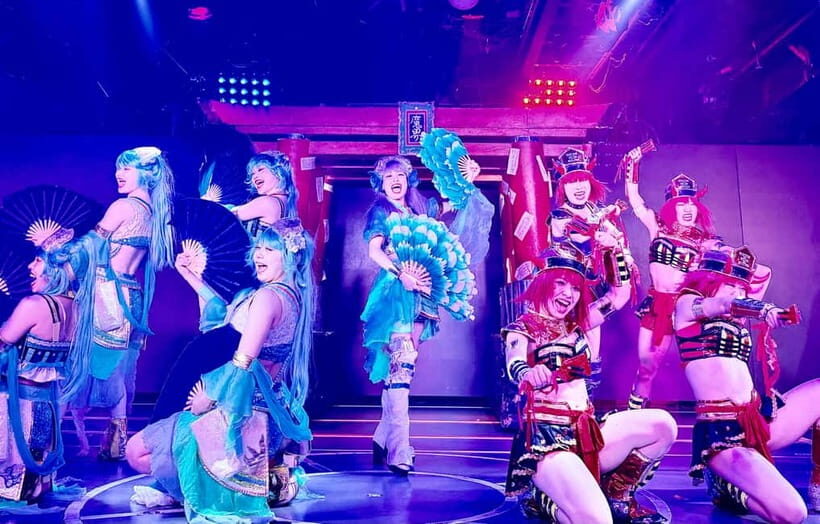
See samurai, ninjas, dancers, and neon spectacle in Shinjuku. This 90-minute Tokyo show includes two drinks, with practical tips on sound, food, and entry.
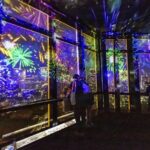
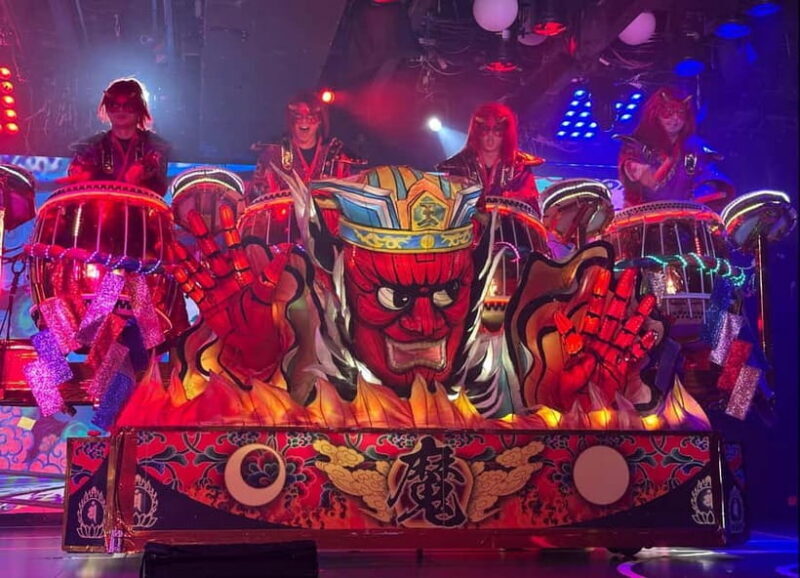
Tokyo’s Samurai Restaurant is less a quiet dinner spot than a full-volume stage show, with samurai, ninjas, dancers, neon light, and music packed into a spectacularly decorated room. I like the close-up, high-energy performances and the chance to see a deliberately over-the-top side of Tokyo that a temple visit will not provide.
I also like that the ticket includes two drinks, with alcoholic and non-alcoholic choices, and that the show lasts about 90 minutes according to the activity details. The main caution is the sound: it can be extremely loud, and short pauses between acts may interrupt the momentum. Bring earplugs if you are sensitive to noise, and plan to eat elsewhere if you want more than snack-type food.
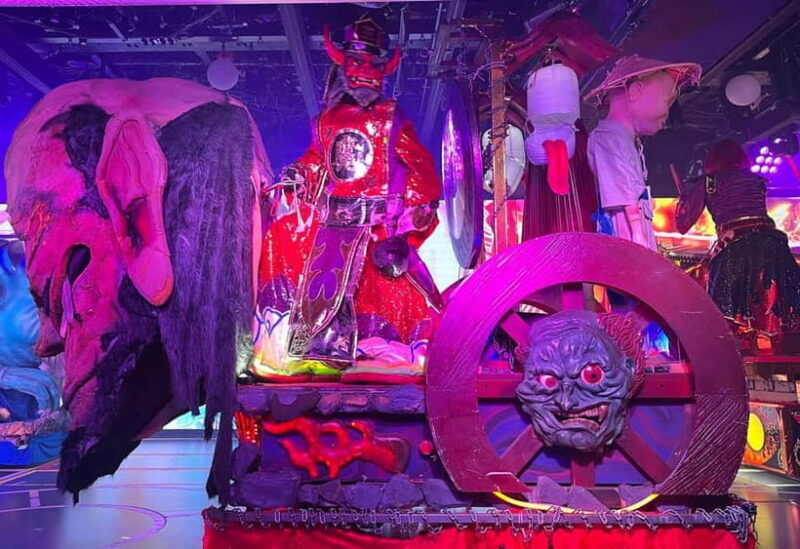
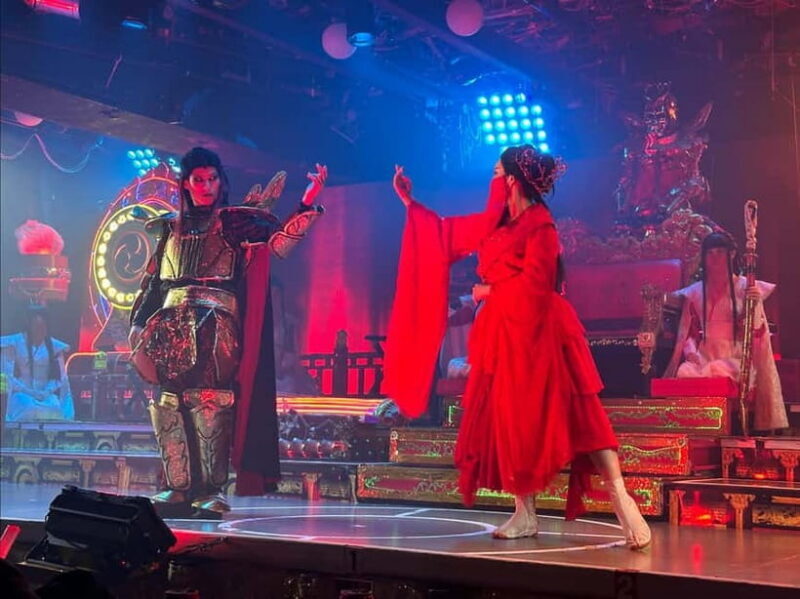
Kabukicho, in Shinjuku, is a fitting home for this production. It is Tokyo’s entertainment district, and the Samurai Restaurant leans into that setting with a show that aims to overwhelm the senses. You are not signing up for a restrained lesson in samurai history. You are signing up for theatrical action, bold costumes, loud music, and a room designed to make an impression.
That distinction matters. If you want a carefully explained account of historical warfare or a traditional performance in a spare setting, this is not the right ticket. If you want an unusual night out that mixes samurai and ninja imagery with dance, music, and modern stage effects, the format makes more sense.
The performers are a major part of the appeal. The action is energetic, and the production combines singing, dancing, acting, and costume changes. One scene may give way to another with a different look and mood, rather than following a story that is easy to summarize. You may not leave with a clear plot in your head, but you will have plenty to talk about.
You might also be interested in these Tokyo experiences
The meeting point is the reception inside the Samurai Restaurant entrance. The venue itself is worth taking in: its elaborate interior is described as having cost more than 10 billion yen to create. Even before the performance begins, the setting signals that this is not an ordinary restaurant room with a small stage tucked in the corner.
Give yourself time to look around and get settled. The show’s visual style is part of the evening, and the room adds context to the performance. The address is in Kabukicho, an entertainment area that can feel very different from the quiet streets around a shrine or a residential neighborhood. It is worth knowing where you are going and allowing time to find the entrance.
The host or greeter speaks English, which helps make the arrival and basic instructions easier for international visitors. Bring a passport or ID card, with a copy accepted, since identification is listed as something to have with you. People under 18 cannot enter, so this is not a family activity for younger children.
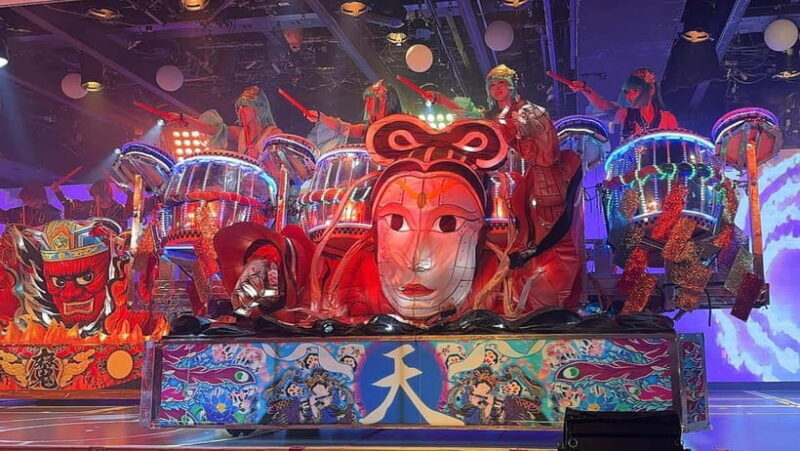
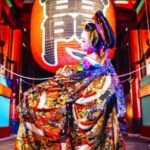
The show is made up of a series of performances rather than a single, continuous piece. Samurai and ninjas take the stage alongside dancers, with neon lighting and sound effects shaping the mood. Costumes, movement, and stage imagery do much of the storytelling, so you do not need a detailed grasp of Japanese history to follow the basic appeal.
Expect fast shifts in tone and plenty of visual detail. The show draws on familiar images of Japan, then pushes them into a modern, theatrical setting. Some parts may feel more like a party than a formal performance, while other scenes lean into dance or traditional-looking theatrical styles. A Kabuki-style performance appears near the end, adding a different flavor to the night.
There are pauses between acts. These breaks give the crew time to change the stage setting, and they also let you sip a drink or look over the room. If you prefer a show that moves without interruption, the stops may feel choppy. I would treat them as part of the format, rather than expecting a tightly linked stage drama.
The activity lists the duration as 90 minutes, but the ticket inclusion describes a two-hour show ticket. Because those details do not match, check the current schedule and expected run time for your chosen session before making plans around dinner or another event. Either way, this is a compact evening activity, not a full-night commitment.
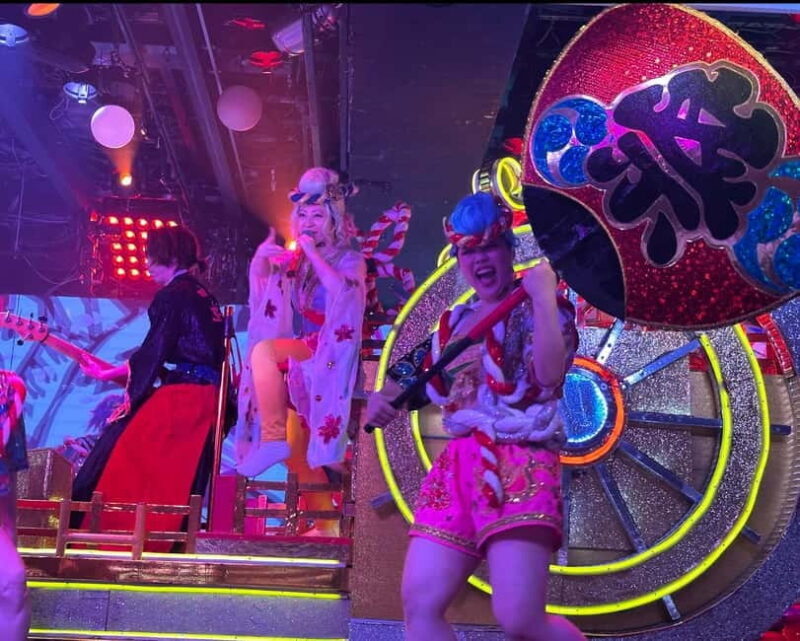
Your ticket includes two drinks, alcoholic or non-alcoholic. That gives you a little breathing room to settle in and enjoy the performance without paying separately for every drink. If you do not drink alcohol, you can choose non-alcoholic options instead.
Food is not included, and the selection is described as snack-style rather than a full meal. You may find items such as popcorn or other small snacks, but you should not count on having dinner here. Plan to eat before or after the show if you need a proper meal, especially if you are making this part of a longer evening in Shinjuku.
At $55 per person, the ticket is best judged as entertainment with two drinks, not as a restaurant dinner. The price can make sense if you want a distinctive Tokyo show and value the venue, performers, and stage effects as one package. It is less appealing if your priority is a substantial meal or a quiet night out.
Extra food and drinks are not included. Keep that in mind when setting your budget, and remember that the ticket’s value rests mainly on the performance. The drinks are a useful addition, but they are not the reason to book.
More Great Tours NearbyThis production can be seriously loud. The music and effects are a big part of its impact, but the volume may be uncomfortable if you are sensitive to sound. Pack earplugs if that applies to you. One useful tip is to ask staff for earplugs, as they may be able to provide them.
The bright lights and frequent visual effects may also be a lot for some people. One attendee described it as psychedelic and cautioned that it may not suit people with epilepsy. The information provided does not give a formal accessibility or sensory-effects policy, so if flashing lights are a concern, contact the venue or booking provider before you buy.
Arriving late can cause a practical problem. If you miss the show time, you may have to wait until the intermission to be seated. That could mean missing an opening segment, so aim to arrive on time rather than cutting it close.
The venue does not allow professional cameras, outside food or drinks, sunglasses, intoxication, or cosplay and unusual costumes. The rules are straightforward: arrive sober, dress normally, and leave professional camera gear behind. These limits help avoid confusion at the door and keep the focus on the performance.
You might also be interested in these Tokyo experiences
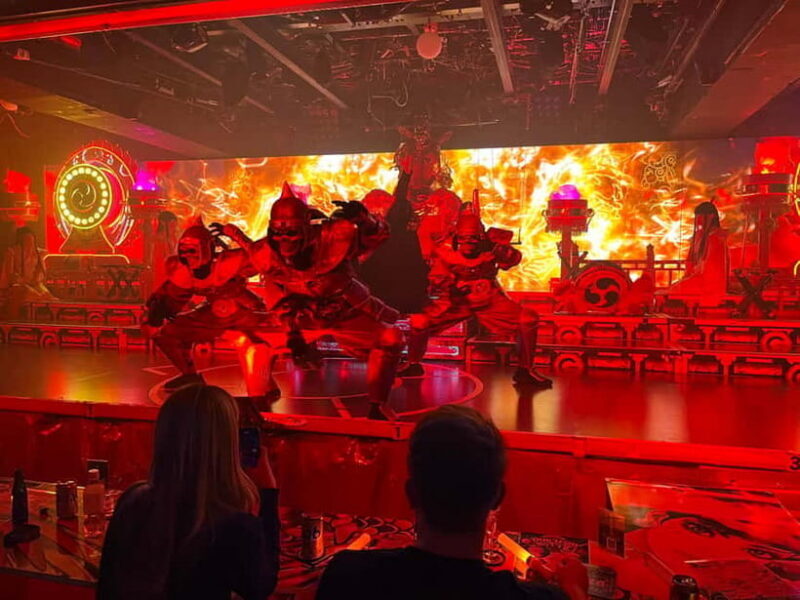
The strongest reason to pay $55 is the production, not the refreshments. You are paying for a distinctive indoor performance in an elaborate venue, with samurai and ninja scenes, dancers, music, visual effects, and two included drinks. For a short activity in central Tokyo, that can be a reasonable use of an evening if you want entertainment rather than another sightseeing stop.
The experience appears to win people over with its performers’ energy, the staff’s welcoming manner, and the sheer color of the show. That is useful to know if you are unsure about booking something that sounds deliberately touristy. The production is unapologetically theatrical, but that does not mean it has to feel dull or perfunctory. The performers’ enthusiasm is central to the appeal.
The weaker points are just as clear: the story may be hard to follow, the music is loud, the breaks can slow the pace, and the food is limited. If those are deal-breakers, spend your evening elsewhere. If they sound like minor costs for an unusual, energetic show, the ticket offers a fairly compact way to sample Tokyo’s louder entertainment side.
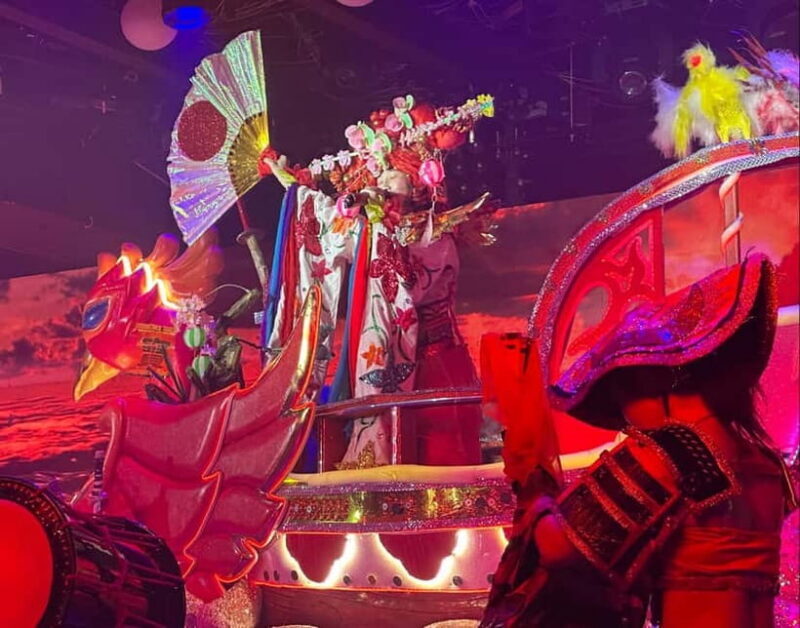
I would recommend it to adults who enjoy live performance, theatrical costumes, dance, and high-impact lighting. It suits couples, friends, and groups looking for something playful to do in Shinjuku. The format does not require specialist knowledge, and the English-speaking host or greeter makes the basic experience easier to navigate.
It also works well as a break from temple visits, museums, and long walks around the city. The show is indoors and lasts around an hour and a half according to the activity details, giving you a different kind of Tokyo memory without taking up a whole day. You might find that the main pleasure is not understanding every scene, but watching the performers throw themselves into the spectacle.
This is not for children, anyone under 18, or people seeking a quiet or historically exact presentation. It may also be a poor fit if you are sensitive to loud sound or intense lighting. Consider the venue’s rules and the sensory effects before booking, not after you reach the door.
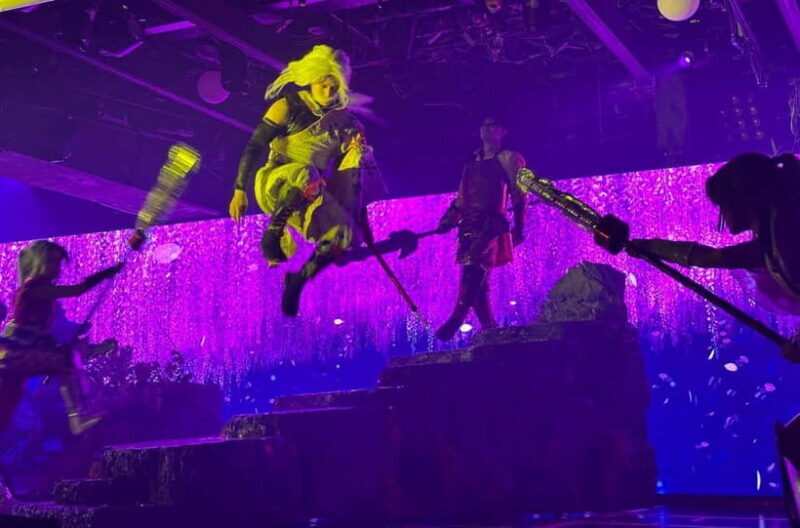
Book it if you want an unusual, energetic Tokyo night and can enjoy spectacle for its own sake. The strongest points are the lively performers, elaborate setting, and mix of samurai imagery, dance, music, and neon effects. Two drinks are a useful extra, but plan to eat elsewhere.
Skip it if you want a calm evening, a full dinner, or a traditional history lesson. If you do go, arrive on time, bring ID, leave professional camera gear and costumes at home, and consider earplugs. Check the session details too, since the advertised duration is given as both 90 minutes and two hours.
“We loved everything!! The singing was amazing, the dancing and performances were exciting, and it was overall a fun time that left us wanting more!…”
The activity duration is listed as 90 minutes, while the ticket inclusion describes a two-hour show ticket. Check the current session details before booking.
The ticket includes two drinks of your choice. They can be alcoholic or non-alcoholic.
No. Additional food and drinks are not included. Food options are described as snack-style, so plan to eat elsewhere if you want a full meal.
Reception is inside the entrance of Samurai Restaurant in Kabukicho, Shinjuku.
No. People under 18 cannot enter.
Bring a passport or ID card. A copy is accepted.
If you are late for the show time, you may have to wait until the intermission to be seated.
Professional cameras and costumes, including cosplay or unusual costumes, are not allowed. Outside food and drinks, sunglasses, and intoxication are also prohibited.
You can check availability for your dates here: