Physical Address
304 North Cardinal St.
Dorchester Center, MA 02124
Physical Address
304 North Cardinal St.
Dorchester Center, MA 02124

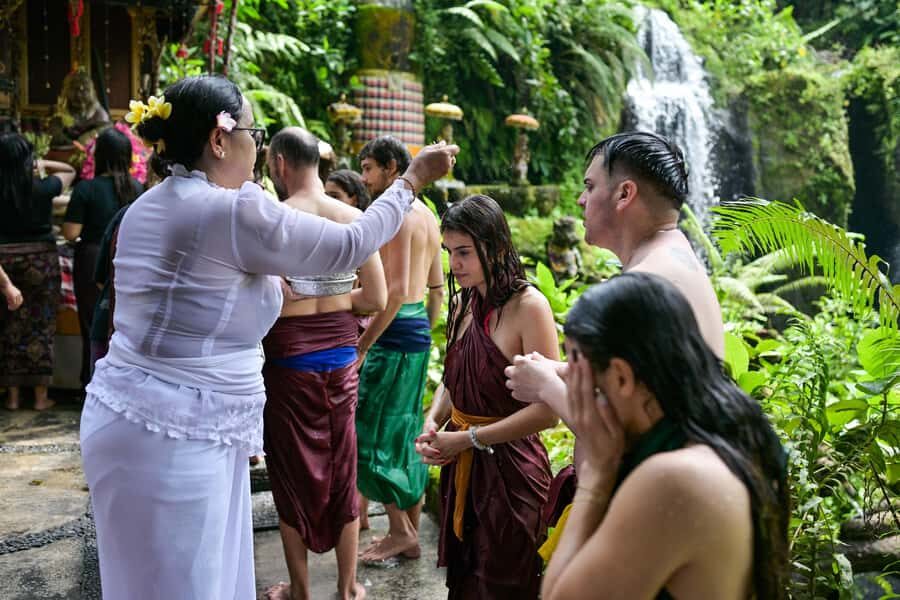
Join a guided Melukat purification ritual at Bali’s Taman Beji Griya Waterfall, with holy water, offerings, practical comforts, and optional transfers.
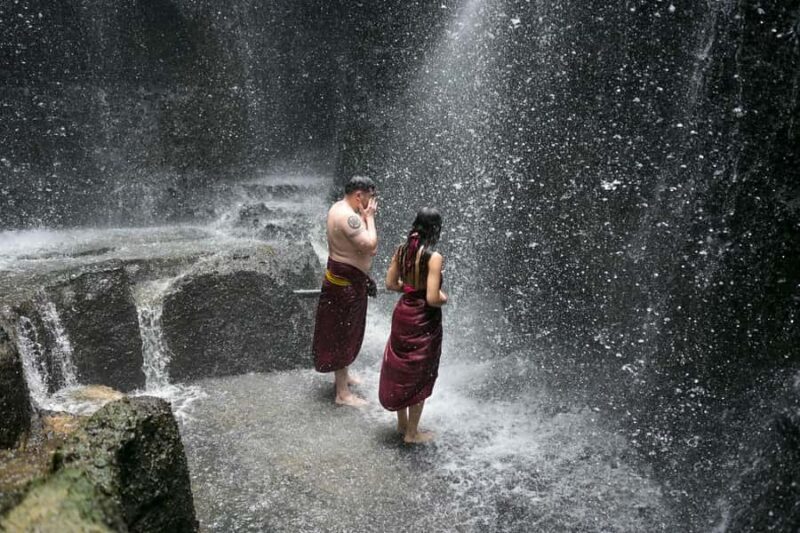
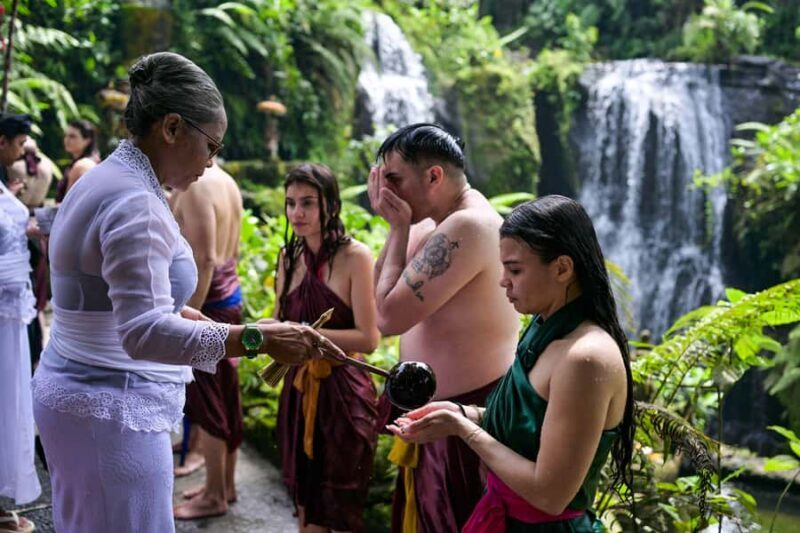
At Taman Beji Griya, the ritual is the point: you follow a local guide through a sequence of prayers, offerings, and holy-water immersions beneath a waterfall. It is a cultural ceremony, not just a scenic stop, and the guide explains what to do as you go.
I like two things in particular: the ritual offers a structured way to learn about Balinese spiritual customs, and the practical arrangements include a sarong, towel, locker, and a traditional jamu drink. A guide such as Bayu or Dudu may explain the ceremony and help you move through it at a comfortable pace, though the staff can vary.
One consideration: this is a sacred site with rules, not a free-form swim stop. You must dress respectfully, follow local customs, and know that people who are menstruating cannot enter. Shared transfers add convenience, but the full outing can take much longer than the 1.5-hour visit at the waterfall.
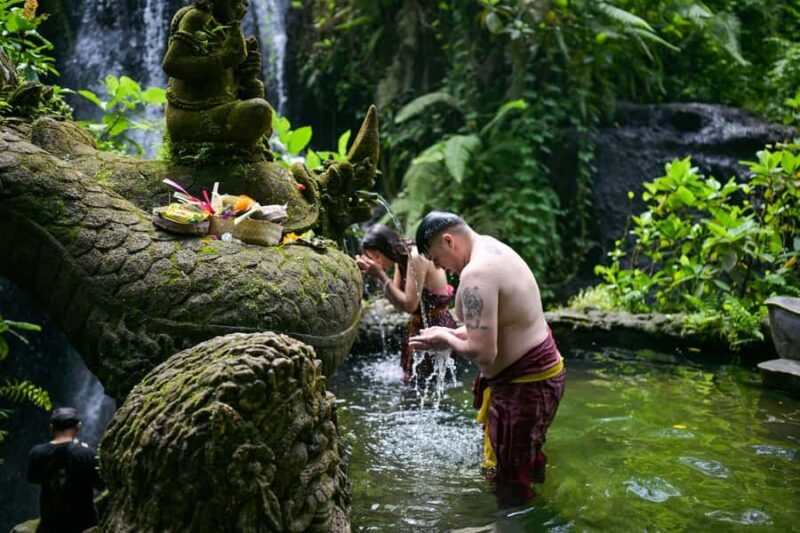
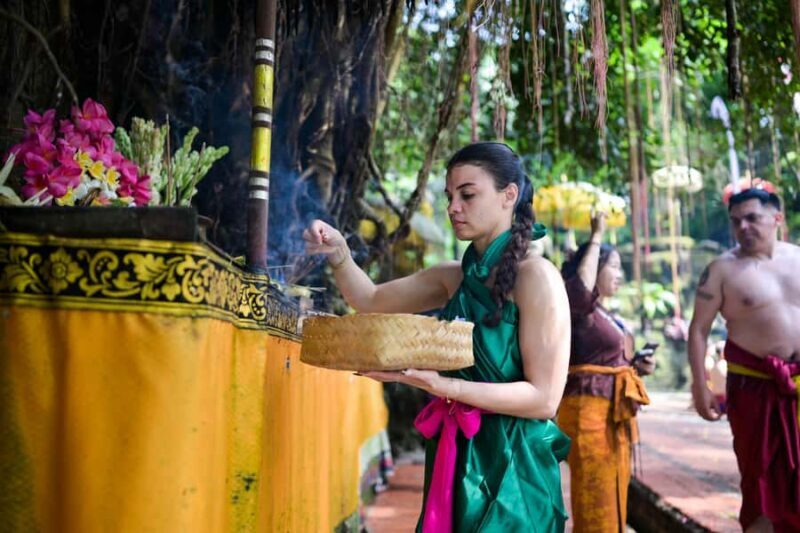
Melukat is a traditional Balinese purification ritual. At Taman Beji Griya, you take part in a guided ceremony at a sacred waterfall, using holy water in a series of immersions. Balinese participants believe the water can cleanse negative energy and support spiritual well-being. You do not need to share that belief to take part respectfully, but it helps to arrive with an open mind and a willingness to follow the ceremony’s customs.
The setting makes the experience feel different from a temple visit focused mainly on architecture or history. Here, the water is part of the ritual itself, and the guide helps you understand the prayers and offerings as you move through each stage. Some guides also explain Balinese Hindu symbols, deities, and guardians. That context matters: without it, you might see a sequence of ceremonial acts; with it, you have a better sense of what you are doing and why.
People describe the ritual in personal terms, and there is no set emotional result to expect. You may find the repeated steps calming, moving, or simply interesting. Treat it as a chance to pause and learn, rather than a promise of a particular kind of healing.
Looking for more options in Ubud? Here are some other experiences worth considering.
You can meet at Taman Beji Griya Waterfall or select a hotel transfer. Pickup and drop-off are offered in areas including Ubud, Uluwatu, Nusa Dua, Jimbaran, Kuta, Seminyak, Canggu, Sanur, Denpasar, Candidasa, and Kintamani. Transfers are shared with other participants, not private. Your pickup time follows the start time you choose and is reconfirmed by WhatsApp before the activity.
The transfer can be more than a ride. Drivers such as Wayan Sue, Udi, Roger, and Nyoman have been praised for explaining local customs, answering questions, and helping make the journey comfortable. That is a useful bonus, especially if this is your first introduction to Balinese Hindu traditions. Do not count on a particular driver, though, or assume that every transfer includes an extra stop. One driver has made an impromptu rice-field visit, but that was an individual courtesy, not a scheduled part of the experience.
Traffic can make the day longer than expected. The advertised duration ranges from one to six hours, while the guided visit at the waterfall is about 1.5 hours. The variation reflects where you are picked up and the time needed for the transfers. If you have another appointment, leave a generous buffer rather than planning around the shortest estimate.
If you arrange your own transport, the meeting point is the waterfall. One participant who went independently recommended arranging a return ride in advance. That is sensible practical advice: do not assume you will be able to find a car immediately after the ceremony.
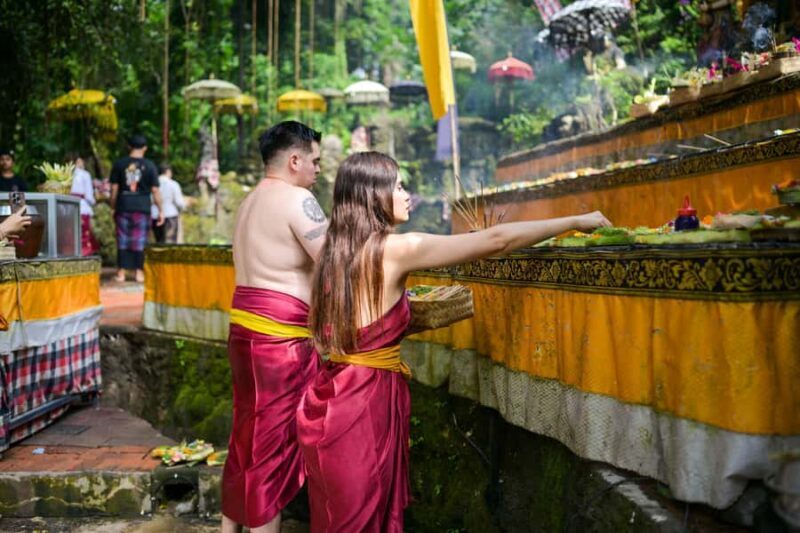
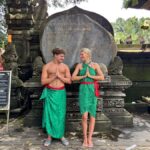
On arrival, a local guide welcomes you and explains the process. Prayer equipment and offerings are provided, along with a sarong to wear for the ritual. Private lockers with keys, towels, and changing facilities are available, so you can keep your belongings secure and change afterward.
Wear comfortable clothes and bring swimwear to put on underneath the sarong. Pack a change of clothes for after the water, even though a towel is supplied. The advice to bring your own towel appears alongside the included towel, so packing a lightweight one is a sensible backup if you prefer not to rely on shared equipment.
The ceremony includes offerings and prayers as well as immersion in holy water. Follow your guide’s instructions, keep your voice low, and avoid treating the proceedings as a performance. Local customs call for respectful dress and behavior; loud noise, littering, smoking, alcohol, drugs, and fireworks are not allowed. Flash photography is also prohibited.
There is an important cultural restriction to understand before booking: people who are menstruating are not permitted to enter Taman Beji under local traditional practices. This is a firm condition of visiting the site, not a rule the tour can change. The experience is also listed as unsuitable for pregnant people, people with back or heart problems, people with mobility impairments, wheelchair users, and people over 70.
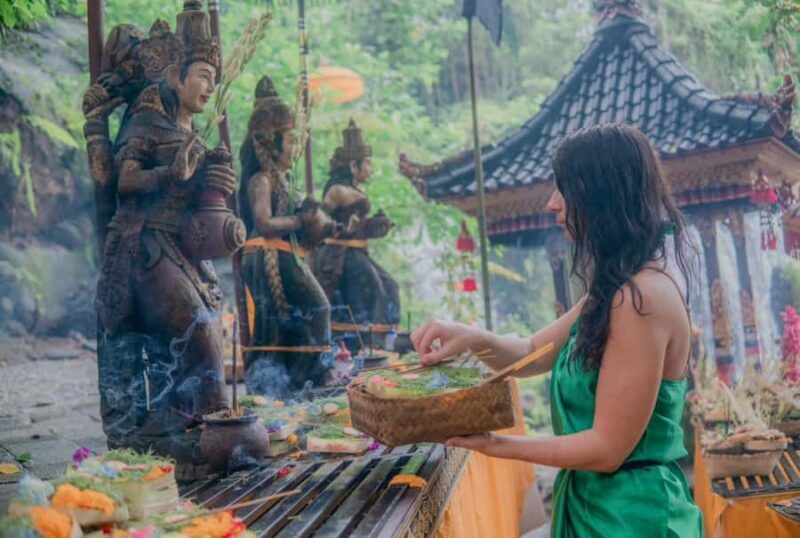
The guided visit lasts about 1.5 hours. That gives you time to follow the ceremony rather than simply arrive, take a quick picture, and leave. The guide leads you through each stage and explains the use of the prayer items and offerings. The exact pace can depend on how busy the site is, so expect some variation.
The waterfall setting is a major part of the experience, but the visit is not presented as a general swimming excursion. The water is used for ritual purposes, and the holy water is not recommended for drinking. Keep your attention on the guide’s instructions and the ceremony, especially if you are unfamiliar with its customs.
You might find the water intense. One participant joked that you may let out a scream, which is a reminder that immersion can be a physical experience as well as a reflective one. There is no need to force a feeling or imitate anyone else. Follow the steps as explained, and take the ceremony at the pace your guide sets.
Guides at the site have been praised for clear explanations, patience, and help with photographs. Names mentioned include Bayu, Dudu, Nanda, and Putu, but the person leading your ritual may differ. Some guides take pictures as part of helping you through the experience; optional Polaroid or professional photography services can also be added at checkout. If you want a dedicated photo package, confirm that choice when booking rather than assuming it is included.
More Great Tours Nearby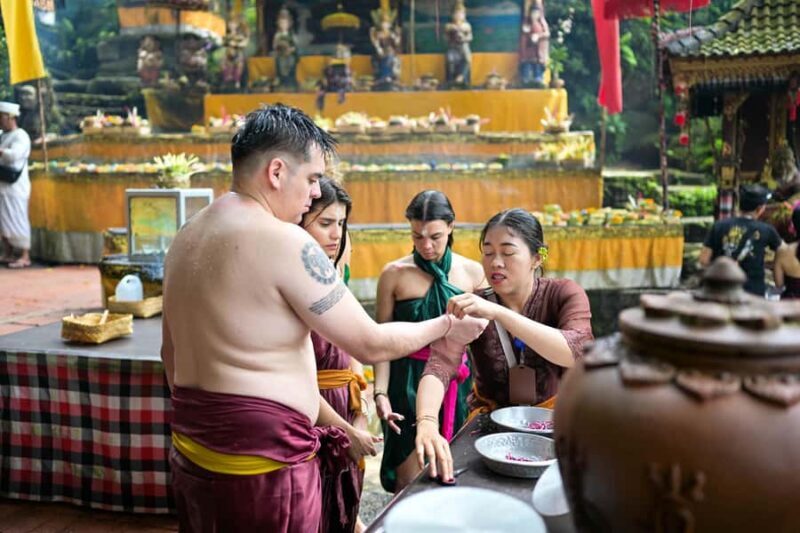
After the ritual, you are offered a traditional jamu herbal drink. It is a small but fitting close to the visit, giving you a moment to pause before changing and heading back. Some participants also buy healing balm on site, but purchases like this are personal expenses and are not included in the price.
Use the locker and changing facilities to change into dry clothes before the return journey. The basic package includes admission, the ritual, a local guide, holy water, prayer equipment and offerings, a sarong, a private locker, a towel, jamu, and parking fees. Food and other drinks are not included, so bring money if you expect to buy anything beyond what is supplied.
If you chose a transfer, the shared vehicle takes participants back to the selected drop-off locations. The ride is a useful time to ask the driver about the area or Balinese customs, if they are open to conversation. Drivers have been a notably strong part of the experience, but the main value remains the ceremony and its setting.
At $29 per person, this is more than a simple waterfall admission, but the price covers a guided ritual and a bundle of practical items: sarong, towel, locker, offerings, holy water, jamu, and admission. You are paying for a structured cultural experience, not merely access to a natural site. The shared hotel transfer is included only if you select that option, and optional photography costs extra.
For someone who wants to understand the ritual and take part respectfully, the guided format adds real value. You do not need to work out how the ceremony proceeds on your own, and the guide can explain what you are doing at each stage. For a visitor who only wants to see a waterfall, the experience may feel expensive or too formal. A participant also noted that foreigners cannot simply visit the purification site independently, which is worth considering if you live in Bali or prefer to explore without an organized experience.
The overall experience is rated 4.8 from 634 reviews, and the strongest recurring points are the guides’ explanations, smooth organization, and the care taken with photography. Transport earns especially strong marks, with 90 percent of reviewers giving it a perfect score. Those details make the package appealing if you value clear arrangements and cultural context. They do not guarantee a particular guide or a private ceremony, and the optional extras can raise your final cost.
Free cancellation is available up to 24 hours in advance, and you can reserve now and pay later. Check the selected option carefully so you know whether it includes transport and any photography service you want.
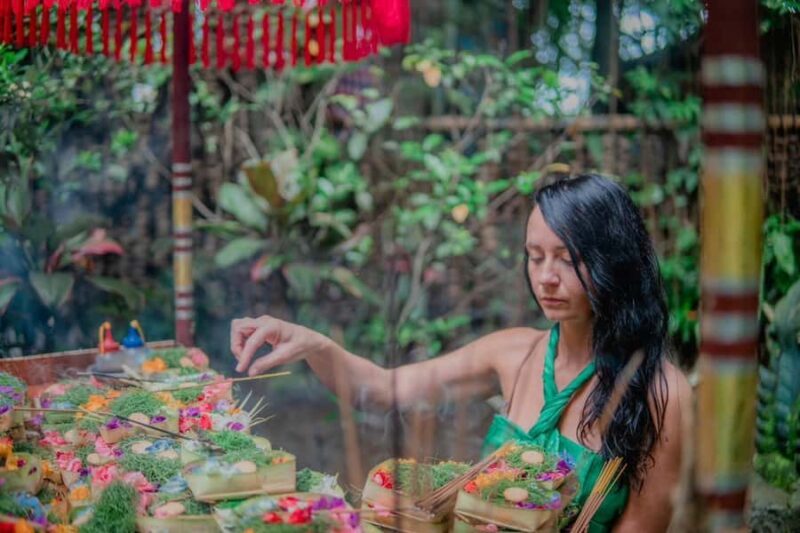
This is a good fit if you are curious about Balinese customs and want to participate rather than watch from the edge. It can also suit solo visitors: the guided structure and organized transfer can make the outing feel manageable on your own. Couples seeking a reflective activity may value the shared ritual, while anyone keen on photos can consider the optional photography package so they are not occupied with a camera.
It is less suitable if you want a quiet, solitary visit. The ceremony is organized for participants, and the site can draw groups, especially when the schedule is busy. Some people prefer an early start; one visitor found the first morning slot especially calm and had little waiting. That is a useful option to consider, but it cannot guarantee that you will have the site to yourself.
Most important, book only if you are comfortable following the rules of a sacred place. Wear suitable clothing, respect the restrictions, and do not treat the ritual as a prop for social media. Photos can preserve a memory, but attention and courtesy should come first.
Book it if you want a guided introduction to Melukat and are ready to take part with care. The combination of a waterfall setting, explanations from a local guide, and included changing essentials makes this a practical way to experience a ceremony that would otherwise be difficult to understand from the outside.
Skip it if you are looking only for a casual swim, want complete independence, or cannot meet the site’s health and cultural requirements. For everyone else, $29 is reasonable for a guided ritual with the basics provided. Choose your transfer and photo options deliberately, leave time for Bali traffic, and arrive ready to listen as well as get wet.
“Amazing trip and well worth the money! Our transporter, Made was amazing and went out of his way to make the experience special!”
The full activity can last from one to six hours, depending on the selected start time and transfer arrangements. The guided visit at Taman Beji Griya Waterfall is about 1.5 hours.
The activity includes the Melukat ritual, local guide, holy water, prayer equipment and offerings, admission, sarong, private locker with key, towel, jamu, and parking fees. Hotel transfer is included only if you select that option.
Yes. Optional shared transfers cover Ubud, Uluwatu, Nusa Dua, Jimbaran, Kuta, Seminyak, Canggu, Sanur, Denpasar, Candidasa, and Kintamani. Pickup time is reconfirmed by WhatsApp.
Bring swimwear, a change of clothes, and comfortable clothing. Swimwear is recommended beneath the provided sarong. A towel is included, though you may bring your own as a backup.
No. The holy water is for ritual purposes and is not recommended for drinking. A jamu herbal drink is provided after the ceremony.
Flash photography is not allowed. Optional Polaroid and professional photography services are available at checkout. Ask your guide about appropriate photography at the site and follow their instructions.
The activity is listed as unsuitable for pregnant people, people with back or heart problems, people with mobility impairments, wheelchair users, and people over 70. People who are menstruating are not permitted to enter Taman Beji under traditional practices.
You can cancel up to 24 hours in advance for a full refund. Reserve-now, pay-later booking is also available.
You can check availability for your dates here: