Physical Address
304 North Cardinal St.
Dorchester Center, MA 02124
Physical Address
304 North Cardinal St.
Dorchester Center, MA 02124

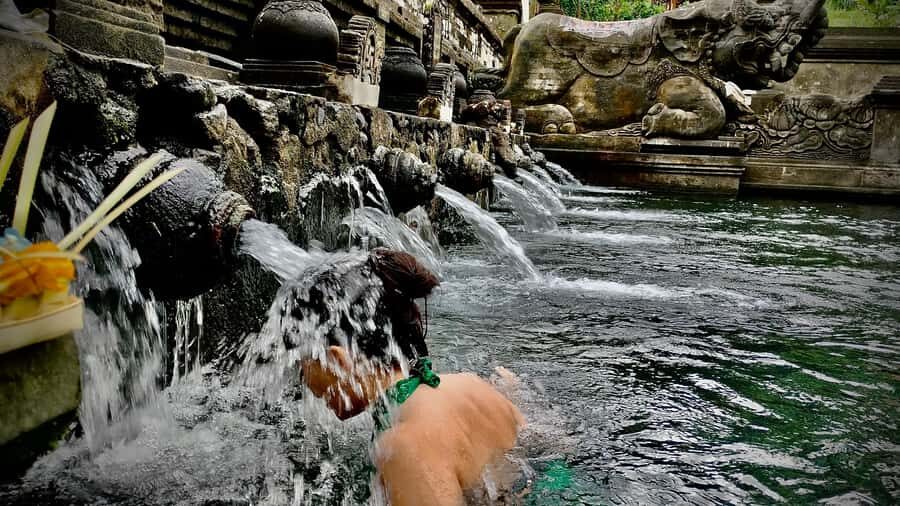
Explore Tirta Empul’s sacred pools with a local guide, learn Balinese Hindu customs, and add a cleansing ritual, lunch, massage, or coffee tasting.
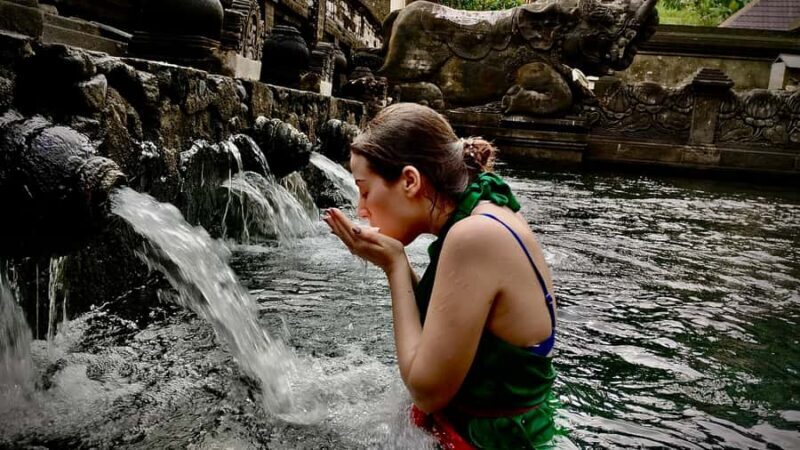
At Tirta Empul, water is more than a scenic feature: it is part of a living Balinese Hindu tradition. A guided walk through the temple’s three courtyards explains how worshippers move from the outer grounds toward the most sacred space, and you can add a melukat cleansing ritual at the pools.
I like two things in particular: the guide helps you understand the customs before you encounter them, and the tour gives you a choice between a focused temple visit and a longer day with extras such as lunch or a massage. Guides including Mangku, Sagita, and Hendra have made the visit feel personal by answering questions and letting the pace suit the day.
The main consideration is that this is a working sacred site, not a set piece for photos. You’ll need to follow local rules, wear modest clothing, and, if you join the cleansing, expect to get fully wet. Traffic from Ubud and other parts of Central Bali can also stretch the outing.
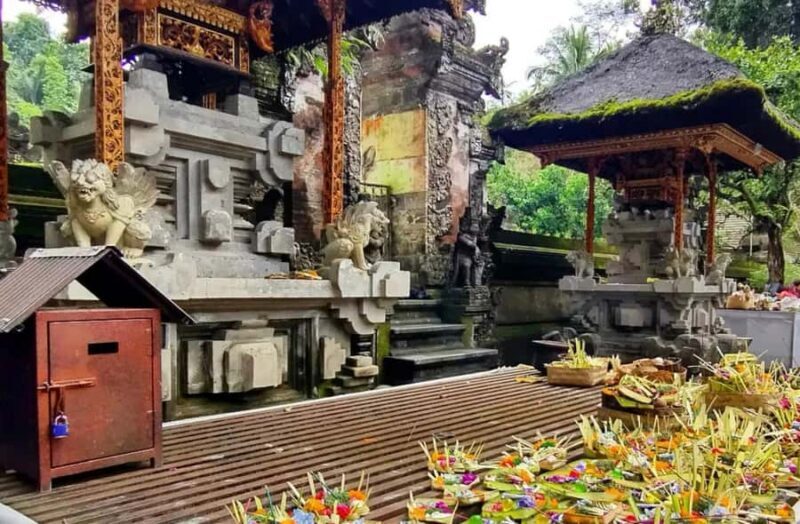
The visit begins at Tirta Empul in Manukaya Village, in the Tampaksiring area of Gianyar. Depending on the option you book, you either meet your guide at the temple entrance or arrange pickup from a location in Central Bali. The transfer option uses an air-conditioned car, a useful choice if you’d rather avoid sorting out your own transport.
Before entering the temple, you’ll take part in a mandatory tirta suci purification with holy water. It lasts around 30 seconds and is a customary gesture of respect before entering a sacred area. This short step is not the optional soul-cleansing experience later in the tour, so keep the two distinct when deciding what you want to do.
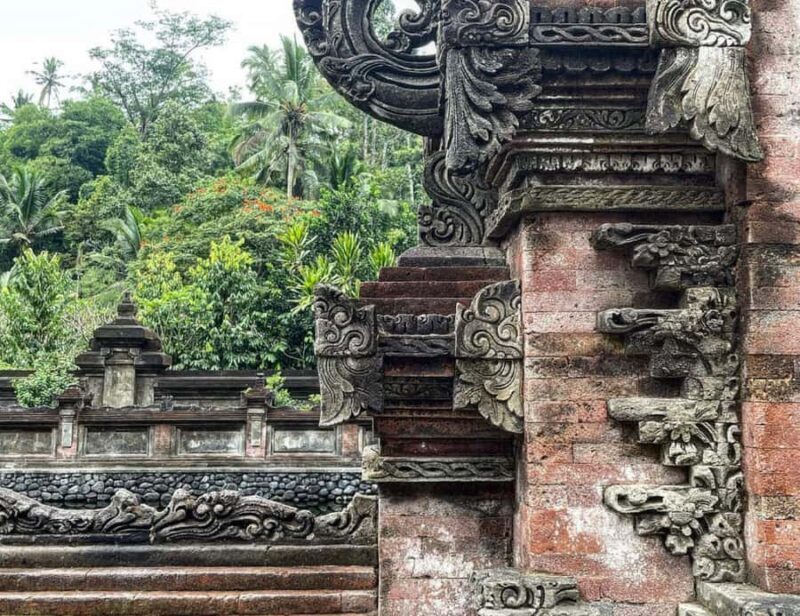
The walk passes through a decorative Candi Bentar, the split gate, and into Nista Mandala, the outer courtyard. Here, a koi pond and Bale Banjar, a temple gathering hall, help show how the complex connects to the world outside its sacred center.
This is a good place to ask questions. Guides such as Hendra and Yoga have explained both the temple and the meaning of its practices in clear English. You’re not simply being hurried from one photo stop to the next: a strong guide can help you understand why the visit follows a particular order and how to behave respectfully.
Looking for more options in Ubud? Here are some other experiences worth considering.
The three mandalas form the backbone of the visit. They are arranged as a sacred hierarchy, moving from the outer courtyard through the middle area and into the innermost space. Knowing that structure gives the walk a purpose: each section has its place, and the temple is more than a collection of gates, pools, and shrines.
Nista Mandala is the outer zone, the threshold between the everyday world and the temple. From there, you move toward Madya Mandala, where the bathing pools and purification area are found. Your guide can explain what happens at the pools and how local worshippers approach the ritual.
The final area is Utama Mandala, the temple’s most sacred space. Here, local worshippers sit and give thanks to the gods, water spirits, and ancestors before leaving. You should approach this part quietly and follow your guide’s instructions. Photography is permitted in most areas, but it should never interrupt prayer or draw attention away from worshippers.
The walk’s value lies in that progression. If you’re interested in Balinese Hindu traditions, the mandalas offer a practical way to understand the site. If you’re mainly looking for a quick scenic stop, the explanations and customs may feel more involved than expected. The guide-led format suits visitors who want context, not just an entrance ticket.
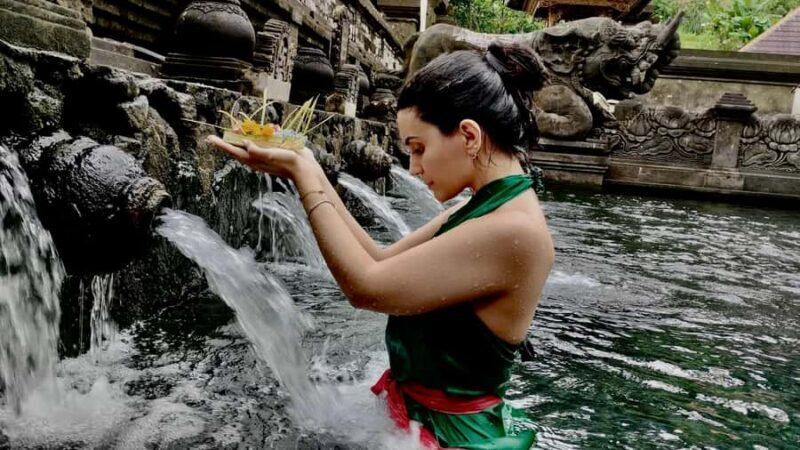
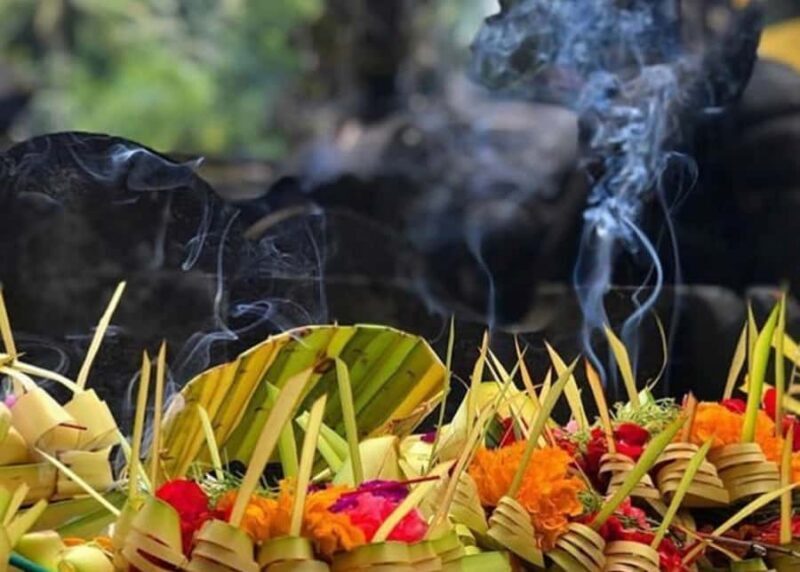
The optional spiritual cleansing, often called melukat, takes place at the temple pools. Your host explains the steps, including a meditation in front of an altar. You’ll see how a local prayer is offered to the gods, water spirits, and ancestors, along with an offering placed at the altar.
If you choose to participate, follow your host’s guidance through the ceremony. The point is to approach the ritual with respect, not to treat it as a performance or a photo opportunity. People who took part with guides such as Sagita, Sandy, and Nyoman have described calm, well-explained experiences, with the guide showing them how to perform the ceremony.
This is the part of the tour that asks the most of you. You should be comfortable with the religious setting, willing to follow the instructions, and prepared to get fully wet. Bring a change of clothes, a towel, and a waterproof bag for anything you want to keep dry. Footwear with a good grip is sensible because temple surfaces may be slippery.
Taking part is optional, and you can still learn about the ritual without joining it. Keep in mind that temple rules prohibit entry for people who are actively menstruating. The activity is also listed as unsuitable for pregnant women, people with mobility impairments, wheelchair users, people with a cold, babies under one year, and people over 95.
The core tour is centered on the temple, but add-ons can extend the day. Depending on the option you select, you can add lunch at a local restaurant, a Luwak coffee tasting, a traditional one-hour massage, ten Polaroid photos, or a jungle swing. Some options are available only with transfers, so check the details of your chosen package rather than assuming every extra can be added at the meeting point.
Coffee tasting is a natural fit if you want to make the outing less temple-focused. The tasting option includes herbal drinks and Bali coffee, and the Luwak coffee tasting is available as an add-on. Hendra took one visitor to a coffee and tea plantation with a view, while Kar guided another through edible plants and the hand-made coffee process. Those details suggest that the coffee stop can offer more than a quick cup, though the exact experience depends on the option booked.
Lunch and massage are useful if you want to make this a longer, more relaxed day rather than returning straight after the temple. A jungle swing and Polaroid photos are more activity- and keepsake-oriented extras. They may suit you if you want variety, but they are not necessary to understand Tirta Empul itself.
The advertised duration is three to six hours. That range reflects the different transport and add-on choices, as well as traffic. The drive can take longer during peak hours, so avoid planning a tight onward appointment. If you want a shorter visit, meeting at the temple may be the simpler choice; if you want pickup and extras, allow more time.
More Great Tours Nearby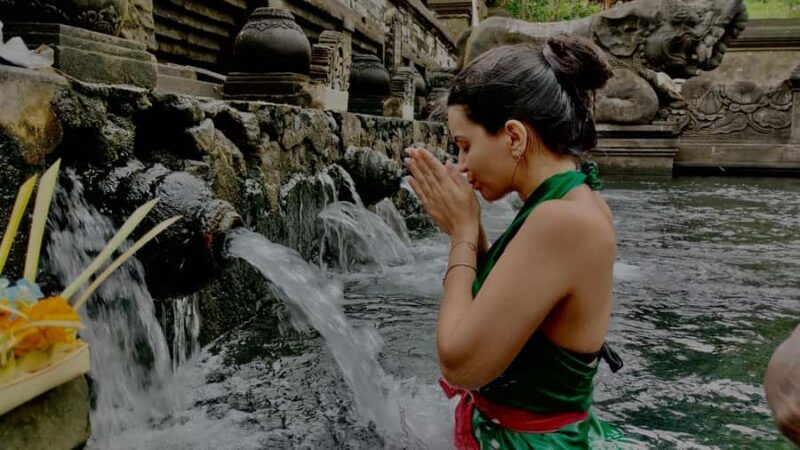
At $24 per person, the base price includes the entry ticket, sarong rental, an offering with incense, a licensed guide, and mineral water. That is a useful bundle for a temple visit where clothing and cultural guidance matter. You don’t have to arrange the entrance ticket or sarong separately, and the guide is central to making sense of the rituals.
The price does not include food and drinks as a general rule. Herbal drinks and Bali coffee are included if that option is selected, while Luwak coffee, lunch, massage, photos, swing access, and transfers are tied to their respective add-ons. Because the optional extras change both the price and the length of the day, compare the specific package before booking.
Transfers from select areas are available when chosen, with pickup from your location in Central Bali. This is convenient if you’re staying in or near Ubud, but the listing does not promise pickup from every Bali address. Meeting points vary by option, so confirm where your selected version starts.
The tour also offers free cancellation up to 24 hours in advance and a reserve-now, pay-later option. Those terms can help if your plans are not settled, but the more important decision is what kind of day you want: a guided temple visit, a ritual-focused outing, or a longer combination with food and other activities.
The most consistent strength of this experience is the guide. People who joined with Mangku, Karba John, Sagita, Hendra, Yoga, Sandy, Nyoman, and Kar describe guides who explain the temple clearly, answer questions, and help with the ritual. Some also appreciated the personal feel, photography help, and recommendations for other places in Bali.
You can’t count on a particular guide when booking, but it’s reasonable to expect an English- or Indonesian-speaking guide, based on the languages offered. The English-speaking option is especially useful if you want to ask about the temple’s history and customs rather than simply follow a route.
A guide also helps keep the visit respectful. The details matter here: where to pause, how to approach an altar, when to pray, and how to avoid disturbing worshippers. That makes the tour particularly useful for first-time visitors who may not know the customs or the layout.
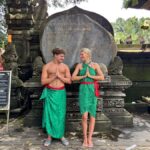
Shoulders and knees must be covered inside the complex. A sarong is included, but plan modest clothing underneath, especially if you are joining the cleansing ritual. Pack a towel, a full change of clothes, cash, and a waterproof bag for your belongings.
Pets, alcohol, and drugs are not allowed. Photography is permitted in most areas, but temple rules come first. Keep your camera down if people are praying, and ask your guide if you are unsure where photos are appropriate.
The temple may be slippery, so choose footwear with good grip. The tour is not suitable for wheelchair users or people with mobility impairments, and the activity’s restrictions also include pregnancy, a cold, babies under one year, people over 95, and anyone actively menstruating.
Book it if you want more than a quick look at the pools. The guide-led walk gives the temple’s three courtyards a clear structure, and the optional cleansing lets you take part in a local ritual if that feels right for you. The $24 base price covers the main essentials, while add-ons let you shape the outing around your time and interests.
Choose the temple-only version if you want to keep the day focused. Add transfers if convenience matters, and choose the cleansing only if you’re comfortable following the customs and getting wet. If you need step-free access, cannot meet the temple’s dress or religious rules, or want a fixed, quick timetable, this is not the right fit.
“Very good day at Tirta empul temple. The guide was so nice and helpful and she told us all the background history about the temple, very interestin…”
No. The cleansing is an optional add-on. The base price includes the temple entry ticket, sarong rental, offering with incense, licensed guide, and mineral water.
Your shoulders and knees must be covered inside the temple. Bring a change of clothes, a towel, cash, and, if you plan to join the cleansing, a waterproof bag for your belongings.
No. A brief tirta suci purification before entering the temple is mandatory and takes around 30 seconds. The longer soul-cleansing ritual at the pools is optional.
Pickup is optional from select areas in Central Bali. The meeting point varies with the option booked, so check the details for your selected tour.
The stated duration is three to six hours. Transfers, add-ons, and traffic can affect how long the outing takes.
It is listed as unsuitable for pregnant women, people with mobility impairments, wheelchair users, people with a cold, babies under one year, and people over 95. People who are actively menstruating are not permitted in the temple due to religious customs.
You can check availability for your dates here: