Physical Address
304 North Cardinal St.
Dorchester Center, MA 02124
Physical Address
304 North Cardinal St.
Dorchester Center, MA 02124

Compare this Fukuoka day tour to Dazaifu, Yufuin and Beppu, with shrine time, mountain views, hot springs and practical costs.
Dazaifu’s shrine approach, Yufuin’s shop-lined streets and Beppu’s steaming hot springs make an unusually varied day out from Fukuoka. The payoff is seeing four very different corners of Kyushu without working out the train and bus connections yourself.
I like two things in particular: the range of places packed into one trip, from a major shrine to a mountain cable car, and the small Beppu touches, including a foot bath, onsen egg and lemon soda. Guides such as Ryu and Vivian have been praised for clear explanations and thoughtful help, though your guide will vary.
The trade-off is time. You get two hours in Yufuin, but just an hour at the ropeway and 30 minutes at Kamado Jigoku. If you want long meals, unhurried shopping or a mountain hike, this schedule may feel tight.
This tour’s appeal is its variety. Dazaifu Tenmangu is a place of worship and a well-known shrine dedicated to Sugawara no Michizane, associated with learning and exam success. Yufuin offers a slower, shop-and-snack kind of visit, while Beppu brings the trip to a close with mountain views and steaming pools.
The stops are not close together, and reaching all four independently takes planning. A shared bus is the practical part of the deal: you can sit back between destinations instead of coordinating several legs of public transport. The flip side is that the group follows a set timetable, and traffic or weather can change the order or length of stops.
At a starting price of $44.25, the tour can be good value if you want to see several places in one day and would otherwise need to arrange transport. But compare the total cost, not just the advertised price. The Beppu Ropeway costs extra, and meals, drinks and personal purchases are on you.
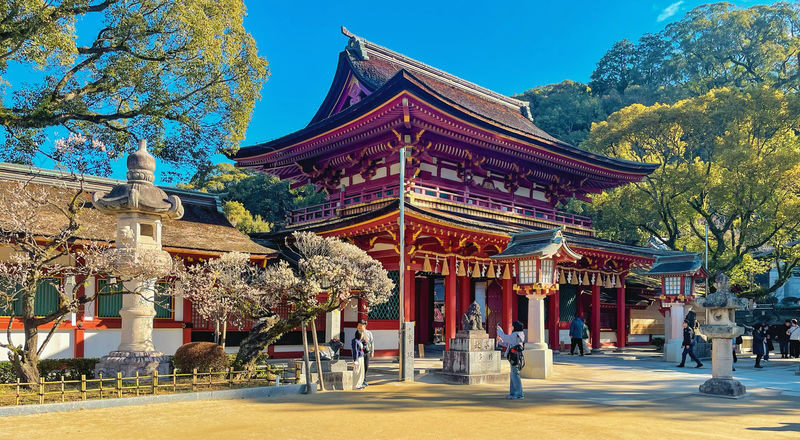
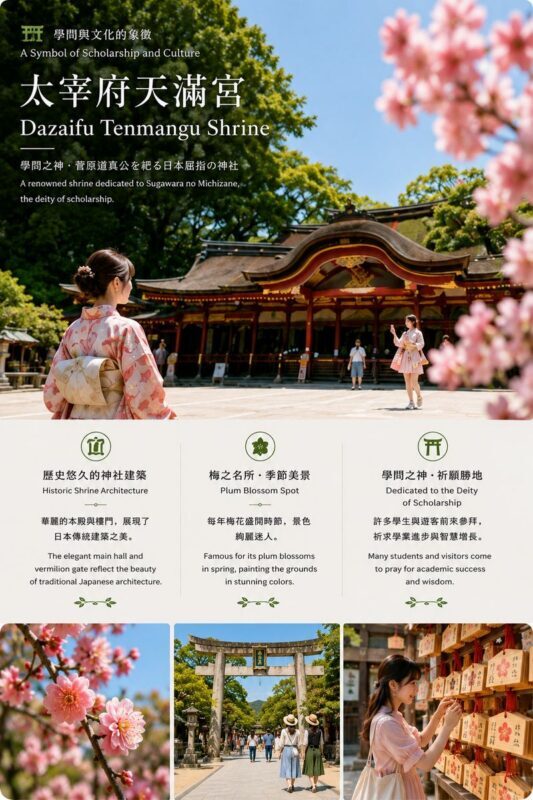
The first stop is Dazaifu Tenmangu, with about an hour to explore independently. The approach leads past traditional buildings and shops toward the shrine grounds. The setting has a calm, ceremonial feel, and seasonal changes, especially plum blossoms, can give the visit a different character at different times of year.
The shrine is associated with Sugawara no Michizane, often prayed to for academic success and passing exams. Even if you are not visiting for a specific prayer, the grounds and the approach offer a good introduction to Japanese shrine culture. You can also look for freshly baked umegae mochi, a local sweet that makes a handy snack.
An hour is enough for a focused visit, but it is not a leisurely one. The tour arrives early, and shops may not all be open yet, so do not count on a long browse or a full shopping stop. If Dazaifu is a priority, use your time for the shrine first, then see what is open on your way back.
You might also be interested in these Yufu experiences
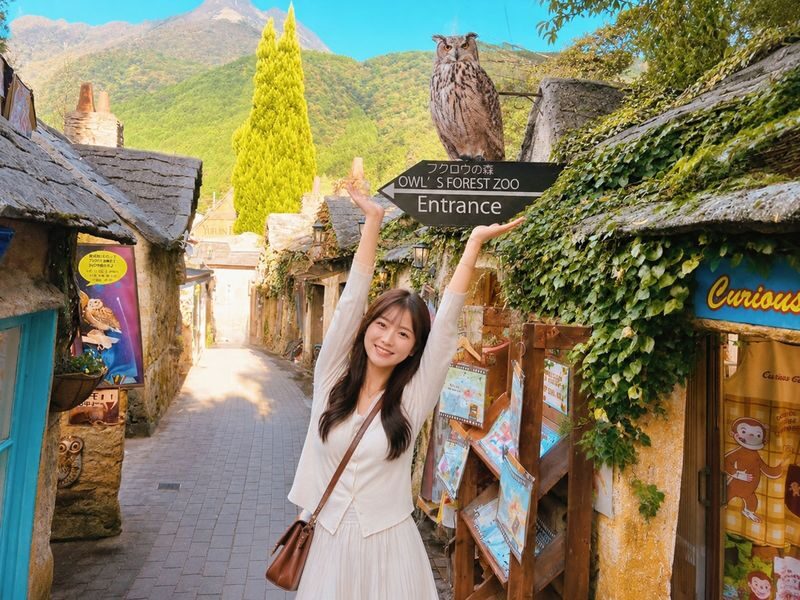
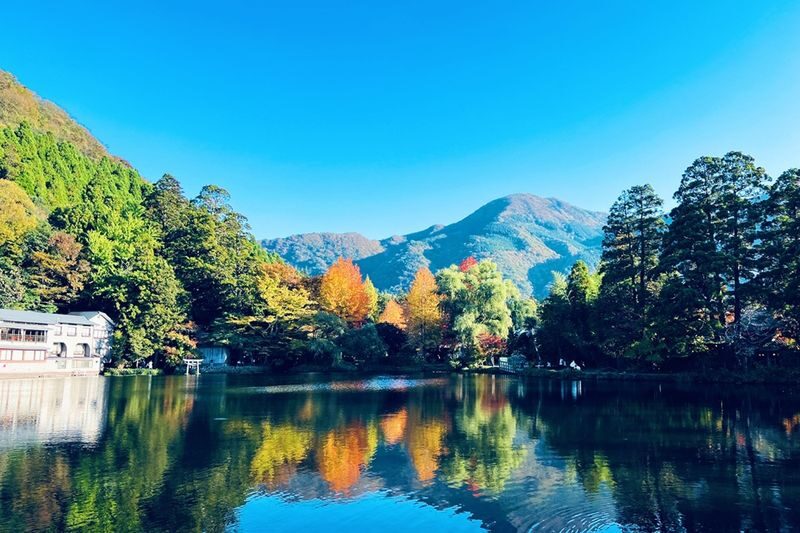
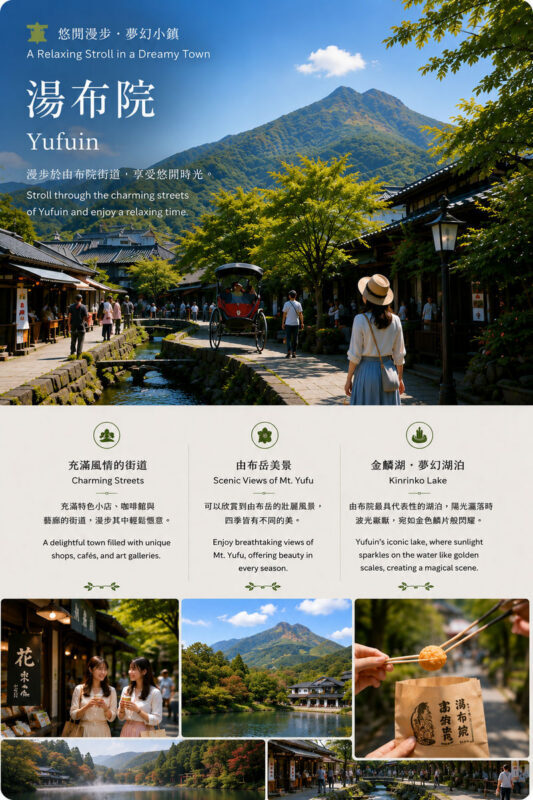
Yufuin gets the most free time, with two hours to explore. The town sits among mountains and is known for its relaxed pace, food shops, small boutiques and handmade goods. Yunotsubo Street is the main strolling area, with plenty to tempt you into stopping for a snack or a look around.
Lake Kinrin is another draw, and Yufuin Floral Village offers a storybook-style cluster of buildings. Two hours is enough to sample the town and make one or two stops, but you will need to choose. A long lunch, a full shopping wander and a walk to the lake may not all fit comfortably.
I would decide what matters most before you arrive. If you want to see Lake Kinrin, head there early and leave time to browse on the way back. If food and shops are the point, stay near the main street and keep an eye on the meeting time. Some visitors find Yufuin’s allotment too short, especially after stopping for lunch, so treat it as an introduction rather than a thorough visit.
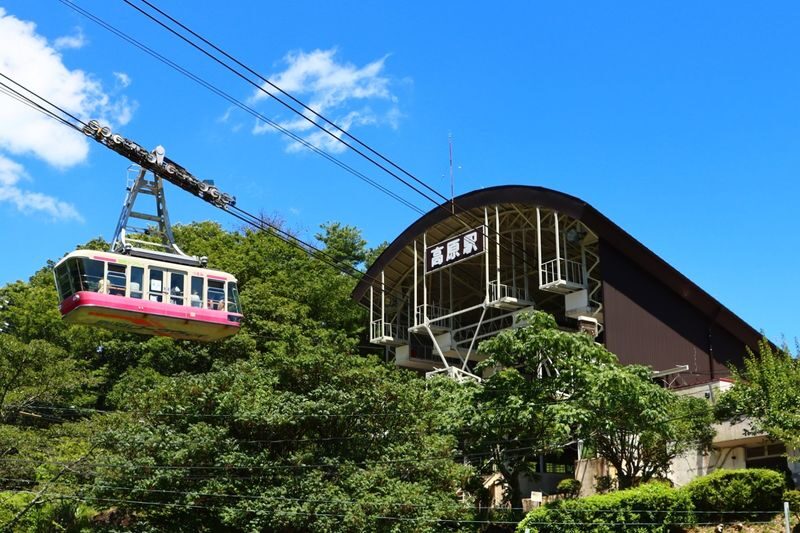
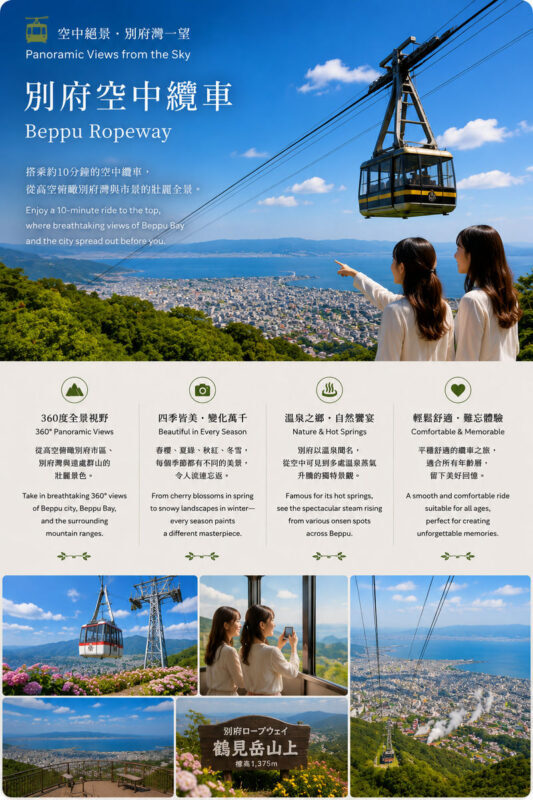
The Beppu Ropeway takes you up Mount Tsurumi, about 1,300 metres above sea level. From the mountain, views can open across Beppu Bay, the city and surrounding hills. The scenery changes with the seasons, making this a different kind of stop from the shrine and town below.
You have about an hour here, and the ride itself is optional. The adult fare is listed at around ¥1,800, payable in cash, so bring enough yen if you plan to go up. The tour price does not cover it. An hour gives you time for the cable car and a look around, but it is not much time for a longer hike or a slow stay at the summit.
Weather matters. Lightning, rain or other poor conditions can affect whether the ropeway operates, and the tour may adjust its plan for safety. From June 22 to July 17, 2026, the ropeway is scheduled to close for annual maintenance; during those dates, the tour visits Umi Jigoku instead. Admission there is ¥500 per person, paid separately.
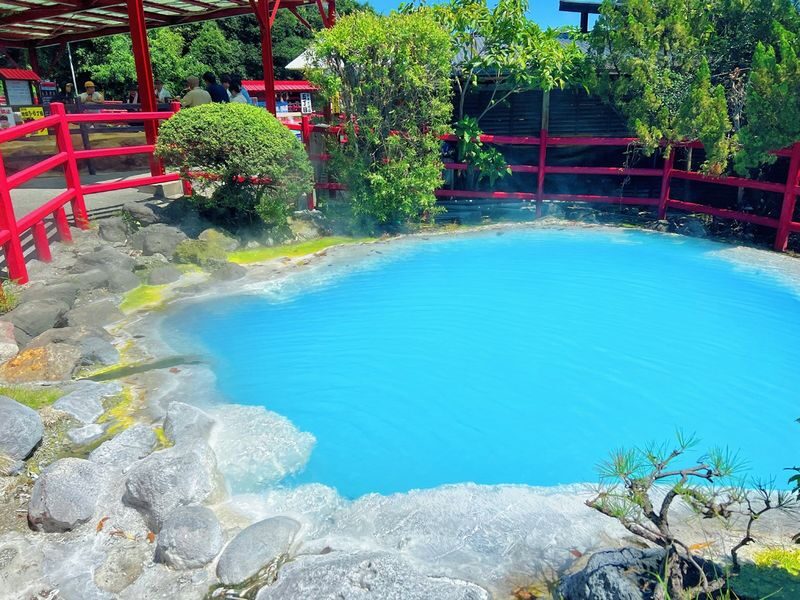
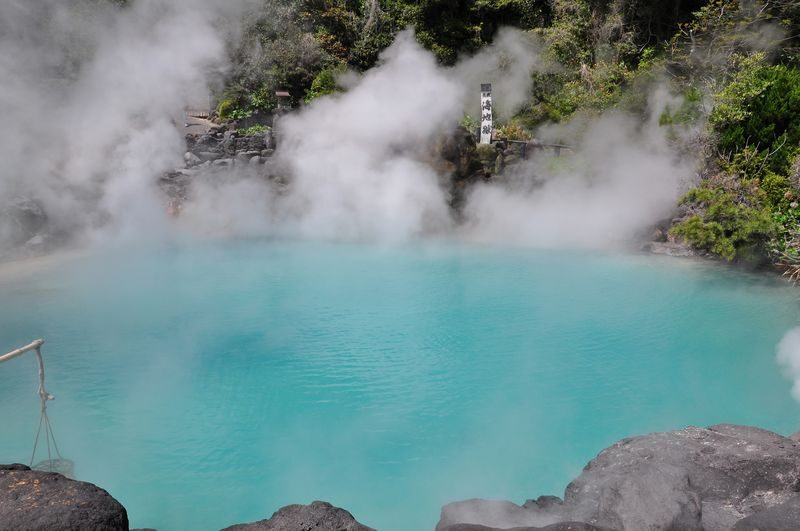
Kamado Jigoku, or Cooking Pot Hell, is one of Beppu’s best-known hot spring sights. Here, geothermal water appears in different colors and forms, a vivid display of the heat beneath the town. The stop is compact, with about 30 minutes to explore.
Admission is included, as are an onsen egg and marble lemon soda. There is also a foot bath in the park. These details make this stop more hands-on than a quick look at hot springs from behind a railing, though half an hour is not a lot of time if the foot bath is crowded. Bring a small towel if you would like to try it; one is not listed among the included items.
The included snack is a fun taste of Beppu’s hot spring culture, rather than a meal. Plan to eat lunch in Yufuin or bring something along, since food and other drinks are not included. If the foot bath has a queue, prioritize the pools and the complimentary treats rather than trying to do everything.
For visitors without a rental car, the strongest advantage is simple: the tour connects places that are spread across the region. Round-trip transport from Fukuoka means no transfers to puzzle out and no need to navigate local connections between Dazaifu, Yufuin and Beppu. The bus also gives you a place to rest during the long drives.
The trip is shared, and the guide may speak to a mixed-language group. Chinese- and English-speaking guidance is included, but the pace and ease of explanations can vary by guide and by the group. Guides named Ryu, Vivian and Mr Li have been praised for multilingual explanations and attentive help, including taking photos and helping people find their way. You cannot choose who leads your departure, so treat those names as examples, not a promise.
There are a few practical limits to keep in mind. Seats are generally chosen in boarding order, except for the first rows reserved for people who book them. If seat position matters to you, check the seat option carefully rather than assuming you can select a place on the day. The tour also does not provide child seats.
The day begins with assembly at 8:20 a.m. for an 8:30 departure, and the bus leaves on time. Return to Hakata Station is estimated at 6:30 p.m., but traffic and weather can push that later. Keep your evening flexible, especially if you have a train, dinner booking or another timed activity.
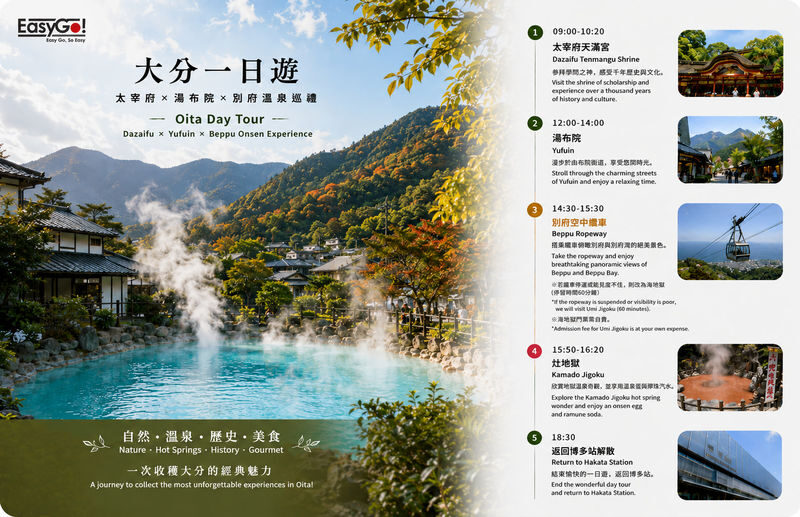
The value depends on what you want from the day. If your priority is seeing several Kyushu highlights without renting a car or planning connections, the starting fare covers transport, a guide, Kamado Jigoku admission and its egg and soda. The route gives you a broad sample of the region for a relatively low starting price.
Add the ropeway fare, lunch, drinks and any shopping before you judge the cost. The substitute visit to Umi Jigoku during the 2026 maintenance period also has a separate entrance fee. For a group of several people, compare the tour total with the cost and effort of arranging your own transport; the tour’s main advantage is convenience, not unlimited time at each place.
This is best for couples, friends, families and independent visitors who are comfortable with a full day and short visits. It can also suit groups with children or older relatives who prefer an air-conditioned bus between stops, though the schedule still requires everyone to keep moving and meet promptly. It is less suited to anyone hoping to hike Mount Tsurumi, spend a relaxed afternoon in Yufuin or linger at the hot springs.
Check your email around 7 p.m. Japan time the evening before the tour for the meeting details, guide and other pre-trip information. If it has not arrived, check the spam folder. The exact vehicle and guide are not announced well in advance, so follow the meeting instructions and look for a guide in an orange vest carrying a white Easygo flag.
Wear comfortable shoes for walking around the shrine, Yufuin and the hot spring park. Bring water, sunscreen and a hat in warm weather, plus a raincoat or poncho if rain is forecast. Carry cash for the ropeway and keep some time and money aside for food in Yufuin.
One standard-sized piece of luggage per person is allowed, but you need to note it in your booking’s special requirements. If you need to bring more, tell the operator in advance. Late arrivals and no-shows are not refunded, so arrive before the assembly time rather than aiming for the exact departure.
Book it if you want a broad, low-planning introduction to Dazaifu, Yufuin and Beppu in a single day. The mix is the point: shrine grounds, a small-town stroll, a cable car and geothermal pools, with transport and a guide linking the stops.
Think twice if you prefer to set your own pace or want substantial time at any one place. The schedule is efficient, not leisurely, and the ropeway costs extra. If you accept those limits and arrive ready to keep to the clock, this is a practical way to see several sides of Kyushu from Fukuoka.
“Had a great time on the tour! Our tour guide Vivian was very friendly, helpful, and accommodating throughout the trip. Everything went smoothly, an…”
The day runs from an 8:20 a.m. meeting time to an estimated return at Hakata Station around 6:30 p.m. Traffic and weather can affect the return time.
It departs from a meeting point in Fukuoka. The vehicle leaves at 8:30 a.m., and late arrivals are not accommodated.
No. The reference adult fare is ¥1,800, paid in cash. The ropeway may also close because of weather or scheduled maintenance.
Kamado Jigoku admission, an onsen egg and marble lemon soda are included. A complimentary foot bath is also available at the site.
From June 22 to July 17, 2026, the tour visits Umi Jigoku instead. Its admission fee is ¥500 per person and is paid separately.
Children aged 0 to 2 can join free. Children aged 3 and older are charged the adult rate. Child seats are not available.
A full refund is available if you cancel at least 24 hours before the activity date, based on local time. Changes are allowed until 24 hours before the activity starts, subject to the stated booking conditions.