Physical Address
304 North Cardinal St.
Dorchester Center, MA 02124
Physical Address
304 North Cardinal St.
Dorchester Center, MA 02124

Make matcha in a 100-year-old Kyoto townhouse with an English-speaking tea master, learn tea ceremony etiquette, and enjoy a traditional sweet.
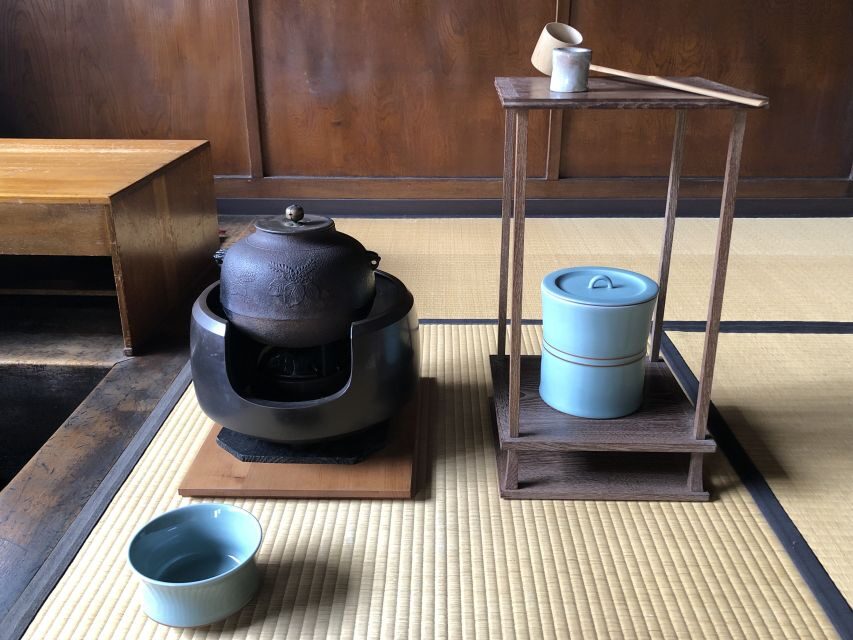
A tea ceremony is not just a lesson in whisking green tea. In this 45-minute session, you step into a 100-year-old Kyoto townhouse, watch a tea master demonstrate the Omotesenke tradition, then make matcha yourself.
I like two things in particular: the small group of no more than 10 leaves room for questions, and the hands-on part turns a cultural introduction into a skill you can try again at home. You also get to taste your matcha with a traditional sweet.
One consideration: this is a short, introductory experience, not a full-length formal ceremony. Kimono rental is not included, and the quiet atmosphere may suit patient children better than restless ones.
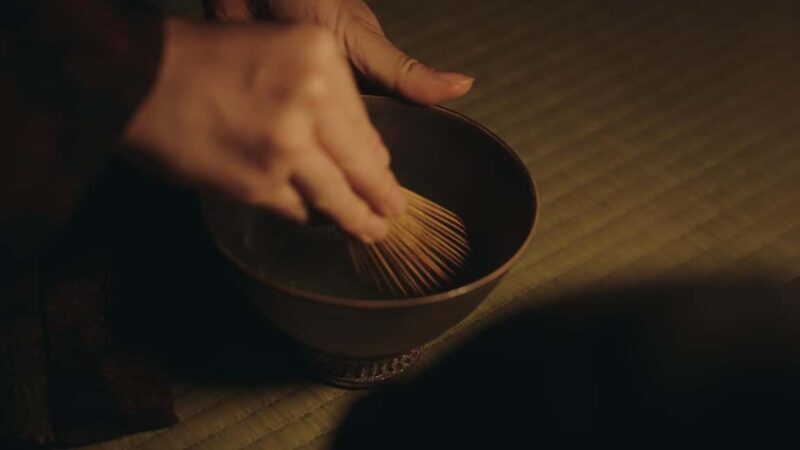
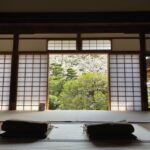
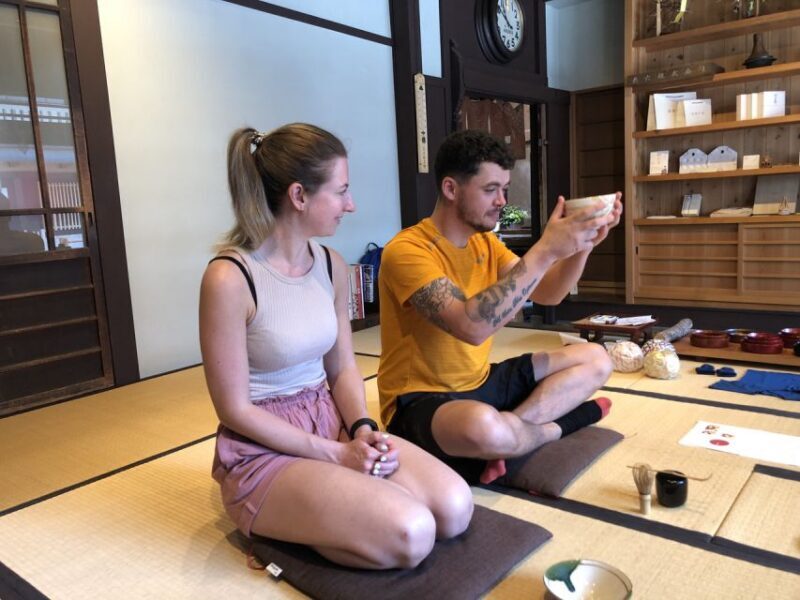
The experience takes place in a century-old townhouse, a setting that gives the session a sense of place before the tea is even prepared. Tatami and the restrained atmosphere help mark a shift from sightseeing pace to a slower, more attentive one.
The space is described as contemporary Japanese in feel, rather than a staged museum room. That balance matters: you get to encounter a traditional practice in a lived-in Kyoto setting, while the host makes it approachable for people who have never attended a tea ceremony.
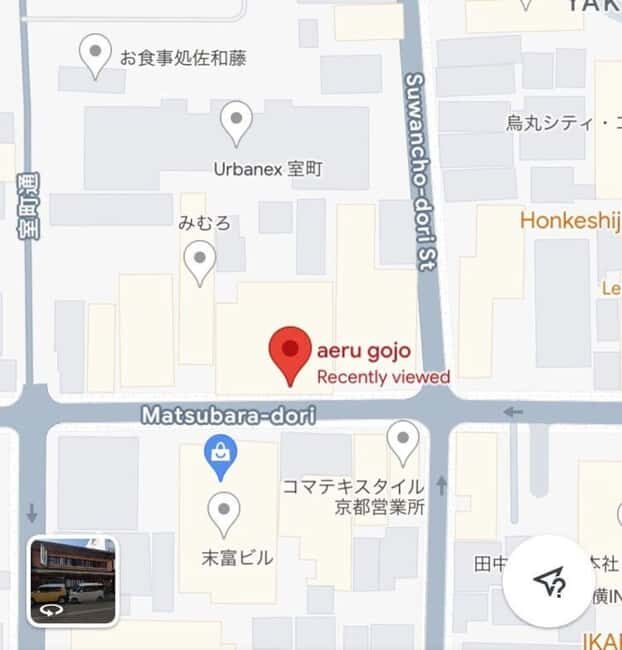
The venue is in central Kyoto, but finding the entrance takes a little attention. From Karasuma-dori, turn at the corner by the Family Mart and continue straight for one block. Look for the sign for aeru gojo, next to Only Corporation and across from Zen Kyoto.
Arrive no more than 10 minutes before your scheduled time. The room is limited in size, and it is not a place to wait while eating or to bring food and drinks. If you arrive by rental bicycle, use the nearby public bicycle parking rather than bringing the bike to the venue. There is no parking lot for cars.
You can check availability for your dates here: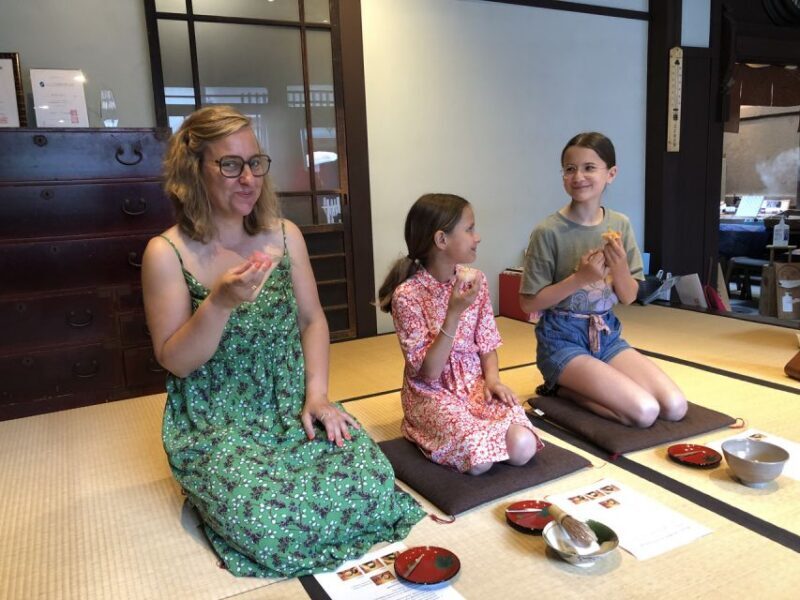
Your host is trained in the Omotesenke tradition, one of Japan’s respected tea schools. The session begins with an introduction to the ceremony and a demonstration of how matcha is prepared. The focus is not only on the finished cup, but on the deliberate movements and etiquette that shape the ritual.
This is a useful way to approach tea ceremony if you are new to it. Instead of being expected to understand every gesture, you can watch first and hear the reasoning behind the steps. The English-speaking tea masters welcome questions, and the atmosphere is described as friendly rather than strict.
Hosts named by visitors have included Miki, Aki, Yoko, Joko, and Kiyoka. The person leading your session may differ, but clear explanations, patience, and willingness to answer questions are recurring strengths of the experience. If you are curious about more than tea, this is a good moment to ask about Japanese customs and culture.
The demonstration is one of the most calming parts of the session. The measured pace invites you to pay attention, but you do not need to treat it as a test. The aim is to understand and appreciate the practice, not to perform every movement perfectly.
Looking for more options in Kyoto? Here are some other experiences worth considering.
After watching, you get to prepare matcha yourself. The tea master guides you through the process and lets you try the techniques with authentic utensils made by skilled craftspeople. That hands-on element is what makes the experience more than a talk or a performance.
You will not leave as a tea master after 45 minutes, of course. But you will have a better sense of how matcha is prepared and why the movements are done with care. The session gives you a first set of skills you can remember and share, whether you want to make matcha at home or simply notice more during your next tea experience.
The small group helps here. With a maximum of 10 participants, the host can demonstrate and guide the activity without the room feeling like a large class. Some sessions may be smaller still, which can make the activity feel especially personal. The exact group size depends on the booking.
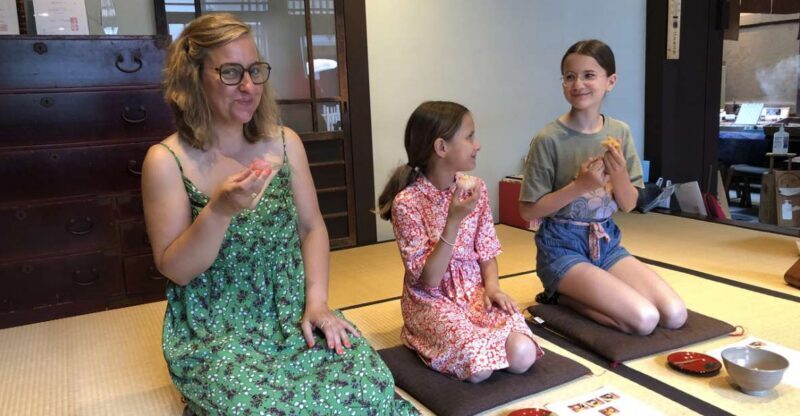
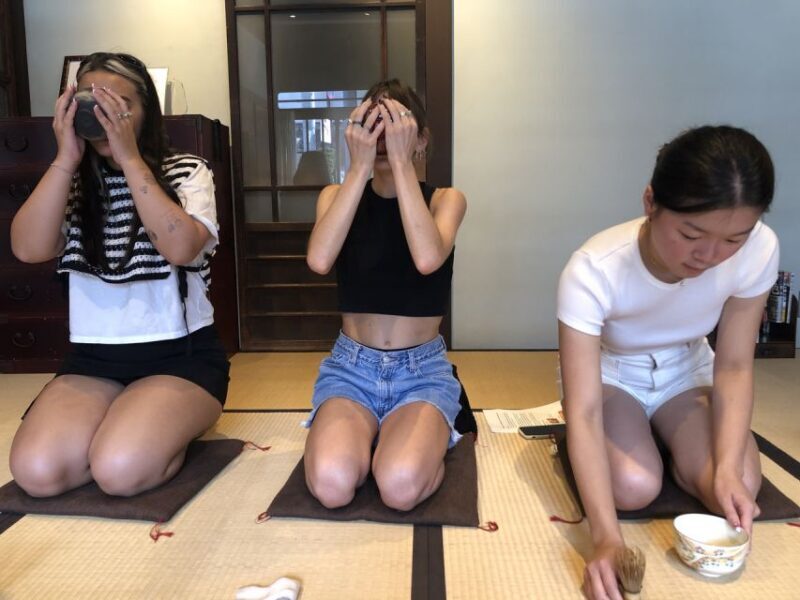
The experience includes one cup of matcha and a Japanese traditional sweet. You drink the tea you have prepared, giving the lesson a satisfying finish: first observe, then make, then taste.
The sweet is part of the tea pairing, not a meal. Food and drinks from outside are not allowed, and the venue is not suitable for eating. If you are hungry, plan to have a meal before or after the session rather than expecting the tea stop to fill that role.
The matcha and sweet are a small but important part of the value. The point is not simply to sample a drink. You get to connect the taste with the method and etiquette you have just learned.
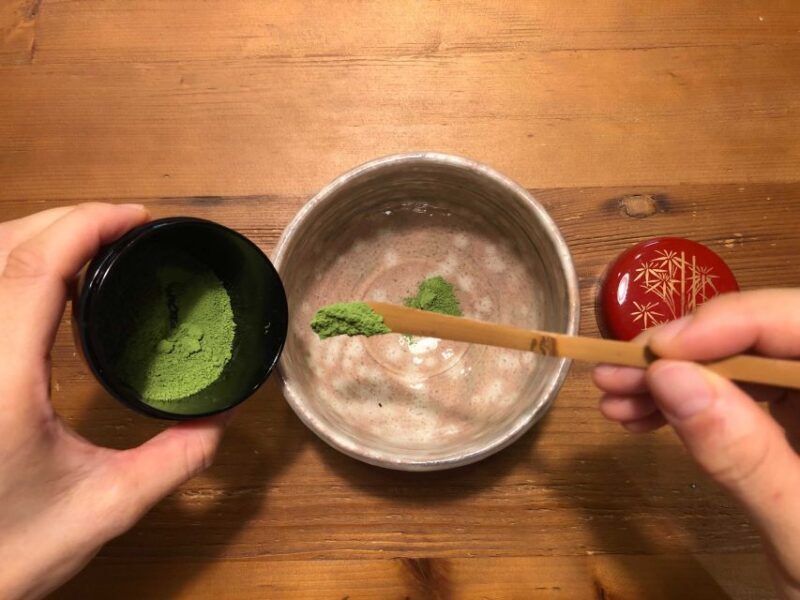
The experience is best understood as an accessible introduction to tea ceremony. You see a demonstration, hear about the tradition, ask questions, and try preparing matcha. The host adapts the session for an international audience, so it is designed to explain the practice rather than leave you guessing about what each action means.
That makes it a good choice for first-timers, solo visitors, couples, and families with children who can enjoy a quiet, guided activity. Children aged 8 and 10 have taken part successfully, and hosts have also shown patience with a toddler. Still, the ceremony asks for a little calm and attention. If your child is unlikely to sit through a short demonstration, you may prefer a more active activity.
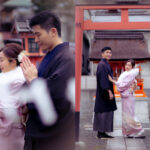
The setting is not a kimono photo session. Kimono and hair setting are not included, so do not book expecting a costume experience. Instead, this is about tea preparation, etiquette, cultural explanation, and a quiet shared activity.
More Great Tours Nearby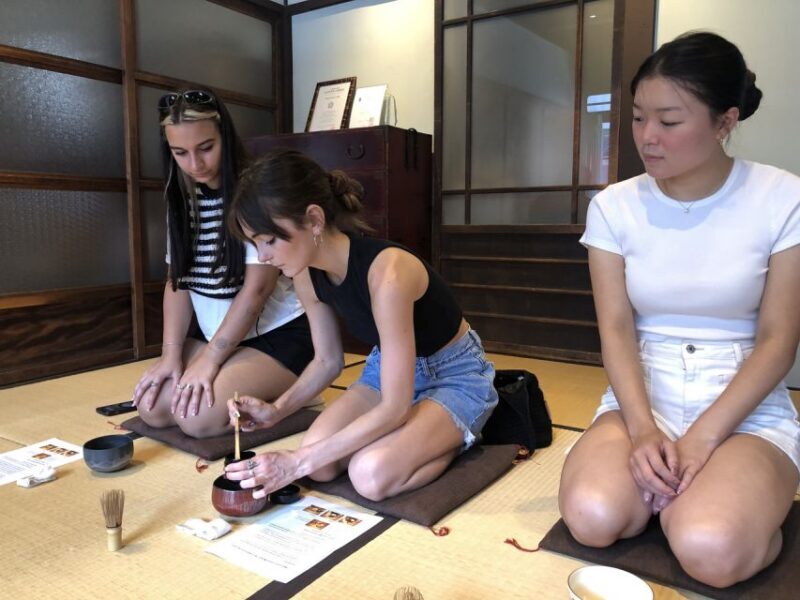
At $45 per person, this is not the cheapest way to drink matcha in Kyoto. You are paying for a guided cultural experience in a historic townhouse, an English-speaking tea master, a demonstration, your own chance to prepare tea, handcrafted utensils, matcha, and a traditional sweet.
The strongest value is the personal instruction. A cup of tea alone would cost far less, but it would not show you the practice behind it or give you a chance to try it yourself. The limited group size also makes the price easier to justify if you value the opportunity to ask questions and get guidance rather than watch from the back of a crowd.
Time is the main trade-off. Forty-five minutes fits neatly between other Kyoto plans, but it means the experience stays introductory. If you want a long, highly formal ceremony or an extended class, this is probably not the right fit. If you want a thoughtful, hands-on cultural stop that does not take half a day, the timing is a strength.
Japanese crafts are available to explore, and you may find a meaningful souvenir to take home. Treat that as an optional extra, not part of the included package. The stated inclusions are the ceremony, one cup of matcha, and traditional sweets.
The session is taught in English and is listed as wheelchair accessible. Starting times vary, so check availability for your preferred date. You can reserve now and pay later, and cancellation up to 24 hours in advance qualifies for a full refund.
Please skip perfume or cologne. The venue asks participants to avoid fragrances so everyone can appreciate the aroma of the matcha. It is a small request that suits the quiet, sensory nature of the activity.
There is no hotel pickup or drop-off. You will need to make your own way to the townhouse, and there is no car parking on site. The directions from Karasuma-dori are straightforward once you know to look for the Family Mart corner and the aeru gojo sign.
I would choose this session if you want more than a quick taste of matcha but do not need a lengthy formal event. It gives you cultural context, a clear demonstration, and the chance to make the tea yourself. That mix works especially well for first-time visitors to Japan and anyone curious about the traditions behind a familiar drink.
It also suits solo visitors. A small group gives you a natural way to share the activity with others, while the host’s explanations keep the session welcoming even if you arrive without a companion. Couples and families with older children can also enjoy the shared lesson.
Skip it if you are mainly looking for a kimono experience, a full meal, or a long ceremony with no adaptations for beginners. And if you are packing your Kyoto schedule tightly, remember to leave time to find the townhouse and arrive calmly. The session is short, but its value depends on being able to slow down for it.
For a modest slice of Kyoto culture that is practical, participatory, and easy to fit into a day, this is a good booking. You leave with a cup of matcha behind you, a little more understanding of the ceremony, and a technique you can try again.
“It was an excellent experience ! Thank you so much and hope to see you again!”
The session lasts 45 minutes.
The listed price is $45 per person.
The experience includes the tea ceremony, one cup of matcha, and Japanese traditional sweets.
Yes. The instructor teaches in English.
The group is limited to 10 participants.
Yes. After the tea master demonstrates the preparation, you make your own bowl of matcha with guidance.
No. Kimono rental and hair setting are not included.
Yes, the activity is listed as wheelchair accessible.
No. Food and drinks are not allowed, and the venue is not suitable for eating.
From Karasuma-dori, turn at the Family Mart corner and continue straight for one block. Look for the aeru gojo sign next to Only Corporation and across from Zen Kyoto.
You can check availability for your dates here: