Physical Address
304 North Cardinal St.
Dorchester Center, MA 02124
Physical Address
304 North Cardinal St.
Dorchester Center, MA 02124

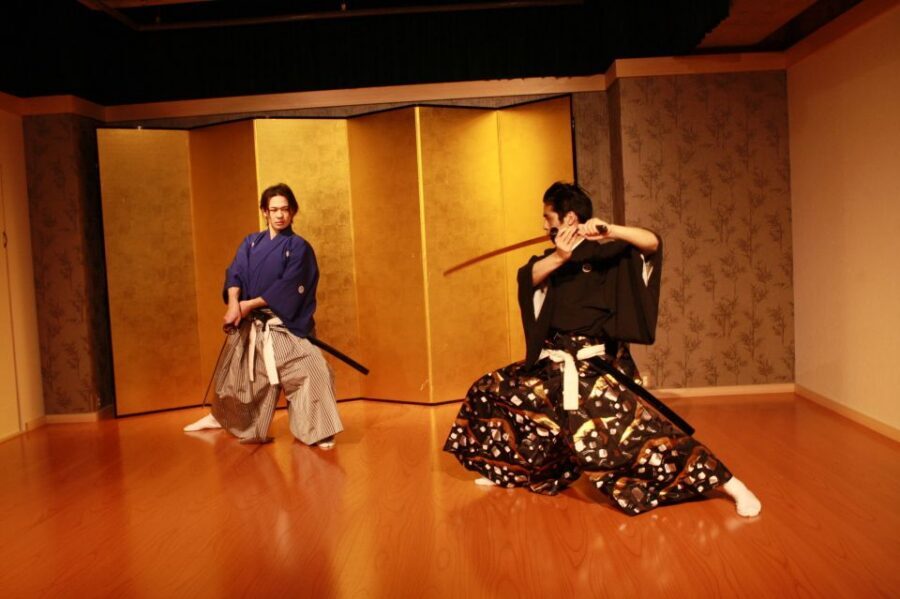
See Kyoto’s Kenbu sword dance, hear samurai stories in English, then try basic sword movements in a one-hour cultural experience.
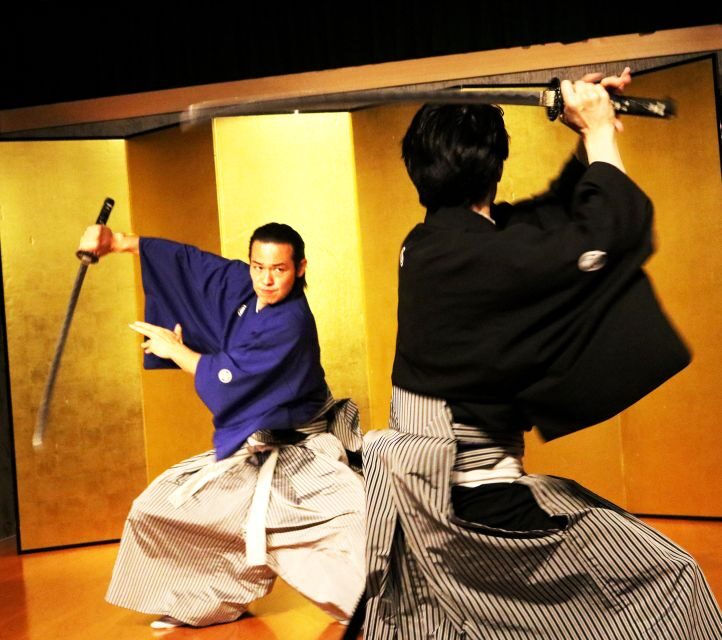
Kenbu is not a sword fight staged for spectacle. It is a traditional performance in which a samurai’s sword movements, gestures, and fan work give shape to stories and poems. At Kyoto’s Samurai Kenbu Theater, you’ll see several demonstrations, hear English explanations, and get a short chance to handle a sword yourself.
I like the way the performance pairs graceful, deliberate movement with stories about the samurai, and I like that the sword lesson lets you feel how much control the movements require. One consideration: this is a cultural performance, not an extended action show, and you cannot take photos or video during it.
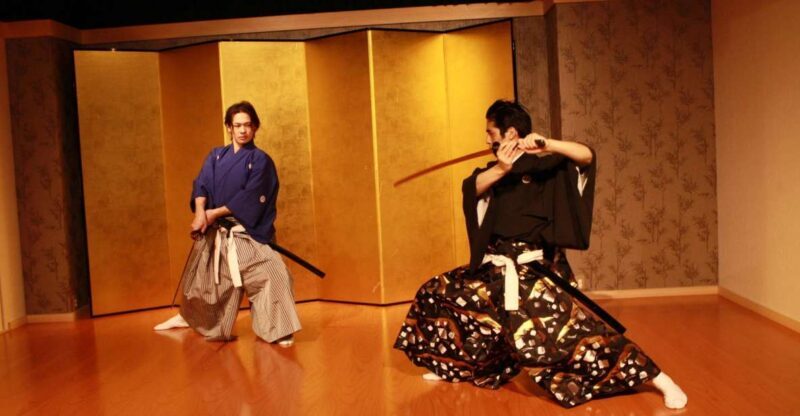
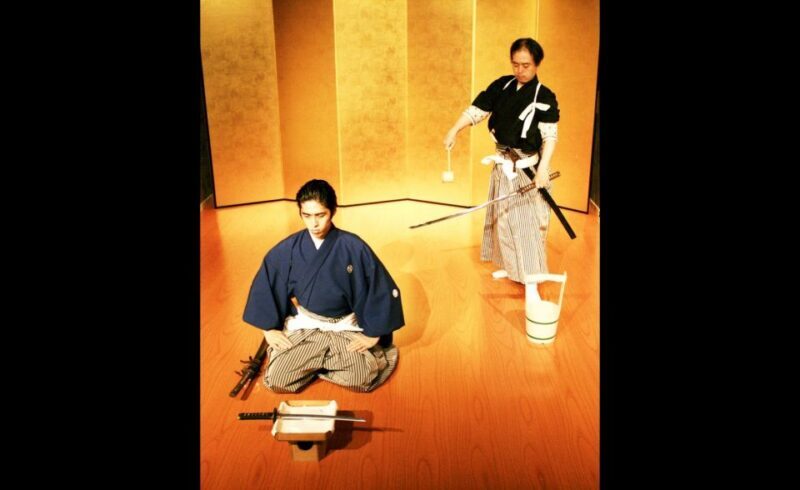
Kenbu, also written Kembu, is a traditional sword dance that uses controlled movements to bring samurai stories to life. Rather than presenting a long sequence of sword fights, the performance focuses on form, timing, and expression. Each movement is connected to a scene, with performers following poems that samurai recited before going to battle.
That distinction matters when you decide if this is for you. If you want a show built around fast combat and staged clashes, Kenbu may feel quieter than expected. If you’re curious about the artistic and ceremonial side of samurai culture, you’ll get a more useful introduction than a simple display of sword tricks.
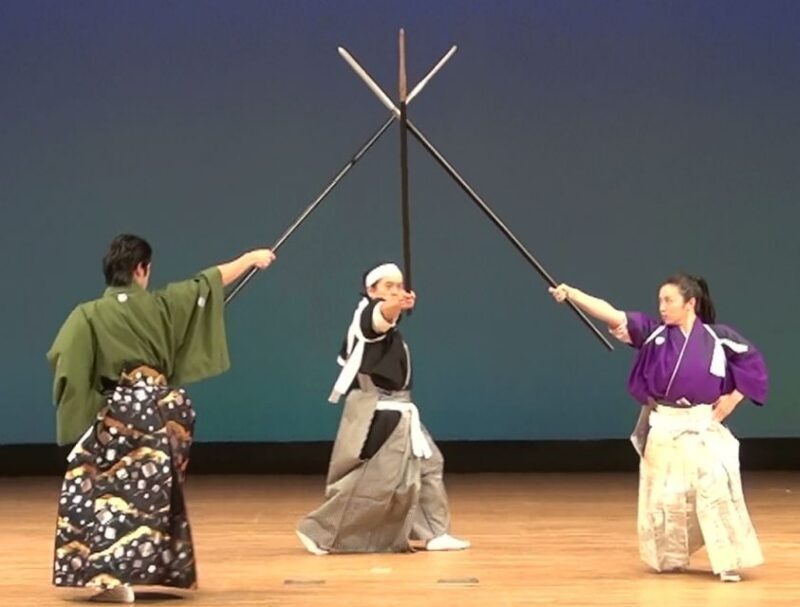
The hour-long program includes traditional-style and new-style Kenbu. The performer’s sword movements can look fluid and light, yet each gesture carries a sense of purpose. The effect is part dance, part storytelling, and part demonstration of a discipline that takes practice to make look effortless.
You can check availability for your dates here: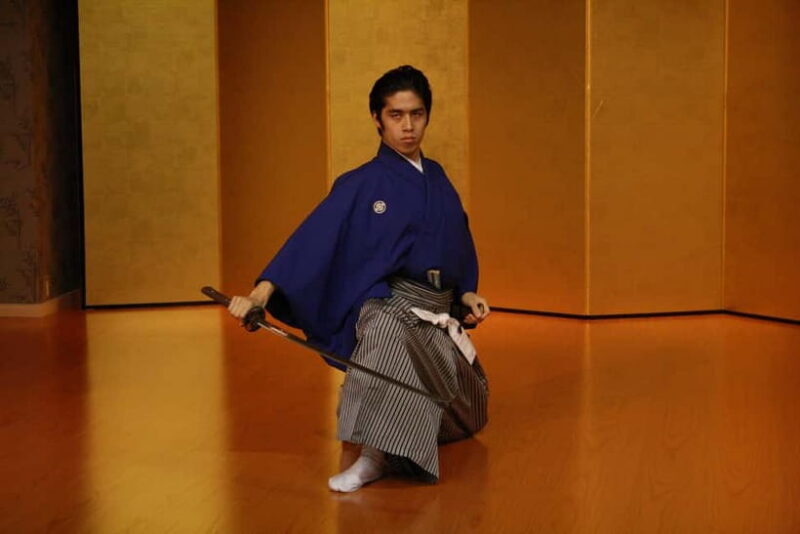
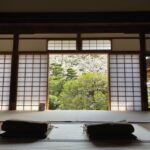
When you arrive at the Samurai Kenbu Theater, you’ll take off your shoes in keeping with the local custom. Then you’ll sit down for an introduction to the history and techniques of Kenbu. The instructor speaks in English and Japanese, and the show’s English narration helps explain what you’re seeing as the performances unfold.
The introductory talk gives you a helpful frame for the rest of the hour. You’ll hear about samurai culture across the centuries, from the 12th through the 19th century, and learn about the responsibility associated with carrying a sword. That context helps make the careful handling and formal movements feel less like choreography for its own sake.
Expect history in concise pieces rather than a full lecture. The explanations are there to guide your attention to the performance, not to cover every part of samurai life. If you’re a history buff, you may want to keep a note of questions to look up later. The show can spark curiosity about the beliefs and customs behind the art, but it is still a one-hour introduction.
You might also be interested in these Kyoto experiences
The main part of the experience is a series of Kenbu demonstrations. Before each one, you hear a short account of the story or historical background. Then the performer uses the sword, and sometimes a folding fan, to represent the scene. The narration and movement work together, so you can follow the story even if you have never seen Kenbu before.
A poem often sets the mood. The performer’s movements then give that poem a physical form, with shifts in posture, direction, and pace. You may see a scene of combat, but the point is not simply to show who can swing a sword fastest. It is the connection between the story, the words, and the controlled motion that makes the art distinctive.
The folding fan adds another layer. It is not just a prop to fill a hand; it has its own role in the performance and is part of the samurai tradition presented here. If you’re used to seeing samurai portrayed only through swordplay, the fan demonstrations offer a welcome reminder that this performance is about a wider set of skills and forms.
The setting is a theater, not a large arena. That makes the performance feel direct and lets you pay close attention to details, but it also means you should not expect a grand stage production. The show’s appeal is in the performers’ precision and the stories they tell, not elaborate scenery or effects.
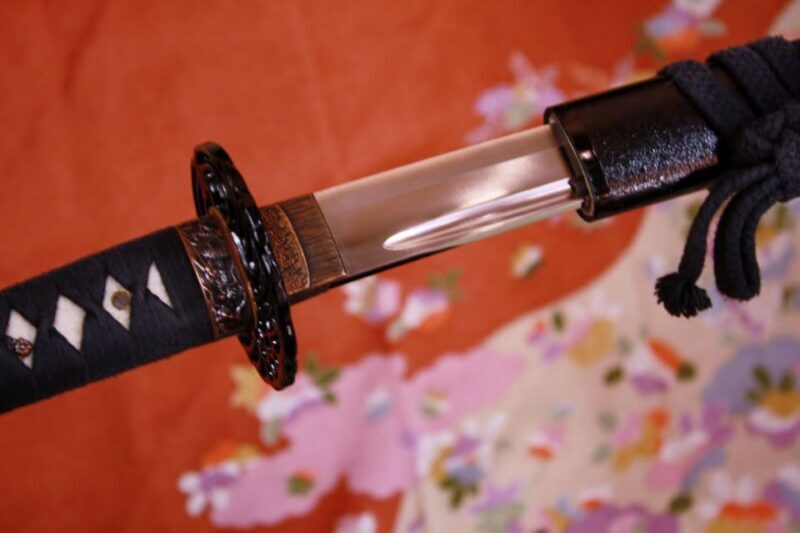
After the demonstrations, the experience shifts from watching to doing. An instructor shows you how to hold and draw a sword, then guides you through gentle swings and basic movements. You start slowly and build force only as instructed. The practice is brief, but it gives you a new respect for how much coordination and care even a simple movement requires.
This is a supervised introduction, not a full martial arts class. You won’t leave with advanced sword skills, and the point is not to test your strength. Instead, you get a safe, short taste of the posture and control behind the movements you have just watched. Some sessions may also include a chance to learn how to use a folding fan, if there is time.
The lesson is one of the experience’s strongest features because it turns an elegant performance into something physical. You can see the sword work differently once you’ve tried holding and moving a sword yourself. It also makes for a light, sociable finish: instructors are described as friendly and playful, which can take the pressure off if you feel awkward at first.
Once the show is over, you can take photos with the performers. You may also get pictures of yourself holding the sword, so you don’t have to choose between taking a photo and being in one. Photography and video are not allowed during the performance, so plan to enjoy the show without a phone in your hand and save your camera for the end.
At $32 per person, this is a good-value cultural activity if you want more than a stage show. The price includes theater entry, the Kenbu performance, and a short sword lesson. You’re getting an introduction to a Japanese performing tradition, English explanations, several demonstrations, and an interactive finish in one compact session.
The value is less compelling if you are shopping strictly for a long performance or a hands-on lesson that lasts most of the hour. The show and lesson share the same short time slot, and the practice is meant to be a taste rather than in-depth training. A few people may also find the explanations or lesson a little less satisfying if they were hoping for more detail or structure.
For families, the combination of short stories, movement, and a turn with the sword can work well. The experience has been enjoyed by families with young children and older children, though the information-heavy parts may suit children who can sit and listen for a while. There is no stated age limit, so check directly if you have a specific concern about a child’s participation.
It also suits solo visitors and couples who want an indoor cultural stop that does not take half a day. At one hour, it fits neatly between other Kyoto plans. Food and drinks are not included, and there is no hotel pickup or drop-off, so treat it as a theater visit rather than a packaged sightseeing tour.
More Great Tours Nearby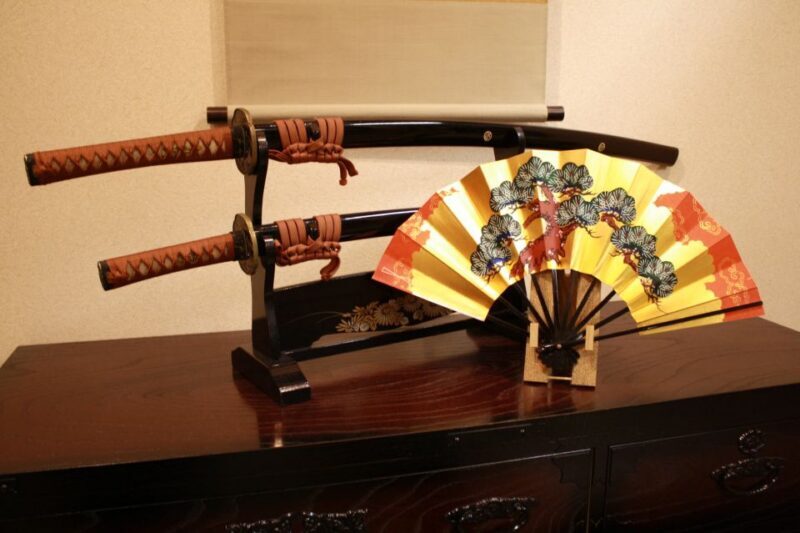
The meeting point is the Samurai Kenbu Theater in Kyoto. It is about a four-minute walk from Sanjo Keihan Station on the Kyoto City Subway and a five-minute walk from Sanjo Station on the Keihan Main Line. Allow a little extra time if you are unfamiliar with the area, and arrive five to 15 minutes before the start.
There is no waiting room, and people without an appointment cannot wait inside. The theater also has no room for large luggage or travel bags, so make this a stop for a day when you can travel light. You’ll remove your shoes on arrival, so wear footwear you can take off without a fuss.
The theater is listed as wheelchair accessible. The activity is offered in English and Japanese, and the reservation name is confirmed at reception on the day. Avoid arriving under the influence of alcohol, as the venue asks visitors not to do so.
If your plans may change, you can reserve now and pay later. The activity allows free cancellation up to 24 hours in advance for a full refund. Any cancellation must be made by you through GetYourGuide.
I’d book this if you’re interested in samurai culture, Japanese performance, or the relationship between poetry and movement. It is especially well suited to first-time visitors who want an accessible introduction, since the English narration explains the stories and the short lesson gives you a hands-on connection to what you’ve seen.
It is also a good choice if you’re traveling with family and want something interactive without committing to a long activity. The sword practice and end-of-show photos give the hour a playful finish, while the performance itself offers enough context to keep it from feeling like a photo opportunity alone.
I’d think twice if your main goal is a large-scale action show, a detailed history lecture, or extended sword training. Kenbu is measured and expressive, and the lesson is brief. Book it for the tradition, the stories, and the chance to try a few basic movements, not for a full combat demonstration.
“It was an unforgettable very knowledgeable experience that me and my sister won’t forget. Wanted to take pics during but it’s not allowed howev…”
The activity lasts one hour, including the performance and short sword lesson.
The price includes entry to the Samurai Kenbu Theater, the Kenbu show, and a short sword lesson. Food, drinks, and hotel pickup and drop-off are not included.
Yes. The show includes English narration, and the instructor speaks English and Japanese.
No. Photos and videos are not allowed during the show. You can take photos after the performance when the performers return.
Yes. After the show, you can try basic sword handling and movements with an instructor. A folding-fan lesson may also be offered if time allows.
The theater is about a four-minute walk from Sanjo Keihan Station on the Kyoto City Subway and a five-minute walk from Sanjo Station on the Keihan Main Line.
No. There is no room for large luggage or travel bags, and the theater does not have a waiting room.
You can check availability for your dates here: