Physical Address
304 North Cardinal St.
Dorchester Center, MA 02124
Physical Address
304 North Cardinal St.
Dorchester Center, MA 02124

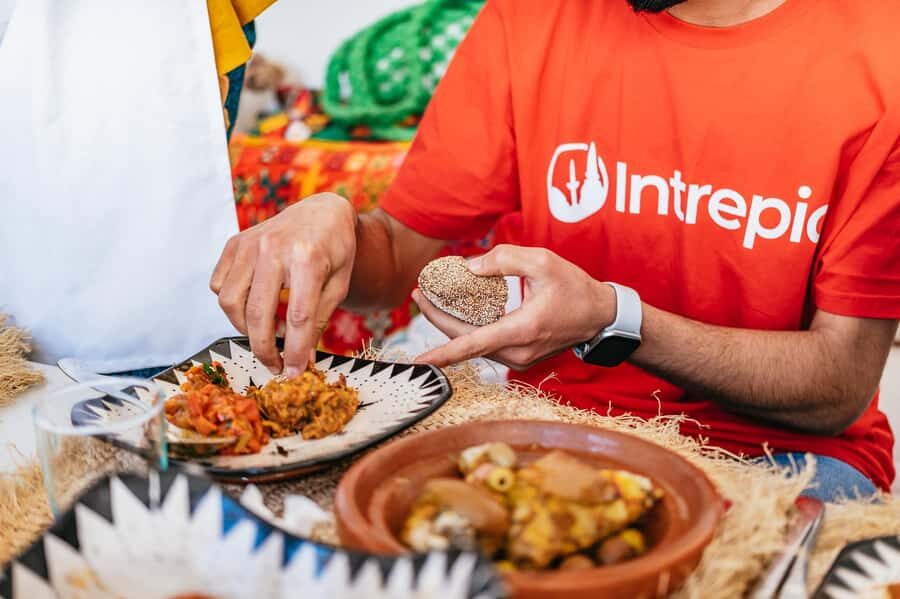
Shop Marrakech’s souks, learn Moroccan cooking in a family riad, and share a homemade tajine in this four-hour, small-group class.
In Marrakech, the best cooking lesson may begin before you reach the kitchen. This four-hour class takes you from Djemaa El-Fna into the souks to choose ingredients, then into a traditional riad to prepare a tajine with a local chef. You learn by doing, not just by watching.
I like two things in particular: the market visit gives you a local’s eye on ingredients and spices, and the meal is one you help make and can try again at home. The riad setting and tea make time for conversation, too, while a group capped at 12 keeps the class from feeling like a cooking show.
The main drawback is practical: there’s no hotel pickup, and the meeting point is in a square where unofficial guides may approach you. The class can also run longer than four hours, so avoid booking it right before another fixed appointment.
The class begins outside Café France, a three-storey café on the right side of Djemaa El-Fna as you enter through the square’s main entrance. The provider warns that unofficial guides may try to draw you into a tour, so check for the official guide holding an Urban Adventures sign or badge before setting off.
There is no hotel pickup or drop-off. That means you need to get to the square yourself and allow a little time to find the right meeting point. If you are new to the medina, confirm how to reach Café France before you leave your accommodation rather than relying on someone who approaches you in the square.
The tour is in English, and private groups are available. Otherwise, expect a shared class with up to 12 people. That size gives you the chance to meet other visitors and share the cooking work, while still leaving room to ask questions and take part.
Want to bring Marrakesh flavors home? These cooking classes could be just right
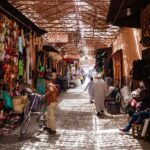
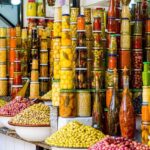
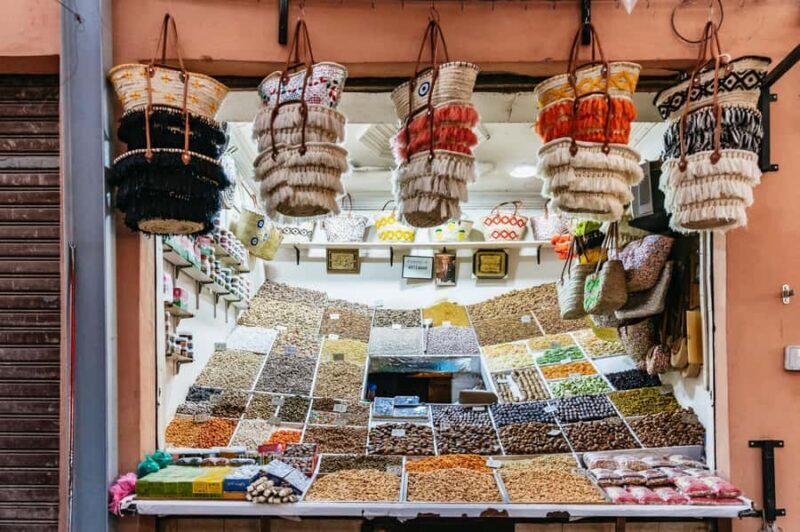
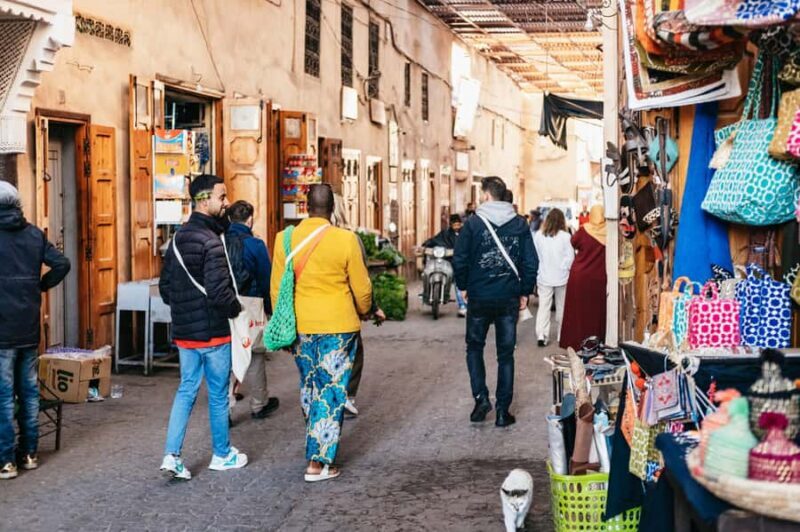
After meeting your guide, you head into the souks to shop for the ingredients that will go into the meal. The walk is more than a quick errand. It gives you a useful look at how local cooks choose fresh vegetables, herbs, spices, and other staples, with the guide explaining what you are seeing along the way.
You also get some Arabic food vocabulary and tips for navigating market purchases. The tour is designed to teach you about Moroccan spices and haggling, but don’t expect a formal bargaining lesson at every stall. The focus is on finding the ingredients for the class and learning from a local guide as you go.
The details of the shopping can vary. In one account of the experience, the group selected fresh produce and chicken; another participant chose a vegetable tajine instead. Some earlier outings have involved seeing a live chicken purchased, which can be confronting if you are not used to seeing food handled that way. The route and food depend on the day, so if this matters to you, ask the provider what to expect before booking.
That flexibility is useful for dietary needs, but it also means the exact market stops and menu are not fixed. The provider says vegetarian, vegan, gluten-free, and other dietary requirements can be accommodated. Tell them about your needs in advance so the shopping and cooking can be planned accordingly.
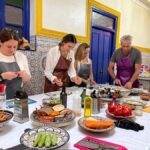
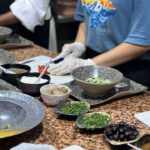
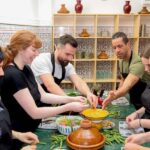
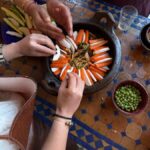
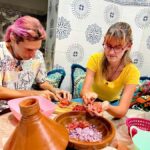
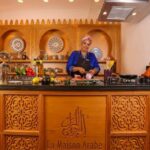
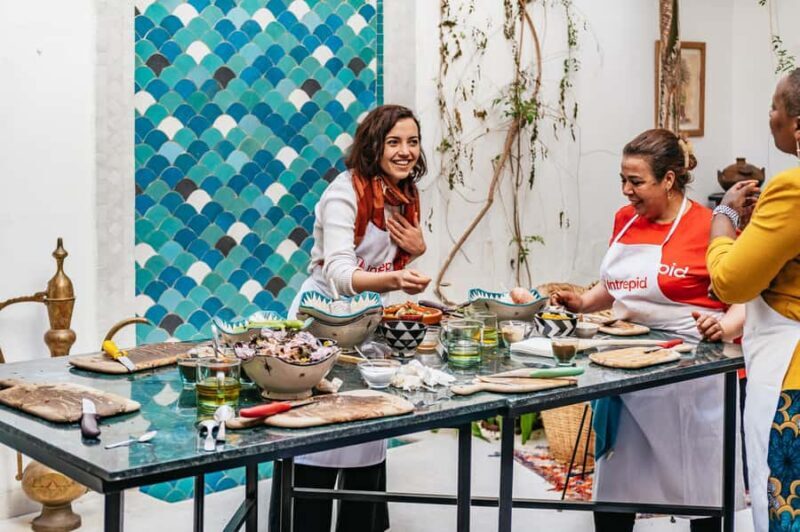
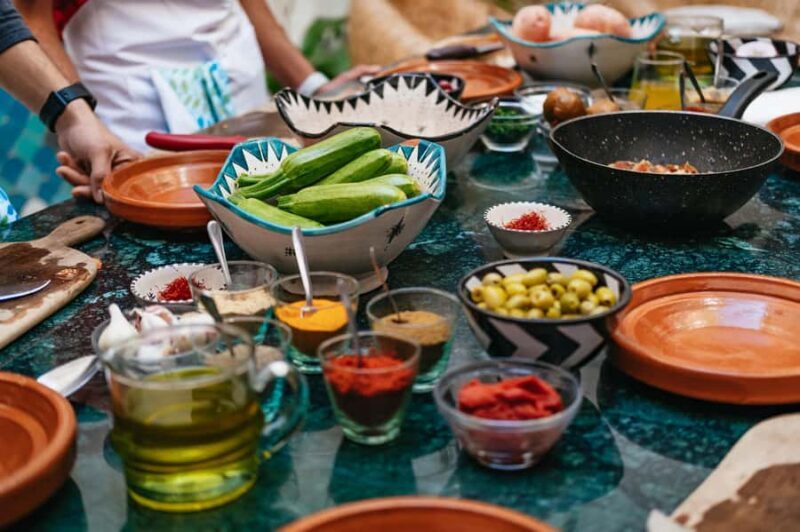
From the souks, you continue to a traditional riad kitchen, where the hands-on cooking begins. The class is hosted by a local chef, and members of the household may help set up and guide you through the steps. The point is not to watch a professional do all the work: you chop, season, layer, and prepare the food yourself.
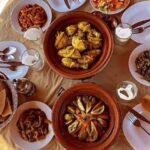
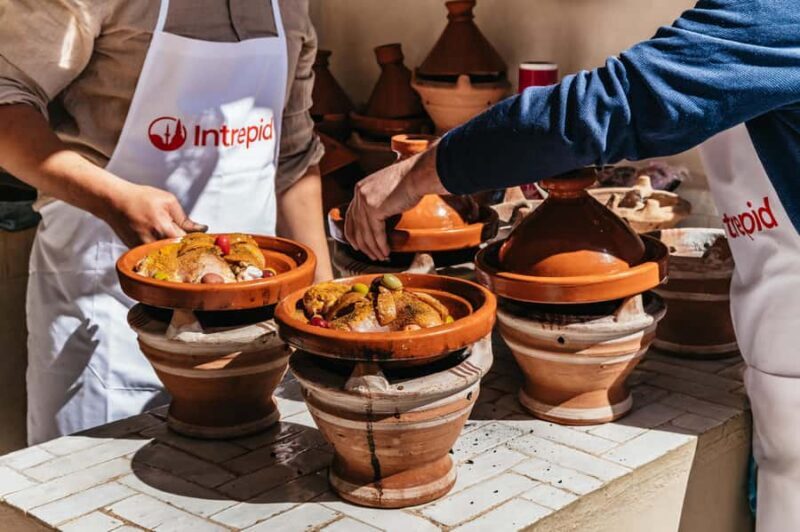
The central dish is tajine, usually made with chicken, vegetables, herbs, and spices, though the ingredients can change. Moroccan salad is part of the described meal, and some sessions have also included dessert. Since the provider says food inclusions depend on availability, treat the tajine and salad as the core expectation and any extra dish as a possible bonus.
Several chefs have led the class over time, including Samira, Amina, Karima, and Sanae. The individual host may vary, but the format is built around learning directly from a local cook. You can ask about spice choices and preparation as you work, rather than trying to memorise a string of instructions while someone else does the cooking.
Mint tea is part of the experience, and some classes begin by preparing it. It offers a natural pause before or during the cooking, with time to sit down and talk. Homemade biscuits have also appeared in some sessions, though they are not listed as a guaranteed inclusion.
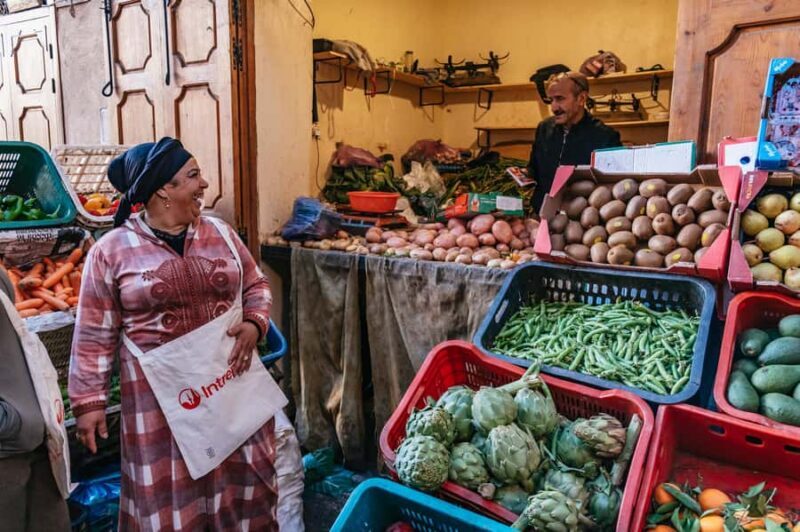
The class finishes around the meal you have prepared. You sit down with the group, enjoy the tajine and tea, and get to taste how the ingredients and cooking method come together. That shared table is part of the appeal: you are not only learning a recipe, but spending time with the people who helped bring it to life.
The take-home recipe sheet makes the class more useful after your trip. Tajine is a dish you can adapt to ingredients at home, and the market visit gives you a better sense of what to look for when choosing produce and spices. You will not leave as an expert cook, but you should have a practical starting point and a meal tied to a real place and a particular morning in Marrakech.
Some classes have included additional dishes such as dessert, but the exact menu can change. Ask your guide what you prepared if you want to make sure you have the full recipe details before leaving.
More Great Tours Nearby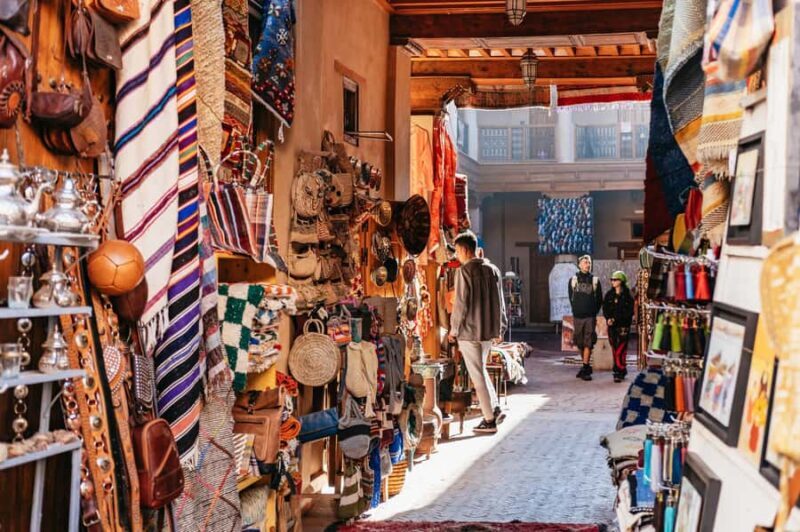
At $57 per person, the value comes from the combination of market walk, guided shopping, cooking lesson, meal, tea, and recipe sheet. You are also spending time in a local home rather than only eating in a restaurant. If you already plan to take a cooking class, adding the market visit makes this a more complete introduction to Moroccan food and shopping customs.
It is not the cheapest way to eat tajine in Marrakech. You are paying for the guide, the instruction, the ingredients, and the chance to prepare the meal yourself, not just for lunch. For a four-hour activity, that is a reasonable package if you are curious about how the food is made and enjoy meeting people around a shared table.
The experience is also described as carbon-neutral and operated by a B Corp-certified company committed to using travel as a force for good. That may matter if you want your spending to support a locally run cultural activity. The class is child-friendly, and children under six may join free, though the cooking and market walk will suit children who can manage a four-hour outing.
You can reserve now and pay later, and cancel up to 24 hours in advance for a full refund. Starting times depend on availability, so check the schedule before building the rest of your day around it.
You might also be interested in these Marrakesh experiences
Wear clothing that meets the tour’s dress rules: shorts, short skirts, and sleeveless shirts are not allowed. The walk, cooking, and meal together take about four hours, but one class ran over its expected finish time. Leave some breathing room afterward, especially if you have another tour or a timed transfer.
The operator may change the route and places visited, and the food depends on what is available that day. If you have a dietary restriction, make it known in advance rather than assuming a particular substitute will be arranged on the spot.
I’d book this class if you want more than a restaurant meal and are happy to spend a half-day walking, chopping, and sharing lunch. It is especially well suited to curious cooks, first-time visitors who want a local introduction to food shopping, and anyone who likes a small-group setting. If you mainly want a quick meal, dislike market shopping, or have a tightly packed schedule, choose a simpler plan.
“Asis(sorry if I spelt wrong) was absolutely brilliant very fun and easy to understand English. this is a great way to learn Moroccan foods, also gr…”
Meet outside Café France in Djemaa El-Fna. It is a three-storey café on the right as you enter the square through the main entrance. Look for the guide with an Urban Adventures sign or badge.
The class is scheduled for four hours. It can run over, so avoid placing another fixed activity immediately afterward.
The live guide speaks English.
The experience includes the ingredients for a tajine, a hands-on cooking class, the meal you prepare, Moroccan tea, and a take-home tajine recipe sheet. The route and food may change based on availability.
Yes. Vegetarian, vegan, gluten-free, and other dietary restrictions can be accommodated. Share your requirements with the provider before the class.
Yes, it is child-friendly. Children under six may join free of charge.
Shorts, short skirts, and sleeveless shirts are not allowed. Choose clothing that follows these rules.
Hotel pickup and drop-off are not included. You can cancel up to 24 hours in advance for a full refund, and the reserve-now, pay-later option lets you book without paying today.
You can check availability for your dates here: