Physical Address
304 North Cardinal St.
Dorchester Center, MA 02124
Physical Address
304 North Cardinal St.
Dorchester Center, MA 02124

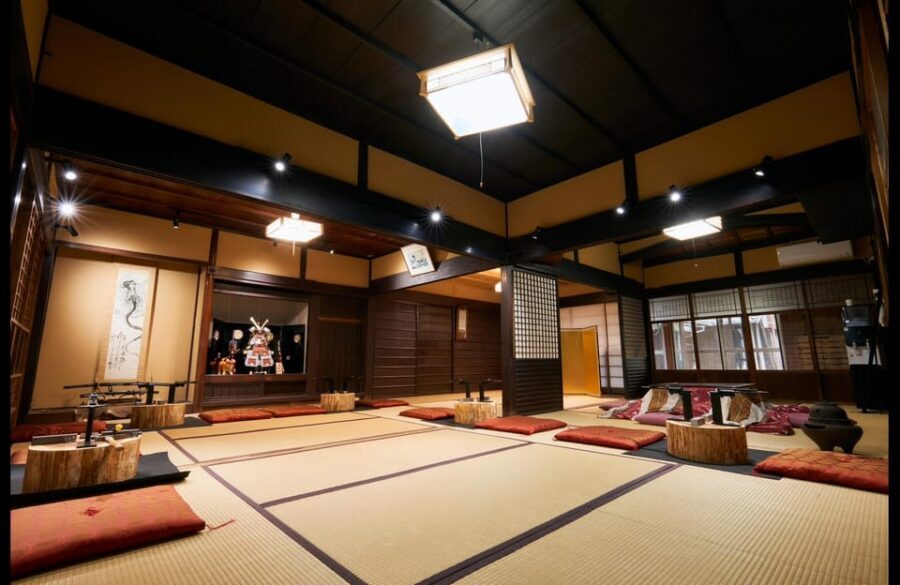
Forge a steel shuriken or kunai in Kyoto, learn about ninja history, and take home a custom-engraved souvenir.
A furnace heated to about 800°C sets the tone: you’ll hammer real steel, then shape and finish a ninja-inspired weapon under an instructor’s eye. I like that you do more than watch, and that kanji engraving turns the finished piece into a personal keepsake. The other pleasure is the friendly, energetic teaching, with instructors such as Taka guiding the work.
The main consideration is the trip out from central Kyoto, which can take time, and the 150-minute schedule may not tell the whole story: allow some extra room in your day. A kunai also costs ¥3,000 extra, and your finished weapon must travel in checked luggage, not your carry-on.
Kyoto offers plenty of temples, gardens and carefully arranged tea rooms. This workshop gives you something to do with your hands. For about two and a half hours, you trade sightseeing shoes for a blacksmith’s uniform and take part in the stages of making a steel ninja-inspired weapon.
The result is not a museum-grade antique or a historical weapon made exactly as a ninja would have used it. It is a modern, hands-on craft experience shaped by Japanese forging traditions, with a bit of ninja history along the way. That distinction matters: book it for the making, the learning and the personal souvenir, not as a chance to train with a weapon or test it.
At $148 per person, it is a substantial activity rather than a small add-on. In return, you get instruction, materials, tools, uniform, the making session and the piece you create. I find that combination easier to value than a souvenir bought off a shelf, especially if you enjoy learning a physical skill as part of a trip.
The session is in English, and the team’s warm, lively approach is a big part of its appeal. Taka is named often as an engaging instructor, while other team members help with the process and engraving. The welcoming guidance also makes the activity approachable for families and first-timers, though each person still needs to pay attention around heated metal and workshop tools.
You can check availability for your dates here: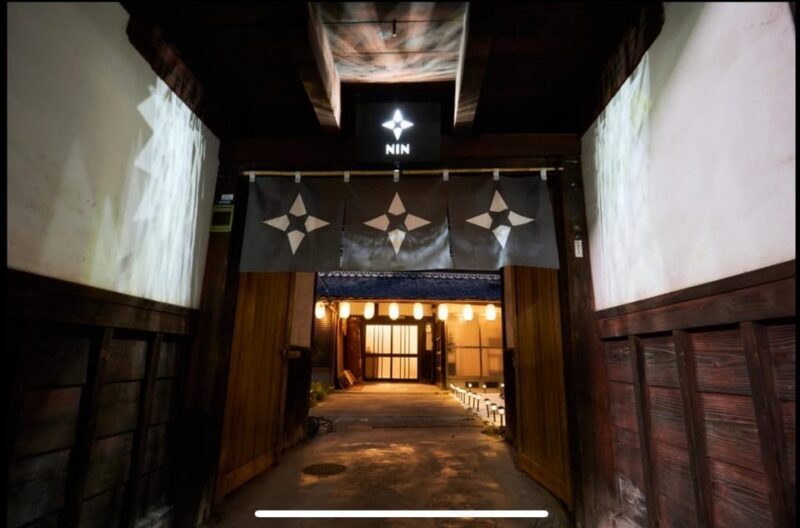
The session begins with a change of clothes. You put on samue, traditional workwear associated with Japanese craftspeople, and wrap a tenugui around your head. It is a simple touch, but it helps set the mood: you are here to work, not just pose beside a forge.
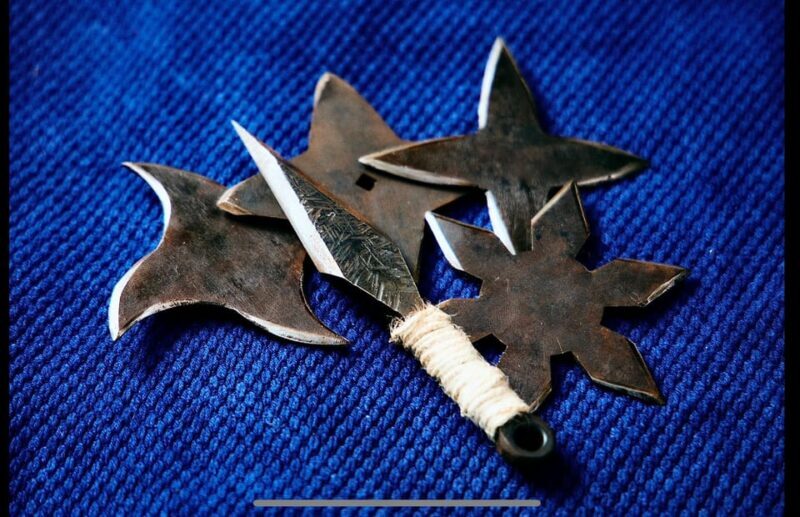
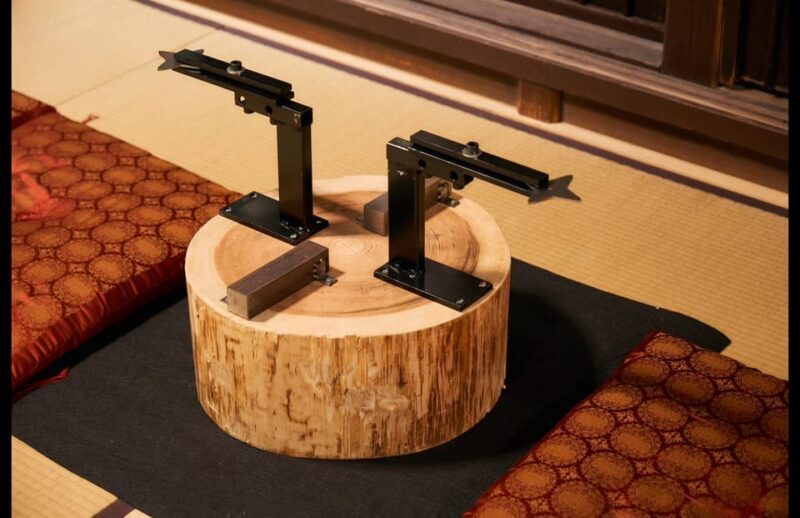
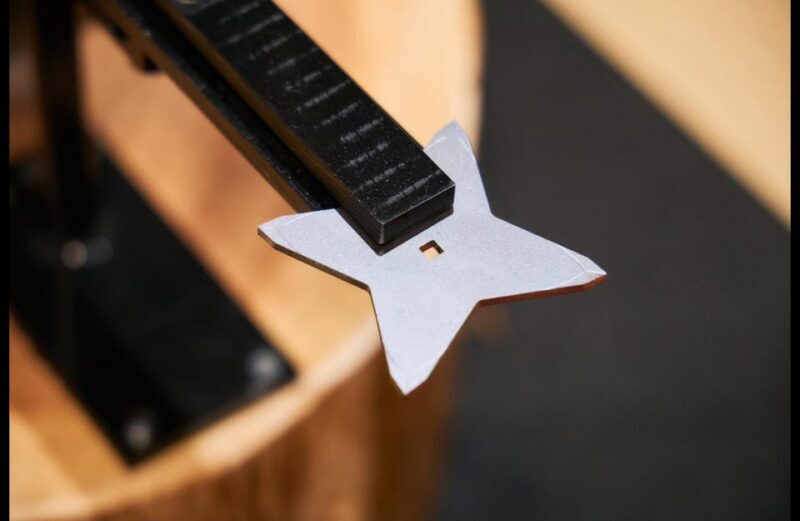
Next, you choose your piece. There are three shuriken styles, each with its own shape and character, or a kunai. The kunai requires an extra ¥3,000, so select that option when you reserve if it is the one you want. If you choose a shuriken, the standard activity price covers it.
This choice is worth a moment’s thought. The shuriken offers a compact, star-like shape, while the kunai has a different silhouette and costs more. You will be making a display keepsake, not a tool for use, so pick the design that you most want to take home.
Looking for more options in Kyoto? Here are some other experiences worth considering.
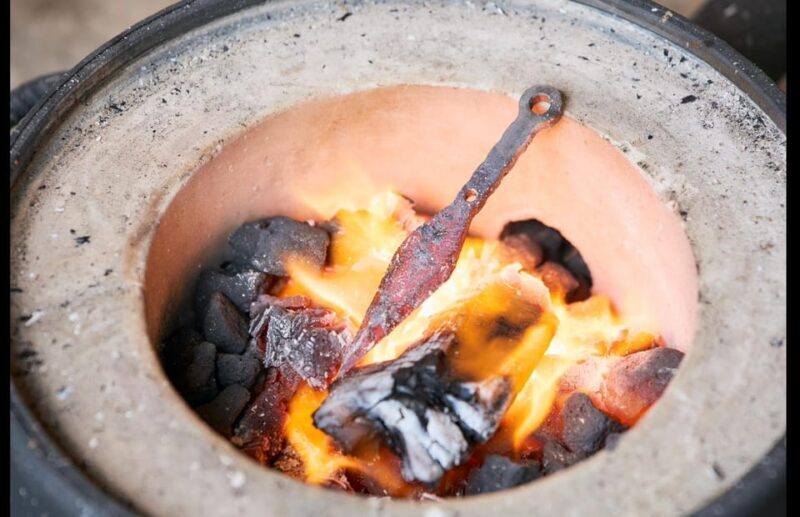
The forge is the dramatic heart of the class. Your steel is heated in a furnace at about 800°C until it glows, then you hammer it under instruction. The staff explain the steps and help you as needed, so you are not expected to know how to handle metal before arriving.
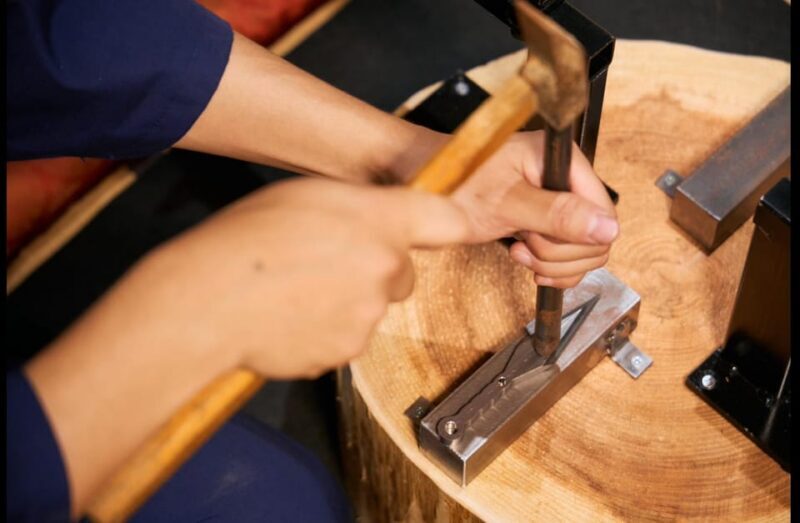
Hammering is a small but satisfying lesson in effort and control. Each strike contributes to the shape, yet the process is guided rather than left to guesswork. That balance makes the activity accessible to beginners while still giving you a real role in the work.
Expect to do part of the process, not every operation from raw stock to finished blade without help. The steel begins with a basic form, and the instructors guide the stages so that everyone can move through them safely and finish a piece. If you are hoping for a long session of hammering and forming, keep expectations measured: the workshop includes several different steps, and the forging portion is only one of them.
The furnace and sparks make for striking photos and video. Bring your camera if you want to record the moment, but keep your attention on the instructor’s directions while working. The workshop encourages memory-making, yet it is still a working space with heat and tools.
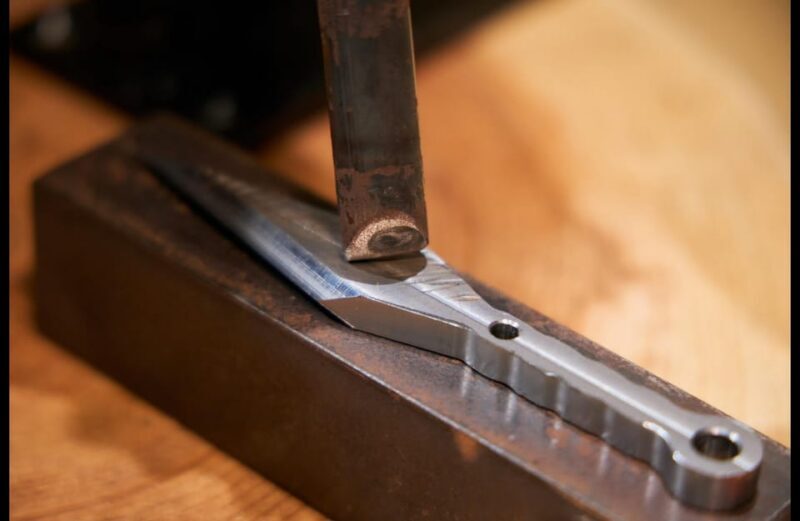
After forging, you refine the shape with a professional belt sander. This is where the outline becomes cleaner and the metal begins to look more like a finished piece. You get to take part in the shaping, with guidance at each stage.
The sanding step can be especially rewarding because the changes are visible. A rougher form takes on clearer lines, and you can see your work becoming more finished. It is also a reminder that making a weapon is not only about the dramatic hammering; careful finishing matters just as much.
Then comes the personal touch. You choose a kanji character, and a staff member engraves it onto your piece. The engraving is done for you, rather than being another task with a tool to master, but choosing the character gives the finished weapon an individual mark. If you are unsure what to choose, consider a character whose meaning you understand and want to remember.
The steel is then blackened with a special solution to darken and help protect it from rust. A final polish brings out the surface, and the finished piece is placed in a box for you to take home. The sequence gives you more than a quick hammering demonstration: you see the metal go through several stages, from heated steel to a polished object.
The workshop includes a session about ninja history, symbolism and techniques. The cultural context gives the activity more substance than a novelty craft class. It helps connect the object in your hands with the stories and ideas behind ninja tools.
Keep the scope in perspective. This is an introduction, not a full history course, and the main event remains making your weapon. Still, the combination of short explanations and hands-on work works well: you can ask questions, then return to the craft with a clearer sense of what the design represents.
The instructors’ energy helps keep the explanations lively. Taka and the wider team are described as funny, patient and clear in English, which matters when you are learning a sequence of unfamiliar tasks. The staff also help with photos and videos, so you can capture the process without having to document every moment yourself.
More Great Tours Nearby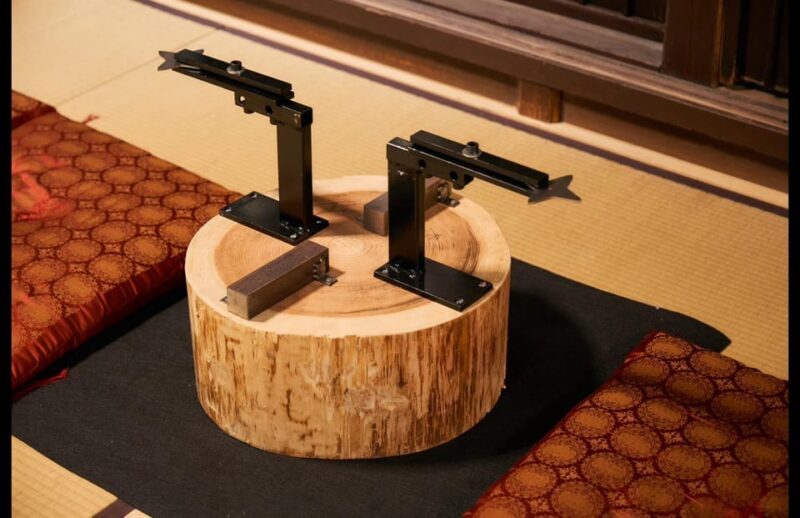
The price is not low, but you are paying for a guided workshop, the use of tools and materials, a uniform, instruction in English, and a handmade piece to take away. There is also the novelty of working with real steel and seeing it heated, shaped and finished. If hands-on cultural activities are a priority for you, that makes the cost easier to justify.
The finished object is the strongest part of the value. You have a souvenir tied to a specific experience, rather than a mass-produced item that could have come from any shop. The engraving adds a personal detail, and the boxed presentation makes it easier to keep or give as a memento.
The kunai option changes the total. It costs an extra ¥3,000, so factor that in before booking if you have your heart set on that shape. Replica swords are also sold at the studio for a fee, but they are not included in the activity price. You do not need to buy one to take part.
The meeting point is a one-minute walk from Hieizanguchi Station. From the station, go up the hill where a red postbox stands in front. That short walk is useful once you are there, but the location is outside central Kyoto: the journey from the city centre can take around 40 minutes by bus, and one visitor found a taxi necessary. Check your route for your chosen session rather than assuming the nearby station means a quick trip from downtown.
The activity is listed as 150 minutes. Some sessions may take closer to three hours, so avoid scheduling a tight connection or a major timed attraction immediately afterwards. A little spare time lets you enjoy the final polishing and photos without watching the clock.
You can take the finished weapon home on a flight, but it must go in checked luggage, never in your carry-on. Make room in your suitcase before the workshop, and check the rules that apply to your airline and destination. The box is handy for keeping the piece protected, but it does not change the baggage restriction.
The class is suitable for families as well as adults, and families with children as young as eight have taken part. The staff guide participants through the steps, but the work involves heat, metal and tools, so children should follow instructions closely. The experience is also a good fit for solo visitors: the shared task gives people something to talk about, and one solo participant even made friends during the session.
Book it if you like craft, Japanese history, or activities that let you make something rather than simply look at it. It is especially appealing if you want a Kyoto memory with a story attached, or if you are travelling with older children who enjoy practical projects.
It may be less suited to you if your schedule is packed, you dislike handling workshop tools, or you are mainly looking for a detailed historical lecture. It is also not a weapons-training class, and you do not get to test the piece you make. Think of it as a guided craft session with a cultural introduction and a striking keepsake.
I would book it if you have room in your Kyoto plans for a hands-on outing and are comfortable with the price. Choose the shuriken for the included option, or add the kunai fee when you reserve. Leave time for the journey and the workshop, and make sure your suitcase has space for the finished piece.
“Fantastic experience. Taka was energetic and knowledgeable, Mits was a great host, Ako was very helpful and gave me guidance and Yok was amazing at…”
The stated duration is 150 minutes. Allow extra time in your day, as a session may run closer to three hours.
The listed price is $148 per person. Making a kunai costs an additional ¥3,000.
You can choose from three shuriken styles or a kunai. Select the kunai option when making your reservation if you want that design.
The experience includes an instructor, the weapon-making class, a uniform, tools and the weapon you make to take home.
Yes. English is listed as the language for the instructor and activity.
The meeting point is a one-minute walk from Hieizanguchi Station. Go up the hill where there is a red postbox in front of the station.
Yes, but it must go in checked luggage. It is not allowed in your carry-on luggage.
Yes. Replica swords are available to purchase for an additional fee, and they are not included in the activity price.
Yes. You can capture photos and videos of your crafting experience.
You can cancel up to 24 hours in advance for a full refund.
You can check availability for your dates here: