Physical Address
304 North Cardinal St.
Dorchester Center, MA 02124
Physical Address
304 North Cardinal St.
Dorchester Center, MA 02124

Ride the Enoden past Kamakura’s famous crossing, explore Enoshima, then spend free time among Yokohama’s harbor lights on a long day trip.
Enoshima, Kamakura’s famous railway crossing, and Yokohama after dark make an appealing trio, and the Enoden ride links two of the day’s best-known coastal sights. You get a taste of old Kamakura, sea air on Enoshima, and a harbor-city finish, all without arranging separate trains and transfers yourself.
I like that the tour includes two Enoden train segments, a small but memorable way to travel along the coast, and that the stops leave you time to explore independently. I also like the practical value: shared transport, fuel, tolls, parking, and the train fares are covered in a starting price of $41.05.
The trade-off is a packed 10.5-hour day, with fixed departure times and a lot of walking at Enoshima. Yokohama’s cable car and other paid attractions cost extra, and weather can cloud the night views or disrupt outdoor plans.
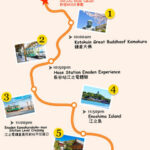
This route moves from Kamakura’s shrine precincts to the shore, then ends among Yokohama’s harbor lights. Its variety is the main attraction: you get historic sites, a local railway, a popular anime pilgrimage stop, an island walk, and time in a modern port city, all in one day.
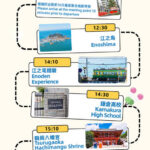
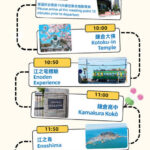
The tour departs from Tokyo at 11:00 and is scheduled to return to Shinjuku at about 21:25 to 21:45. The vehicle handles the longer connections, while the Enoden carries you between Kamakura, Kamakura-koko-mae, and Enoshima. You avoid piecing together every transfer, but you do give up the freedom to stay longer at a favorite stop.
Expect a group outing rather than a private tour. The stated group size is 4 to 48, and the vehicle may be a smaller car if numbers are low. Guides may offer explanations in more than one language, but the level of commentary can be shorter when the driver is also guiding.
Guide assignments vary. Names associated with this route include Jack, Yaya, Evan, Andrew, Ko, and Liu. The guiding style is often described as attentive and organized, with clear time reminders and useful suggestions. Still, the tour is not a long lecture at each site: most sightseeing time is self-guided.
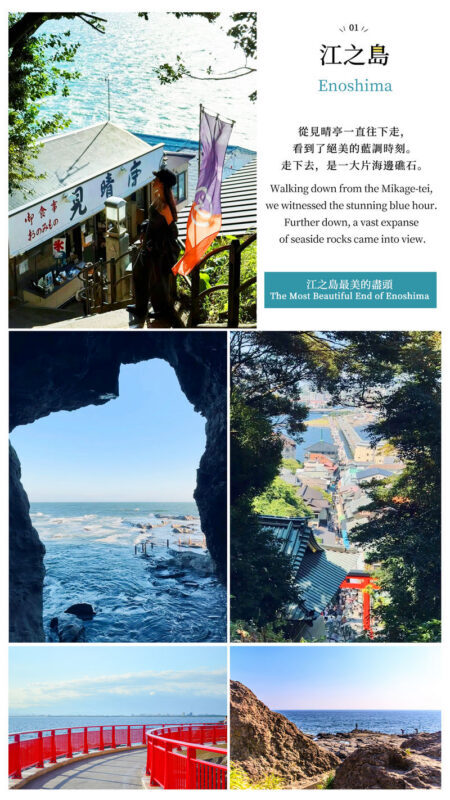
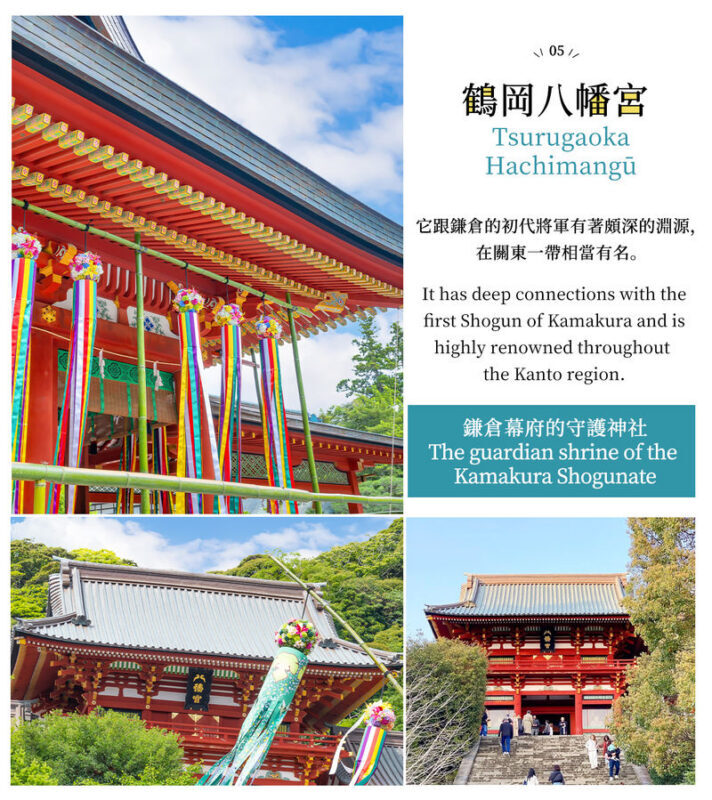
Your first major stop is Tsurugaoka Hachimangu, Kamakura’s best-known shrine. The broad approach and shrine grounds make a calm opening to a day that later grows busier and more coastal. Take a moment to notice the shift in atmosphere: this is a place for worship and local tradition, not simply a scenic backdrop.
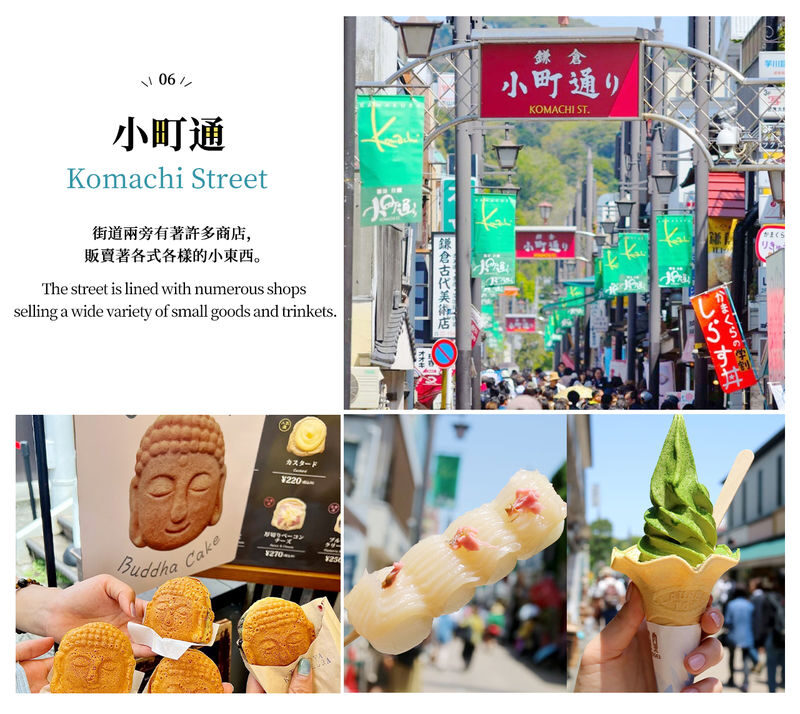
The schedule allows about 1 hour 20 minutes for this part of Kamakura. Komachi-dori, the shopping street near Kamakura Station, is also part of the activity, so you may have time to browse for a snack or look at local shops. The exact balance between the street and shrine can depend on the group’s timing and the day’s conditions.
This is free time, so decide early what matters most to you. If you want a quieter shrine visit, head there before lingering over shops and food. If you would rather browse, keep a close eye on the meeting time. The tour cannot wait for late arrivals, and the rest of the day depends on staying on schedule.
Some planned stops may be changed or skipped because of weather, crowds, capacity, or other disruptions. That flexibility helps the group keep moving, but it means you should treat the schedule as a plan, not a promise of fixed minutes at every site.
Evening activities in Fujisawa include these interesting options
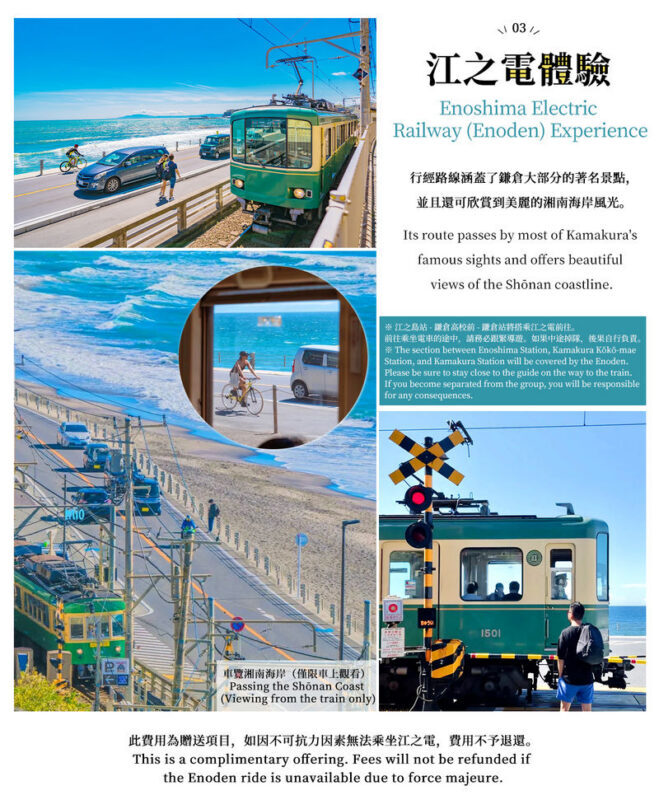
The Enoden is a small electric railway that threads through Kamakura and along the Shonan coast. On this tour, you take it from Kamakura Station to Kamakura-koko-mae, then ride another short segment toward Enoshima. Both fares are included, and the train ride is more than a transfer: it gives you a window on the coastal towns and the everyday rhythm of local travel.
The first scheduled ride is about 20 minutes. The second is listed as about five minutes. Trains can be crowded, especially in busy periods, so stay with your guide and be ready to board promptly. You are using a public railway, not a reserved sightseeing carriage, and the operator notes that the experience may be affected by weather, traffic, or equipment maintenance.
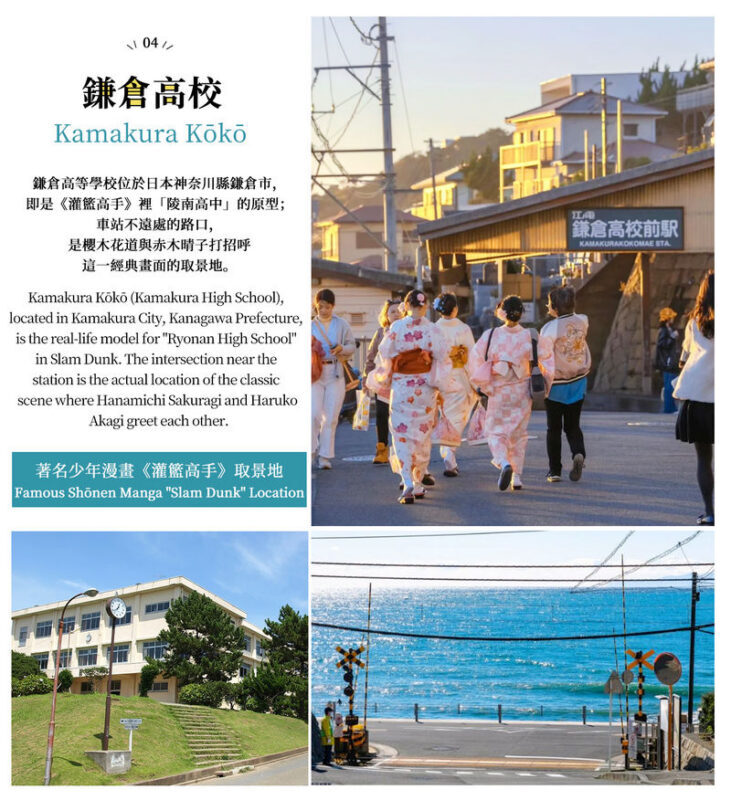
At Kamakura-koko-mae, the level crossing near the high school is famous among fans of Slam Dunk. It is the real-world setting associated with a well-known scene, which explains the steady stream of people hoping for a photo. You get around 20 minutes here, enough for a brief look and a few pictures if the crossing is not too crowded.
This is a working road and railway, not a photo set. Do not step onto the tracks or block vehicles, pedestrians, or other people trying to pass. If the crowd is thick, patience and a quick photo are more realistic than a long, quiet stop.
From Enoshima Station, the walk to the island takes about 20 minutes, including the crossing of Enoshima Benzaiten Bridge. The bridge is about 389 meters long and gives you open views across Sagami Bay. On a clear day, Mount Fuji and the Hakone mountains may be visible in the distance, though haze and weather can hide them.
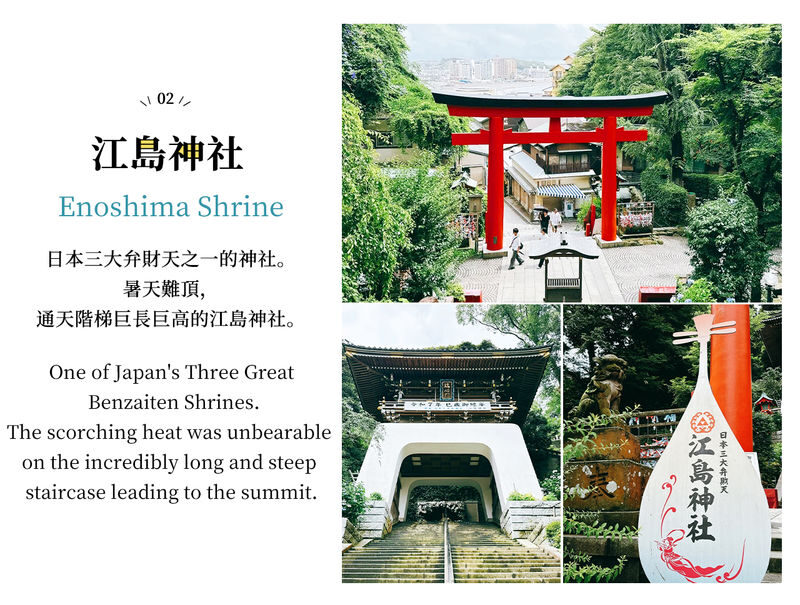
Once on the island, you have about 1 hour 40 minutes. Enoshima Shrine is a natural focal point, and the island also has other historic religious sites. You can use the time for a shrine visit, a walk, or a meal. Seafood is a local draw, and the free-time format lets you choose how to spend your minutes rather than follow the guide from one attraction to another.
There is a catch: Enoshima is best explored on foot, and the route includes ramps and stairs. Wear comfortable shoes and bring sun protection or rain gear to suit the forecast. If you want a leisurely meal and a full island walk, you may need to choose between them. The guide’s meeting time is firm, so leave enough time to walk back.
The island’s appeal is its mix of sea views and local sacred sites. It is not a resort stop with unlimited time to lounge by the water. Think of it as a compact visit, with a chance to get a feel for the island and decide what you would return to see at greater length.
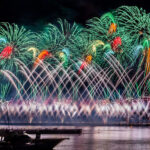
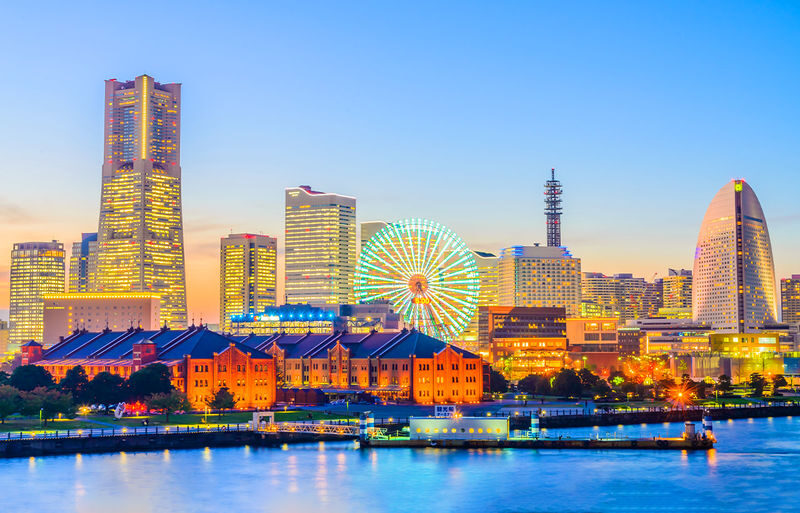
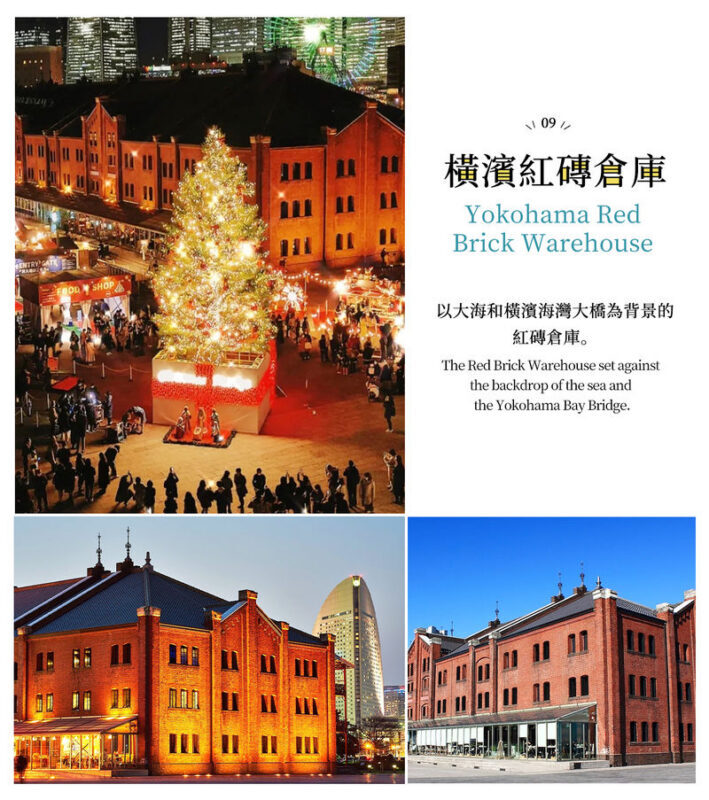
The final major stop is Yokohama, where the schedule sets aside about 2.5 hours for free time. The route highlights the Red Brick Warehouse area and the waterfront, giving you a chance to see the port city after sunset. This is the day’s most flexible stretch, but it is also where extra costs can add up.
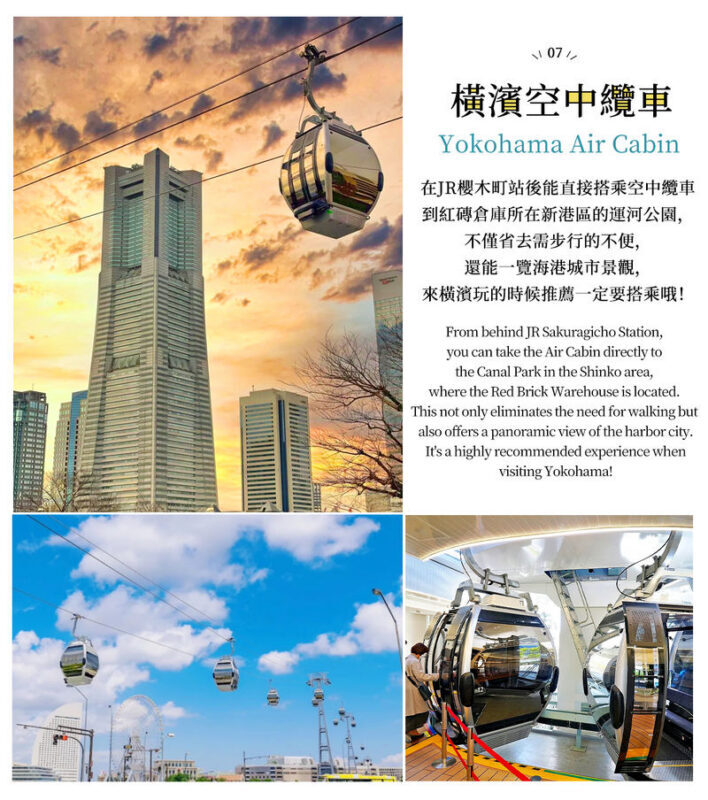
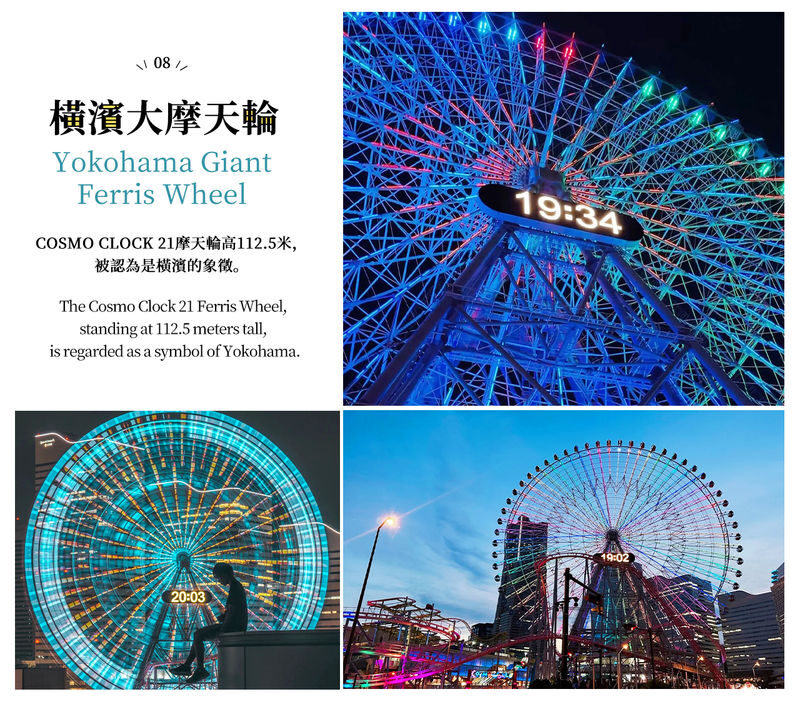
The Yokohama Air Cabin, an aerial cable car linking the Sakuragicho area with Shinko and the Red Brick Warehouse district, is not included. The Ferris wheel and other paid activities are also on your own account. You can instead spend your time walking around the harbor area or browsing the shops, then return to the meeting point on time.
The night view depends on conditions. Rain, fog, or strong weather can obscure the lights, and outdoor attractions may close. If you are mainly booking for a clear skyline or a cable-car ride, keep your expectations flexible. The tour still gets you to Yokohama, but it cannot control the weather or guarantee a particular view.
The scheduled return to Shinjuku is around 21:25 to 21:45, though traffic can move that time earlier or later. The tour information also gives a return departure reference of 20:25, so check the final timing and meeting instructions sent before departure. In either case, avoid booking a tight evening connection or a show afterward.
At a starting price of $41.05, the tour can be good value if you want to cover several places without planning every connection. The included package lists round-trip transfers from the meeting point, tolls, parking, fuel, and both Enoden segments. Those costs and logistics would otherwise take time to arrange, especially if you are unfamiliar with the rail network.
The price does not cover the Yokohama Air Cabin, Ferris wheel, meals, or personal purchases. Budget for these separately if they are part of your plan. You should also compare the price with the value you place on flexibility: an independent trip would let you linger longer in Kamakura or Enoshima, while this route gives you a broad sampler in one day.
The schedule can shift because of road conditions, weather, or crowds, and the operator does not offer refunds for delays or partial itinerary changes. That is a normal risk on a long road trip, but it matters if you have a fixed plan in Tokyo that evening.
You might also be interested in these Fujisawa experiences
I’d choose this trip if you have limited time in Tokyo and want a first look at Kamakura, Enoshima, and Yokohama without navigating every connection alone. It is especially appealing if the Enoden railway or the Slam Dunk crossing is part of your wish list, or if you like a day with very different settings rather than one long museum or shrine visit.
It also suits visitors who are comfortable with a group timetable and short, self-guided stops. The repeated praise for guides’ patience, timekeeping, and multilingual help is encouraging, especially for people who want someone to manage meeting points and transitions. But a guide’s language mix and detail can vary, and the focus is as much on keeping the group moving as on giving an in-depth talk.
I would think twice if you have limited mobility, need a slow pace, or want to explore Enoshima thoroughly. The island’s walking and stairs may be tiring, and there are no child seats in the vehicle. The tour is also not recommended for people with certain serious medical conditions, and pregnant participants are advised against taking part.
Arrive at the designated Shinjuku meeting point at least 10 minutes before the 11:00 departure. The guide will not contact you in advance; vehicle and guide details are sent by email between 16:00 and 22:00 Japan time on the day before. Check the latest message if more than one arrives, and confirm the exact meeting point there.
Bring only what you need for the day. One piece of luggage per person is allowed at no charge; additional pieces cost JPY 2,000 each and should be noted when you book. Eating and drinking in the vehicle are not allowed. Children aged 0 to 2 ride free if they do not need a separate seat, while children aged 3 and older pay the adult rate and must be with a paying adult.
The activity offers free cancellation up to 24 hours before the date, with booking changes also allowed until that point in most cases. Check your booking terms for exceptions. Seniors over 70 and pregnant participants are asked to submit a signed waiver in advance; the tour information also says seniors over 70 should present a medical certificate.
Book it if the appeal is the combination: shrine, coastal train, anime-famous crossing, island, and night-lit Yokohama in one long day. The included Enoden rides and shared transfers make the starting price attractive, and a helpful guide can take the stress out of keeping connections straight.
Skip it if you want an unhurried island visit, guaranteed clear night views, or full independence at each stop. This is a sampler with a firm clock, not a slow exploration. Pack comfortable shoes, leave your evening open, and book with the understanding that the best parts are the variety and convenience, not extra time at any single sight.
“Had a great time on this tour. Our guide Evan was very good and supportive throughout the tour. In morning we got late by few min but he waited for…”
The tour is scheduled from 11:00 to about 21:25. The stated return window is 21:25 to 21:45, but actual arrival depends on road conditions and the day’s schedule.
The activity is described as multilingual. The advertised tour information mentions Korean, Chinese, and English, while the selected package is listed as Chinese, English, and Japanese. Confirm the language options for your chosen departure.
Yes. The two listed Enoden segments, from Kamakura Station to Kamakura-koko-mae and from Kamakura-koko-mae to Enoshima Station, are included.
No. The Air Cabin, Ferris wheel, and other paid activities in Yokohama are not included. You pay for those yourself if you choose to use them.
The meeting point is in the Shinjuku MODE Gakuen area. Arrive 10 minutes before departure and check the latest email sent the day before for the vehicle, guide, and exact meeting details.
One piece of luggage per person is allowed free. Additional pieces cost JPY 2,000 each, and you should note them when booking.