Physical Address
304 North Cardinal St.
Dorchester Center, MA 02124
Physical Address
304 North Cardinal St.
Dorchester Center, MA 02124

See Jaipur’s forts, palaces and observatory by private car, with a guide, flexible stops and practical advice on costs and timing.
Jaipur’s best-known sights sit across a broad city, from the hilltop courtyards of Amber Fort to the instruments of Jantar Mantar. This private car tour links them in one long day, with a guide to explain what you’re seeing and a driver to handle the traffic between stops.
I like two things in particular: the mix of grand architecture and working science, especially Amber Fort and Jantar Mantar, and the private, adjustable format, which lets you spend more time where your interest catches. The car also gives you a cool, calm break between visits.
The trade-off is the pace. Eight hours is a tight window for this many sights, and entry tickets and meals are extra. If you want to linger at every palace, plan to trim the route or extend your day if that option is available.
Jaipur is not a city where every major sight sits around one central square. Amber Fort lies outside the city center, while Hawa Mahal, City Palace and Jantar Mantar are in the historic core. Jal Mahal and Gaitor add further stops, so a car is a practical way to link them without arranging separate rides.
The tour lasts about eight hours and is listed as private, with a dedicated car, driver and guide. Vehicle size depends on group size: a five-seat sedan for one to three people, an eight-seat SUV for three to six, or a ten-seat van for seven to ten. The tour information also notes that a solo visitor may, in some cases, be joined by another solo visitor to share the experience, so confirm the arrangement if traveling alone and privacy is important.
Pickup and drop-off are available at a Jaipur location of your choice. That flexibility is useful if your hotel is away from the old city or if you are arriving at the airport or railway station. The guide and driver are separate roles, which is a real advantage: one person can focus on the story while the other takes on Jaipur’s busy roads.
The tour’s strongest feature is this combination of transport and interpretation. A private car does not make traffic disappear, but it gives you a comfortable place to pause between visits. The air conditioning matters in the heat, and the car can also hold your belongings while you explore.
If you prefer having a local expert, these guided Jaipur experiences could work well
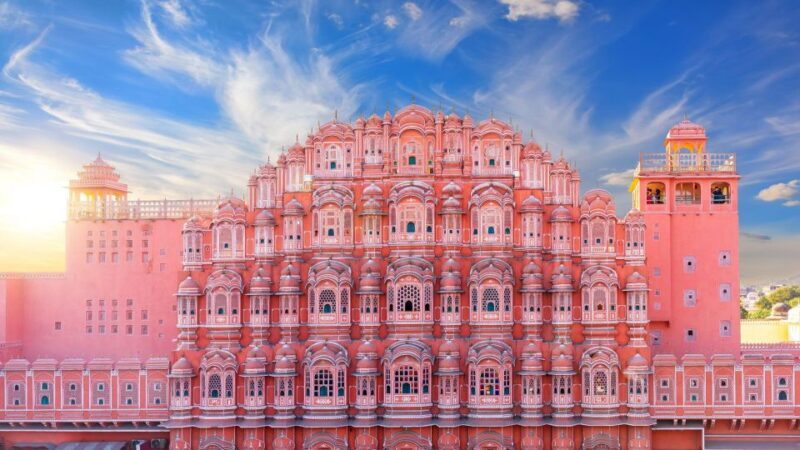
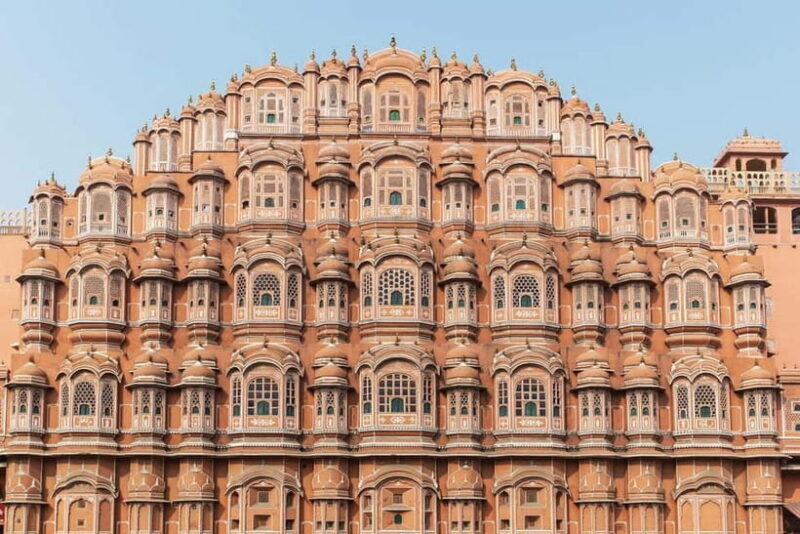
The route lists Hawa Mahal first, with about 20 minutes for a visit and photos. Its tiered arches and fine lattice screens make it one of Jaipur’s most recognizable buildings, but the guide’s explanation gives the facade more meaning: it was designed to offer a view into city life.
That short stop is best treated as an introduction rather than a full palace visit. You’ll have time to admire the details and take pictures, but not to linger long. If Hawa Mahal is a personal priority, ask whether the schedule can allow more time here.
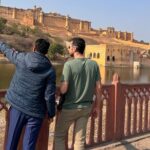
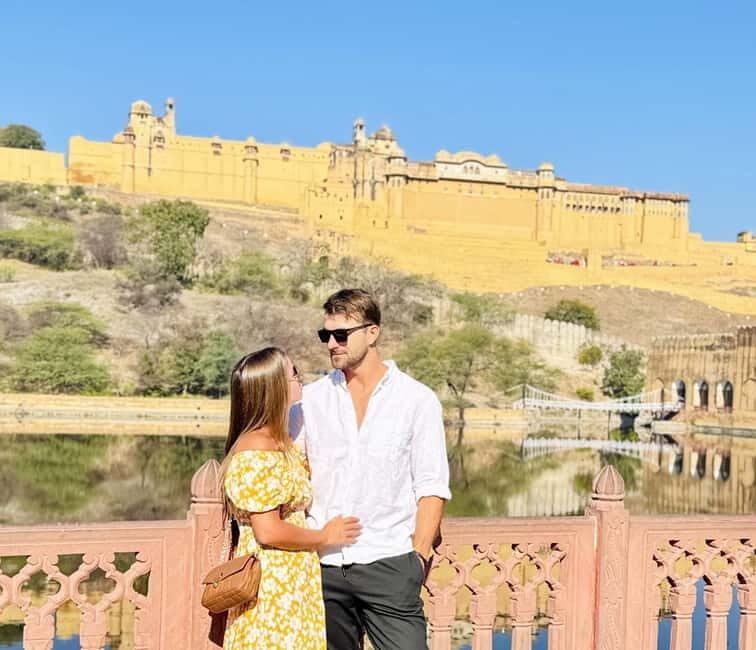
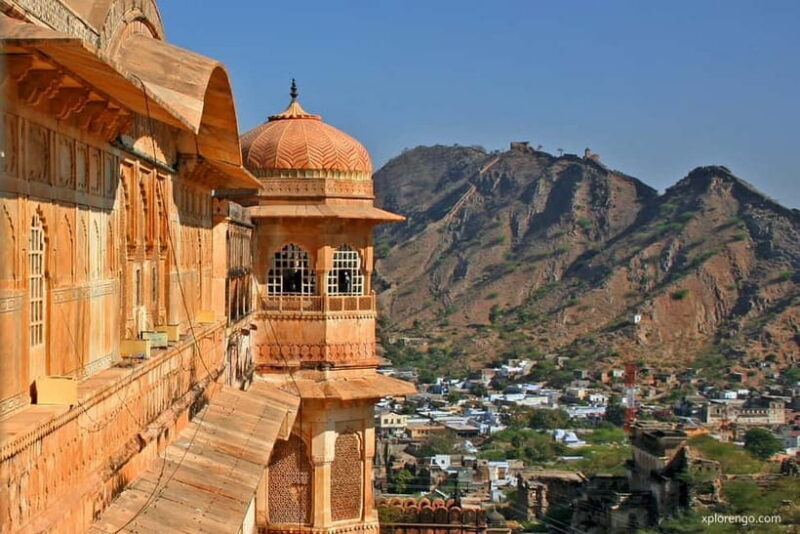
Amber Fort receives the longest single visit, about two hours, and rightly so. Built from red sandstone and white marble, it combines Hindu and Muslim architectural elements and gives a sense of the Rajput court’s scale and style. The hilltop setting also brings broad views over the surrounding area.
The included guided visit can help you read the place as more than a succession of courtyards and decorated rooms. The optional three-hour Amber Fort tour described for this experience focuses on spaces such as Ganesh Pol, Sheesh Mahal, royal chambers and courtyards. If you choose that longer fort option, check how it fits with the rest of the full-day route; it may require adjusting other stops.
Two hours is enough to see a substantial amount, but it is not an unhurried visit if you want to study every room. The guide can help you focus on key features, then leave you time to look around at your own pace. Wear comfortable shoes, since the tour recommends sports shoes and the fort involves walking.

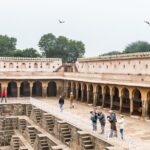
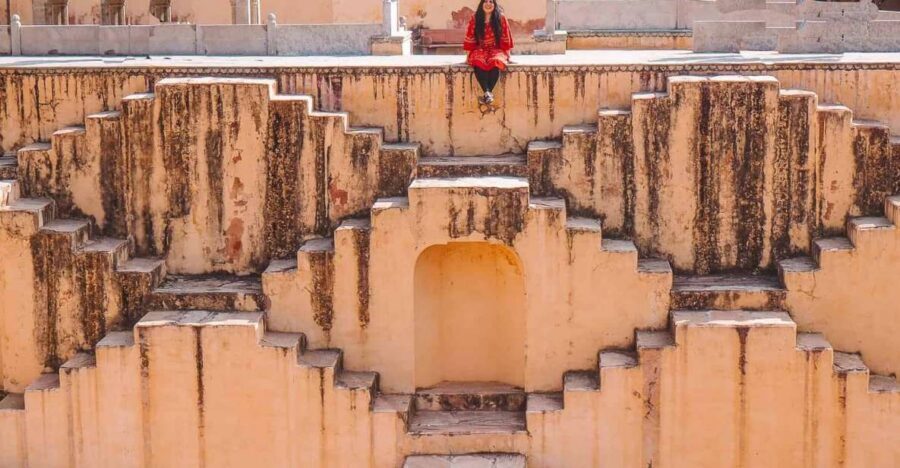
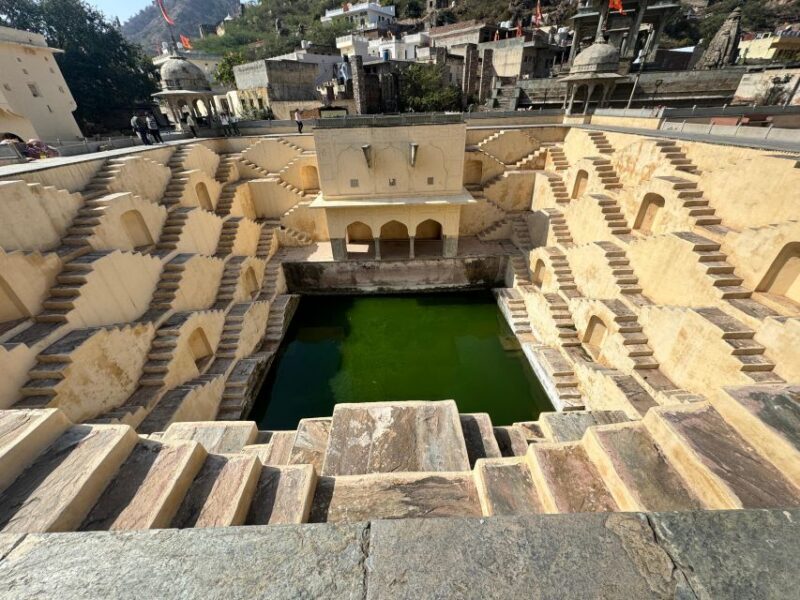
Near Amber Fort, Panna Meena Ka Kund offers a change of scale and mood. This 16th-century stepwell is known for its orderly, symmetrical stairways and its rainwater catchment system. The geometric design is striking, but the practical purpose matters too: this was a water structure, not simply a decorative landmark.
The schedule allows around 30 minutes, enough to take in the pattern and hear how the stepwell worked. It is a useful contrast to Amber’s royal rooms: here, the design speaks to daily needs as well as visual order. Keep your camera ready, but take a moment to look at the repeating lines without a screen in front of you.
More Great Tours Nearby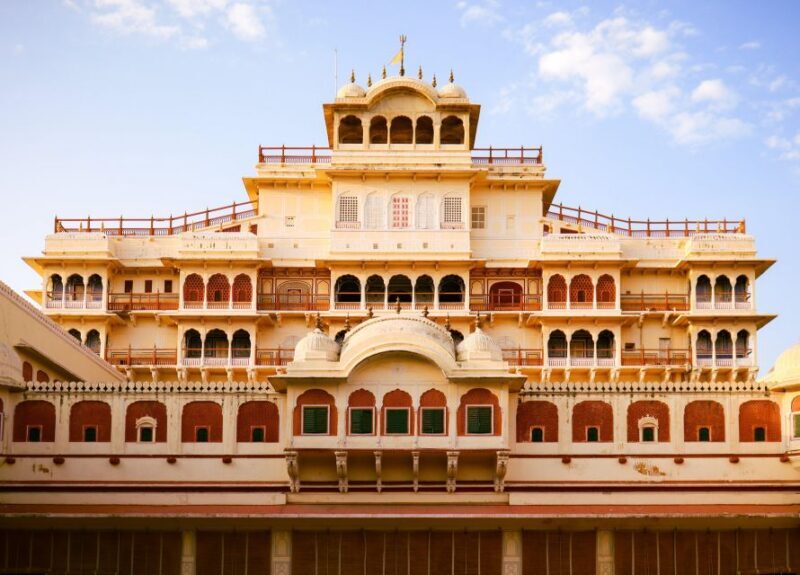
Jal Mahal, the Water Palace, sits amid Man Sagar Lake and is described as an 18th-century Rajput structure built in red sandstone. The tour allows roughly 20 to 30 minutes, depending on the schedule details. This is a short stop for the setting and views, rather than a long interior visit.
Treat it as a breather between the fort area and the city. The palace’s position in the lake gives you a different perspective on Jaipur’s architecture, though the limited time means you should not expect an extended exploration. If you want more time for a particular stop, this is one to discuss with your guide.
For a more personal experience, these private Jaipur tours deliver individual attention
A one-hour lunch break is optional, and meals are not included. You can use the pause to eat at a local restaurant before continuing, but the final cost depends on what you order. Since the schedule is full, keep lunch simple if you want to preserve time for the afternoon sights.
The tour also includes a 10-to-30-minute visit to a local arts and crafts workshop or market, depending on the itinerary details. The focus is on traditional crafts such as Jaipur hand block printing and cutting rough stones. It is presented as an educational stop, with no pressure to buy.
That distinction is worth keeping in mind. A workshop visit can add useful context to the city’s craft culture, but you may prefer to spend that time at a monument. Because the day is flexible, tell your guide what interests you and ask how the craft stop fits into the route before setting off.
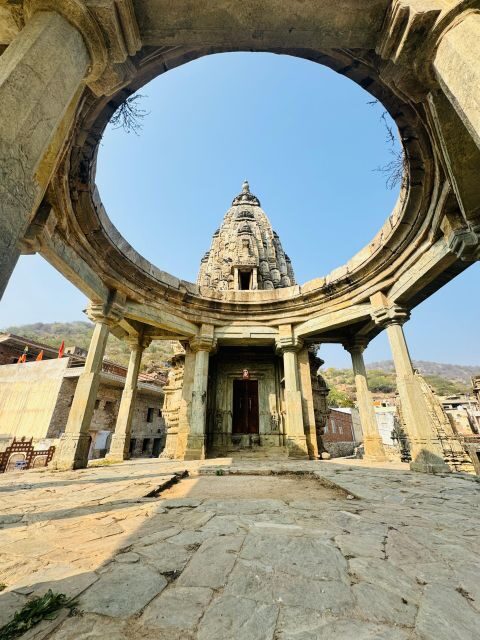
Royal Gaitor Tumbas, also called Gaitor Ki Chhatriyan, is an 18th-century complex of memorial structures with intricate carvings and dedicated temples. The schedule allows about 30 minutes, though the tour description elsewhere gives an hour. Confirm the expected timing with your guide at the start of the day.
This stop brings a more contemplative note to the route. The carved stonework rewards a slower look, and the site’s religious significance adds another layer to Jaipur’s royal architecture. If the day is running late, ask whether you can give Gaitor the time it deserves rather than rushing through.
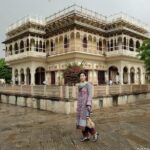
City Palace is allotted about 90 minutes in the route. Built by Maharaja Jai Singh, it remains connected to the erstwhile royal family and offers a closer look at Jaipur’s regal history. Its buildings and courtyards help put the city’s royal identity into context after the hilltop scale of Amber Fort.
A guide can make this visit more rewarding by explaining what the different spaces represent and pointing out details you might otherwise pass. Still, the palace is a substantial stop, and 90 minutes can go quickly. If you are drawn to royal history, tell your guide; if you are more interested in the city’s science or street life, you may want to balance your time accordingly.

Jantar Mantar is one of the tour’s most distinctive stops. This UNESCO World Heritage Site contains 19 astronomical instruments built by Rajput king Sawai Jai Singh, including the world’s largest stone sundial. The structures are unusual at first glance, and they make much more sense when someone explains how they were used.
The tour allows about an hour here. That gives you time to hear about the instruments and their purpose, rather than treating the site as a brief photo stop. If you enjoy science, engineering or the history of observation, this may be one of the day’s most rewarding visits.
Jantar Mantar also explains why this route is more than a procession of palaces. Jaipur’s heritage includes an ambitious scientific legacy, and the observatory offers a different kind of grandeur: precise, public and built in stone.
The stated price is $4.88 per person, an unusually low figure for a full day with private transport and a guide. At that price, the car, fuel, parking, hotel pickup and drop-off, and professional guide are listed as included. The low per-person cost is most compelling for a group sharing the vehicle, but check the final price for your party and chosen option before booking.
Entry tickets and meals are not included. Those costs can change the day’s total considerably, especially if you visit several paid sites and have lunch out. One useful bit of advice from a tour participant is to carry enough cash for entrance tickets; check current ticket arrangements before you go rather than assuming the tour price covers admission.
The activity also advertises skip-the-ticket-line access, while separately stating that entry tickets are excluded. Ask the operator what skip-the-line means for your selected date and which tickets you still need to buy. That small check can prevent confusion at the first monument.
A guide’s role here is not just to name buildings. The best use of a full-day tour is to ask questions and connect the architecture to Jaipur’s history, culture and astronomical work. Guides on recent departures have included Ashwani, Rohit, Gaurav, Raj, Manu and others, but the person assigned to your date may be different. Languages offered are English, French, Italian and Spanish.
The most consistently praised parts of the experience are the guides’ explanations and the drivers’ care on Jaipur’s roads. Names such as Sohil, Shakir, Nadeem, Hasan and Ali appear among the drivers on recent tours, but assignments vary. Practical details matter too: reports describe clean, comfortable cars, attentive driving and water available in some vehicles. Do not assume every extra is guaranteed; ask your driver what is provided.
Many departures have felt flexible, with guides adjusting the route or timing to suit interests and family needs. That flexibility is a strength, but it works best if you are clear about your priorities. Decide whether you want more time at Amber Fort, a longer City Palace visit, a craft stop, or a quicker day that covers every listed sight.
Book this tour if you want to see Jaipur’s major landmarks in one day without having to organize separate transport. It suits first-time visitors, couples, families and small groups who value a guide’s context and want the option to adjust the pace. The air-conditioned car is especially useful when you need a quiet break between walks.
Choose another format, or negotiate a shorter route, if you prefer slow visits and long meals. The full list is ambitious for eight hours, and every extra pause has to come from somewhere. Before you go, confirm your pickup, the guide language, how tickets work, and which version of the Amber Fort visit you have booked. Bring your ID, sunglasses, sunscreen and comfortable shoes.
“Fantastic tour with Rohit and Sohil! Seen loads of great sights and great transport”
The tour is listed as eight hours. The time spent at each sight can vary, and the route is described as flexible.
Hotel pickup and drop-off are included. Pickup can also be arranged at another Jaipur location, such as the airport, railway station or a preferred address.
No. Entry tickets and meals are not included in the stated tour price.
Guides are offered in English, French, Italian and Spanish. Confirm your preferred language when booking.
The vehicle is air-conditioned. The stated options are a five-seat sedan for one to three people, an eight-seat SUV for three to six, and a ten-seat van for seven to ten.
Bring a passport or ID card, sunglasses, a camera, sunscreen and sports shoes. The tour information also advises against bringing pets, alcohol or drugs.
You can check availability for your dates here: