Physical Address
304 North Cardinal St.
Dorchester Center, MA 02124
Physical Address
304 North Cardinal St.
Dorchester Center, MA 02124

Visit Medellín’s Escobar-era sites with a local guide, cemetery stop, Inflexión Park, transport, and a beer or water for $33.
Pablo Escobar’s story is written into Medellín’s streets, its memorials, and the lives of people who remember the cartel years firsthand. This four-hour tour links several key sites, from a neighborhood Escobar supported to the rooftop where he died, while putting the violence and its aftermath in context.
I like two things in particular: the route gives you a clear timeline, and guides such as Alejandro, Kevin, Mateo, and Carlos are often praised for bringing in personal perspective and answering questions. A beer or water and transport are included, which make the $33 price feel fair for a half-day outing.
One point to check before you go: the meeting details name both Poblado Park and the Church of San José at Cra 43A #9-30. They may refer to the same starting area, but confirm the exact spot and time with the operator. Traffic can also take a good share of the four hours.
This is a compact, guided tour for making sense of places that can be hard to interpret on your own. Rather than offering a string of photo stops, it connects Escobar’s early years, the violence tied to his organization, and the debate over how Medellín remembers that period.
The route begins at the Church of San José, with pick-up and drop-off described as being at Poblado Park in El Poblado. From there, you travel between stops by car or van. The stated schedule allows about 30 minutes at each site and includes several 30-minute transfers. That is a lot of time on the road for a four-hour tour, but it also lets you cover sites spread across the city without arranging separate rides.
The guide is central to the value. The tour is offered in Spanish and English, and visitors regularly single out guides such as Alejandro, Kevin, Mateo, and Carlos for clear storytelling and for answering questions. Alejandro is noted for adding personal memories of Medellín during Escobar’s era, while Kevin is praised for a calm speaking style and detailed explanations. Guide assignments can vary, so you should not assume you will have a particular person.
For more Medellin culinary adventures, you might enjoy these food and drink experiences
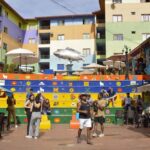
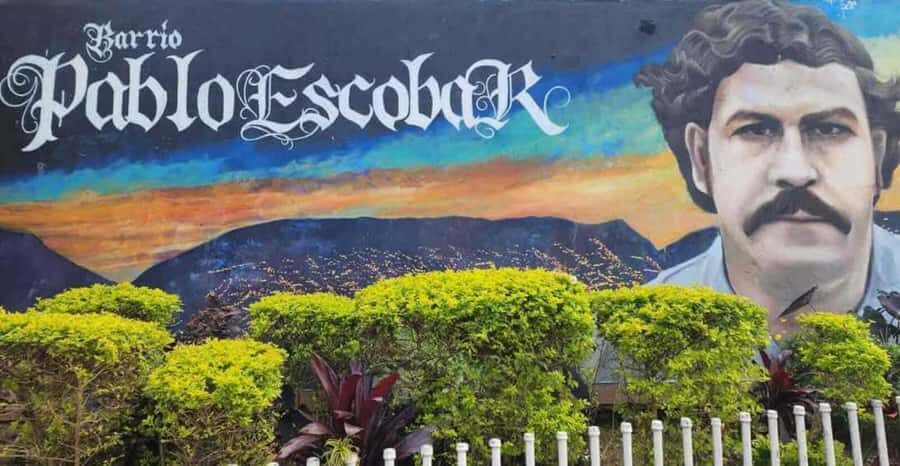
The first stop is the Pablo Escobar neighborhood, where the tour visits a mural or graffiti image dedicated to him. The neighborhood is described as a place Escobar helped provide to people living in poverty. That detail matters: it helps explain how he built a public image that was more complicated than the drug boss seen in films and television.
Your guide discusses his beginnings in drug trafficking and the way he gained influence. This is a useful place to ask how his charitable gestures and political ambitions sat alongside the harm caused by his criminal enterprise. A good tour should hold both ideas in view without turning generosity into an excuse for violence.
The mural is also a reminder that public memory is not simple. Images of Escobar can draw visitors because they are instantly recognizable, but the guide’s context helps you consider what such an image means to residents. You are not just looking at a wall; you are looking at a contested symbol in a neighborhood with its own history.
The scheduled visit lasts about 30 minutes. That is enough for an explanation and questions, though it will not feel like a long, independent neighborhood walk. If you want to explore more, treat this stop as an introduction rather than a full visit to the area.
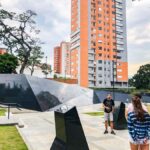
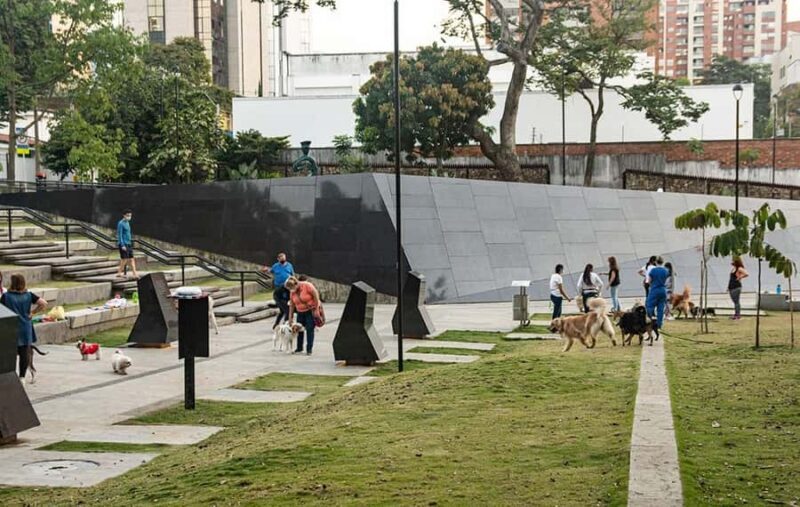
The next stop is the former site of the Monaco building, where Escobar’s family once lived. The building is no longer there. In its place is Parque de Inflexión, a public memorial to victims of the Medellín cartel’s violence.
That change gives the site much of its meaning. The tour can explain the history of the building and why the park now serves a different purpose. Instead of treating Monaco as a dramatic landmark in Escobar’s story, the visit asks you to consider how the city chooses to remember the people harmed by cartel violence.
I value this stop because it shifts the focus away from the trappings of Escobar’s life. A former residence can easily become a curiosity; a memorial asks for a more serious response. Listen for how your guide describes the park and its role in Medellín’s present-day memory.
Allow roughly 30 minutes here. The time is enough to hear the background and take in the site, but the stop is more about context than a long list of exhibits. It is one of the tour’s most important moments for understanding why a visit to Escobar-related places should not become an exercise in celebrating him.
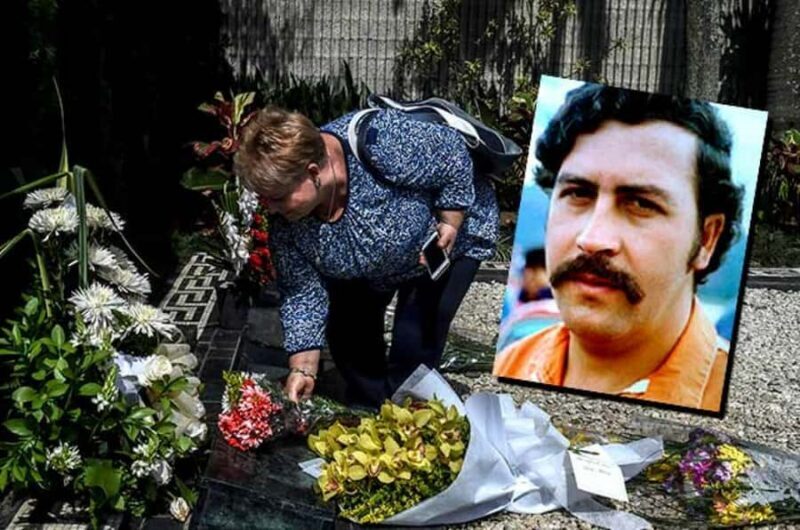
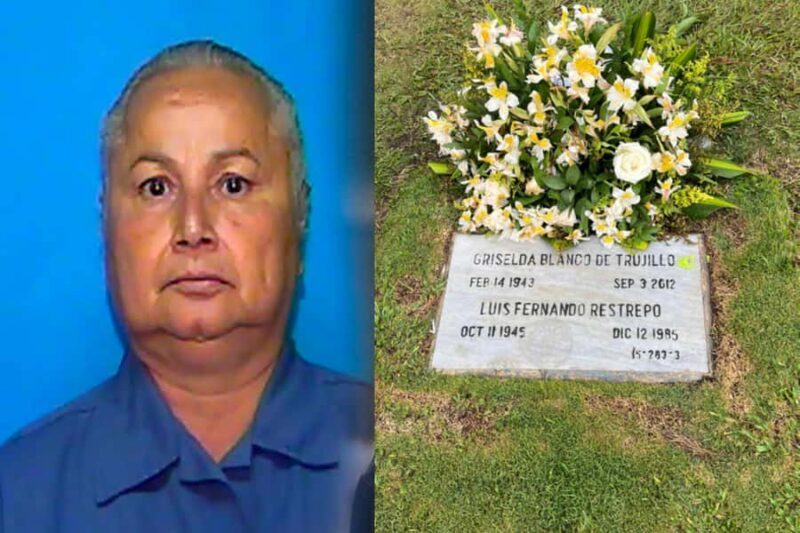
At Jardines de Montesacro cemetery, you see the graves of Pablo Escobar, Gustavo Gaviria, and Griselda Blanco, among other notable figures. The stop brings the story out of the city streets and into a place where the people at the center of this history are remembered by name.
A cemetery visit can feel different from looking at a mural or a former building. It is a real place of burial, and the tour’s tone matters. The aim here is to understand who is buried there and how these figures fit into Medellín’s history, not to treat their graves as props. Keep your manner respectful and follow your guide’s direction.
The cemetery is scheduled for about 30 minutes. That gives your guide time to explain the main graves and answer questions, though the visit is not designed as an extended cemetery tour. You will also hear about the wider circle of people connected to Escobar’s rise and the violence around the cartel.
The inclusion of Griselda Blanco adds another thread to the story. It reminds you that Medellín’s criminal history cannot be reduced to one person, even if Escobar remains its most famous name.
More Great Tours NearbyThe final stop is described as the rooftop where Escobar met his end. Here, the guide talks about his last days and the disagreement over how he died. The account presented includes the claim that he was killed and the claim from his family that he committed suicide.
This is a fitting end to the route because it leaves you with a question rather than a neat conclusion. The tour does not ask you to accept one version without thought. Instead, it gives you the basis for understanding why the circumstances remain disputed.
The stop is allotted around 30 minutes. As with the rest of the tour, the value lies in the explanation as much as the place itself. The rooftop may be compelling to see, but its significance comes from the story and the wider consequences of Escobar’s final days.
Descriptions of the experience also refer to an Escobar museum visit, and some accounts describe seeing photographs from his childhood and historical objects there. The scheduled stop list does not clearly identify a museum as a separate stop, however. If the museum is a deciding factor for you, ask the operator what is included on your departure rather than assuming it is a guaranteed part of the route.
A strong guide can turn a short route into a useful introduction to Medellín’s past. Guides named in connection with this tour include Alejandro, Kevin, Mateo, Carlos, Alex, Esteban, and Eddy. Many are praised for explaining the social and political background, not just reciting dates and names.
Personal perspective is a recurring strength. Alejandro, for example, is described as sharing memories of living in Medellín during the period. That kind of account can help you understand how the violence affected ordinary life, though a guide’s experience is one perspective, not the whole story. Make room for questions, and listen for the distinction between personal memory and established historical facts.
The tour is offered in English and Spanish. Several accounts highlight guides who speak clearly and take time with questions, which is particularly useful when the subject involves competing accounts and unfamiliar names. Still, the pace is shared with the group. If you have a specific question, ask it when the guide opens the floor rather than waiting until the last stop.
At $33 per person, the tour includes transport between stops, a beer or bottled water, and visits to the Escobar neighborhood, Inflexión Park, Montesacro Cemetery, and the rooftop associated with his death. You are paying for a connected route and a guide who can explain why these places matter, not just for entry to a single attraction.
That is solid value if you want an efficient overview and do not have a car. Arranging separate transport to several sites would take time and planning, while this tour bundles the main locations into four hours. The included drink is a small extra, not a reason on its own to book.
The main cost is time. The schedule has several 30-minute transfers, and traffic can make the bus or van feel like a larger part of the experience than you expected. One person specifically found rush-hour traffic meant spending a lot of time in transit. If you have a tight schedule, avoid placing an important commitment immediately after the tour.
The experience has a 4.8 out of 5 rating from 1,813 reviews at the time of the supplied information. That is a strong signal of consistent satisfaction, especially around the guides and the educational value, but it cannot guarantee your guide, traffic conditions, or the exact museum arrangement on your day.
The listed meeting point is outside Iglesia de San José, at Cra 43A #9-30, described as being in the town park. The tour information also says pick-up and drop-off are at Poblado Park. Because the two descriptions may cause confusion, confirm where to stand and arrive with time to spare.
The tour lasts four hours, with start times depending on availability. It uses a car, van, or larger van, and the language options are English and Spanish. Beer or bottled water is included. Wear shoes you are comfortable walking in at stops, and bring drinking water if you prefer more than the included bottle or drink.
You can cancel up to 24 hours in advance for a full refund, and the booking option allows you to reserve without paying immediately. These terms can make planning easier, but check the current conditions when booking.
I would choose this tour if you want a guided introduction to Escobar’s impact and to Medellín’s effort to remember the cartel years with more than a criminal celebrity story. It suits curious first-time visitors, people interested in recent Colombian history, and anyone who values a guide’s personal perspective alongside visits to significant sites.
It may not suit you if you want a slow, museum-heavy outing or prefer to explore each stop at your own pace. The schedule is brisk, and the amount of driving can vary with traffic. If a museum visit is essential, confirm that detail before paying.
Book it if you want a compact, guided route with meaningful context and included transport. Before you do, verify the meeting point and ask whether the museum is part of your specific departure. Those two checks will help you know exactly what your four hours will cover.
“This tour was excellent! Alejandro was so knowledgeable, easily answered all of our questions. We highly recommend this tour, gives you so much inf…”
It lasts four hours, including travel between stops.
The stated meeting point is outside Iglesia de San José at Cra 43A #9-30. The tour information also refers to Poblado Park for pick-up and drop-off, so confirm the exact location before you go.
The route includes the Pablo Escobar neighborhood mural, the former site of Edificio Monaco, now Parque de Inflexión, Jardines de Montesacro cemetery, and the rooftop where Escobar died.
Yes. Transport between the stops is included by car or van.
The tour is offered in Spanish and English.
Yes. The tour includes a beer or bottled water.
You can check availability for your dates here: